
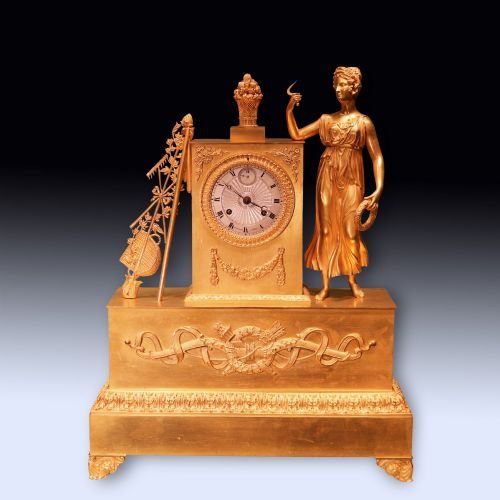

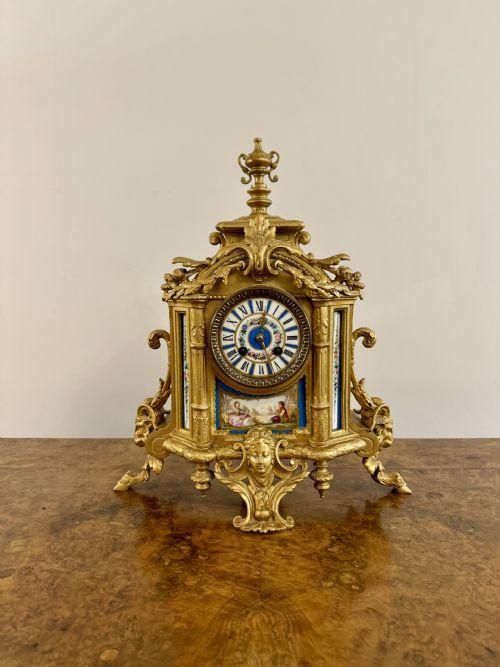


Gilded Bronze Desk Clock
A gilded bronze desk clock brings weight and steady motion to a room, cast in heavy metal and built to keep time across generations.
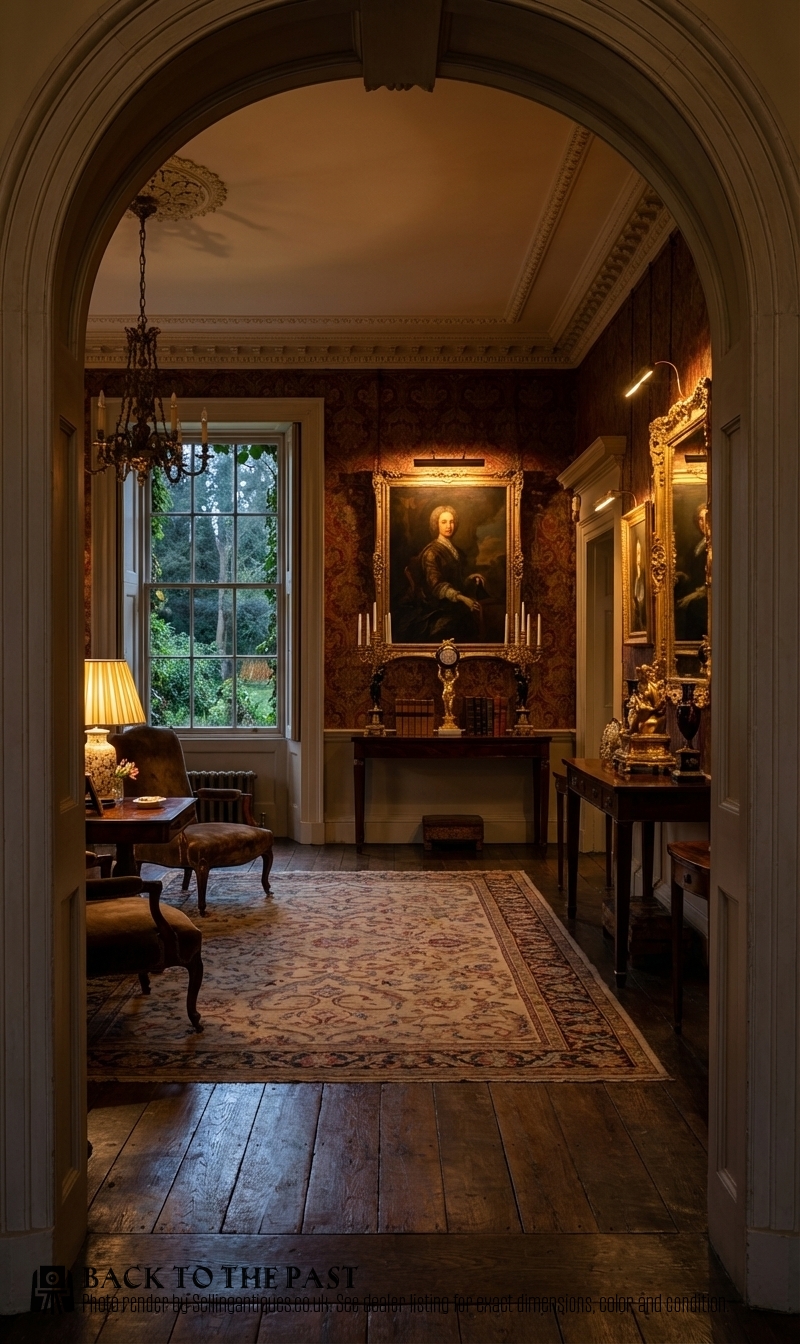
Gilded Bronze Desk Clock
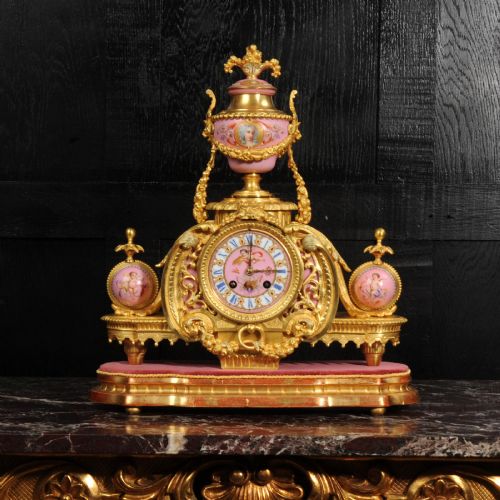
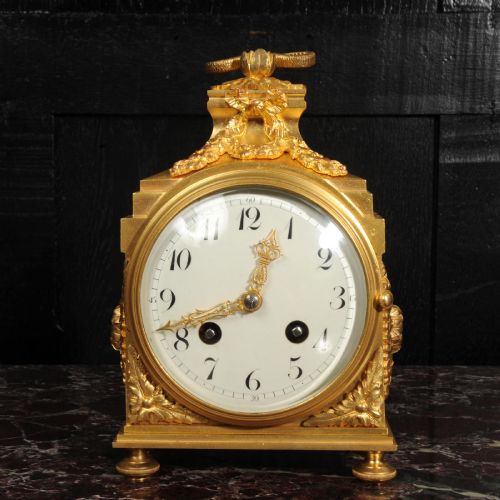
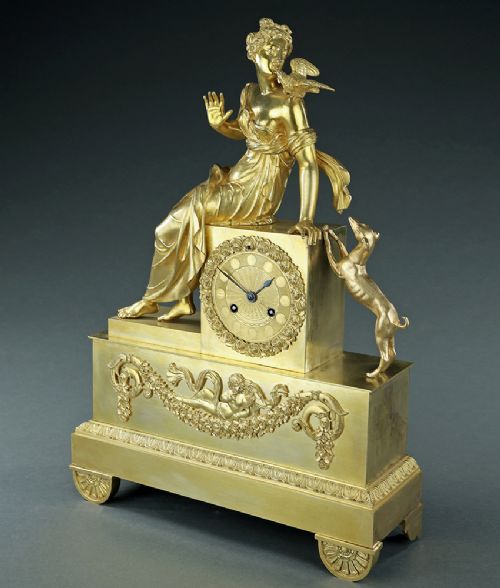
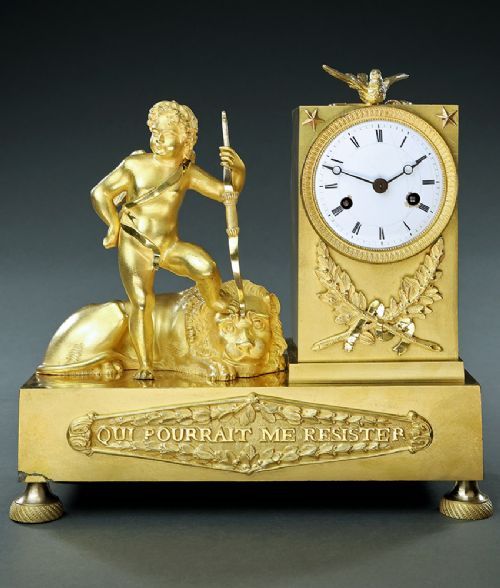
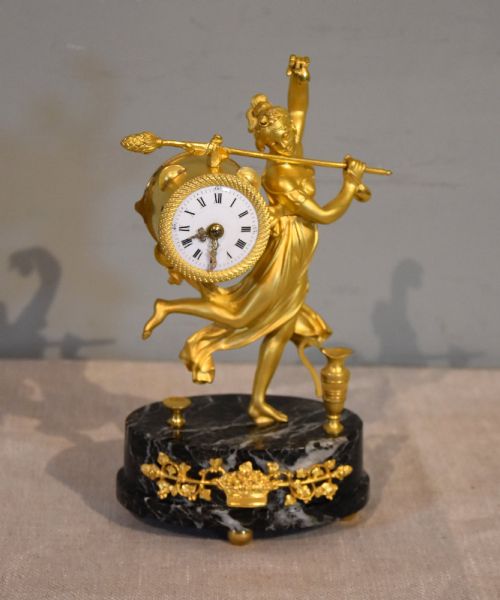
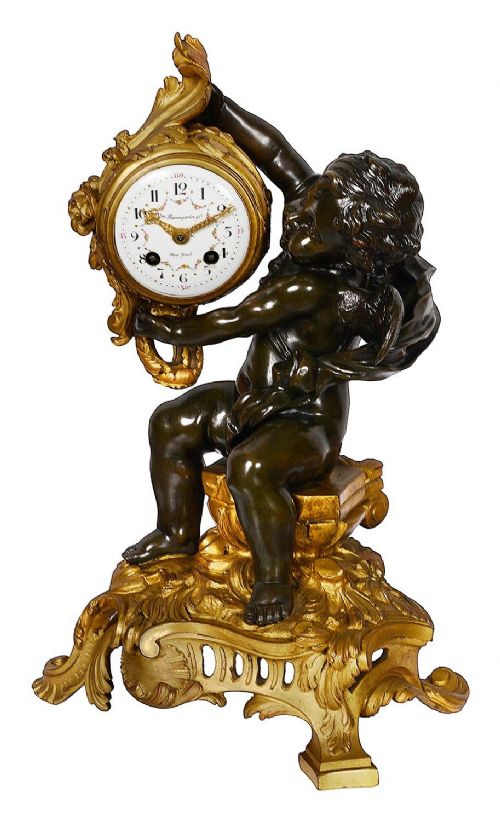
A gilded bronze desk clock brings together cast metalwork and precise horology, originating predominantly from French workshops during the nineteenth century. These pieces take the form of mantel clocks, portico clocks, and smaller carriage or bedside timepieces designed for domestic interiors.
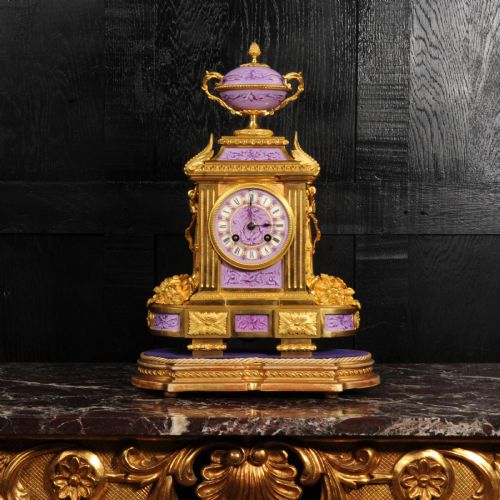
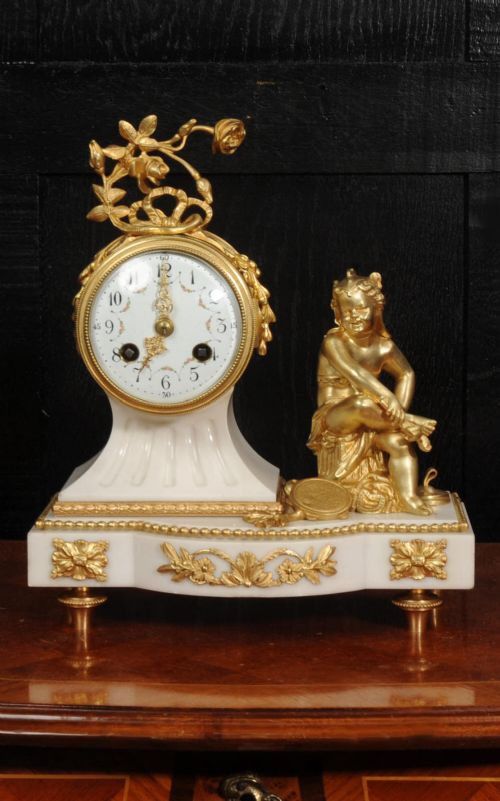
The most common examples on this page date from the Victorian era and the mid-nineteenth century, drawing on French Empire, Rococo Revival, and Louis XVI styles. They often incorporate decorative elements such as porcelain panels, marble plinths, and figural bronzes depicting classical motifs.
Makers integrated various materials into these chassis, combining gilt bronze with enamel dials, glass panels, and occasionally cut crystal. Buyers encounter both simple timepieces and complex mantel clock sets flanked by matching ornaments.
How they were made
Foundry workers shaped the metal components through sand casting or lost-wax methods, producing detailed figural ornaments and architectural cases from bronze and brass. Artisans then applied a gold wash or mercury gilding to the surface, creating the characteristic ormolu finish that catches the light.
Clockmakers fitted mechanical brass movements inside these metal housings, incorporating escapements and spring-driven or weight-driven gear trains. Dials were frequently fashioned from white enamel with painted numerals, protected behind curved glass bezels.
Gilded Bronze Desk Clock Retail Price Guide 2026
Typical asking prices for gilded bronze desk clock among the pieces listed under this phrase on Sellingantiques today, from the lower quarter to the upper quarter. They describe what is for sale here now, not the wider market.
Listings feature nineteenth-century French clock forms produced in materials including gilt bronze, marble, porcelain, and champlevé enamel.
What varies in quality
The reputation of the movement maker influences desirability, with signed escapements and plates from established horologists indicating superior mechanical execution. Furthermore, the integration of materials such as genuine Sèvres porcelain plaques or matched marble bases elevates the overall ambition of the object.
Achille Brocot·Japy Freres·Canaillor of Paris·Le Roy Paris·Hessen Paris·Henri Jacot
The Gilded Bronze Desk Clock Glossary
- Ormolu
- A gold-coloured alloy of copper, zinc, and sometimes tin, or the technique of applying finely ground gold mercury to bronze. This treatment produces a durable metallic sheen characteristic of nineteenth-century decorative arts.
- Pendule d'Officier
- A portable military-style desk or travel clock equipped with a carrying handle on top. These pieces often feature robust movements suitable for transport.
- Champlevé
- An enamelling technique where troughs are dug into the surface of a metal object and filled with vitreous paste before firing. The resulting surface displays colourful geometric or floral patterns flush with the surrounding metal.
- Portico clock
- A timekeeping device housed within a frame resembling a classical temple portico, typically supported by four columns. This architectural form became popular during the neoclassical and Charles X periods.
- Regulator
- A precision clock designed to keep exceptionally accurate time, often featuring a long pendulum and a simplified dial for easy reading. Nineteenth-century examples sometimes utilise glass-sided cases to display the mechanical movement.
Gilded Bronze Desk Clock: Frequently Asked Questions
How do I wind a gilded bronze desk clock?
Most nineteenth-century mechanical clocks use a dedicated winding key inserted into small arbors on the enamel dial. Turn the key gently until you feel resistance, taking care not to overwind the mainspring.
Ensure you match the correct key size to the square arbor to avoid rounding the metal over time. Regular winding keeps the tension balanced and maintains steady operation of the escapement.
Where should I place a heavy bronze clock?
Position your timepiece on a sturdy, level surface such as a mantelpiece, heavy desk, or sideboard to prevent vibrations. Uneven placement can cause the pendulum to strike the inside of the case or stop the movement entirely.
Keep the clock away from direct sunlight and moisture fluctuations, which can damage enamel dials and dry out internal lubricants. A stable environment helps preserve both the metal case and the brass gear train.
How can I tell a nineteenth-century clock from a later copy?
Examine the casting quality of the bronze case, looking for hand-chased details and natural wear patterns in the gilding. Nineteenth-century movements typically feature hand-cut serial numbers and makers' stamps unique to the workshop that produced them.
Modern reproductions often display uniform machine casting without the subtle irregularities found in period pieces. The weight of the metal and the construction of the dial bezel also offer clues to the age of the object.
What does fully restored mean for these clocks?
A fully restored movement has been cleaned, oiled, and adjusted by a horologist to ensure reliable timekeeping. This process involves removing old oil and debris from the brass gears and pivots.
Restoration focuses on mechanical longevity rather than erasing the patina of the outer bronze case. Buyers receive an object ready for daily use while retaining its historical character.