



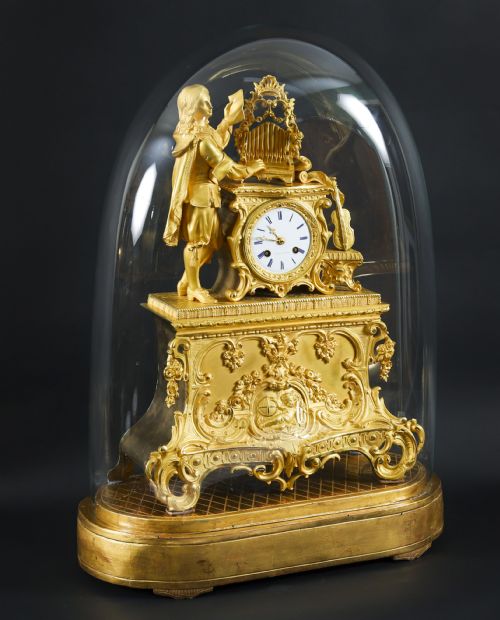


Rococo Revival Table Clock
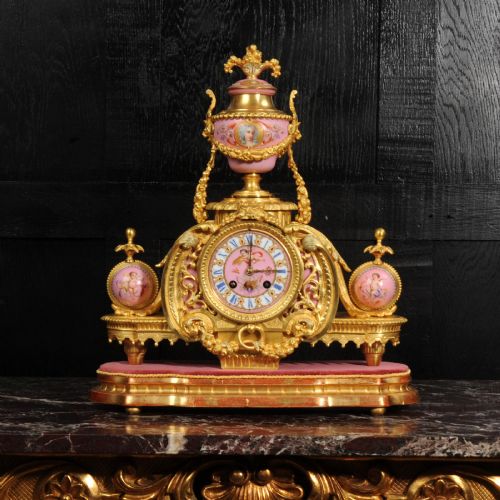
A rococo revival table clock brings dramatic asymmetric curves and elaborate gilt metalwork into a room.
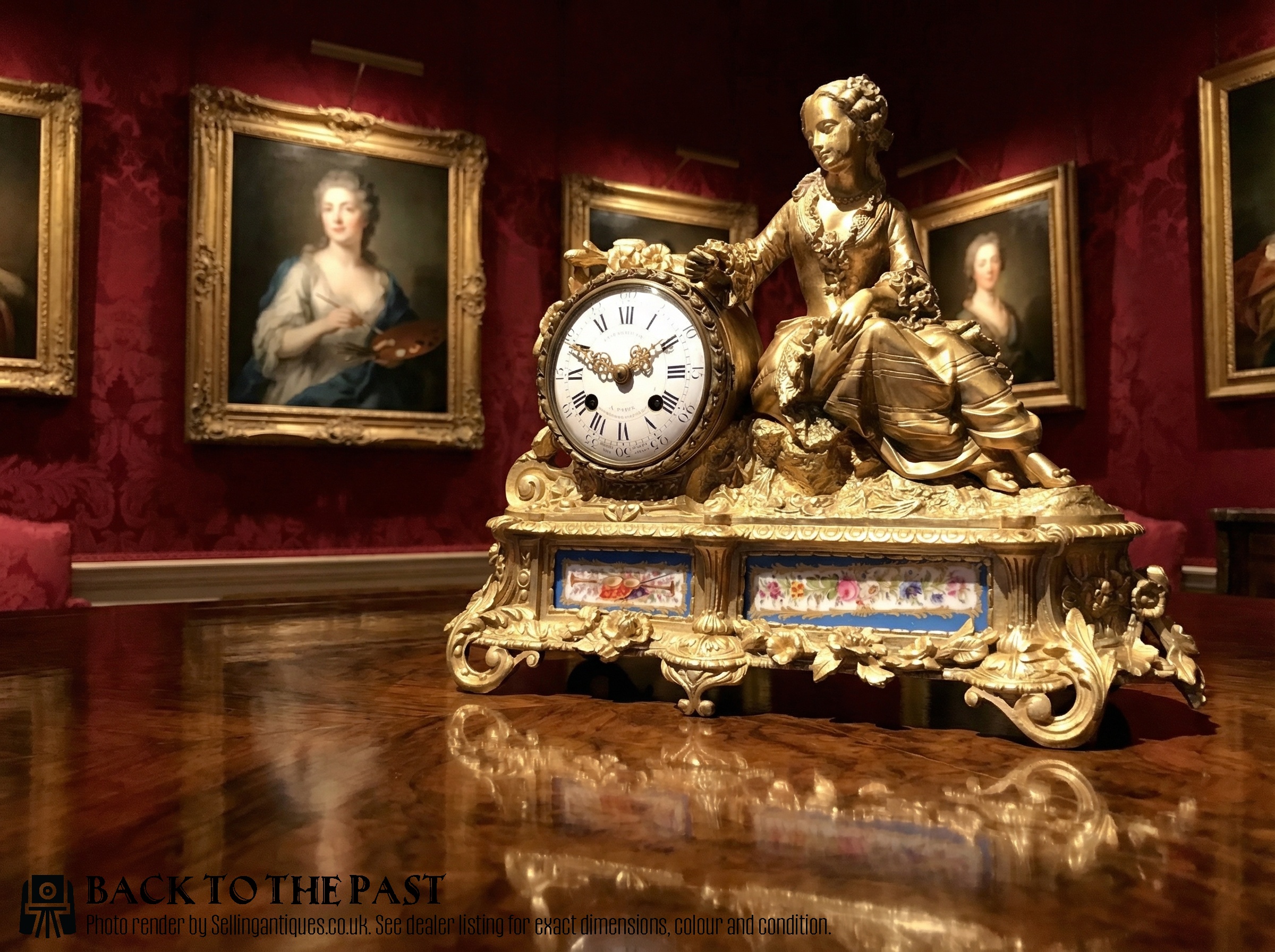
Rococo Revival Table Clock
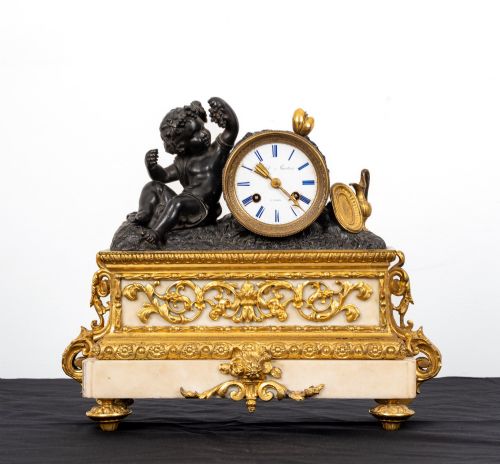
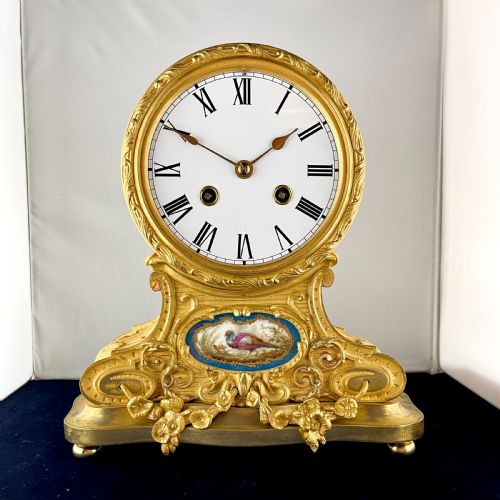
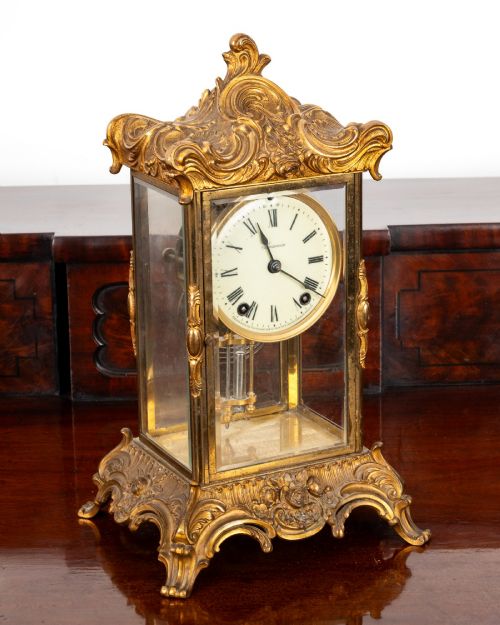
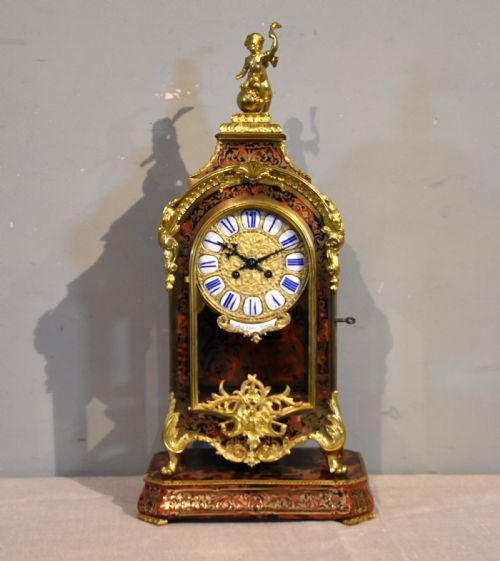
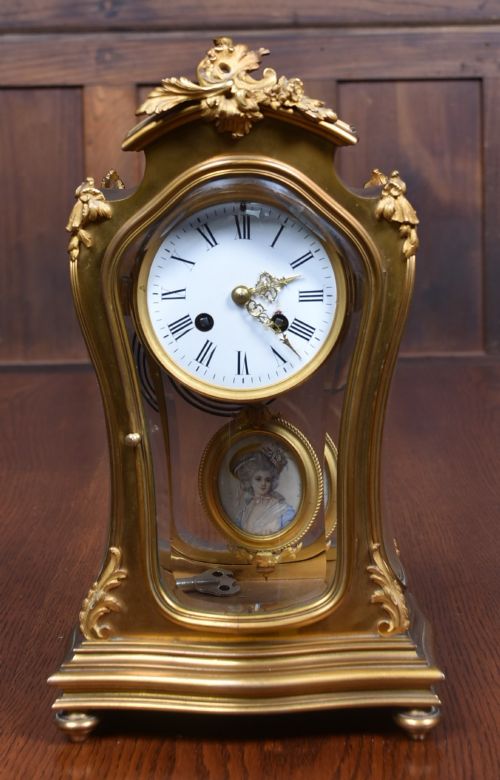
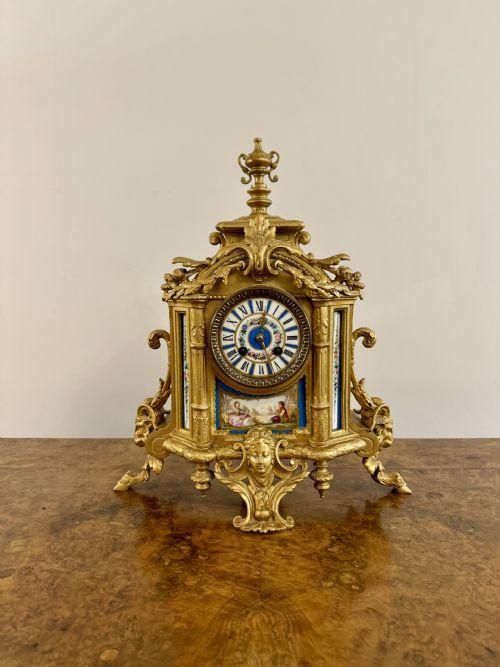
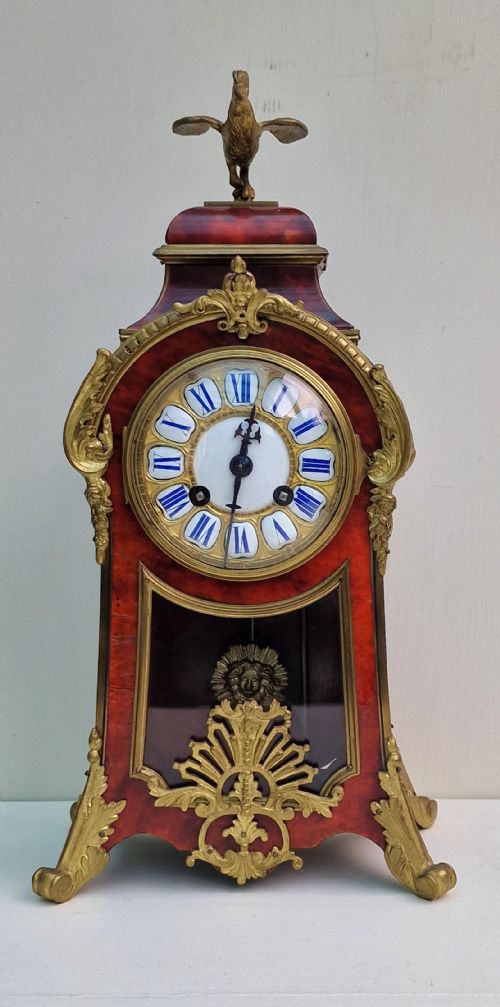
A rococo revival table clock takes many forms across the nineteenth century, including mantel clocks, desk clocks, clock garnitures, and boudoir clocks. You will frequently encounter French examples alongside Victorian interpretations, often housing porcelain panels or enamel dials within ornate metal cases.
Makers and houses produced these timepieces in various styles such as Louis XV revival, French Second Empire, and Chinoiserie. The physical forms range from compact bedside and miniature pieces to substantial mantel and bracket clocks requiring dedicated surface space.
How they were made
Foundry work relied heavily on casting bronze, brass, and gilt metal into elaborate scrollwork and asymmetrical motifs characteristic of the period. Artisans then applied fire gilding or ormolu finishes to create the characteristic metallic brilliance.
Many cases incorporate painted Sèvres or Meissen porcelain panels, hand-painted enamel dials, and occasionally tortoiseshell or marble components. Movements were manufactured by specialised clockmakers and housed within these decorative metal and ceramic chassis.
Rococo Revival Table Clock Retail Price Guide 2026
Typical asking prices for rococo revival table clock among the pieces listed under this phrase on Sellingantiques today, from the lower quarter to the upper quarter. They describe what is for sale here now, not the wider market.
Several clocks arrive paired with tortoiseshell or miniature painted portraits, proving that nineteenth-century desks needed as much drama as possible.
What varies in quality
The refinement of the casting and chasing separates standard production from exceptional pieces, as skilled hands gave depth and sharpness to the foliage and C-scrolls. The crispness of the gilt bronze or ormolu surface indicates the level of care taken during manufacture.
The integration of the clock case with signed movements by known makers elevates the piece significantly. Quality also shows in the preservation of hand-painted details on enamel dials and porcelain plaques.
Achille Brocot·Siffel and Cartier·Ansonia New York·Japy Freres·Leroy Paris·Leon Message·Jollet et Cie·William Payne·PH Mourey·Le Roy and Fils
The Rococo Revival Table Clock Glossary
- Ormolu
- Gilded bronze produced by applying a mercury and gold amalgam to a bronze base and heating it until the mercury vaporised. This technique created a durable, deep golden surface.
- Champlevé
- An enamelling technique where troughs or cells are hollowed out of the metal surface and filled with vitreous enamel before firing. It frequently decorates nineteenth-century clock cases.
- Garniture
- A set of matching decorative objects, typically consisting of a central clock flanked by matching candelabra or vases designed to sit together on a mantelpiece.
- Boudoir clock
- A smaller, often decorative clock intended for private rooms rather than principal reception spaces. These frequently feature delicate gilt metal or porcelain cases.
- Drumhead
- A clock design featuring a circular dial housing mounted on a base or pedestal, resembling a side drum viewed from the side.
Rococo Revival Table Clock: Frequently Asked Questions
Where should a mantel clock be placed?
These clocks suit stable, level surfaces such as mantelpieces, sideboards, or large desks where their weight and height are fully supported. Keep them away from direct heat sources and damp walls to protect the delicate gilt surfaces and internal movements.
Allow adequate clearance around the case so that winding keys and adjusting levers can operate freely without scratching surrounding furniture.
How do I identify the period of a clock?
Dating relies on examining the stylistic markers of the case, the signature on the movement or dial, and the materials used. Nineteenth-century pieces often combine cast ormolu with Sèvres-style porcelain panels or champlevé enamel work characteristic of Victorian and Second Empire tastes.
Consulting maker signatures recorded on the backplates or dials frequently provides a narrower window of production during the 1800s or early 1900s.
What is a clock garniture set?
A garniture comprises a central clock accompanied by matching side ornaments, such as vases or candelabra, designed to create a balanced display across a mantelpiece or shelf. These matched sets share identical motifs, materials, and gilt finishes.
Keeping the pieces together preserves the intended decorative harmony of the Victorian interior scheme.
How do these clocks function daily?
Most rely on a mechanical spring-driven movement requiring periodic winding with a specific key. Ensuring the clock rests on a flat surface helps the pendulum or escapement maintain a steady beat.
Professional servicing every few years keeps the gears and springs operating smoothly without excessive wear on the vintage components.