



Rococo Revival Desk Clock
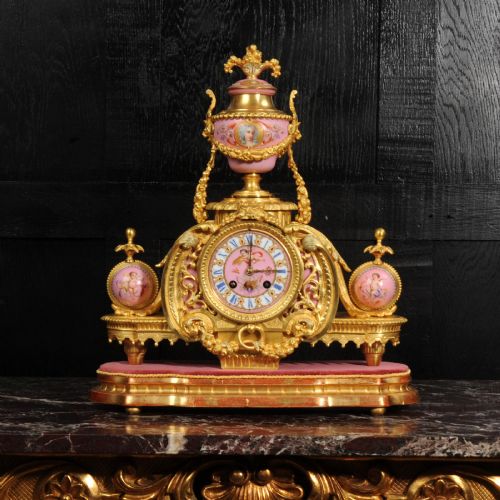
These rococo revival desk clock pieces bring extravagant asymmetric curves and rich metallic gilding straight into any interior.

Rococo Revival Desk Clock
A rococo revival desk clock embodies the ornate aesthetic of the nineteenth century, drawing heavily on earlier French designs from the reigns of Louis XV and Louis XVI. These pieces typically take the form of mantel, boudoir, or bedside clocks rather than strictly modern desk timepieces, often designed for prominent display on a mantelpiece or a surface within a room.
The objects seen here originate primarily from the Victorian era and the broader nineteenth century, spanning decades such as the 1860s, 1870s, and 1880s up to 1910. Most examples reflect French influence, incorporating elaborate styling that leans into the revival of eighteenth-century motifs.
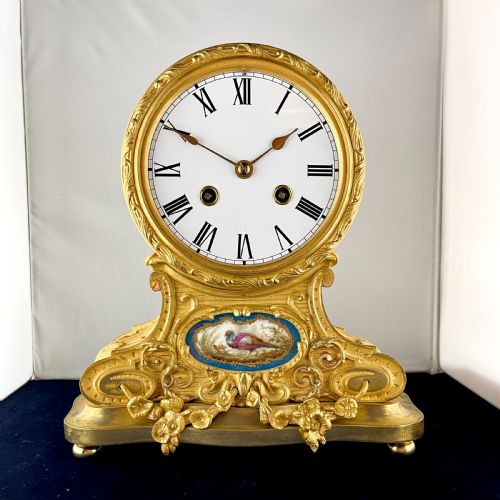
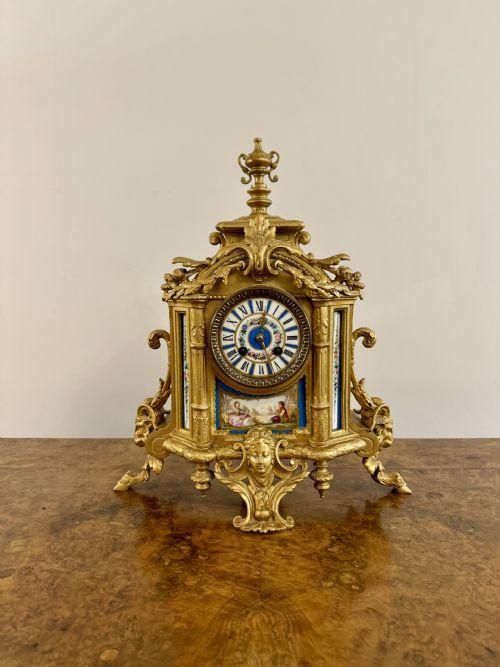
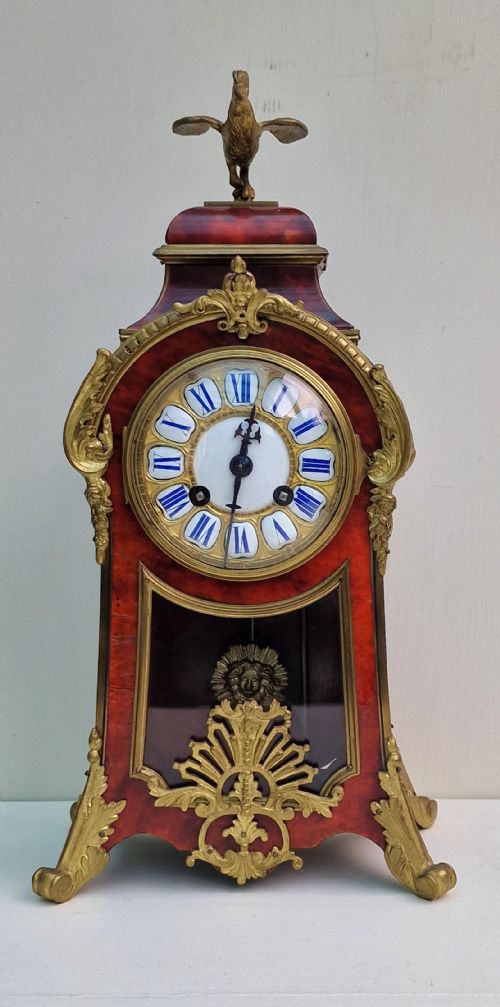
Buyers will encounter various formats on this page, ranging from grand gilt bronze mantel pieces with porcelain panels to miniature bedside clocks and tortoiseshell or Boulle work designs. While some adopt drumhead shapes or four-glass housings, the core of the selection remains deeply tied to French rococo and Victorian interpretations.
Materials and construction
Makers utilised cast metals such as ormolu, gilt bronze, and brass to form the intricate, flowing frames characteristic of the style. These metallic elements are frequently combined with painted porcelain, Sèvres panels, or enamel dials featuring delicate numerals.
Cabinetwork techniques also play a significant role, with specialised housing constructed using tortoiseshell or Boulle marquetry for specific boudoir and mantel pieces. The physical structure relies on substantial metal casting, meticulous gilding, and the integration of glass panels or marble stands.
Rococo Revival Desk Clock Retail Price Guide 2026
Typical asking prices for rococo revival desk clock among the pieces listed under this phrase on Sellingantiques today, from the lower quarter to the upper quarter. They describe what is for sale here now, not the wider market.
The evidence shows French influence dominating this selection, alongside occasional English carriage and longcase clocks.
Distinctions in quality
Quality in a rococo revival desk clock rests upon the crispness of the bronze or ormolu casting and the depth of the gilding. Superior examples exhibit sharply defined asymmetrical scrolls and foliage without the softening of detail often found in lesser recast items.
The integration of secondary materials like hand-painted porcelain panels or genuine enamel dials further separates standard production from finer workshop pieces. Maker attribution, movement complexity such as twin fusee mechanisms, and substantial overall weight also mark the upper tier of the range.
Achille Brocot·Leon Message·Jollet et Cie·William Payne·P.H Mourey
The Rococo Revival Desk Clock Glossary
- Ormolu
- Gilded bronze produced by applying a mixture of gold and mercury to a bronze base, creating a rich golden surface finish. This technique was widely employed on nineteenth-century French clock cases.
- Boulle
- An elaborate form of marquetry utilising tortoiseshell and brass inlay, named after the famous cabinetmaker André-Charles Boulle. Pieces featuring this technique offer a striking dark and metallic contrast.
- Twin Fusee
- A clock movement mechanism utilising a cone-shaped pulley and a chain or cord to equalise the force of the mainspring as it unwinds. This mechanical addition helps maintain more accurate timekeeping.
- Drumhead
- A circular clock case mounted on a base or plinth, resembling the shape of a drum. It is a common format found among nineteenth-century mantel timepieces.
- Sèvres
- Porcelain produced by the historic French royal manufactory, known for distinctive decorative panels and rich background colours. These panels are frequently inset into the front or sides of ornate clock cases.
Rococo Revival Desk Clock: Frequently Asked Questions
What is a rococo revival desk clock?
It is a decorative nineteenth-century timepiece influenced by earlier French design periods, characterised by flowing organic curves, asymmetrical scrollwork, and rich metallic finishes.
These objects were designed to serve as both functional timekeepers and ornate decorative centrepieces for mantelpieces, desks, and boudoirs.
How do I tell different periods apart?
Distinguishing between periods involves looking at the combination of materials, case construction, and specific decorative motifs. Pieces from the 1860s often display robust ormolu casting, whereas later Edwardian examples can include miniature formats or refined brass work.
Reference to specific revival styles, such as Louis XV or Louis XVI emulation, provides further clues regarding the intended historical inspiration of the maker.
Where were these clocks originally displayed?
These timepieces were placed in prominent public and private rooms, including drawing rooms, salons, and formal mantelpieces where guests would admire them. Smaller boudoir and bedside versions were intended for private chambers.
Their substantial weight and decorative presence made them permanent fixtures on desks, marble stands, and bracket mountings.
How do I live with and care for one?
Living with these clocks requires placing them on stable, level surfaces away from direct sunlight and damp environments to protect delicate gilding and internal mechanics. Regular professional servicing keeps the mechanical movements running accurately.
Dusting should be done gently with a dry, soft cloth, avoiding harsh cleaning agents that might damage ormolu or enamel surfaces.