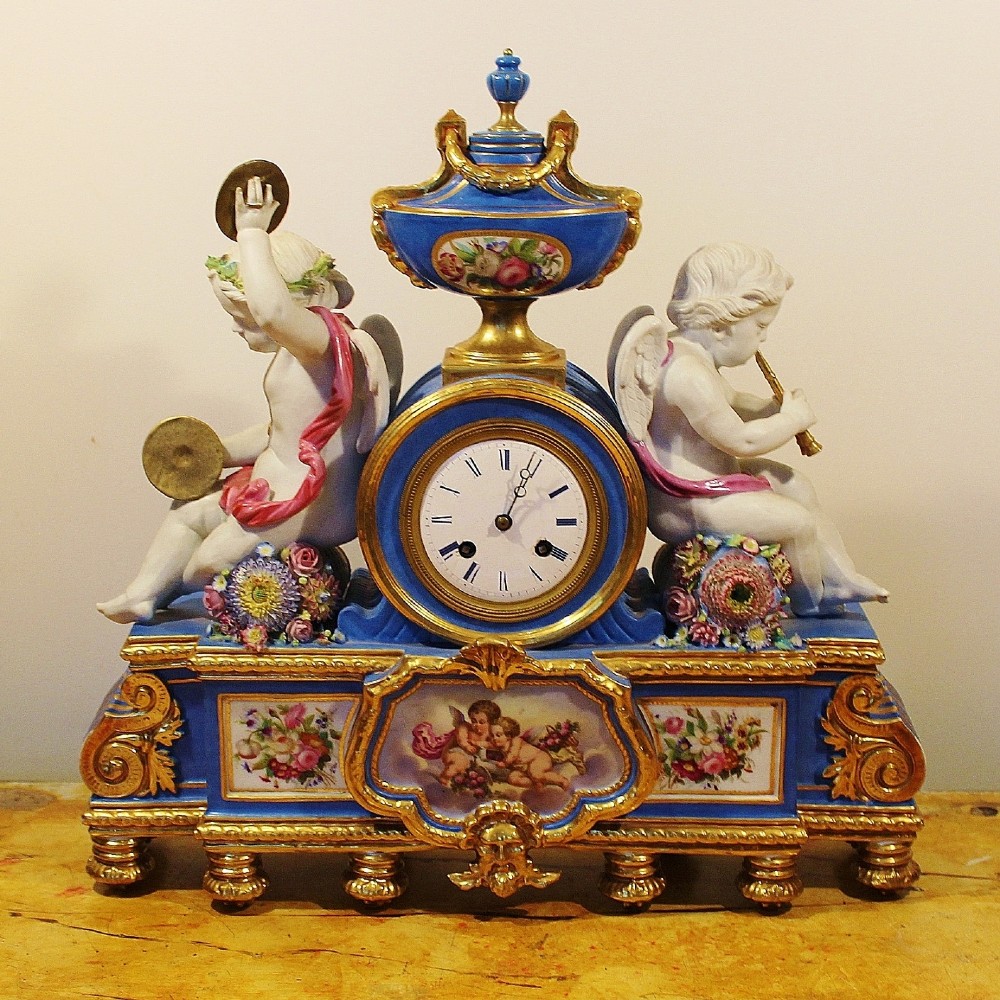
Carlton House Antiques has dated this Sevres Porcelain Mantel Clock to the 19th Century.
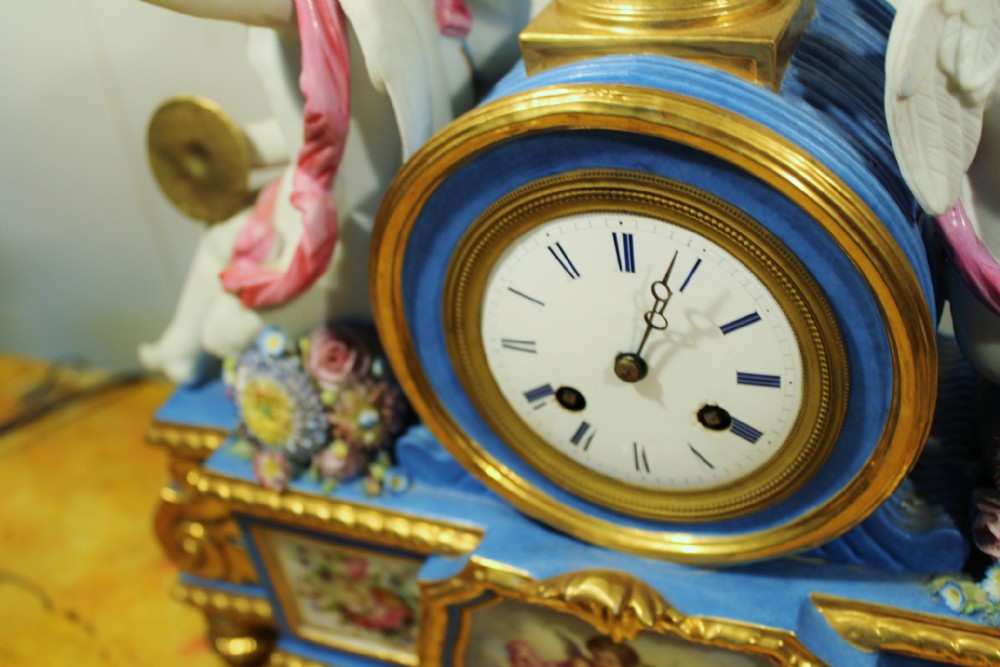
gilded porcelain supports, a central cartouche depicting
two winged putti surrounded by flowers as they lovingly
feed white doves, below which a gilt mask reminds us
of times past and present, flanked by floral panels and
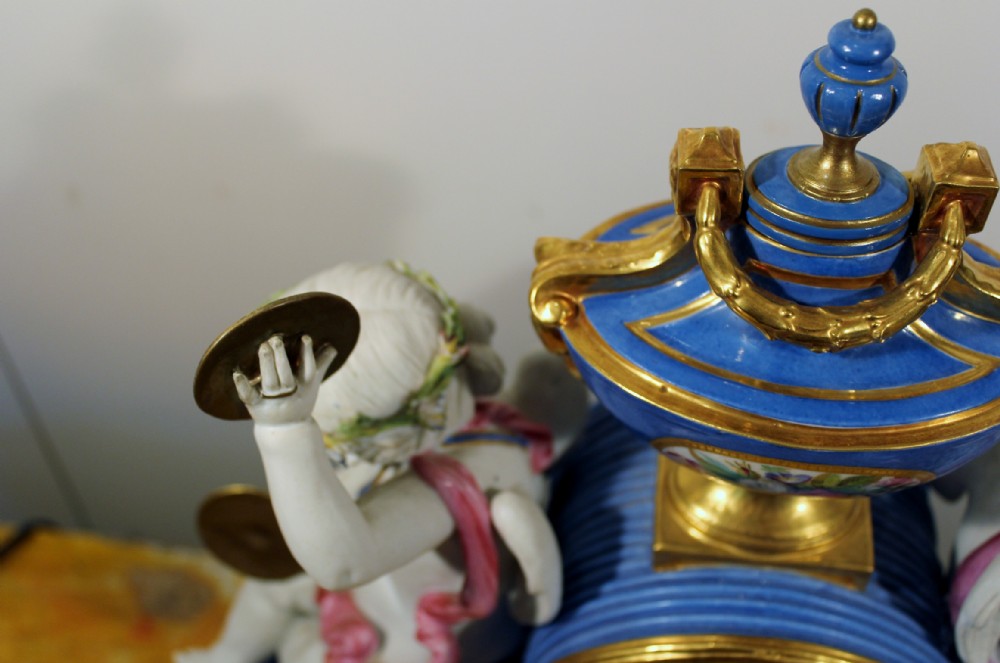
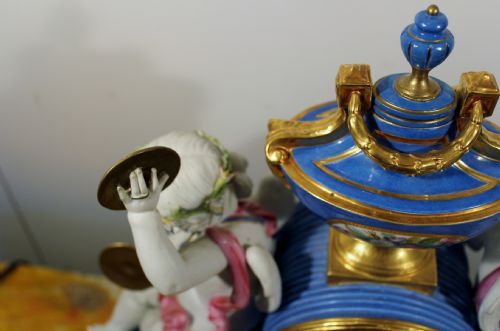
terminating in gilt S scrolls. Above, a pair of pure white
winged putti sit on floral banquettes, whilst playing
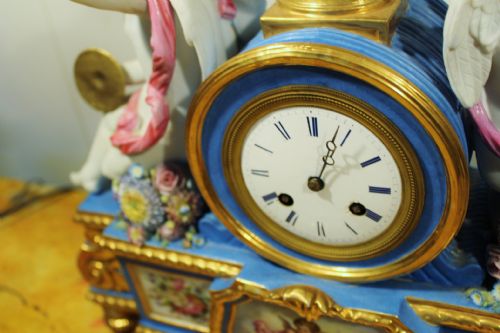
cymbals and flute they support the circular clock. It is
no accident that this is the third reference to the wings
of time; the clock is surmounted by a floral swag
draped urn and completed with a slender finial. The
white clock face with Roman numerals.
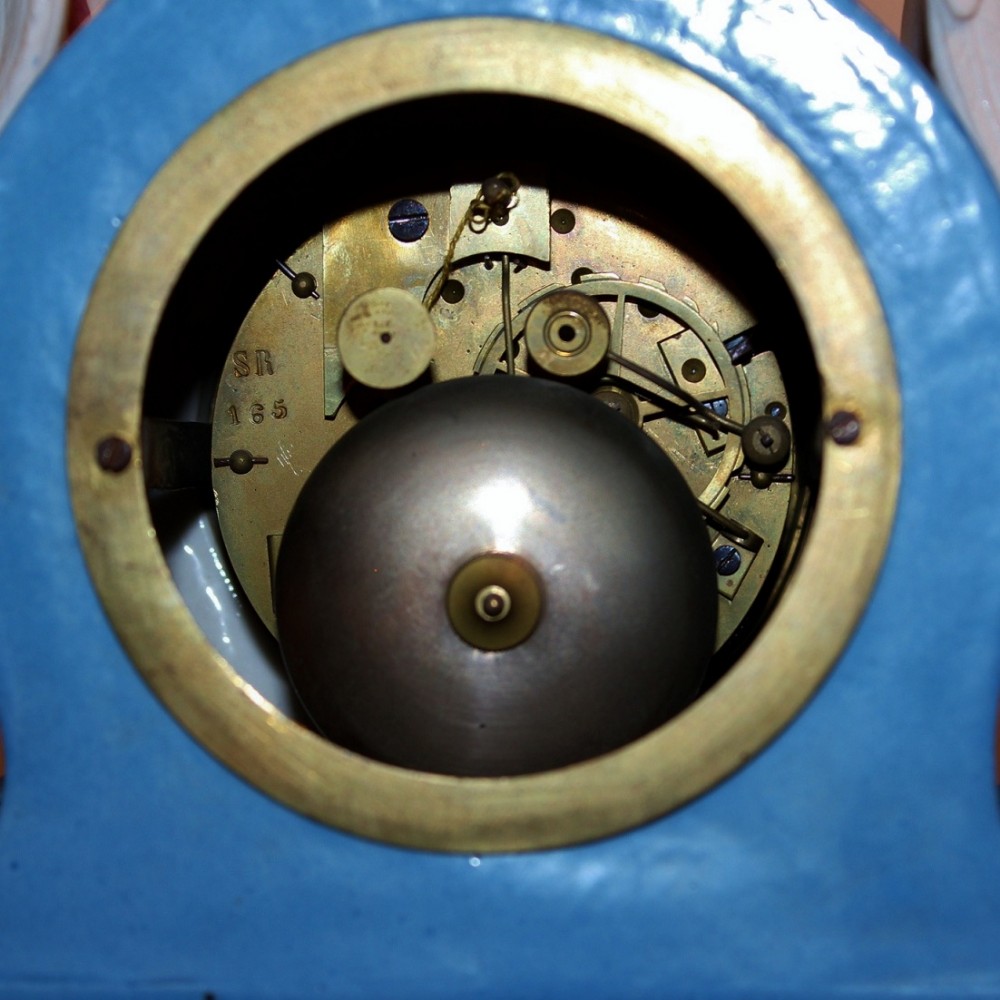
The movement is stamped JAPY FRERES MEDAILE
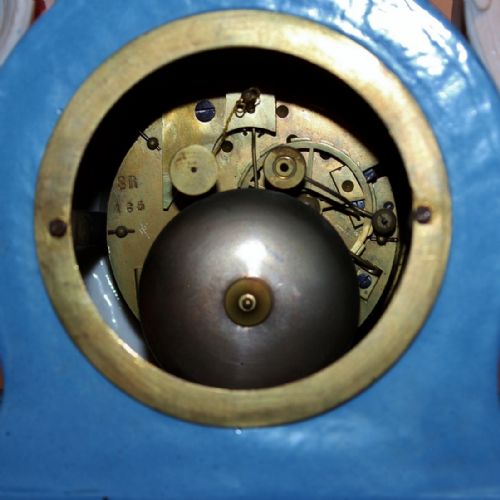
DOR with the letters S.R. followed by the number 165.
This French Ebauche movement was developed by the
three sons of Japy after they took over the clock
making empire from their father in 1806.
The principal was that the parts were made by machine
but unfinished, the clockmaker would finish making the
clock movements entirely by hand, fitting the gears
together between the plates, the escapement, the
pendulum, the dial etc and finally the hands, so as to
complete the clock, the completed hand finished and
hand assembled clock was then taken over by other
artists in porcelain, painting and gilding, the result was
the award of gold medals in various exhibitions. 1851
The Great Exhibition of London, 1853 The New York
Exhibition to name but two.
L’amour fait passer le temps - Love helps us to pass the time...
More than a mere timepiece, an ornament to decorate and compliment the grandest of salons.
In good working order. Chimes on the half hour and on the hour.
Carlton House Antiques has dated this Sevres Porcelain Mantel Clock to the 19th Century.
You can view the stock and full dealer information on the Carlton House Antiques Profile Page
Sevres Clock