



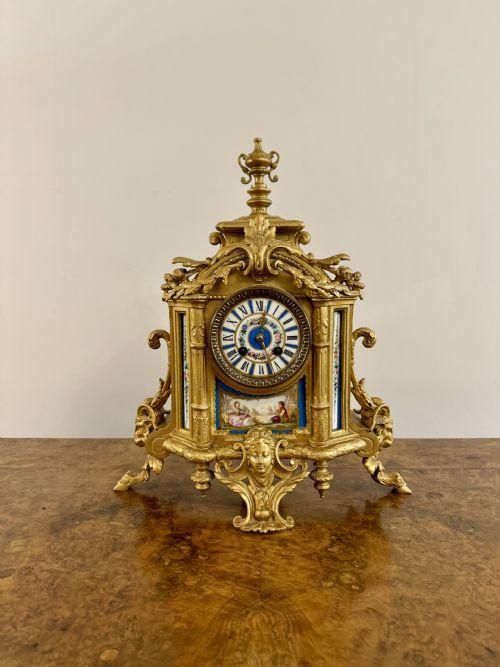


Ornate Mantel Clock
An ornate mantel clock sits at the heart of a room, bringing together heavy bronze, polished marble and precise nineteenth-century mechanics.
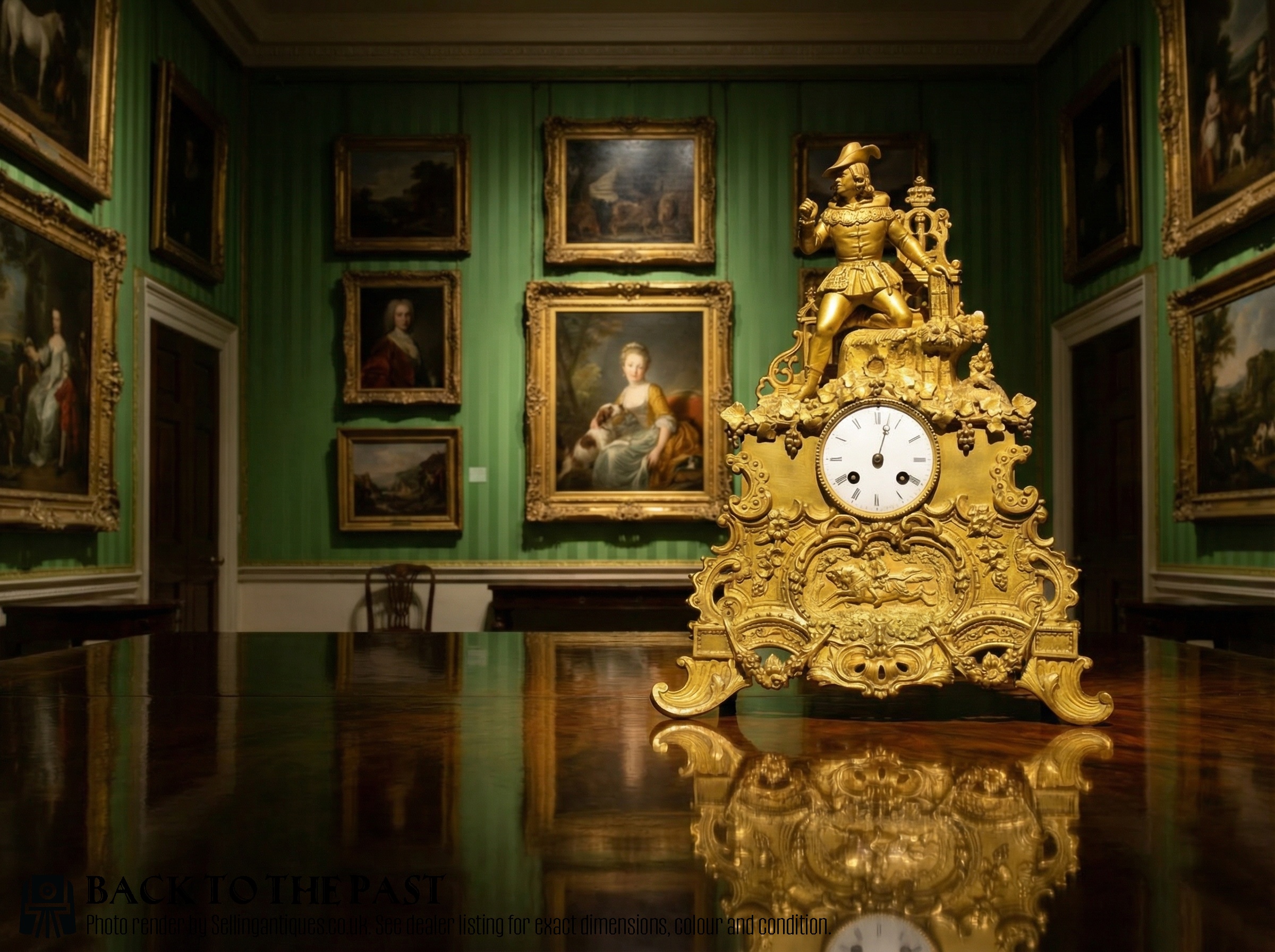
Ornate Mantel Clock
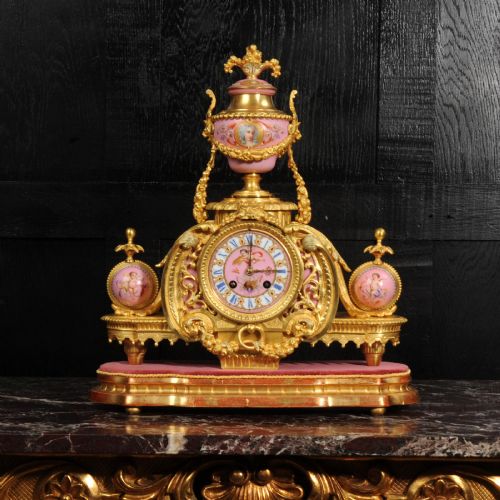
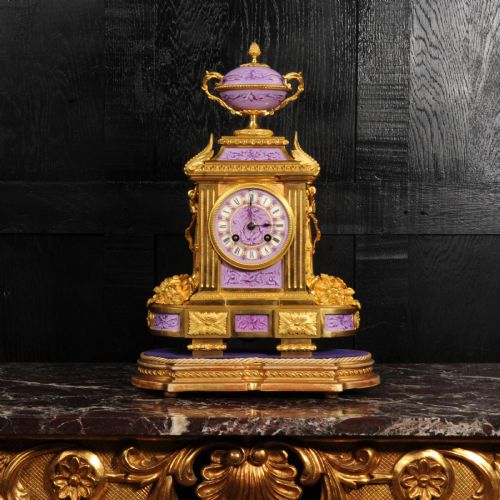
When you search for an ornate mantel clock, you encounter nineteenth-century timepieces originating primarily from France and Britain. The selection spans the Victorian period alongside decades such as the eighteen-eighties and eighteen-nineties, capturing elaborate historical revivals.
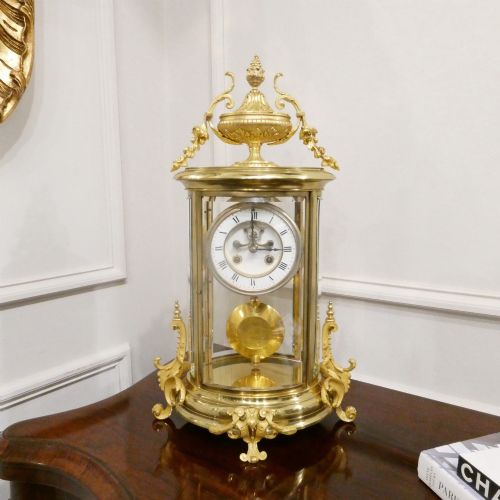
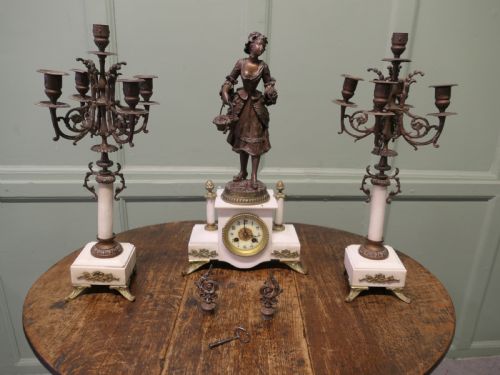
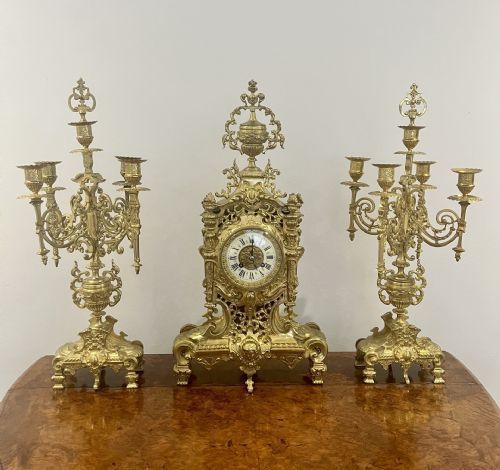
The dominant forms include substantial mantel clocks, table clocks, and multi-piece clock garniture sets comprising matching side ornaments. You also encounter four-glass clocks and portable carriage clocks housed in brass cases.
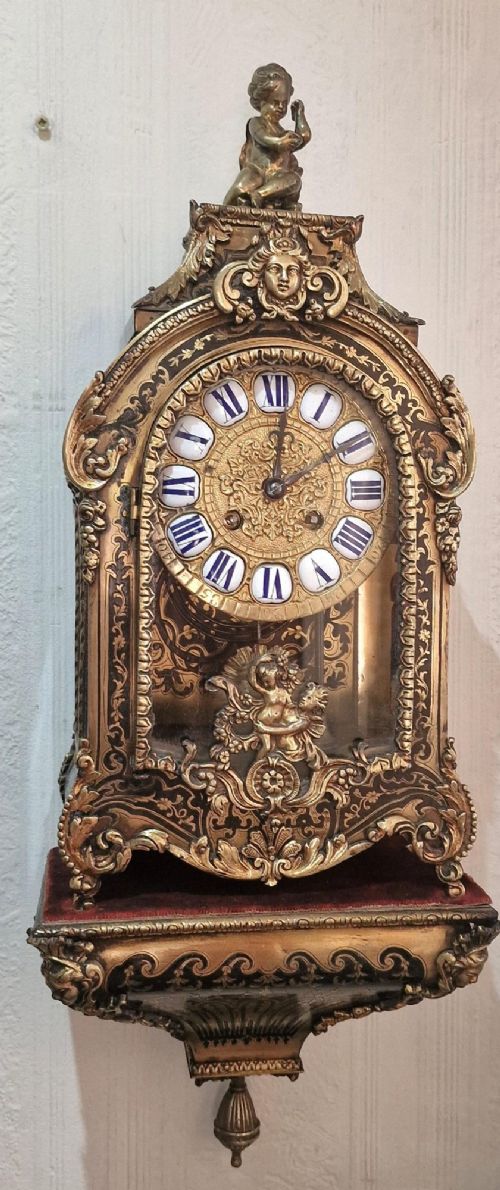
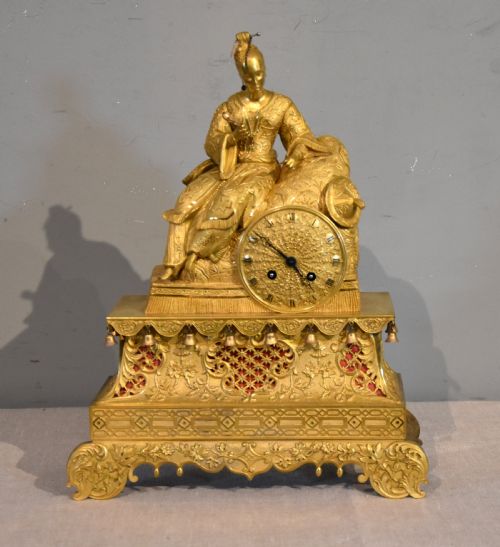
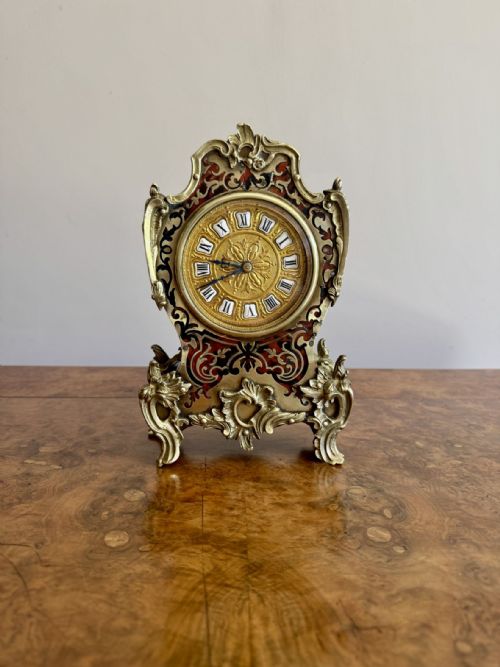
Most examples lean heavily into French Rococo Revival and Louis XV design idioms, utilising elaborate scrollwork, architectural portico frames, and figural sculptures. These objects served both as functional timekeepers and as prominent status symbols for nineteenth-century interiors.

How they were made
The construction of these clocks relies heavily on cast metals such as ormolu, gilt bronze, and solid brass, often finished with detailed chasing and gilding. Heavy stone elements like red marble, slate, and white marble provide stable architectural bases for the metalwork.
Decorative surfaces frequently incorporate hand-painted Sèvres porcelain panels, intricate champlevé enamel work, and Boulle tortoise shell inlay with brass marquetry. Glass panels are integrated into four-glass models to expose the intricate mechanical movements within.
French Rococo Revival and Louis XV styles dominate the decorative metalwork.
What varies in quality
Quality in these clocks rests upon the crispness of the metal casting and the depth of the subsequent chasing. Superior examples display sharply defined scrollwork, smooth gilding, and substantial bronze or marble weight rather than light alloy substitutes.
The distinction between standard production and top-tier work also lies in the movement. Signed mechanisms from notable nineteenth-century French and English clockmakers demonstrate finer finishing, superior gear train execution, and integrated complications such as grand sonnerie striking.
Achille Brocot·Samuel Marti·Japy Freres·William Payne·John Barwise of London
The Ornate Mantel Clock Glossary
- Ormolu
- Gilded bronze, produced by applying a mercury and gold amalgam to a bronze base and heating it. This technique creates a rich, durable golden surface seen on nineteenth-century French clock cases.
- Garniture
- A set of matching decorative objects designed to be displayed together on a mantelpiece. In clock sets, this typically includes the central clock flanked by matching urns, vases, or candelabra.
- Champlevé
- An enamelling technique where troughs or cells are hollowed out of a metal surface and filled with vitreous enamel powder before firing. The resulting coloured patterns decorate brass and bronze clock cases.
- Fusee
- A conical pulley used in mechanical clocks to maintain an even pull on the gear train as the mainspring unwinds. This mechanism improves timekeeping accuracy across the power reserve.
- Grand Sonnerie
- A complex clock striking train that chimes both the hours and the quarters automatically on every quarter hour. It represents a higher grade of horological craftsmanship found in select carriage and mantel clocks.
Ornate Mantel Clock: Frequently Asked Questions
What is a clock garniture?
A clock garniture is a matched decorative set designed for display on a mantelpiece, consisting of a central clock accompanied by side pieces such as ornamental urns or vases.
These sets were produced as unified decorative schemes, sharing identical materials like ormolu, porcelain, or marble to create a balanced presentation across a fireplace.
How do four glass clocks work?
Four glass clocks feature glass panels on the front, back, and both sides, allowing an unobstructed view of the mechanical movement and swinging pendulum from all angles.
This transparent housing style gained popularity during the nineteenth century, utilising brass or gilt bronze frames to hold the glass panes securely.
Where should I place a mantel clock?
Mantel clocks are traditionally placed on the mantelpiece above a fireplace, though they sit equally well on side tables, bracket shelves, or desks.
When positioning your clock, ensure the surface is level to keep the pendulum swinging evenly and maintain accurate timekeeping.
How do I identify a Victorian clock?
Victorian clocks are identified through their period styling, materials, and mechanical construction dating between eighteen-thirty-seven and nineteen-one. Many feature heavy brass, bronze, marble cases, or champlevé enamel work.
Reviewing the movement inside often reveals maker signatures or stamps corresponding to nineteenth-century French and British production centres.