




Tortoiseshell Bracket Clock
A tortoiseshell bracket clock brings rich pattern and warm metallic contrast into a room, uniting functional timekeeping with decorative luxury.

What these tortoiseshell bracket clocks are
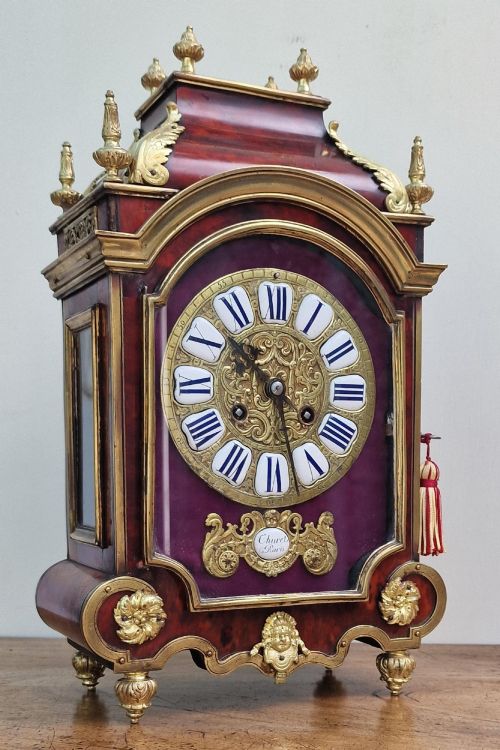
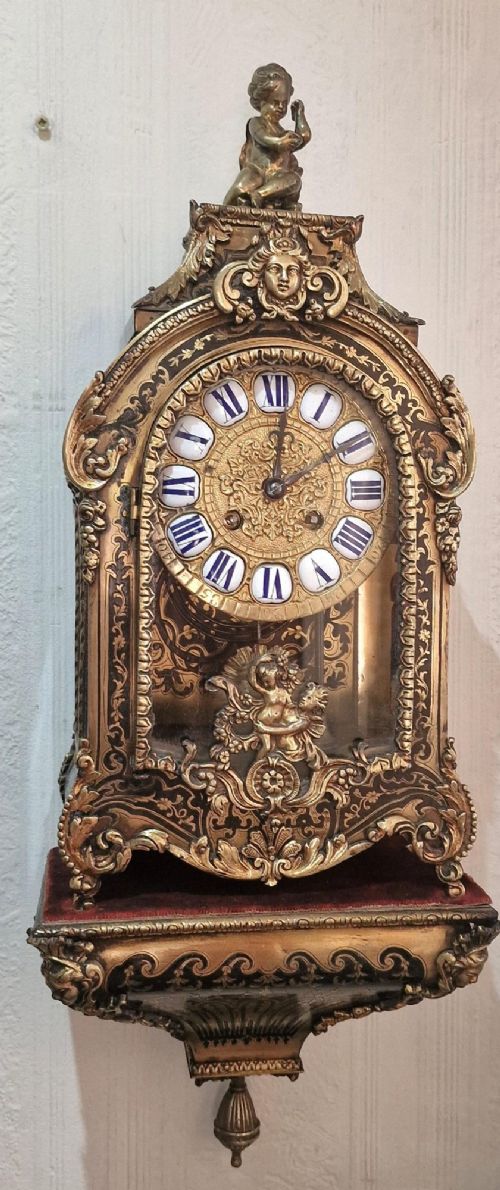
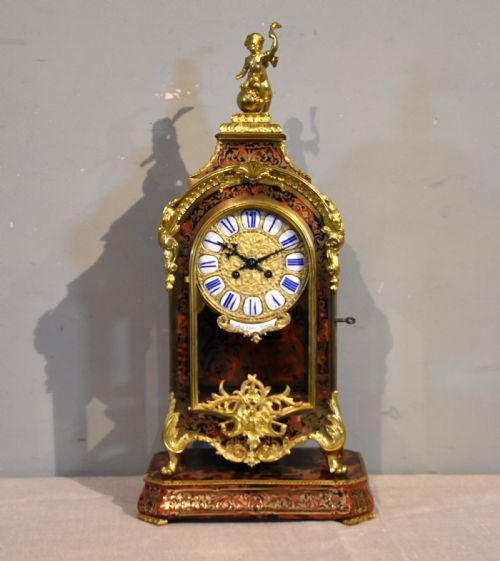
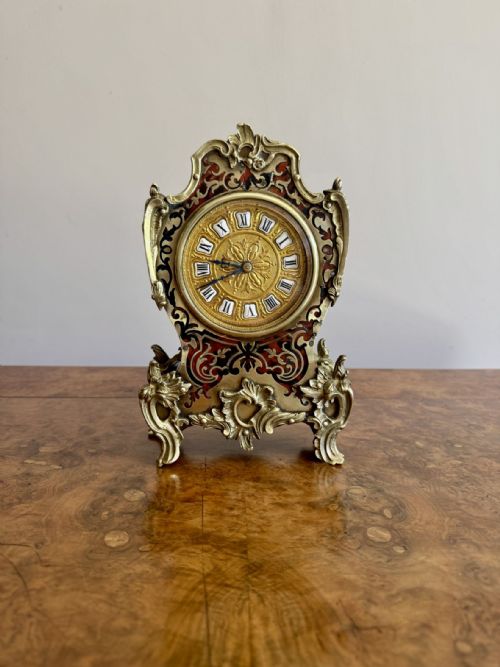
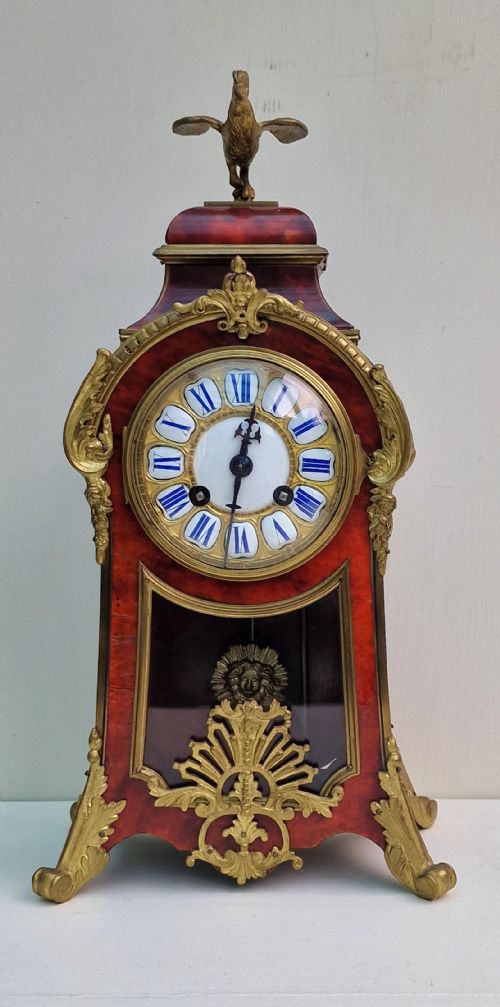
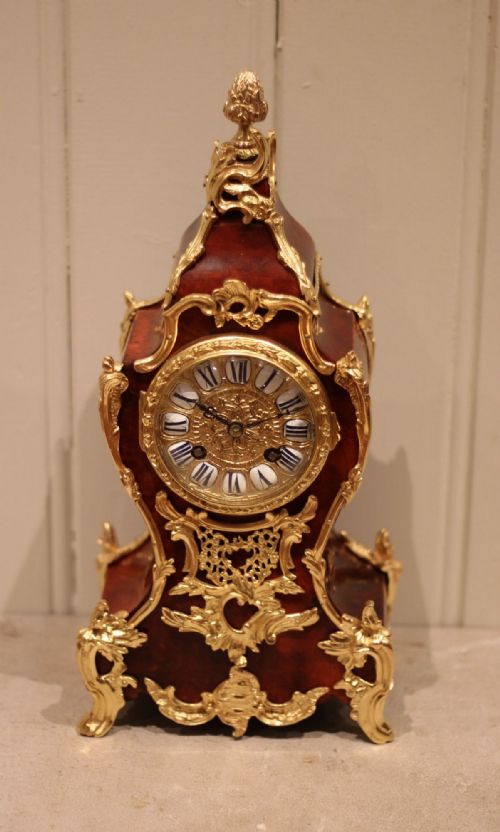
A tortoiseshell bracket clock unites organic mottled patterning with bright metal mounts to form a striking ornamental object. When you search for tortoiseshell bracket clock, you encounter pieces that range from compact mantel designs to grand wall-mounted arrangements complete with matching brackets.
The selections span the nineteenth century, drawing heavily on French Rococo Revival, Louis XIV, and Louis XV aesthetics alongside Georgian sensibilities. Many pieces take the form of mantel clocks or waisted silhouettes, originating primarily from Parisian workshops.
Makers and ateliers of the period utilised distinctive red tortoiseshell and standard tortoiseshell veneers over wooden carcasses. These housing structures often incorporate brass inlay and opulent metalwork to create elaborate visual depth.
How they were made
Craftsmen applied thin veneers of tortoiseshell - including striking red variants - over timber carcasses using traditional cabinetmaking techniques. These surfaces were frequently embellished with Boulle marquetry, integrating finely cut brass alongside the shell material.
Moulders and metalworkers cast ormolu, gilt bronze, and gilt metal mounts to frame the dial and accent the corners, feet, and crests. Glass covers protected delicate enamel dials while mechanical movements with quarter striking capabilities were fitted internally.
Retail Price Guide 2026
Typical UK retail prices for tortoiseshell bracket clock, calculated from the Sellingantiques database of over a million retail prices indexed since 2003. This retail price guide relies exclusively on Sellingantiques data; no external sources or auction records are used, so the figures do not describe the wider market.
Listings feature pieces spanning the nineteenth century, including Regency and 1900 dates alongside French Rococo Revival styles.
What varies in quality
The distinction between tiers rests upon the precision of the Boulle marquetry and the crispness of the cast ormolu or gilt bronze mounts. Finer examples display deeply chased metal ornamentation and seamless integration of shell veneers across complex waisted or bracketed forms.
Superior pieces maintain original matching wall brackets and retain the structural integrity of their tortoiseshell panels over centuries. Movement sophistication also dictates standing, particularly those featuring quarter striking complications alongside clean enamel dials.
Thuret, Paris·Vincenti and Cie
The Tortoiseshell Bracket Clock Glossary
- Boulle marquetry
- A decorative technique of inlaying brass and tortoiseshell together in contrasting patterns, named after cabinetmaker André-Charles Boulle. This method defines many French mantel clocks.
- Ormolu
- Gilded bronze mounts applied to furniture and clock cases for ornamental enrichment. The process involves creating a mercury-gilt finish on bronze.
- Bracket clock
- A portable clock originally designed to sit on a wall bracket or a furniture surface. Many examples in this category retain their matching hanging brackets.
- Quarter striking
- A movement mechanism that strikes the bell or gongs at each quarter hour as well as the full hour. This complication indicates a higher grade of horology.
- Waisted mantel clock
- A clock case featuring a narrowed central section that tapers inward before flaring at the base. This silhouette is typical of nineteenth-century decorative styling.
Frequently Asked Questions
What is a tortoiseshell bracket clock?
A tortoiseshell bracket clock is a decorative timepiece encased in veneered shell and brass inlay, often accompanied by a matching wall shelf. These items function as both horological instruments and sculptural ornaments.
Originating largely from nineteenth-century French traditions, they showcase ornate cast metal mounts and visible enamel dials. Their designs draw heavily upon historical revival styles.
Where should I place one?
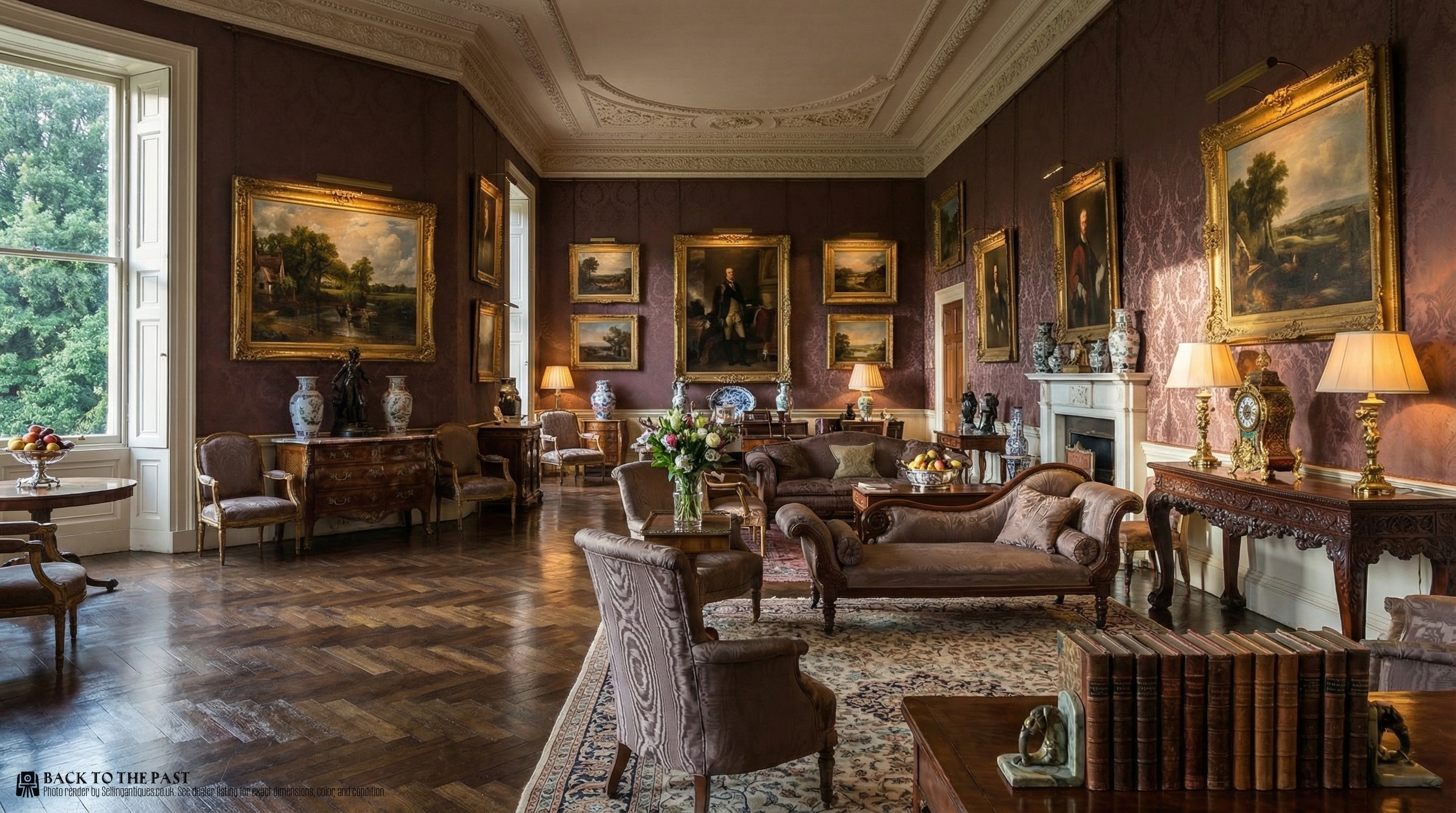
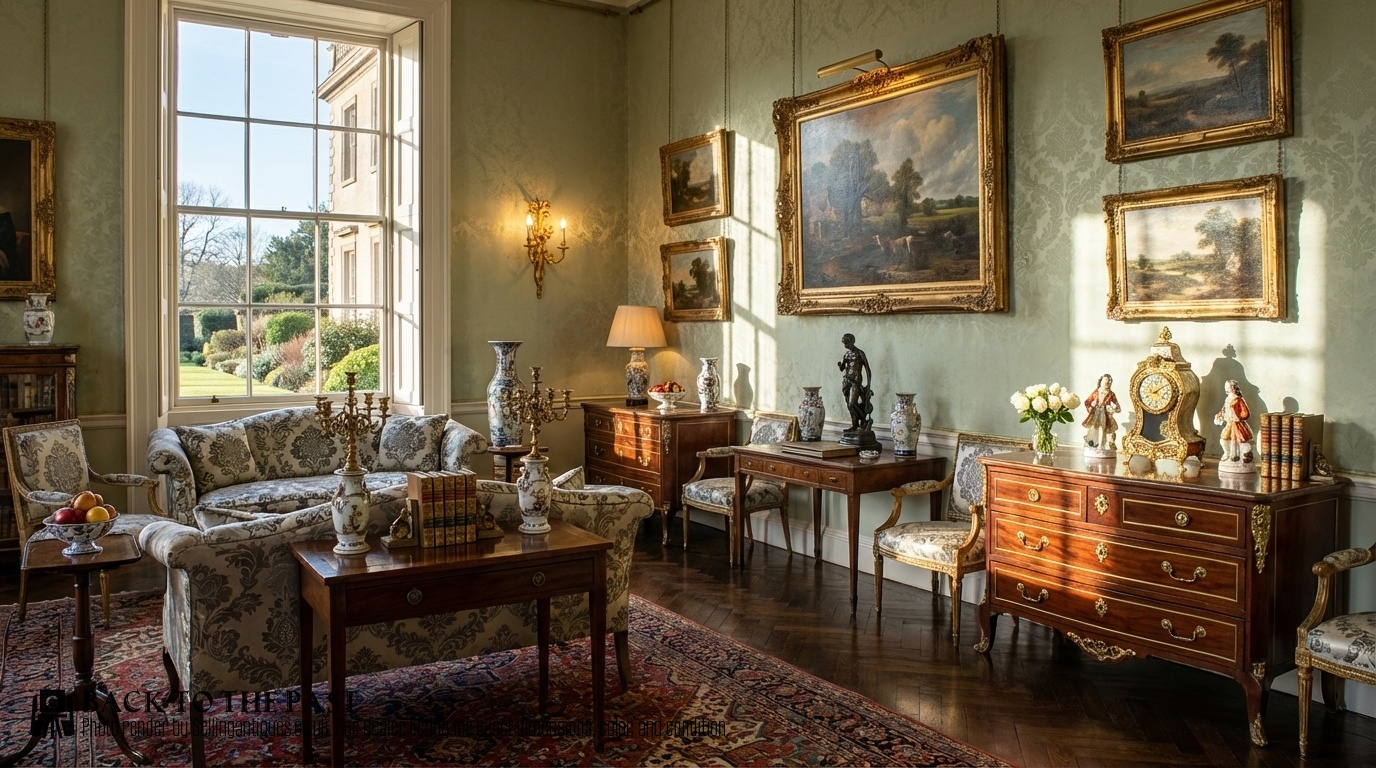
These clocks suit prominent mantelpieces, sturdy side tables, or dedicated wall brackets where their reflective surfaces catch the light. Their rich materials demand a secure, level surface away from direct heat sources.
Pairing a clock with its matching wall bracket creates an integrated architectural display. Ensure the chosen location provides adequate clearance for winding and setting the movement.
How do I identify the period?
Period identification relies on examining the specific revival style, such as Louis XV or Rococo Revival, combined with material characteristics. Nineteenth-century examples often employ machine-sawn veneers and specific brass inlay patterns.
Maker signatures on movements or dials provide definitive chronological markers. The complexity of the ormolu mounts and dial construction also points towards specific decades.
Are these clocks suitable for daily use?
While fully functional mechanical objects, antique clocks require careful handling, regular professional servicing, and precise setup. They serve best as occasional timepieces rather than primary household clocks.
Quarter striking mechanisms and delicate enamel faces need gentle winding routines. Maintaining a stable indoor environment protects the tortoiseshell veneer from humidity fluctuations.