




Pendule De Cheminee
Pendule de cheminee are French mantel clocks that anchor a room with classical bronze and marble presence.
Understanding Pendule De Cheminee
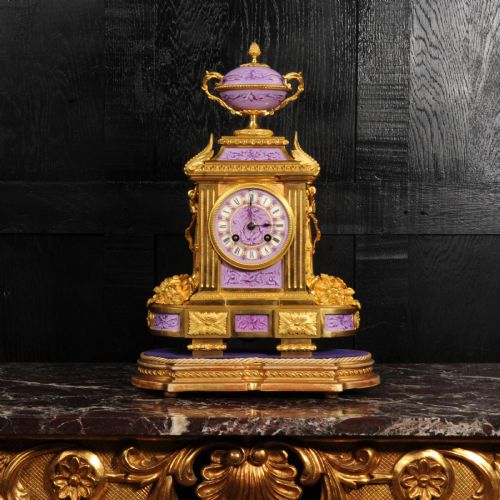
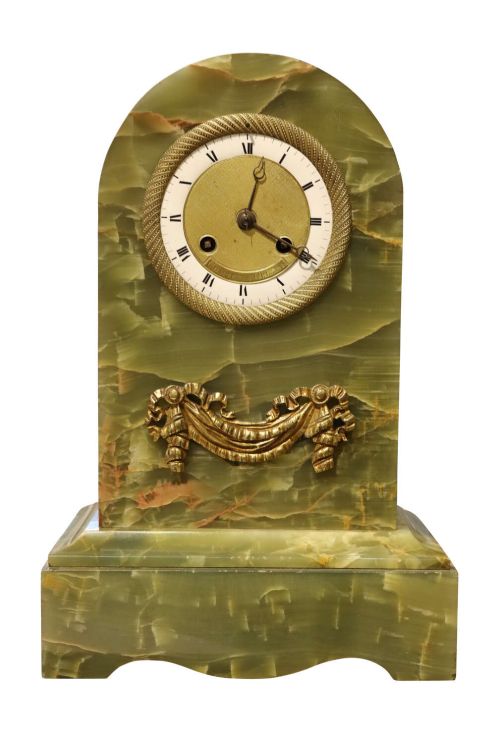
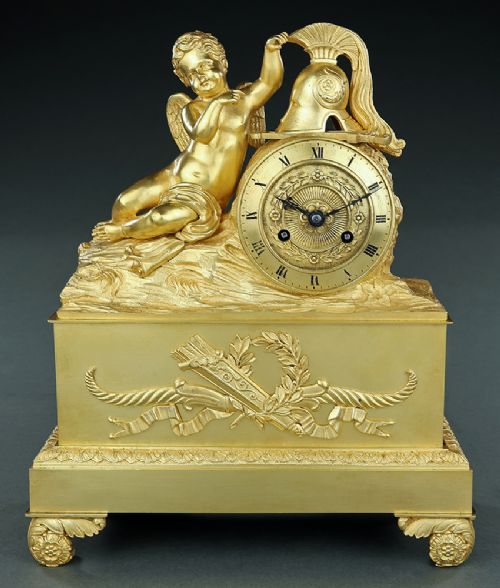
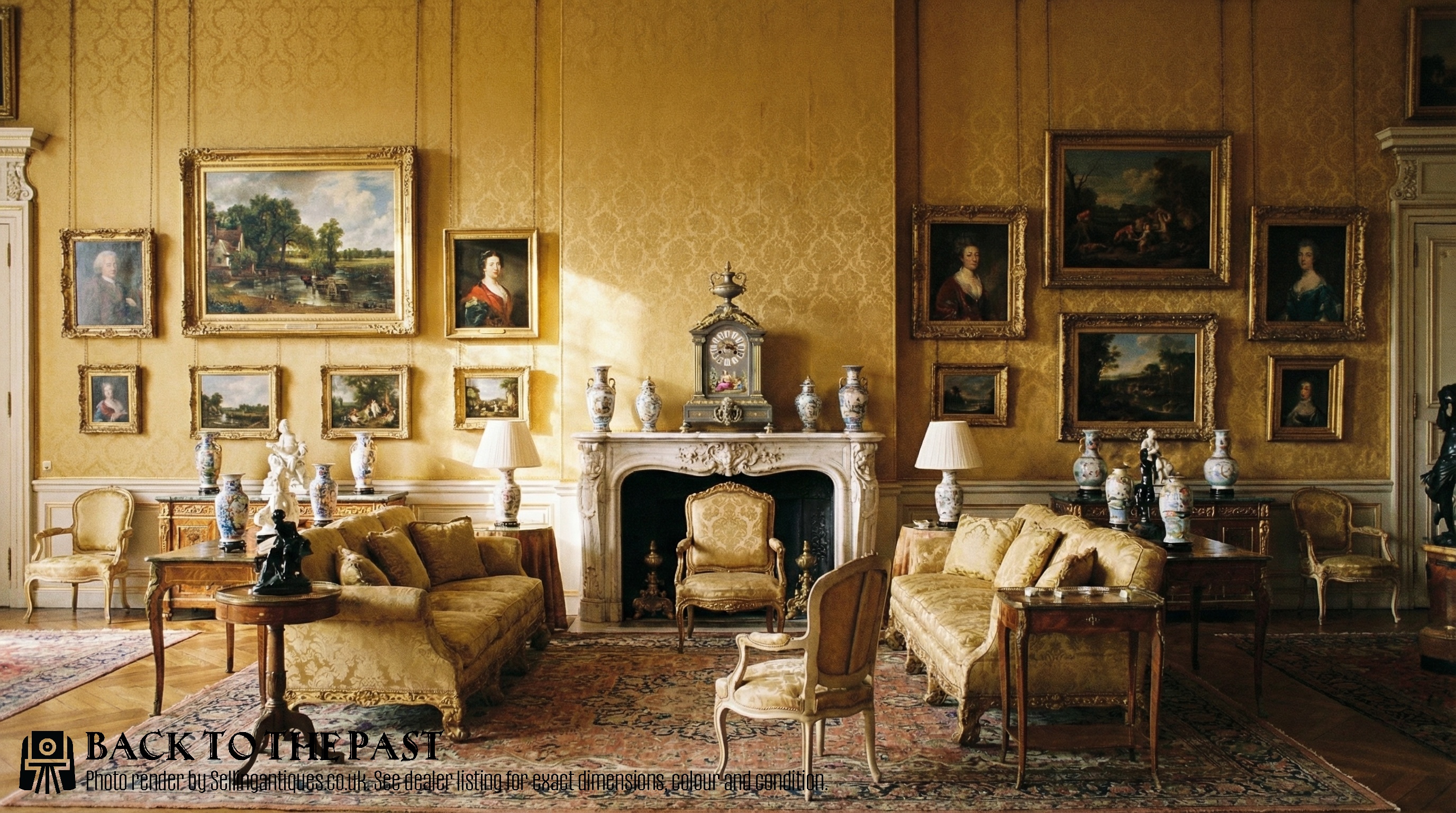
Pendule de cheminee are decorative French mantel clocks designed to sit centrally upon a fireplace surround or console table. When you search for this phrase, you encounter architectural timepieces housed in substantial marble and gilt bronze cases. The examples seen on this page primarily date from the nineteenth century, including Victorian periods and the year eighteen hundred and sixty.
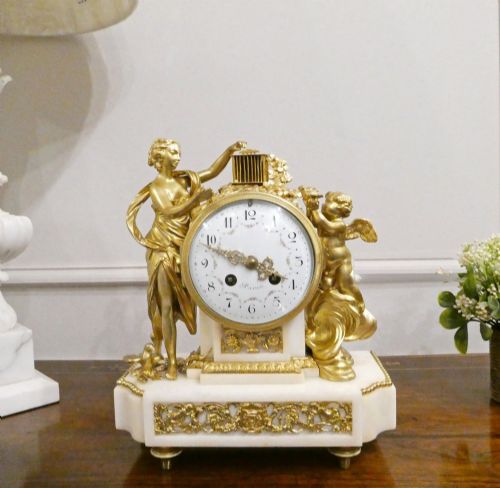
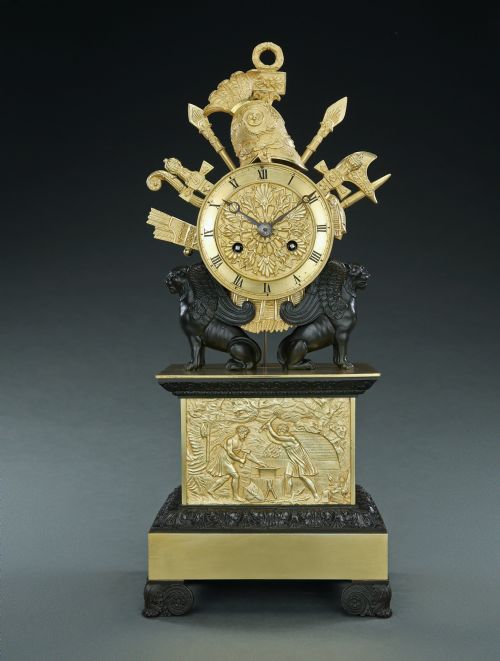
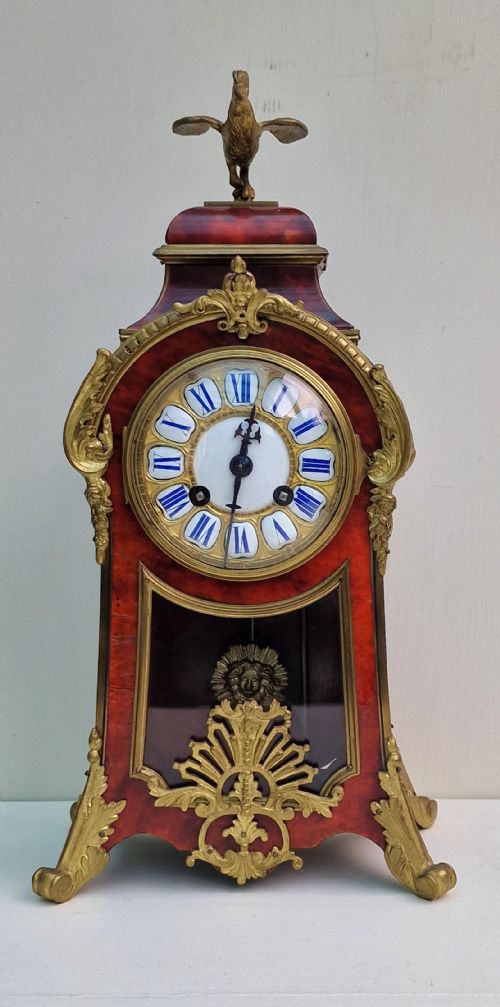
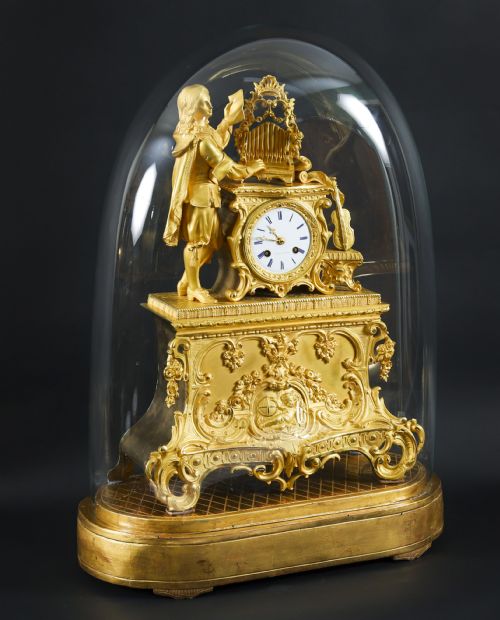
The dominant forms span several historicist revivals that look back to earlier French royal tastes. Louis XVI Revival, French Empire, and Rococo Revival styles recur across the inventory, alongside broader Victorian classifications. These pieces frequently integrate contrasting materials, pairing dark or white marble bodies with luminous metallic mounts.
Beyond telling the time, certain versions incorporate additional scientific or domestic instrumentation. A notable example from eighteen hundred and seventy combines the standard clock movement with an integrated thermometer. The resulting objects serve simultaneously as functional timekeepers and sculptural ornaments for the interior.
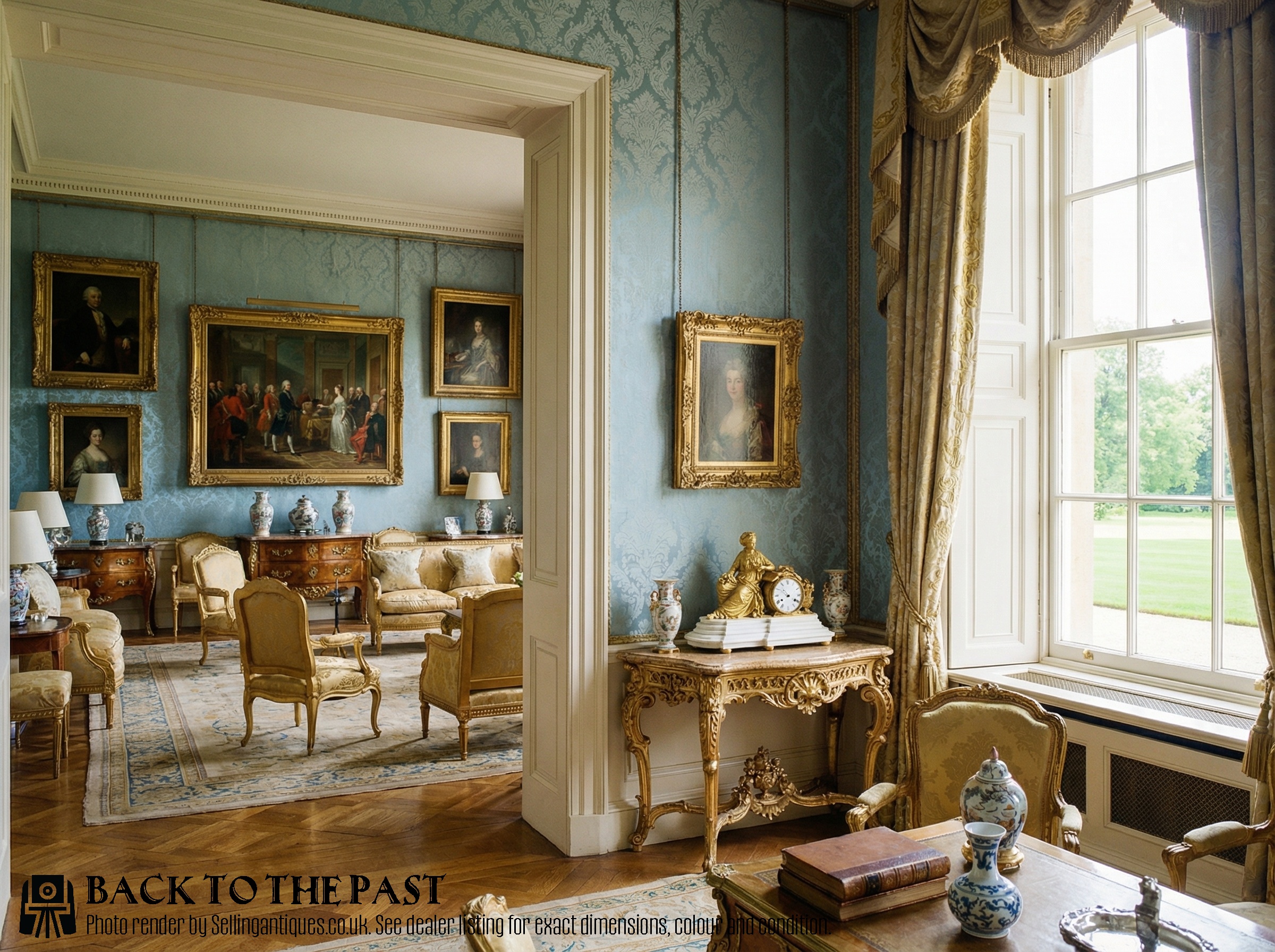
Construction and Materials
These clocks rely on heavy metallic casting and stone masonry combined into unified architectural compositions. Makers utilised gilt bronze and ormolu to create elaborate scrollwork, figures, and architectural framing, which they then mounted onto solid marble or alabaster bases. Subsidiary elements incorporate glass dials, enamel chapter rings, and occasional decorative veneers like tortoiseshell or brass.
The underlying movements are mechanical eight-day mechanisms housed within the stone and metal housings. Surface enrichment depends on the careful channelling, polishing, and fire-gilding of bronze elements alongside the precise turning and cutting of heavy marble slabs.
Retail Price Guide 2026
Typical UK retail prices for pendule de cheminee, calculated from the Sellingantiques database of over a million retail prices indexed since 2003. This retail price guide relies exclusively on Sellingantiques data; no external sources or auction records are used, so the figures do not describe the wider market.
The listings span Victorian and nineteenth-century production periods, featuring styles from French Empire to Rococo Revival.
Distinctions in Quality
Quality in these clocks rests upon the crispness of the bronze chasing and the density of the chosen stone. Superior examples display deeply sculpted mounts with sharp surface detailing, whereas lesser pieces exhibit softer, shallower casting work that loses definition in the foliage and figurative elements.
The integration between the movement and the architectural case further divides the standard of production. Finer clocks feature bespoke movements signed by established makers such as Charpentier Paris, fitted cleanly within substantial marble housings that demonstrate rigorous balance and substantial physical heft.
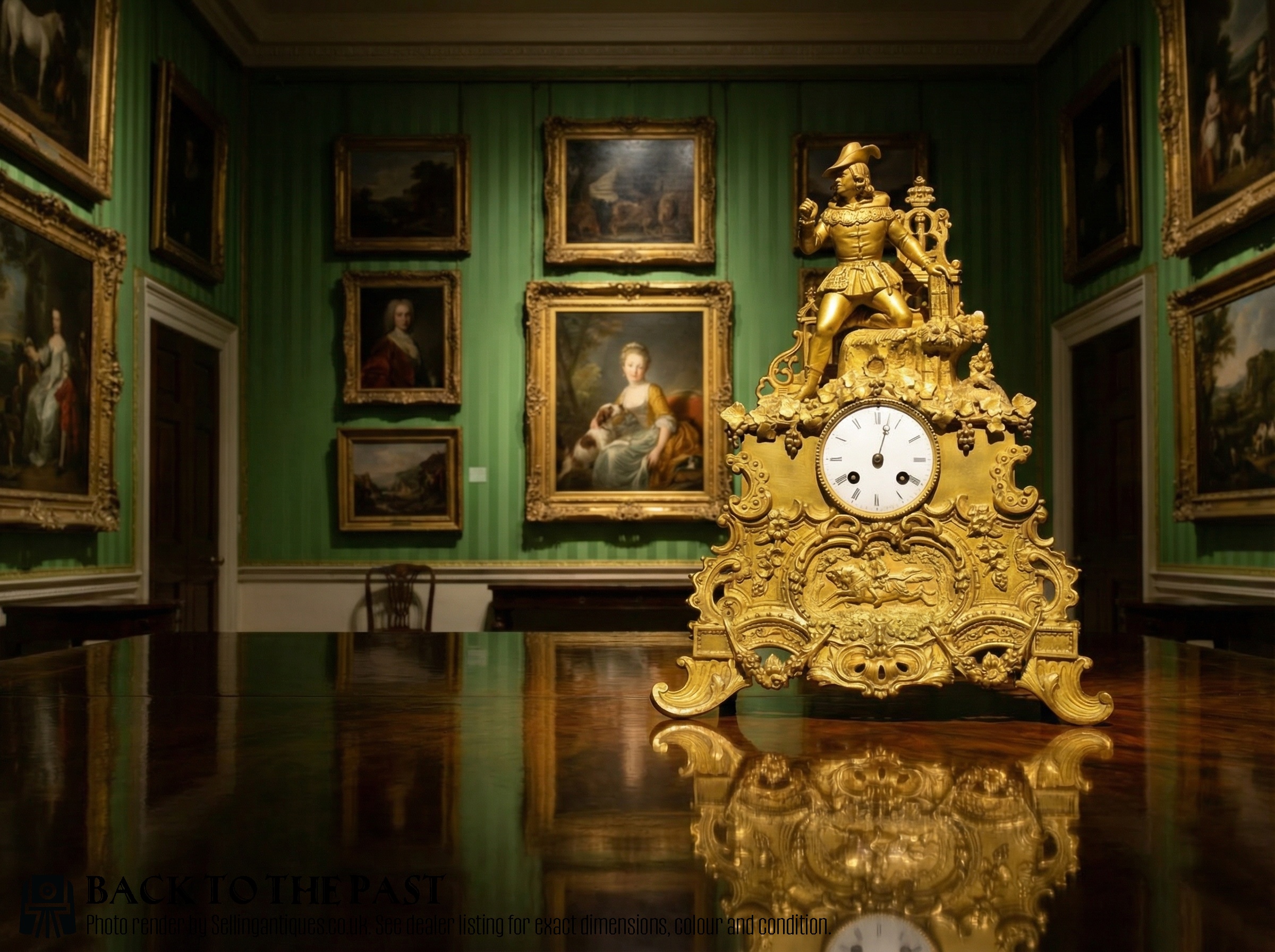
Charpentier Paris
The Pendule De Cheminee Glossary
- Ormolu
- Gilded bronze produced by applying a mercury and gold amalgam to a bronze base and firing it. This historic technique creates a durable, warm metallic lustre found on nineteenth-century French clock mounts.
- Enamel
- Vitrified glass fused to a metallic substrate under high heat. It forms the smooth, white chapter rings marked with numerals on the clock dial.
- Louis XVI Revival
- A nineteenth-century decorative style referencing the neoclassical symmetry, straight lines, and ancient Roman motifs of the late eighteenth-century French court. It dominates many of the architectural clock cases seen here.
- Rococo Revival
- An exuberant nineteenth-century design mode drawing on eighteenth-century French asymmetry, C-scrolls, and naturalistic shell motifs. It shapes the more fluid, organic clock cases in this selection.
Frequently Asked Questions
How do I wind an eight day clock?
An eight day mantel clock requires winding approximately once a week using a matching key inserted into the dial holes. Care must be taken not to overwind the mainspring.
Most nineteenth-century French movements regulate time via a pendulum that hangs inside the rear housing.
Where should I place a marble clock?
These heavy timepieces require a sturdy, level surface capable of supporting considerable weight from stone and metal. A mantelpiece or a strong console table provides an ideal setting.
Keep them away from direct heat sources and damp walls to protect the delicate metallic gilding and internal mechanics.
How do I distinguish Louis XVI from Rococo styles?
Louis XVI style clocks present straight architectural lines, classical symmetry, and restrained geometric mounts. They emphasise order and neoclassical proportion.
Rococo style clocks employ asymmetrical scrolls, curving foliage, and flowing organic forms that avoid strict bilateral symmetry.