


Antique Bronze Clock
An antique bronze clock brings heavy metal presence and precision mechanics together on a mantelpiece.
The Nature of an Antique Bronze Clock
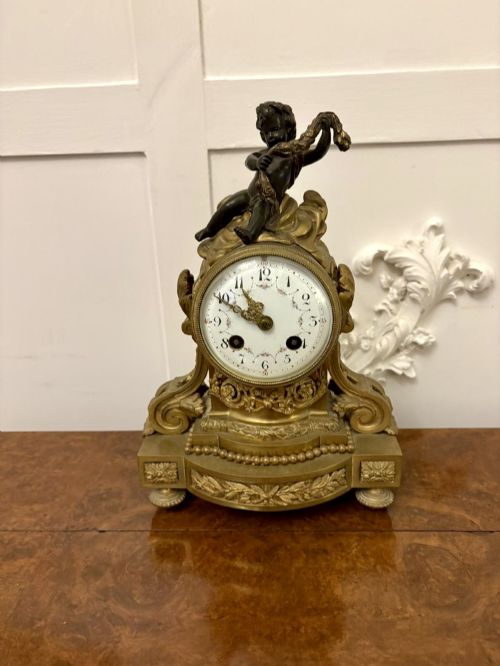
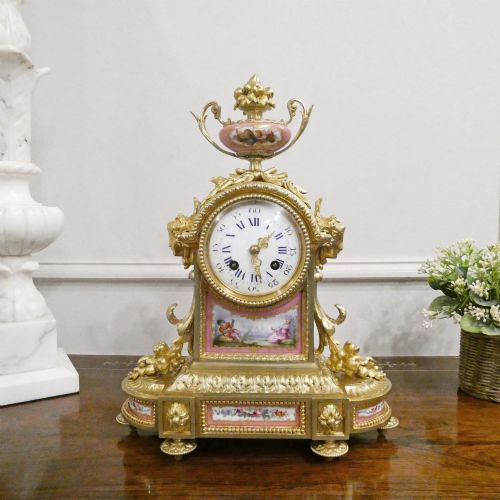
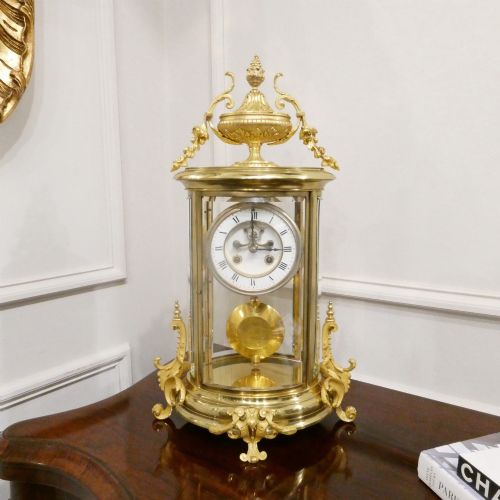
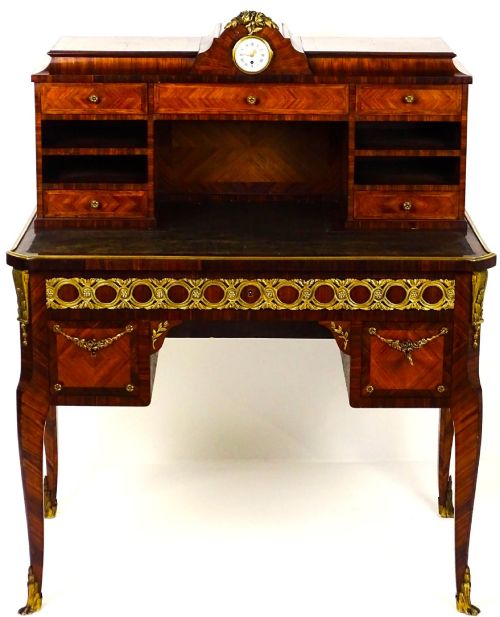
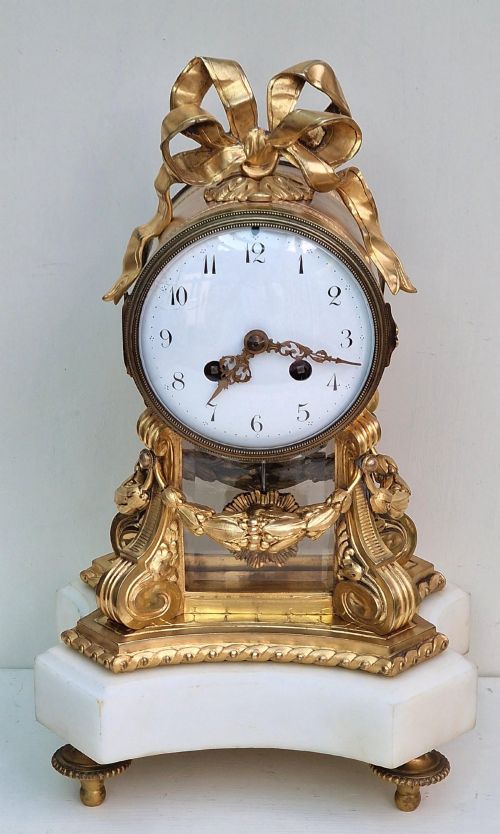
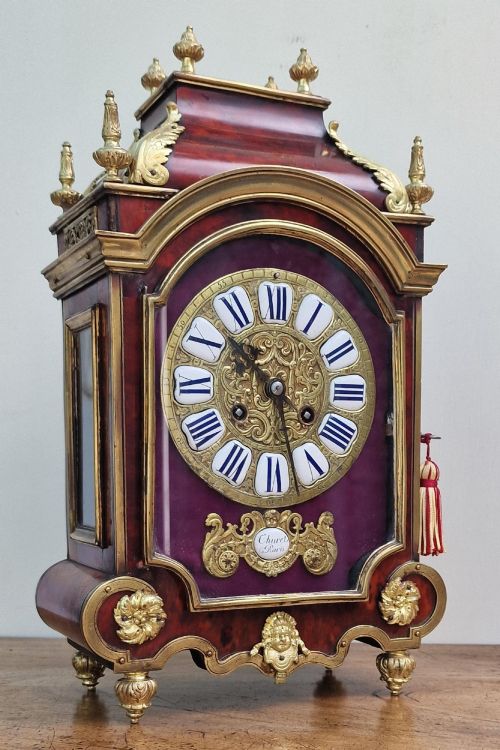
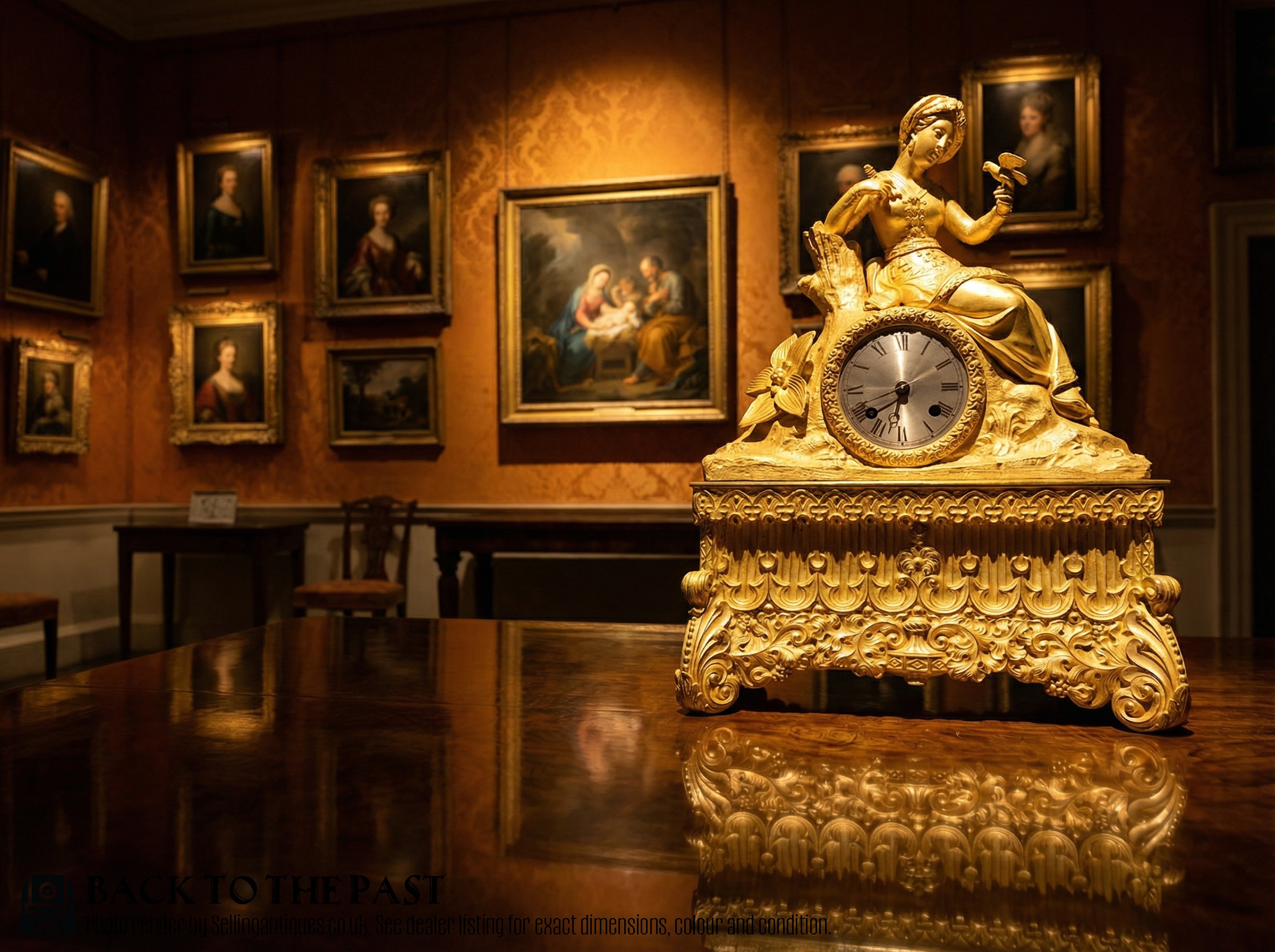
An antique bronze clock combines sculptural metalwork with mechanical timekeeping, taking forms such as mantel clocks, wall-hung cartel clocks, and drum heads. The pieces appearing most frequently across these records are French production from the mid-nineteenth century, alongside English Regency works.
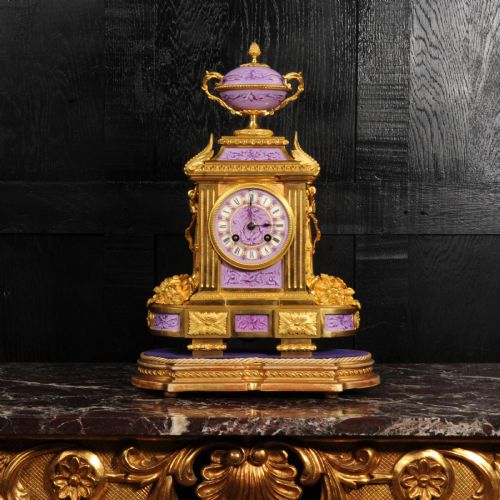
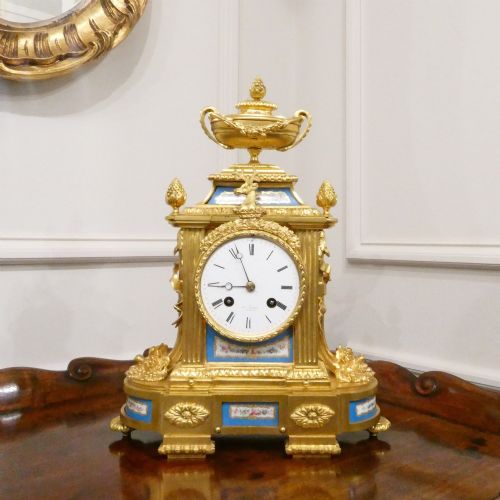
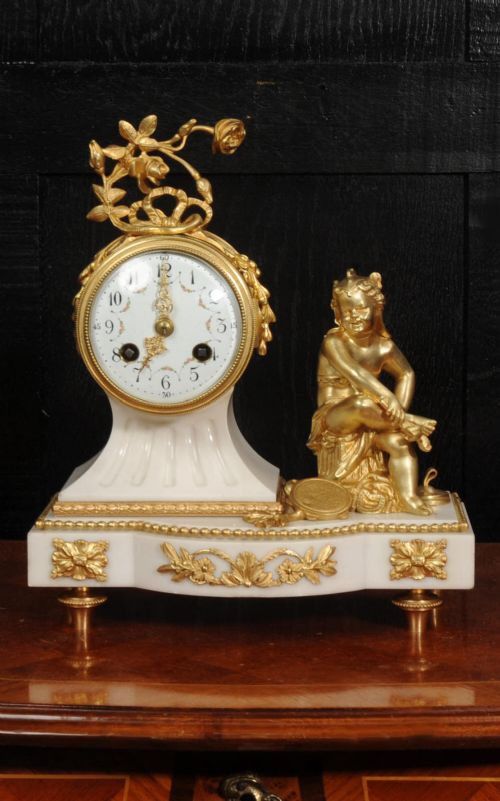
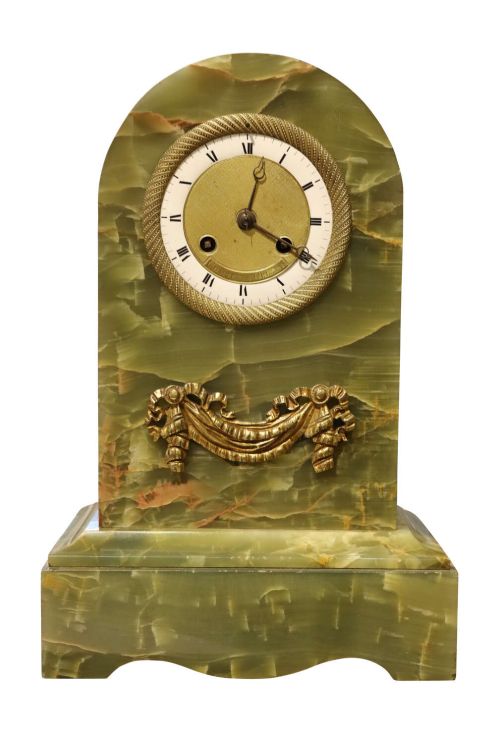
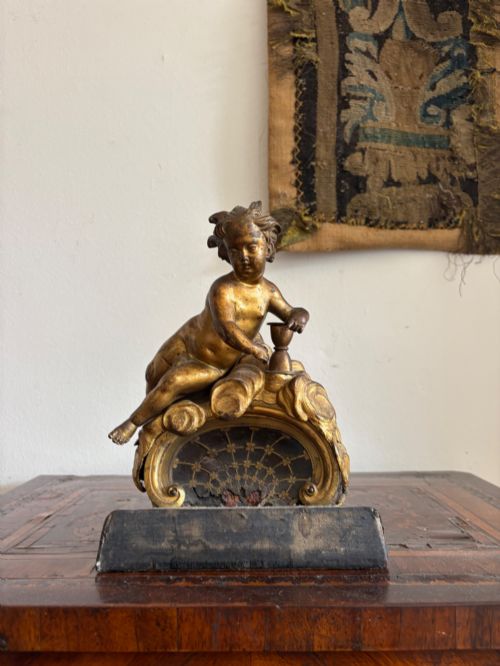
Makers housed these movements in heavy metal housings styled in French Empire, Rococo Revival, Louis XVI Neoclassical, and Baroque designs. Figural subjects, architectural marble bases, and wall-mounted cartel frames dominate the recorded output.
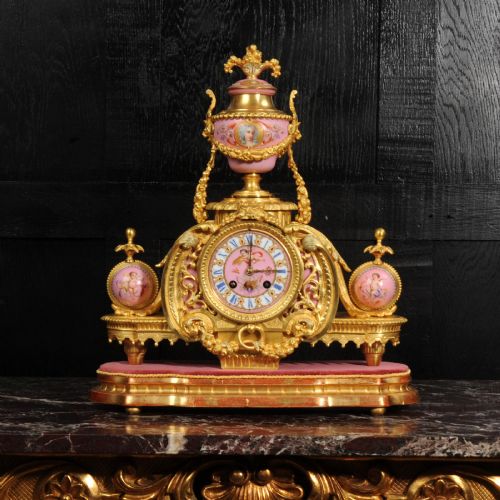
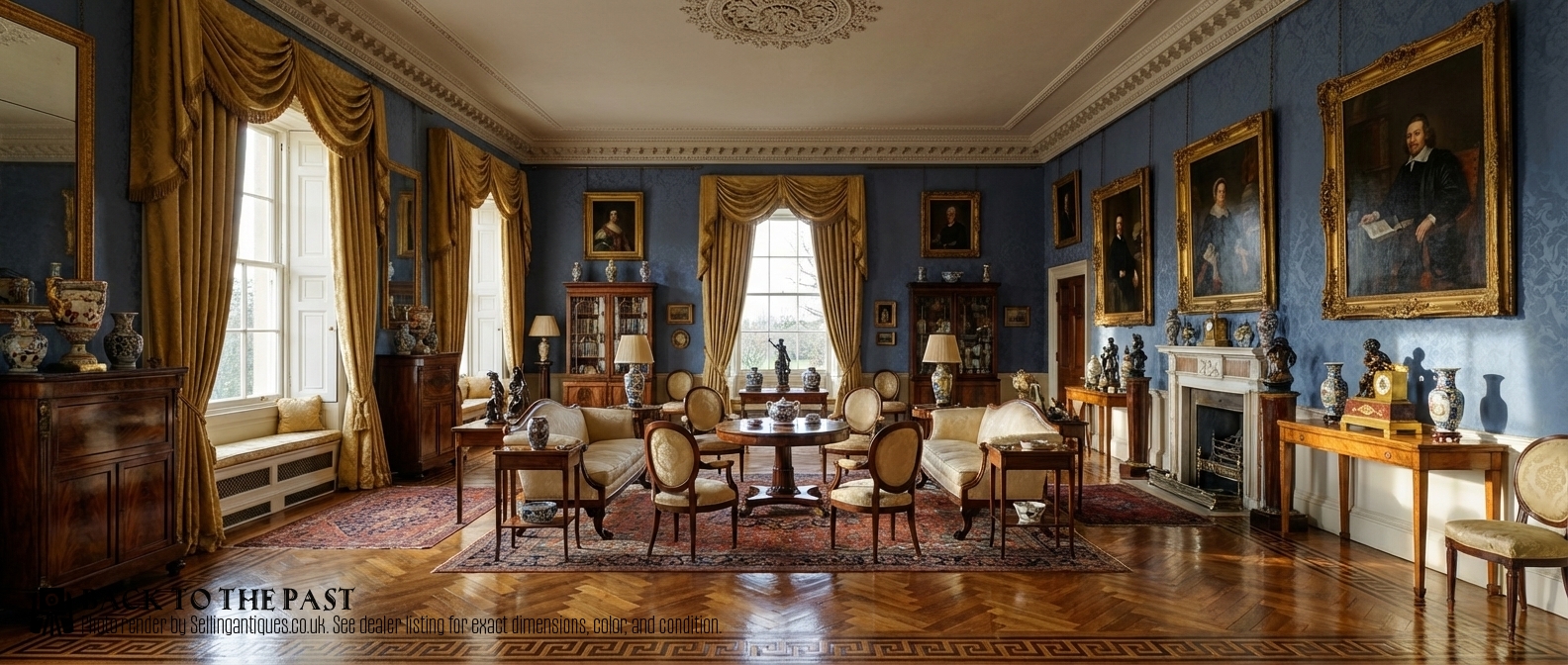
Buyers encounter everything from simple brass-cased English timepieces to elaborate French gilt bronze garnitures featuring porcelain panels and mythological figures. These objects served both as functional timekeepers and as centrepieces for formal rooms.
Materials and Construction
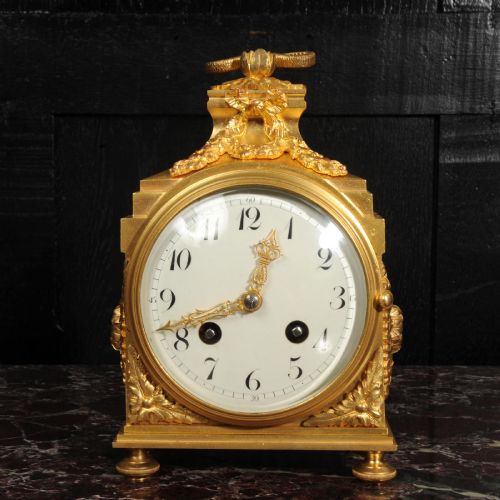
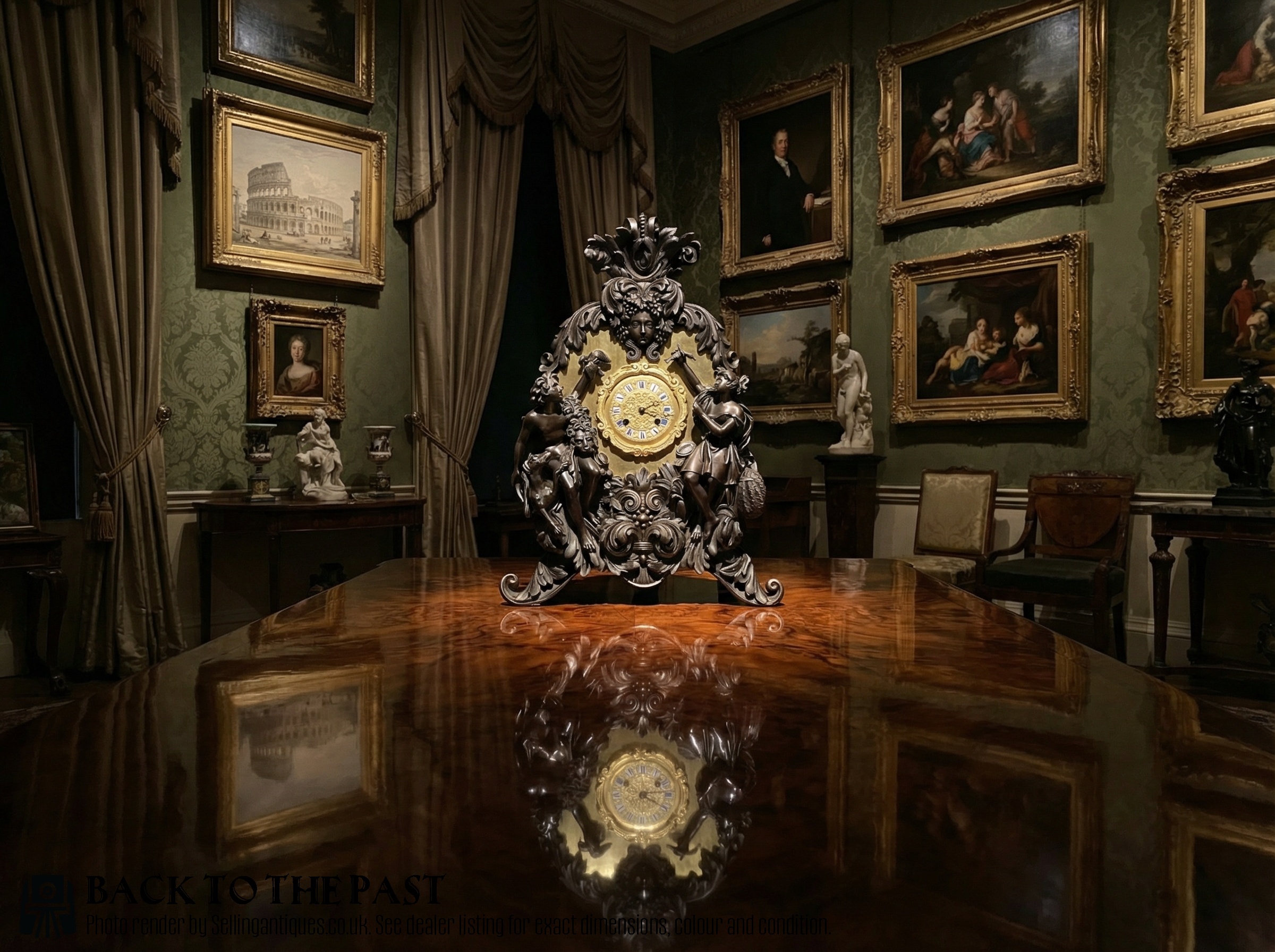
Foundries cast these pieces in bronze, brass, and patinated or gilt bronze, often combining the metalwork with black or pink marble, glass, and enamel dials. Ormolu mounts provided bright gold-toned highlights against darker patinated bronze bodies.
Clockmakers utilised mechanical movements driven by springs and pendulums, including silk suspension systems and chain fusee mechanisms in English examples. Enamel chapters and porcelain plaques were painted and fired to display numerals and decorative scenes.
Retail Price Guide 2026
Typical UK retail prices for bronze clock, calculated from the Sellingantiques database of over a million retail prices indexed since 2003. This retail price guide relies exclusively on Sellingantiques data; no external sources or auction records are used, so the figures do not describe the wider market.
Distinctions in Quality
The division between ordinary production and superior work rests upon the crispness of the bronze casting and the depth of the gilding or ormolu. Finer examples display hand-chased surface details where artisans refined the raw cast metal with chisels and punches.
Movement quality separates workshop output, with named makers such as Japy Freres or Samuel Marti delivering reliable engineering alongside substantial architectural cases. The integration of specialty materials like specimen marble and Sevres porcelain elevates the standing of a piece.
Charpentier Paris·Japy Freres·Samuel Marti·Vincenti·Achille Brocot·P L Hausburg Paris·Tiffany and Co·Baetens London·Rollin A Paris
The Antique Bronze Clock Glossary
- Ormolu
- Gilded bronze produced by applying a mixture of mercury and gold to a metal base and heating it. This technique creates a durable, bright golden surface found on many French cases.
- Cartel clock
- A wall-mounted clock featuring an ornate frame usually cast in bronze or ormolu. These pieces hang directly on wall hooks rather than resting on mantelpieces.
- Silk suspension
- A method of hanging the pendulum from a fine loop of silk thread inside the movement. This delicate system appears on earlier and finer clocks.
- Garniture
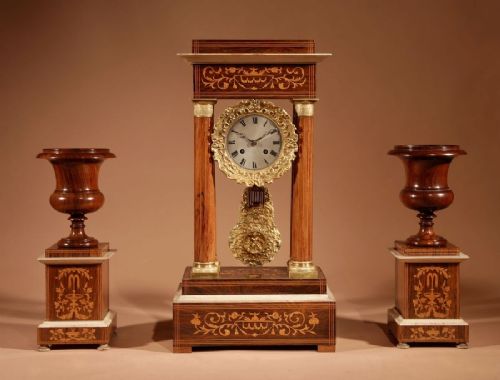
- A set comprising a central clock accompanied by matching side pieces such as urns or candelabra. These sets created a balanced arrangement across a fireplace.
- Fusee
- A conical pulley used in clock movements to maintain even tension on the chain as the mainspring unwinds. This mechanism improves timekeeping accuracy.
Frequently Asked Questions
How do I wind an antique bronze clock?
Use the appropriate winding key on the dial holes, turning gently until you feel resistance. Do not overwind the spring.
Ensure you turn the hands in the correct direction as specified by the movement type to avoid damaging the internal gear train.
Why does my clock run fast or slow?
Temperature changes and age affect the pendulum length and spring tension. Regulation requires adjusting the pendulum nut up or down.
Moving the small regulating nut alters the effective length of the pendulum, which speeds up or slows down the beat.
Where should I place a heavy bronze clock?
Position the clock on a stable, level surface such as a solid mantelpiece or heavy sideboard. Wall-mounted cartel clocks require secure fixings into structural brickwork.
A level foundation ensures the anchor escapement strikes evenly on both sides for steady timekeeping.
How do I clean the bronze case?
Dust the metalwork gently with a dry, soft microfiber cloth. Avoid commercial metal polishes that strip away original gilding or patination.
Moisture and chemical cleaners damage delicate ormolu surfaces and painted enamel dials permanently.