


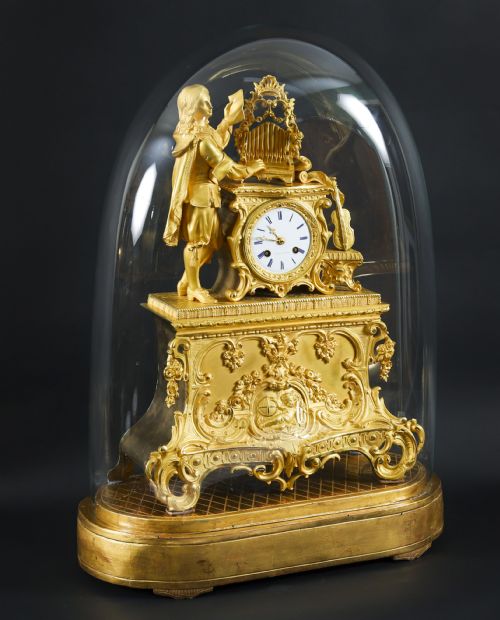


Ormolu Figural Mantel Clock
An ormolu figural mantel clock combines sculptural figures with precision timekeeping, bringing classical mythology and romantic allegories into period interiors.
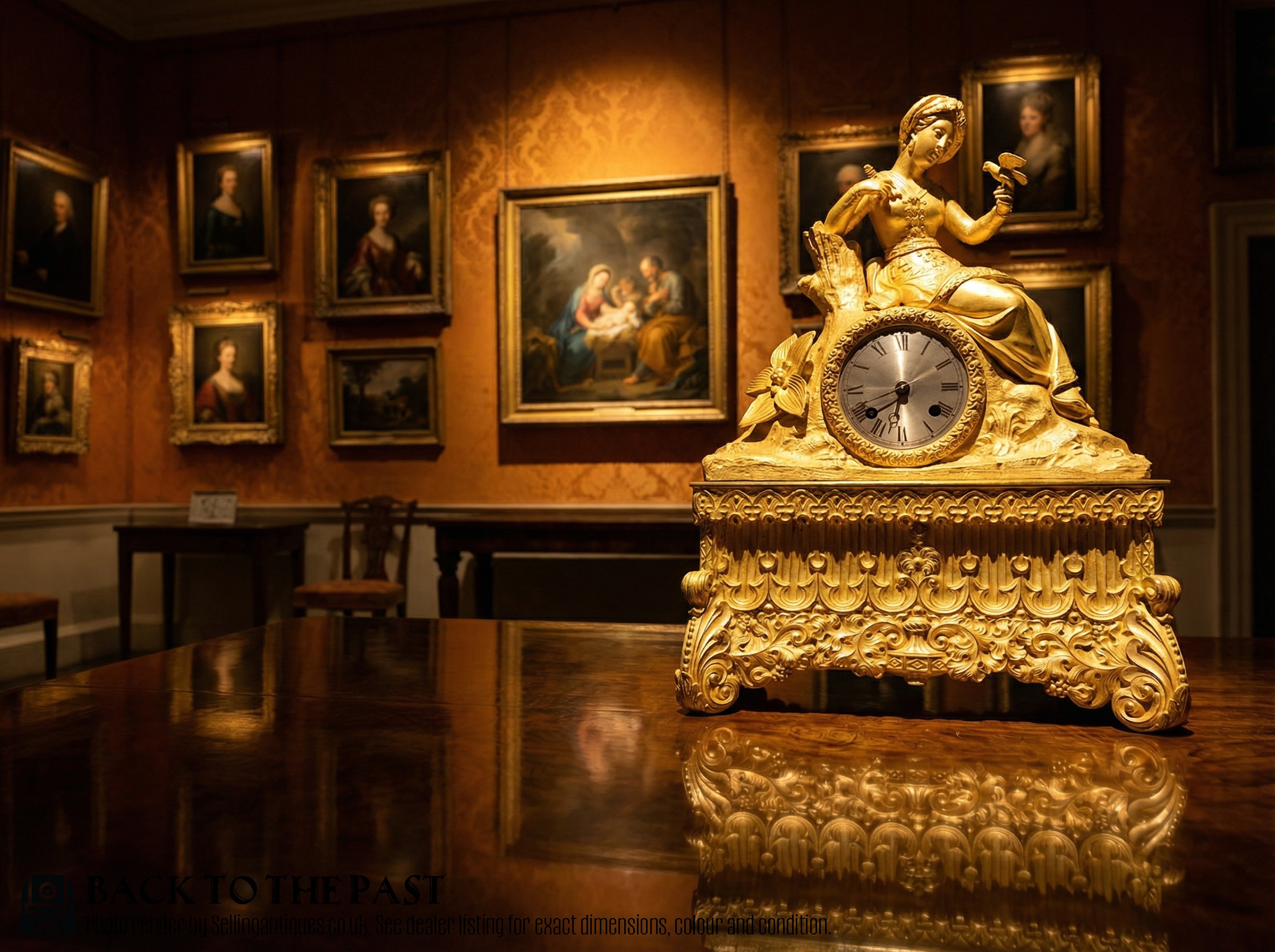
Ormolu Figural Mantel Clock
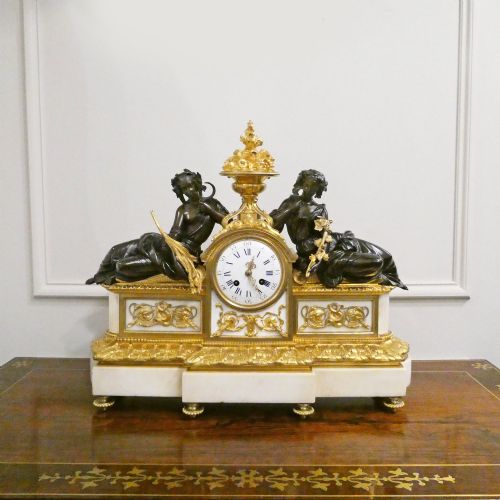
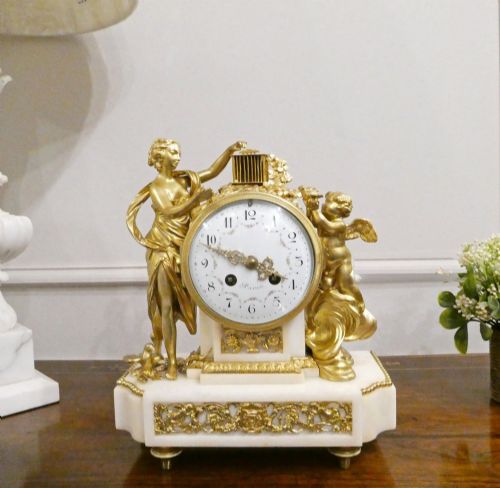
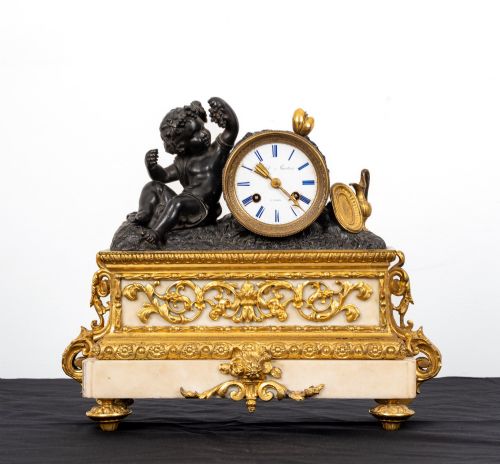
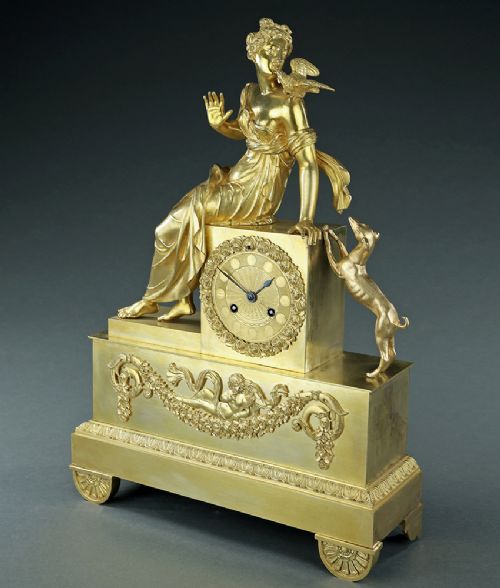
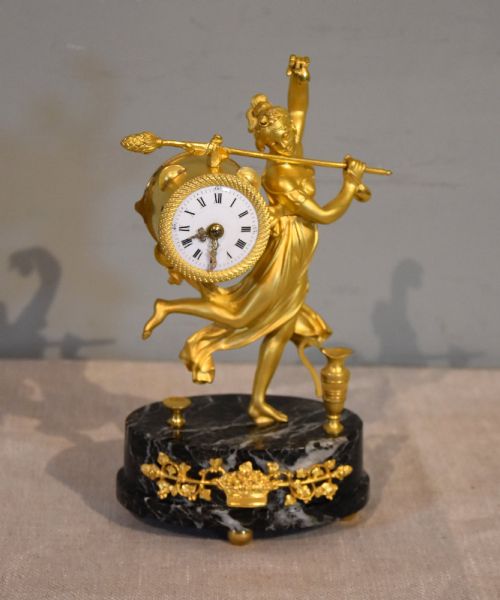
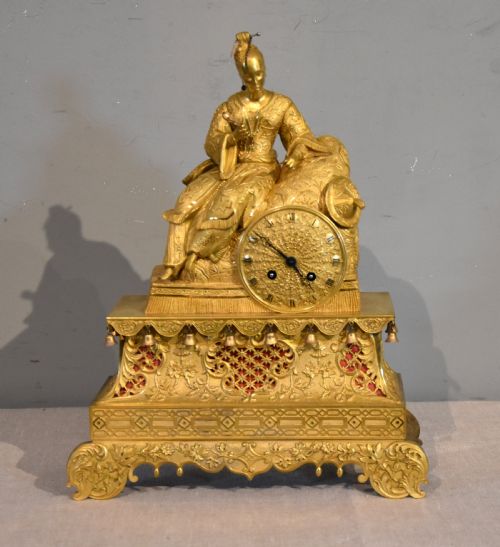
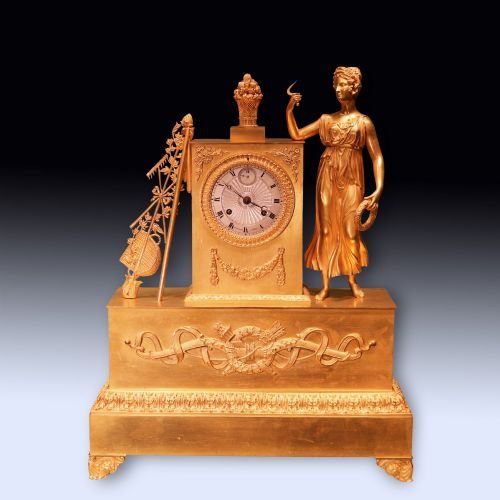
An ormolu figural mantel clock stands as a sculptural centrepiece, uniting cast metalwork with functional horology. These objects frequently depict classical figures, cherubs, lions, or allegorical scenes such as love and fidelity.
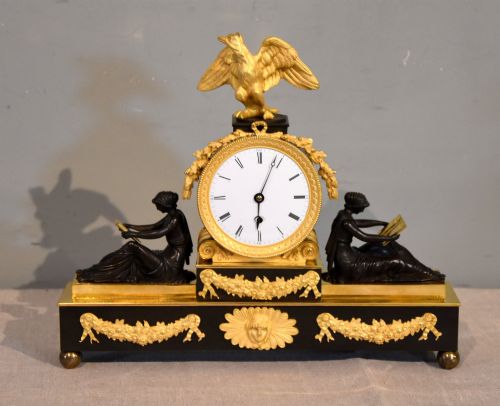
The versions most commonly met on this page originate from nineteenth-century France, executed in styles ranging from French Empire to Louis XVI Revival and French Rococo Revival. English Regency examples also appear, employing brass and gilt bronze alongside marble bases.
Makers and retailers such as Vincenti, Japy Freres, Leroy Paris, and Deniere Et Fils mark many of the French pieces, while London watchmakers sign English Regency and nineteenth-century fusee mantel timepieces.
Materials and Construction
These clocks rely on metal casting, using ormolu, gilt bronze, patinated bronze, and brass to form the sculptural bodies and detailed mounts. Artisans applied mercury gilding or modern electrogilding to bronze bases, producing the distinctive golden surface known as ormolu.
Foundational elements frequently incorporate white marble, green marble, or glass enclosures, providing stable plinths and glazed bezels to protect the hand-painted enamel dials. Internal mechanisms utilise mechanical movements, including eight-day striking systems and fusee movements.
Detailed decoration involves chased figural casts depicting cherubs, maidens, lions, goats, and palm trees, complemented by porcelain panels or Sevres porcelain inserts in specific Louis XVI style iterations.
Among the figures keeping silent watch, goats and palm trees share shelf space with romantic cupids and astronomical deities.
Distinctions in Quality
The complexity and reputation of the clockmaker or retailer dictate the standing of the piece. Signed movements by established Parisian houses like Leroy Paris or Victor Paillard, alongside English makers such as James Murray, indicate superior horological standard.
Materials contribute to tiering, with solid marble plinths, hand-painted enamel dials, and complete clock garniture sets or matching side ornaments representing the higher echelon of domestic timepieces.
Vincenti·Siffel and Cartier·Canaillor of Paris·Japy Freres·Leroy Paris·Deniere Et Fils·Victor Paillard·Deniere and Cailleaux·John Bennett Cheapside London·James Murray London
The Ormolu Figural Mantel Clock Glossary
- Ormolu
- A gilded bronze technique involving the application of a mercury-gold amalgam to a bronze base. This process creates a durable, luminous golden finish characteristic of decorative objects from the eighteenth and nineteenth centuries.
- Garniture
- A set consisting of a central mantel clock matched with subsidiary ornaments such as urns or candelabras. These matched groupings were designed to decorate a fireplace mantelpiece symmetrically.
- Fusee
- A conical pulley used in mechanical clocks and watches to maintain even driving force as the mainspring unwinds. This mechanism improves timekeeping accuracy across the duration of the spring's power reserve.
- Enamel dial
- A clock face formed by fusing powdered glass onto a metal plate at high temperatures, usually featuring hand-painted numerals and minute markers. These durable surfaces resist fading over centuries of use.
- Patinated bronze
- Bronze treated with chemical solutions to produce a darkened, aged surface finish. This technique highlights bright ormolu mounts through contrast.
Ormolu Figural Mantel Clock: Frequently Asked Questions
How do I wind the clock?
Most nineteenth-century mechanical mantel clocks require a winding key inserted into arbors on the enamel dial to tension the mainspring.
Care must be taken not to over-wind the movement, as this can damage the internal springs and gears.
Where should I place a mantel clock?
These pieces sit securely on flat, level surfaces such as mantelpieces, sideboards, or dedicated console tables away from direct heat and moisture.
Ensuring a level foundation helps the pendulum swing evenly and keeps the striking mechanism running accurately.
What is a clock garniture?
A garniture comprises a central mantel clock accompanied by matching decorative pieces like side urns or candelabras.
Placed together on a mantel, these matched sets create a balanced decorative display characteristic of nineteenth-century interiors.
How do I identify French Empire style?
French Empire pieces display motifs inspired by classical antiquity, ancient Rome, and Napoleon's campaigns, including figures of maidens, military trophies, and patinated bronze.
These clocks frequently feature architectural marble plinths combined with bright ormolu mounts.