

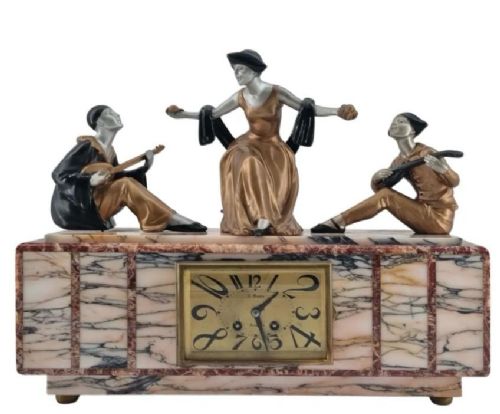
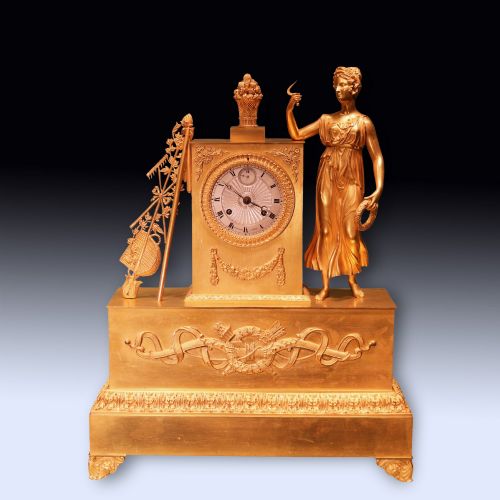
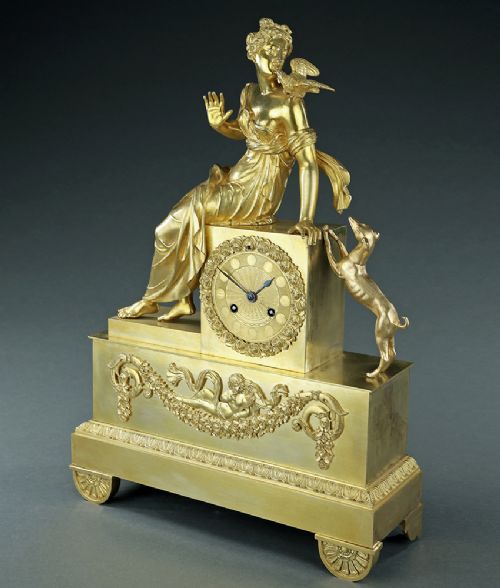
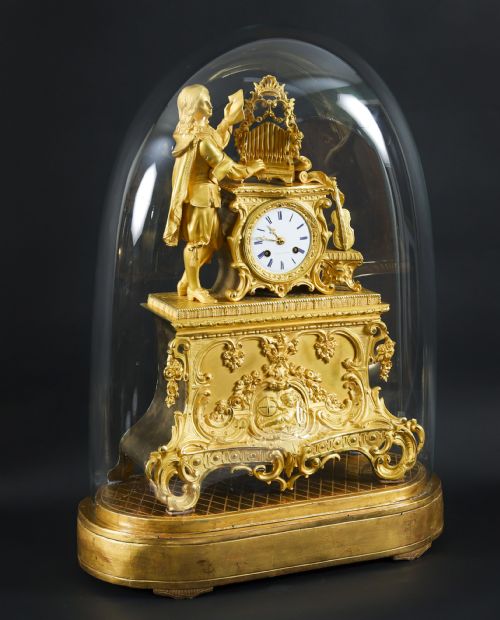


Figural Mantel Clock
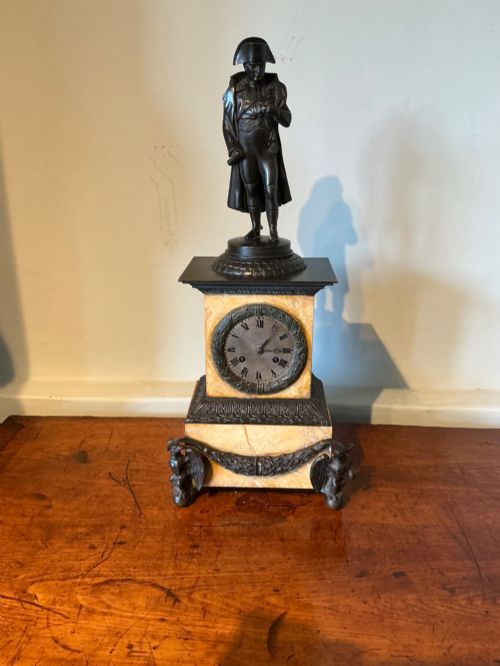
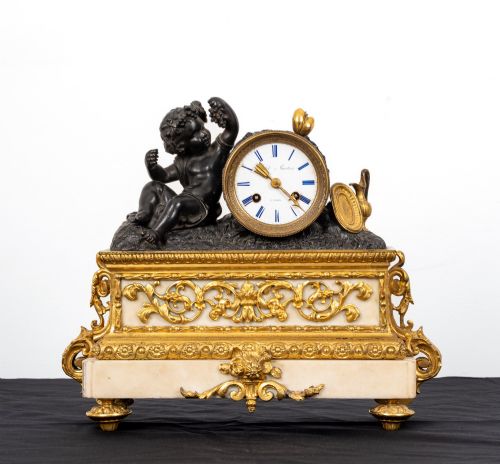
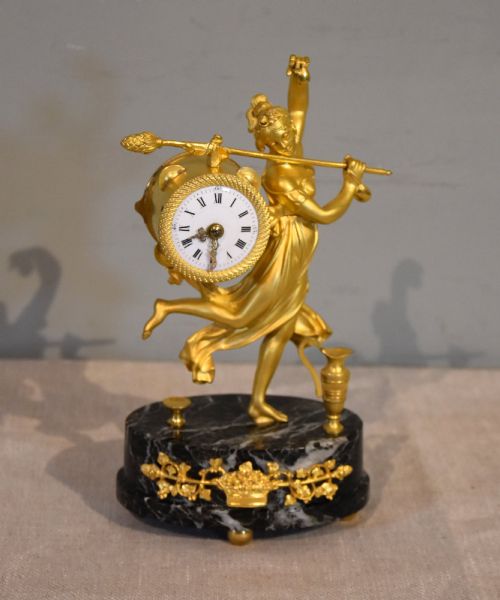
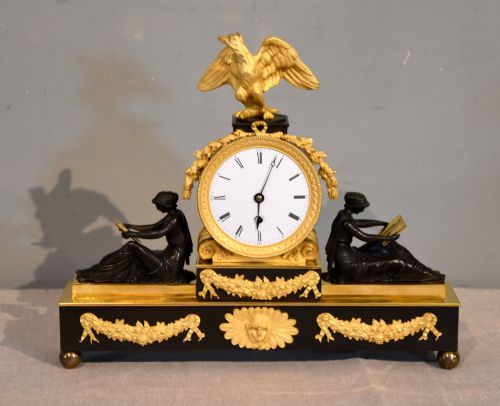
These figural mantel clock pieces place narrative sculpture directly onto the dial shelf, bringing nineteenth-century allegorical figures into domestic rooms.
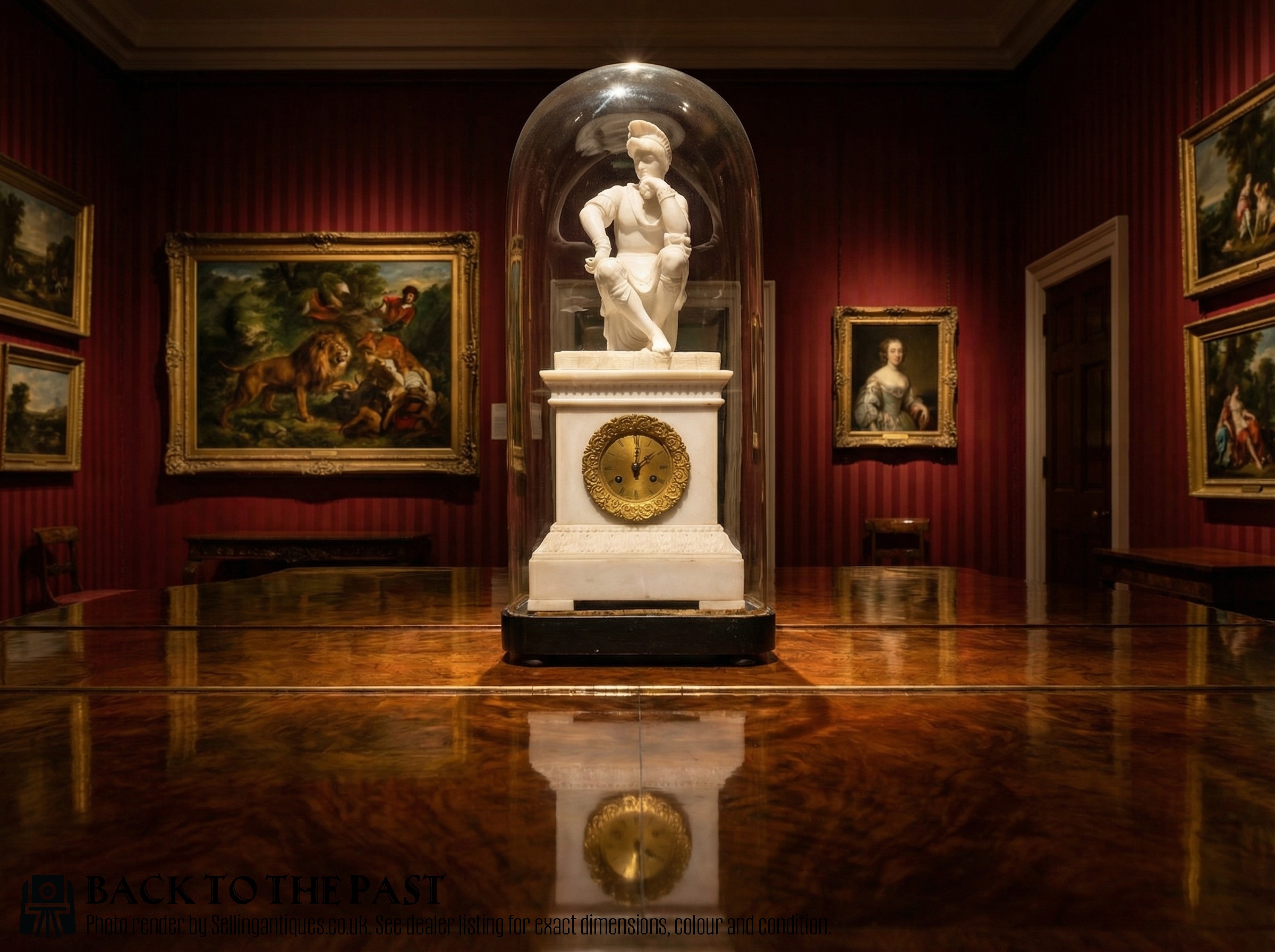
Figural Mantel Clock
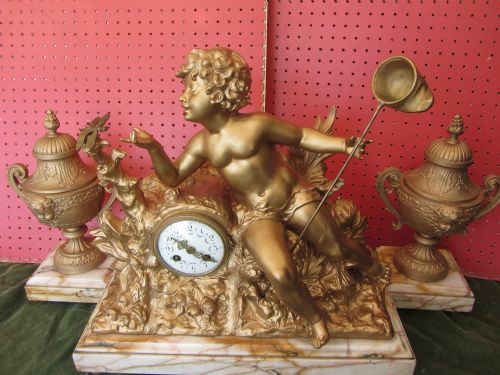
A figural mantel clock integrates a timekeeping movement with a sculptural subject, often depicting classical deities, literary characters, or allegorical figures like Love and Fidelity. The selections available here lean heavily toward nineteenth-century French output, spanning Empire, Louis XVI Style, and Rococo Revival aesthetics alongside Regency and Victorian examples.
Beyond single clock bodies, buyers frequently encounter clock garnitures that pair the main timepiece with matching side vases or candelabra on shared marble or bronze plinths. These multi-piece sets dominate the grander end of domestic interior decoration from the period, creating a balanced, symmetrical arrangement for a salon or drawing-room mantelpiece.
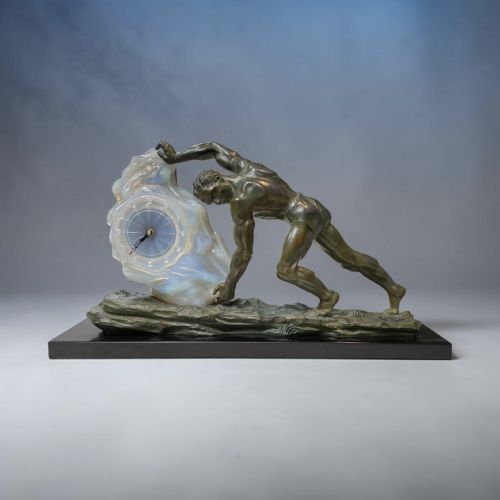
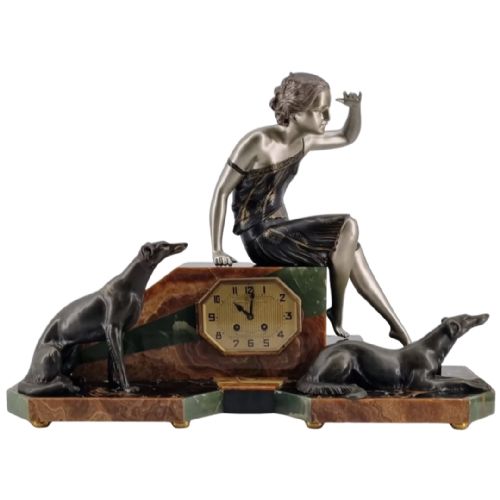
The sculptural subjects range from mythical figures such as Urania and Amphitrite to historical portraits of Napoleon and domestic animals, cast in metal and mounted directly above or beside the enamel dial. These objects combine utilitarian timekeeping with the decorative ambitions of nineteenth-century European foundries and horologists.
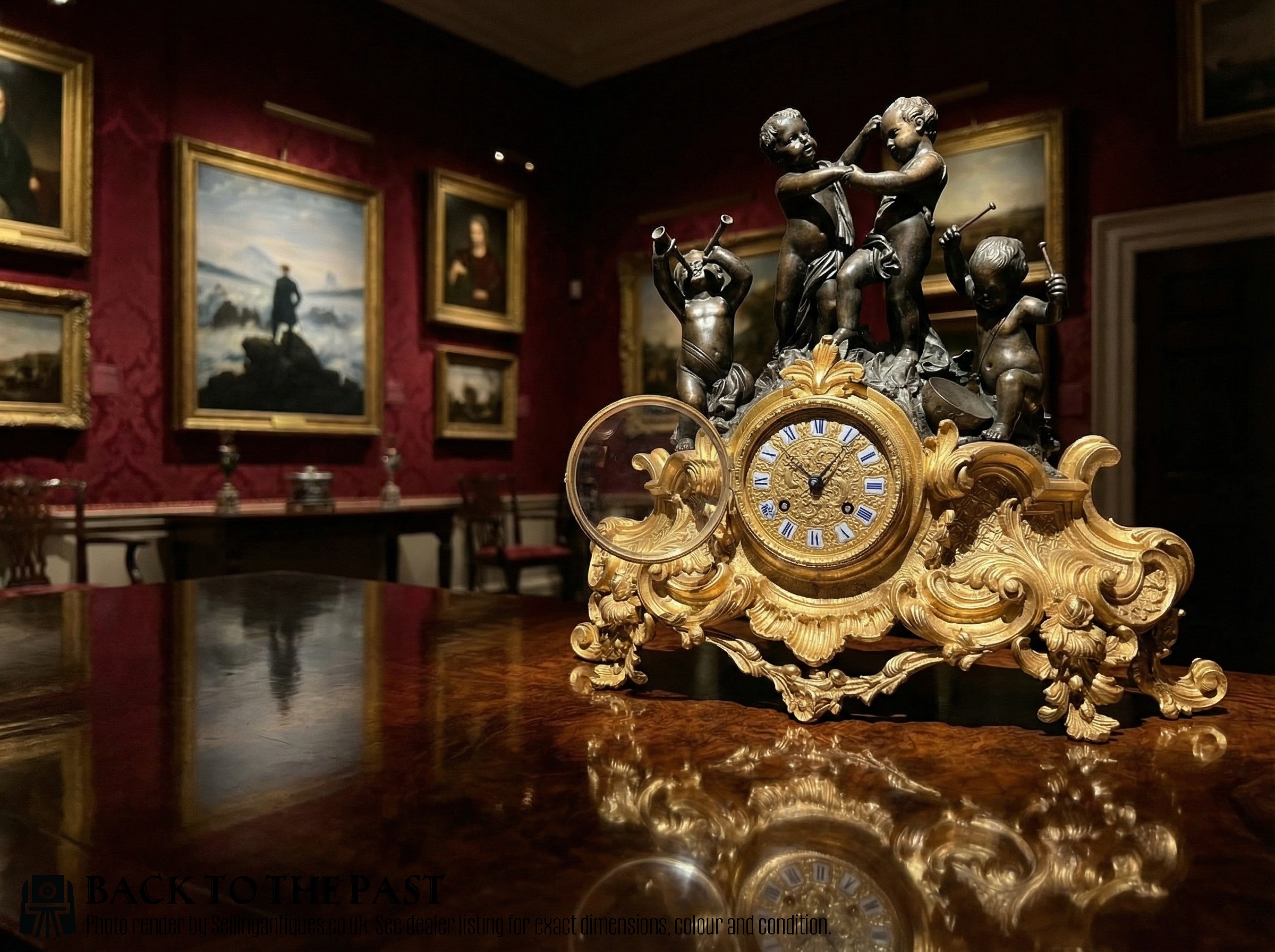
Materials and construction methods
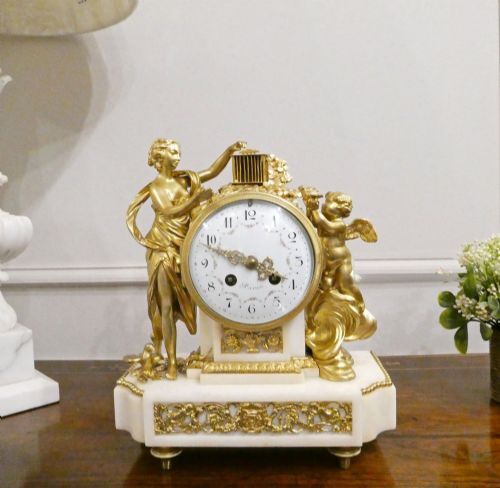
Foundries utilised cast bronze, ormolu, and patinated bronze for the sculptural elements and cases, frequently combining these metals with contrasting white or green marble plinths. Ormolu involves applying finely ground gold to a bronze base through mercury amalgamation or electrogilding, producing a durable, warm metallic lustre.
Dials were typically formed from white enamel with painted Roman or Arabic numerals, sometimes protected beneath curved glass bezels and driven by brass clock movements produced by specialist makers. Secondary materials such as carved linden wood, porcelain panels, and onyx appear in specific regional or stylistic variations across the selection.
Figural Mantel Clock Retail Price Guide 2026
Typical asking prices for figural mantel clock among the pieces listed under this phrase on Sellingantiques today, from the lower quarter to the upper quarter. They describe what is for sale here now, not the wider market.
Factors influencing quality and craftsmanship
The reputation of the horological workshop and the complexity of the movement also govern the standing of an individual piece, with signed dials and backplates by recognised Parisian makers commanding particular attention. Integrated clock garnitures demonstrate higher ambition when the side ornaments match the casting quality and stone selection of the central clock exactly.
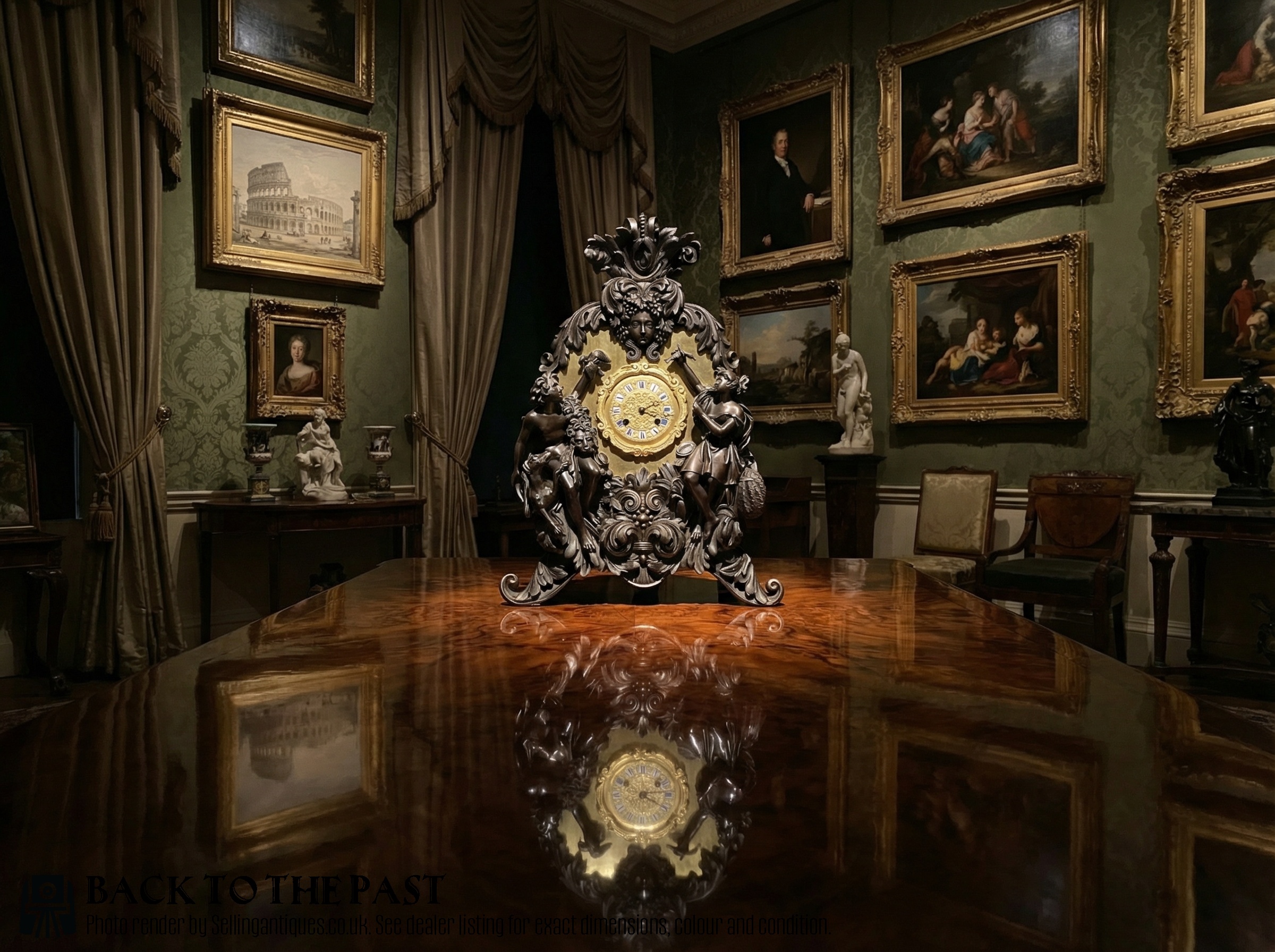
Vincenti·Siffel and Cartier·Baetens London·Sega·Canaillor of Paris·Japy Freres·Leroy Paris·Bergen and Co·Lemerle Charpentier·Berger Paris·Robert A Paris·Cleret of Paris
The Figural Mantel Clock Glossary
- Ormolu
- Gilded bronze, where a layer of gold is applied to a bronze object to produce a bright, enduring metallic finish. This technique defines the rich appearance of many nineteenth-century French decorative pieces.
- Clock garniture
- A matching set consisting of a central clock flanked by decorative side ornaments such as urns, vases, or candelabra. Such suites were designed to create a unified focal point on a mantelpiece.
- Enamel dial
- A metal dial face covered in fused glass powder, fired to create a smooth, glossy white surface for painted numerals. These dials provide a crisp, legible background against ornate metal hands.
- Patinated bronze
- Bronze treated with chemical solutions to create a dark, aged surface coloration rather than a gold-gilded finish. This treatment highlights the sculptural contours of figures and animals.
- Regency
- An English design period spanning the early nineteenth century, characterised by classical restraint, architectural lines, and brass inlay. Pieces from this era often feature disciplined geometric forms.
Figural Mantel Clock: Frequently Asked Questions
How do I wind an antique figural mantel clock?
Most mechanical clocks in this category utilise a key inserted into winding holes on the enamel dial to tension the internal springs. Care must be taken not to over-wind the movement.
Consulting the specific escapement and pendulum setup after transit ensures the beat remains even and the clock keeps accurate time.
Where should I place a heavy marble and bronze clock?
Due to the substantial weight of the marble plinths and cast metal figures, select a sturdy, level surface capable of supporting considerable downward pressure. A firm mantelpiece or dedicated console table prevents any risk of tipping.
Keep the piece away from direct heat sources and strong drafts to protect the internal brass gears and delicate enamel surfaces.
What is the difference between a timepiece and a clock?
In horological terminology, a timepiece refers strictly to a mechanism that indicates the hours and minutes without a striking train. A clock traditionally includes a striking mechanism that chimes the hours or half-hours on a bell or gong.
Reviewing the winding arbors on the dial reveals whether a movement includes striking functions alongside the primary time display.
How do I identify French Empire style pieces?
French Empire designs draw heavily on neoclassical motifs inspired by ancient Rome and Greece, featuring military trophies, classical deities, and symmetrical architectural forms. Ormolu mounts are contrasted against deep patinated bronze figures.
Look for crisp casting details, laurel wreaths, and figural subjects representing figures from classical mythology or Napoleonic iconography.