


Neoclassical Table Clock
A neoclassical table clock brings classical architectural order and gleaming ormolu into a room, anchoring the mantelpiece with disciplined proportion.
Neoclassical Table Clock
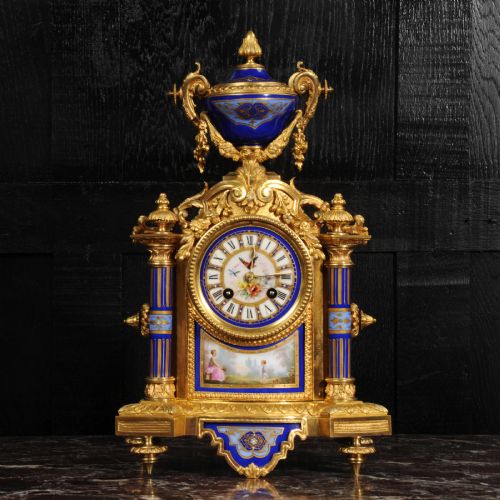
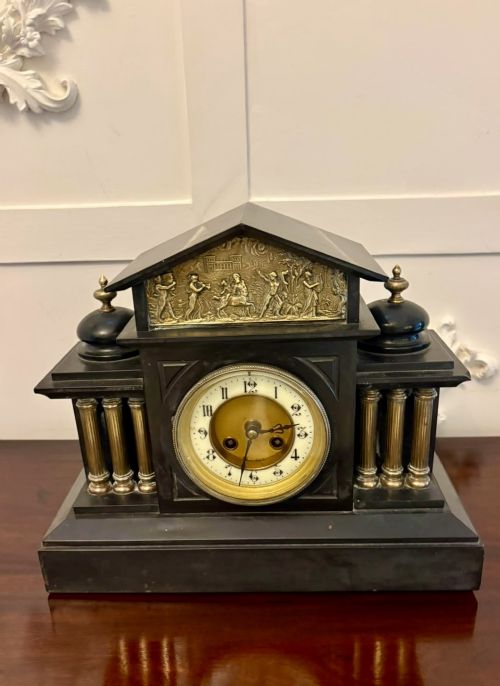
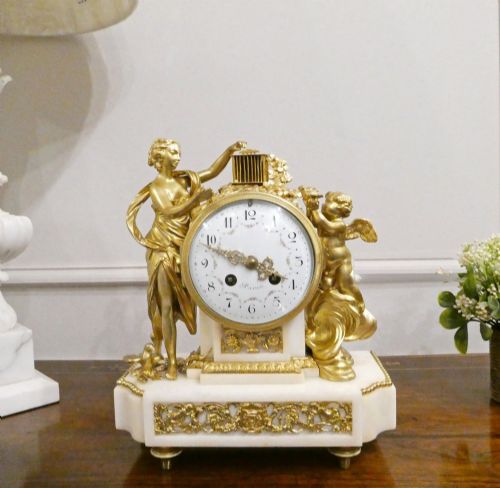
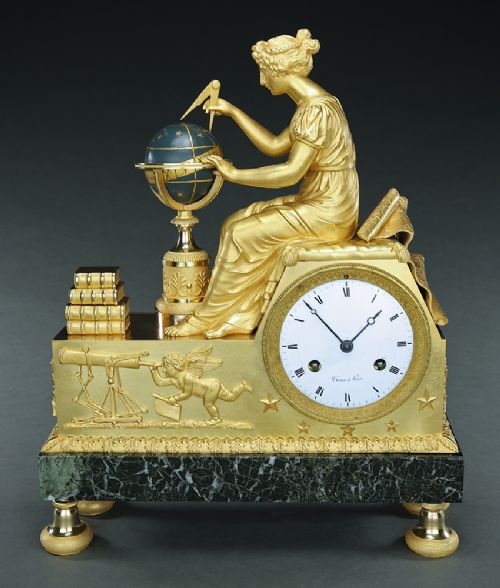
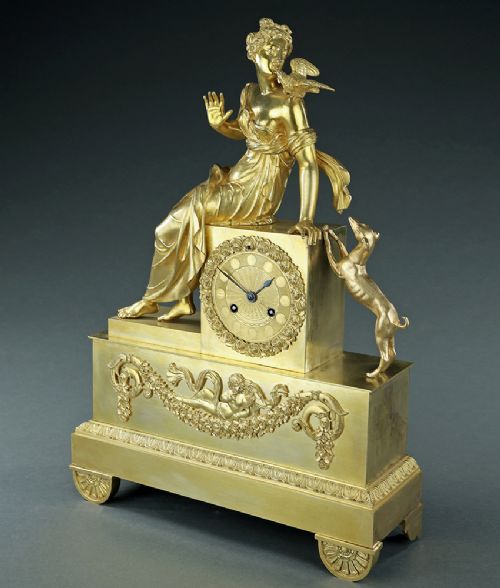
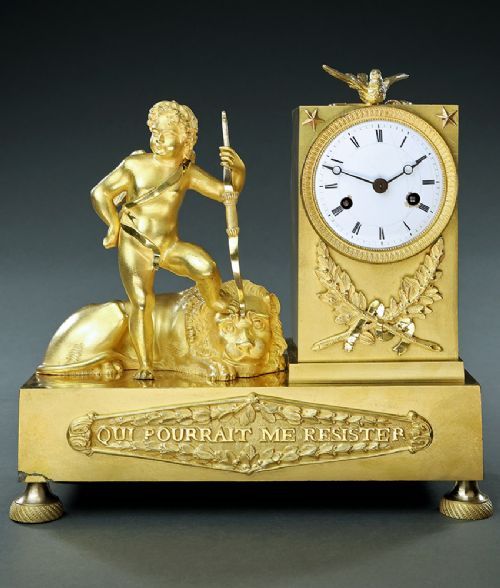
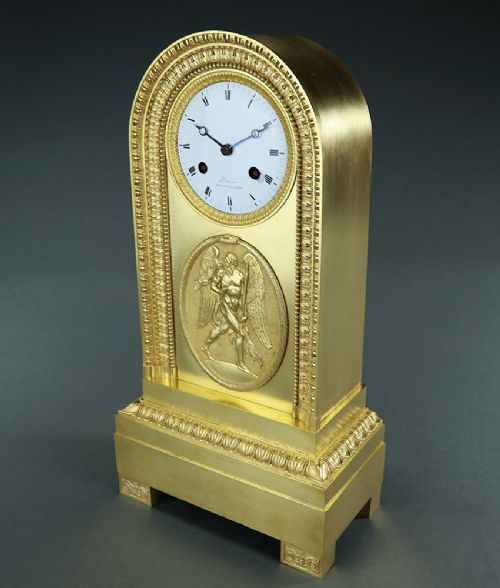
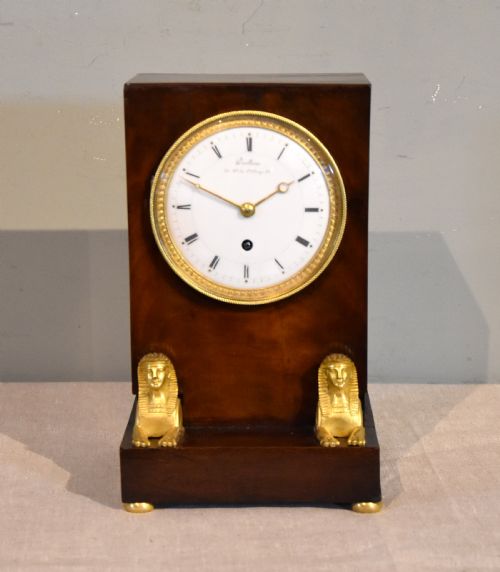
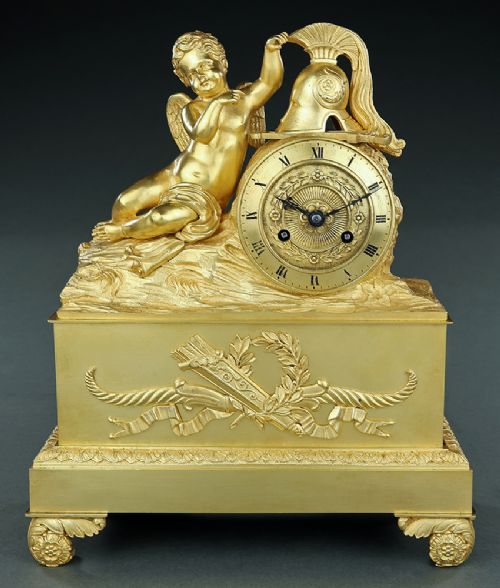
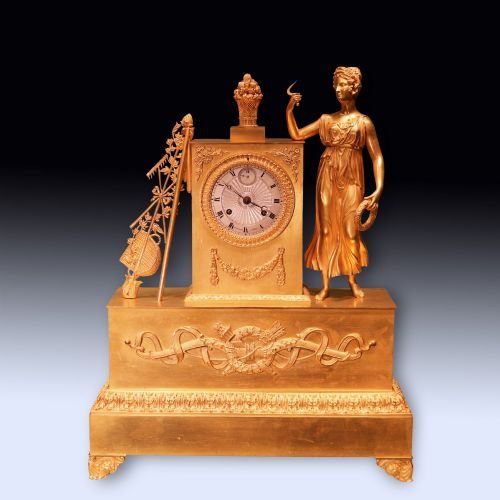
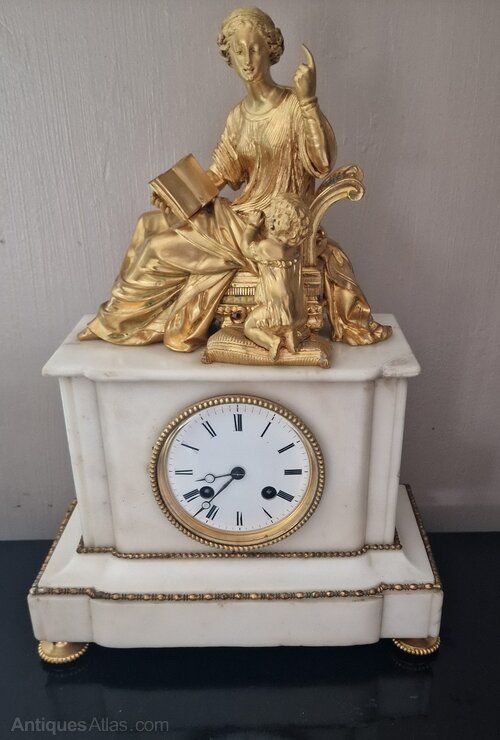
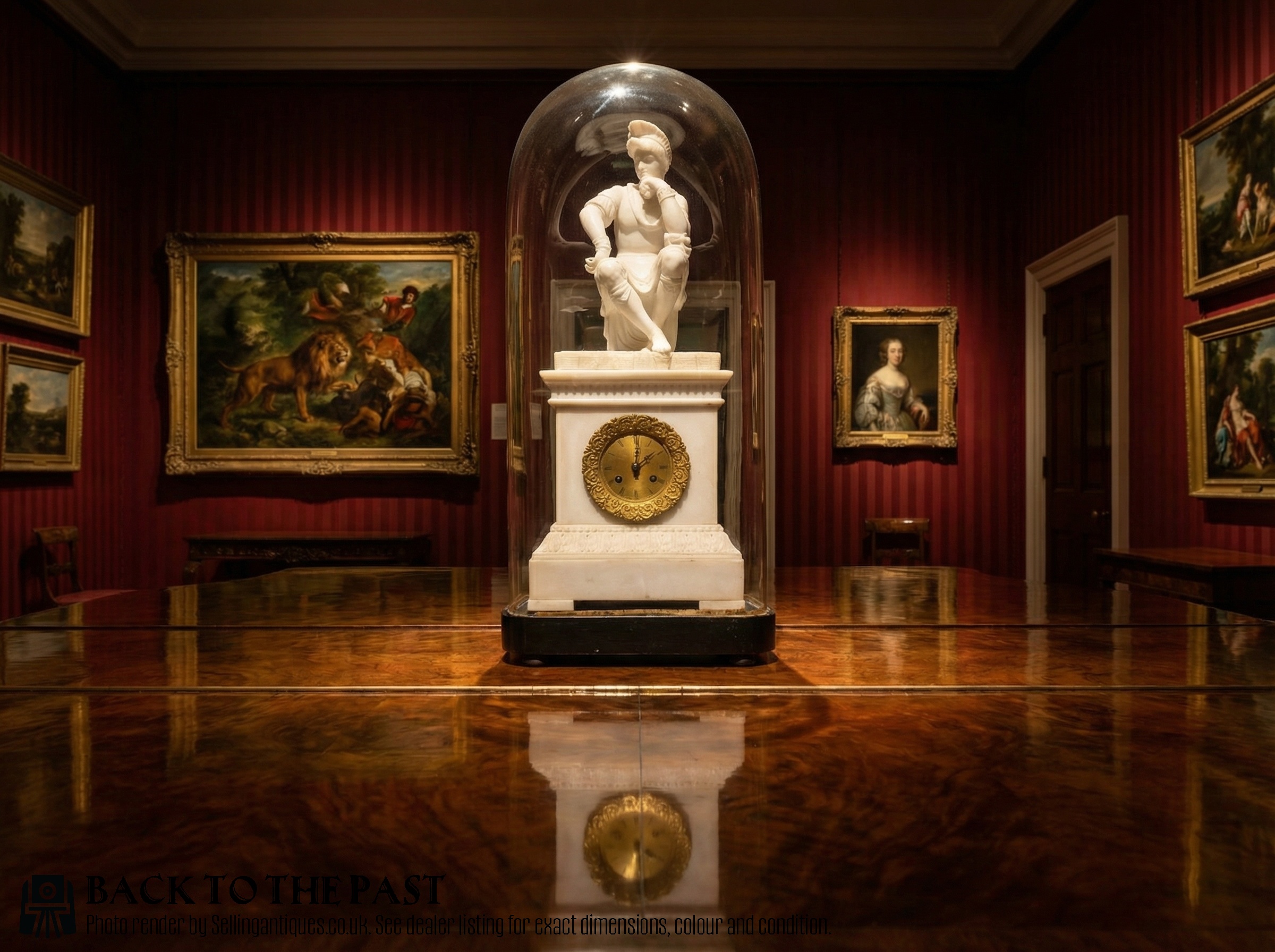
A neoclassical table clock sits upon a mantelpiece or desk, taking the form of architectural porticos, urns, and columned cases that echo ancient Greek and Roman design. These timepieces emerge primarily through nineteenth-century French production, carrying the stylistic influence of Louis XVI, Empire, and Directoire revivals.
The objects span varied configurations, appearing as single mantel clocks, elaborate garnitures flanked by matching ornaments, and crystal regulators or portico clocks. Enamel dials and classical figural bronzes frequently accompany marble and ormolu cases to complete the disciplined aesthetic.
How they were made
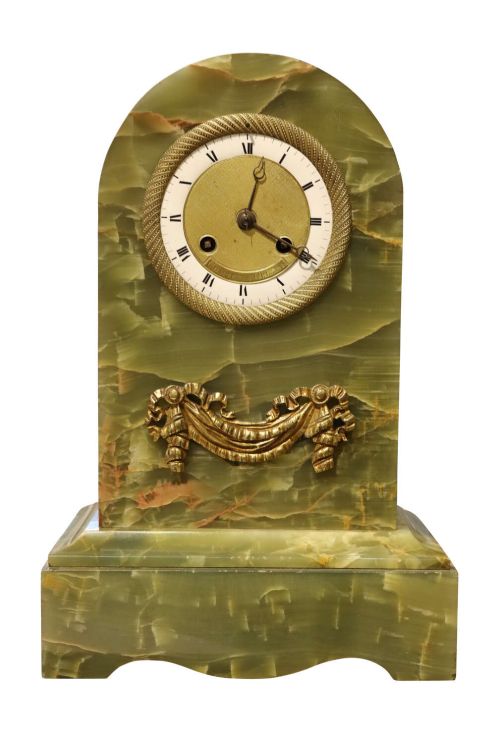
Foundry workers cast gilt bronze and ormolu into crisp classical mounts, pilasters, and figural reliefs, then applied gold amalgam to create a lasting metallic lustre. Cabinetmakers and stonemasons shaped white marble, black marble, green onyx, and mahogany to house the mechanical movements.
Clockmakers fitted brass gear trains, anchor escapements, and pendulum suspensions inside these heavy cases, often adding striking mechanisms or calendar functions. Dial makers painted enamel numerals onto convex plates and protected them behind bevelled glass panes.
Listings feature eighteenth-century pieces alongside nineteenth-century Victorian, Regency, and 1900 examples, utilising marble, ormolu, and glass.
What varies in quality
The crispness of the bronze chasing and the depth of the fire-gilding dictate the visual success of the metalwork, separating sharply cast mounts from soft, later reproductions. Superior examples display high-grade clockmaker signatures on the movement backplates and finely hand-painted enamel dials.
The selection of stone creates another distinction, where uniform white marble, rich rouge marble, or well-figured green onyx with intact architectural mouldings commands greater interest. Complete garniture sets with matching side ornaments also demonstrate higher ambition than isolated timepiece cases.
Japy Freres·Charles a Orleans·Le Roy·Berger·Louis Goret·Sacre·Remond·L Epee
The Neoclassical Table Clock Glossary
- Ormolu
- Gilded bronze produced by applying a mercury and gold amalgam to a cast brass or bronze base, then heating it to drive off the mercury. This technique yields a deep, enduring golden finish characteristic of the period.
- Portico clock
- A mantel clock designed with twin architectural columns supporting a central movement housing, creating an open, temple-like profile. This architectural style gained particular favour during the French Empire and Charles X periods.
- Garniture
- A set consisting of a central clock accompanied by matching decorative side pieces such as urns, vases, or candelabra. These matched assemblies were intended to create a balanced focal point on a mantelpiece.
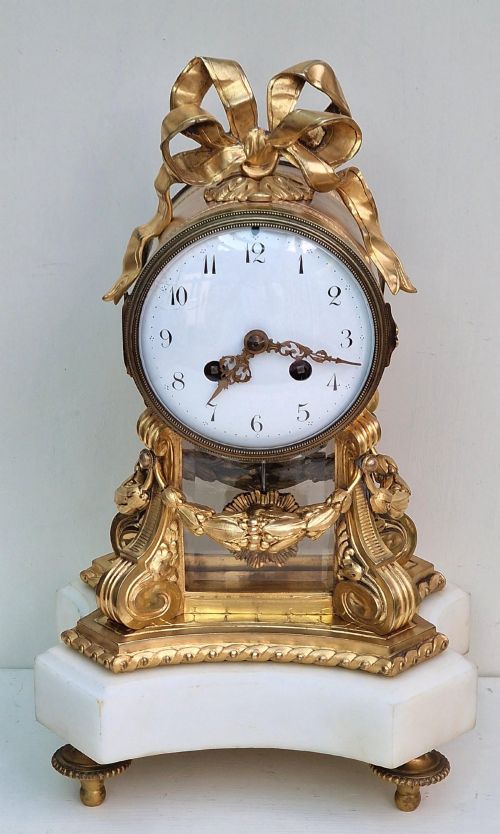
- Four-glass clock
- A timepiece encased in brass and glass panels that expose the mechanical movement from multiple angles. This form developed during the later nineteenth century to showcase the oscillating pendulum and gear train.
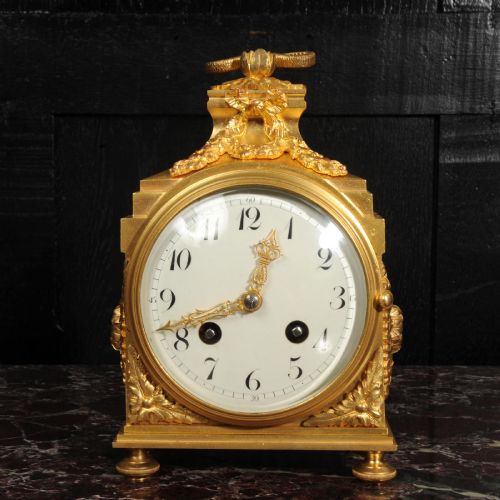
- Pendule d'Officier
- A portable campaign or officer clock fitted with a carrying handle on top of the case. These compact timepieces often combined robust movements with refined architectural or military-inspired bronze mounts.
Neoclassical Table Clock: Frequently Asked Questions
How do I wind my clock?
Insert the appropriate winding key into the dial arbors and turn gently in the direction specified by the mechanism. Take care not to overwind the mainspring, stopping as soon as firm resistance is felt.
Ensure the clock is standing on a level surface before starting the pendulum. If the beat sounds uneven, adjust the suspension spring until the tick is regular.
What is an ormolu finish?
Ormolu refers to gilded bronze mounts applied to the exterior of wooden and marble clock cases. The technique involves fusing a gold and mercury mixture to a cast bronze foundation.
This historical process produces a rich metallic glow that resists tarnishing over centuries. Cleaning requires only a soft, dry cloth to preserve the fragile gold layer.
How do I tell periods apart?
Empire and Directoire pieces display militaristic motifs, laurel wreaths, and heavy patinated bronzes reflecting ancient Roman ideals. Louis XVI and revival pieces favour lighter white marble, delicate floral swags, and bright ormolu mounts.
Later nineteenth-century examples often combine black marble with architectural gilt brass details. Examining the style of the cast mounts and the type of stone reveals the prevailing taste of the decade.
Where should I place a heavy marble clock?
Select a sturdy mantelpiece, sideboard, or console table capable of supporting significant weight. Marble and bronze cases exert considerable downward pressure on their supporting surface.
Keep the clock away from direct sunlight, open windows, and heat sources to protect the delicate enamel dial and internal lubricants. A stable location prevents the pendulum from stopping.