
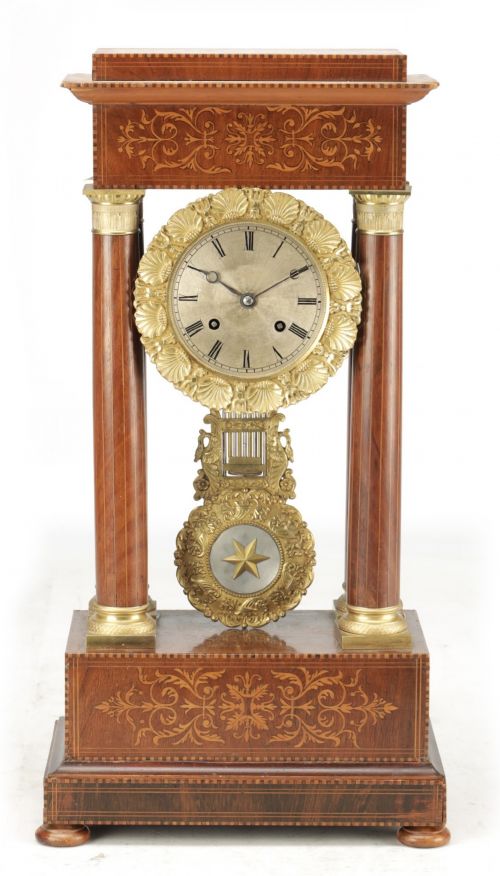


Victorian Portico Clock
A Victorian portico clock brings architectural columns and classic proportions to a mantelpiece, offering a striking centrepiece for a traditional room.
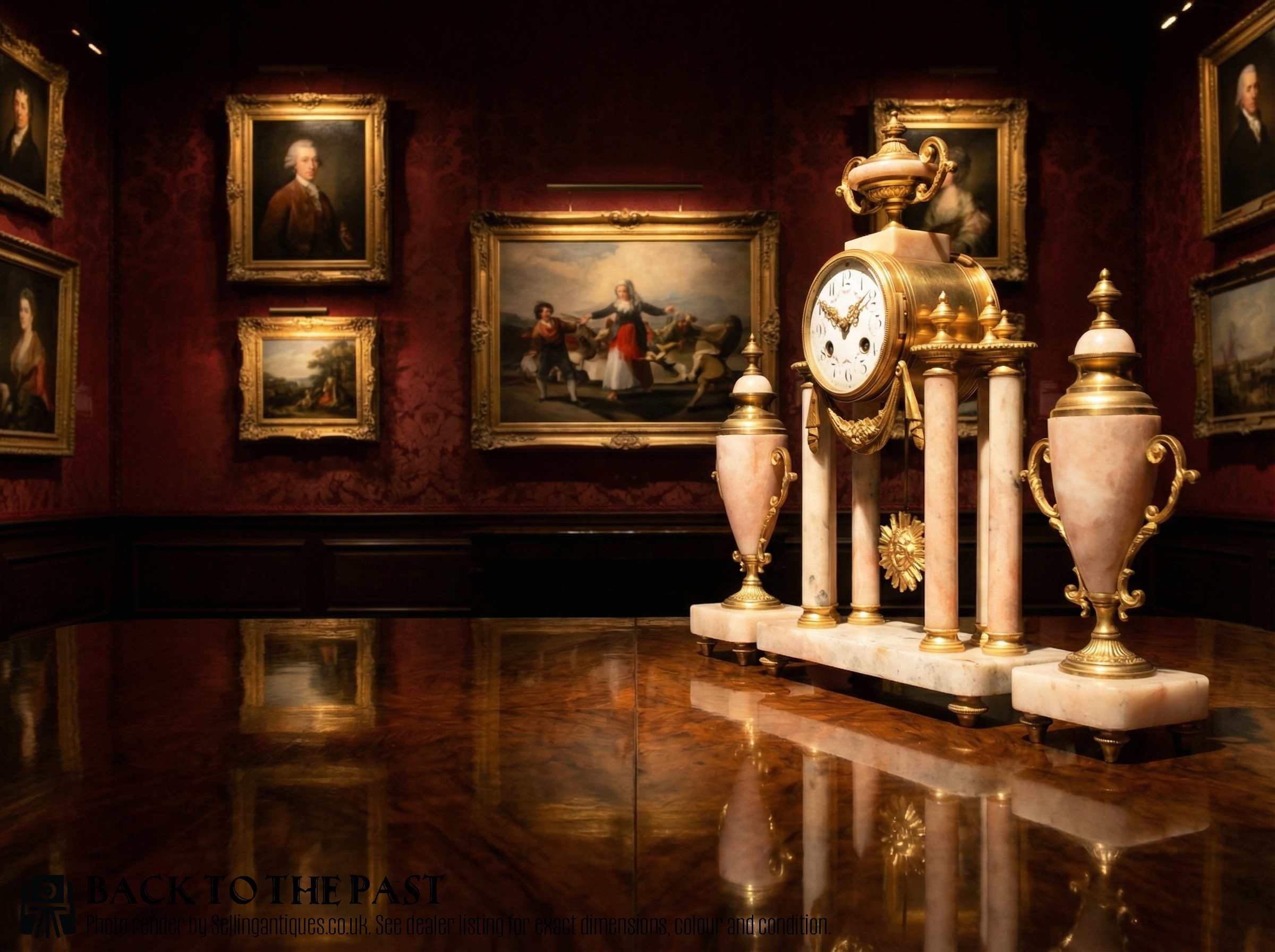
Victorian Portico Clock
A Victorian portico clock uses architectural framing, typically featuring two vertical pillars supporting a central clock housing beneath a pediment. These mantel clocks bridge classical design and nineteenth-century craftsmanship, appearing in various revival styles including Louis XVI and French Empire.
Origins span nineteenth-century France and Britain, reflecting the widespread popularity of classical architecture in domestic interiors. These decorative objects function as reliable timekeepers while serving as bold interior statements.
Materials and construction
Cabinetmakers utilised dense timbers such as rosewood and ebonised wood as the primary chassis for these architectural clocks, frequently embellishing the surfaces with lemon wood marquetry and boxwood inlay. Ormolu and gilt bronze mounts were applied to capitals, bases, and pendulum bezels to catch the light.
Dials were commonly fashioned from white enamel with delicate numerals, protected behind glass. Heavier models incorporated pink marble or onyx, providing a solid foundation for the elevated column structure.
Victorian Portico Clock Retail Price Guide 2026
Typical asking prices for victorian portico clock among the pieces listed under this phrase on Sellingantiques today, from the lower quarter to the upper quarter. They describe what is for sale here now, not the wider market.
Materials documented in these listings include rosewood, brass, enamel, ormolu, gilt bronze, ebonised wood, glass, boxwood, marble, and onyx.
Defining quality
The sophistication of the timber inlay and the crispness of the ormolu mounts separate standard examples from finer works. Finely executed lemon wood marquetry on rosewood demonstrates superior cabinetmaking skill.
The presence of matching garnitures or original glass domes significantly elevates a piece, as does the integration of architectural proportions that remain balanced and harmonious.
The Victorian Portico Clock Glossary
- Portico clock
- A mantel clock designed with architectural columns supporting a lintel and pediment, framing a suspended pendulum.
- Ormolu
- Gilded bronze or brass applied to furniture and clock mounts for decorative accent.
- Garniture
- A set of matching decorative objects, typically a central clock flanked by a pair of candelabras or urns.
- Marquetry
- Decorative veneer applied in patterns to wooden surfaces using contrasting timbers such as lemon wood and boxwood.
- Ebonised wood
- Timber treated with a dark finish to imitate the appearance of ebony.
Victorian Portico Clock: Frequently Asked Questions
What is a portico clock?
A portico clock is a mantel timepiece built with architectural columns reminiscent of classical temples, housing the pendulum centrally between the pillars.
These pieces were popular throughout the nineteenth century in both French and British drawing rooms.
How do I date a portico clock?
Dating relies on examining the timber, revival style, and dial construction, with nineteenth-century examples often showing French Empire or Louis XVI influences.
Marks on the movement and the choice of materials such as rosewood or marble also help narrow the period of manufacture.
What is a clock garniture?
A clock garniture is a matching set comprising a central clock and side ornaments like candelabras or urns.
Victorian makers produced these sets to create a balanced decorative display on a mantelpiece.
Where should I place a portico clock?
These clocks require a stable, level surface such as a mantelpiece, sideboard, or sturdy table to ensure accurate pendulum movement.
Keeping them away from direct sunlight and damp environments helps preserve the wood and ormolu mounts.