



Column Mantel Clock
A column mantel clock brings architectural symmetry and steady timekeeping to a room, drawing the eye with upright pillars of marble, wood or metal.
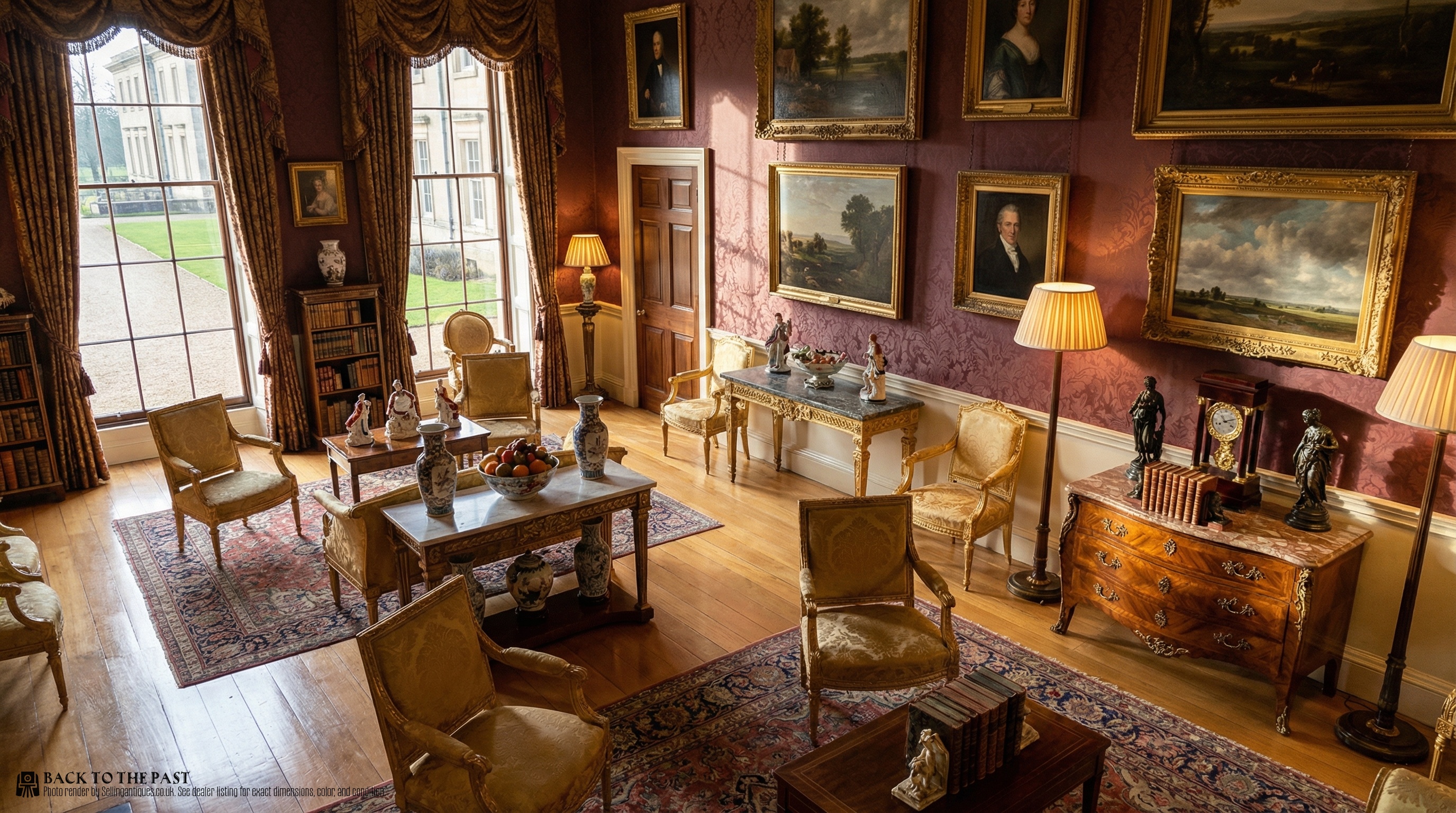
Column Mantel Clock
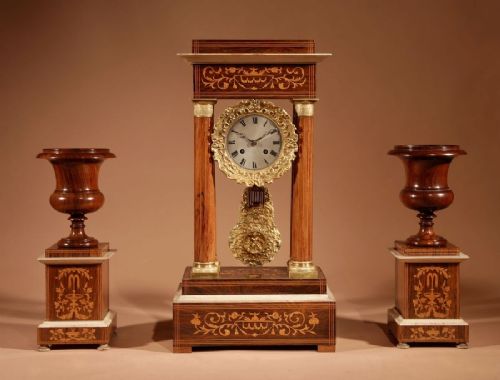
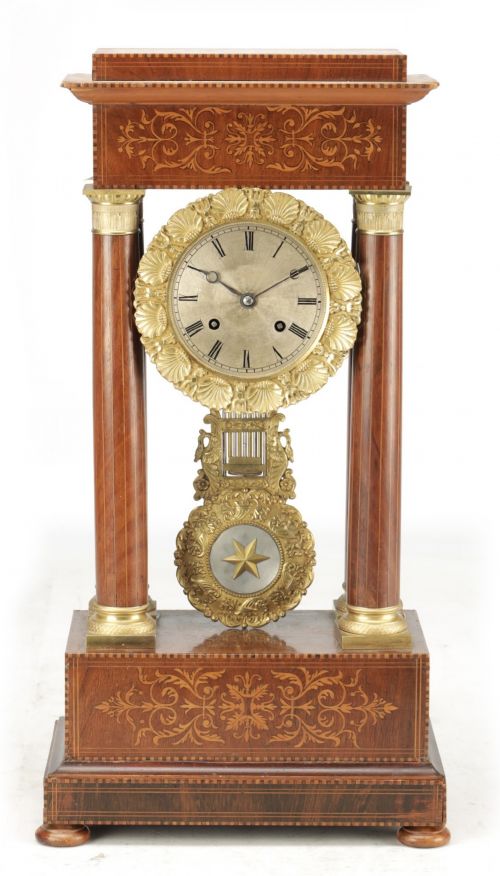
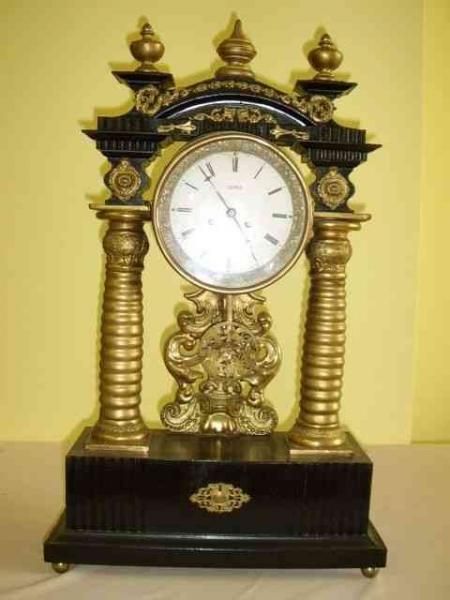
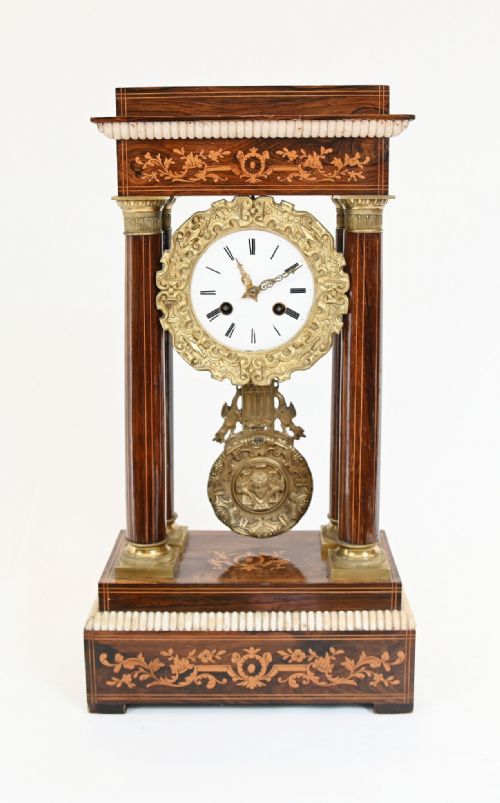
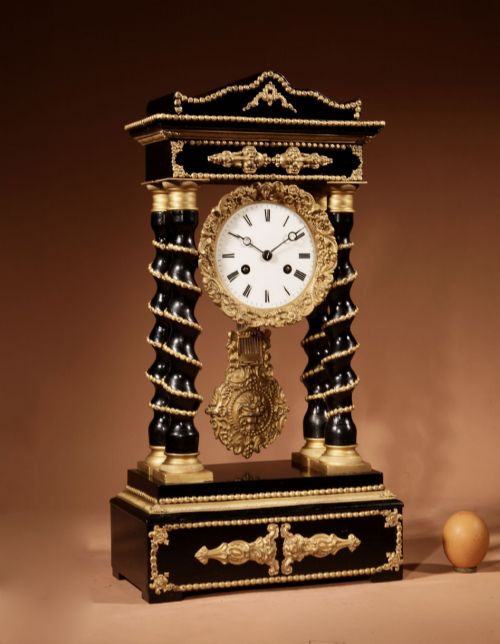
Buyers encounter French works alongside British variants, often housing eight-day movements or intricate striking mechanisms. The forms range from classical portico shapes with suspended pendulums to heavy architectural marble and bronze cases.
Materials and construction
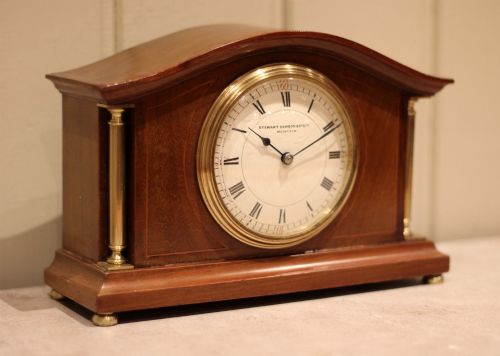
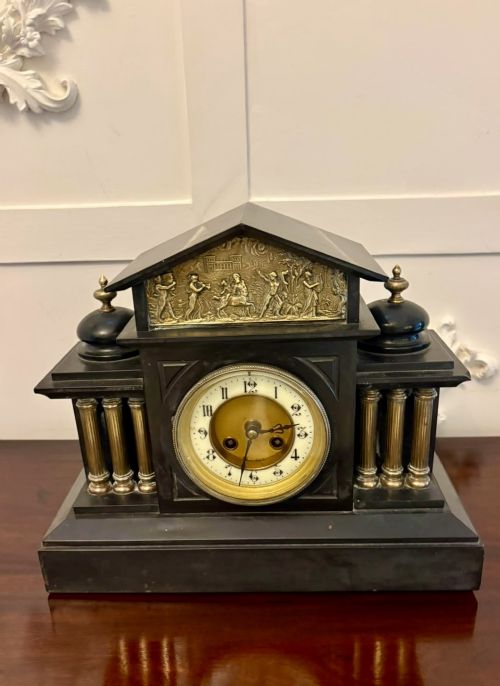
Maker workshops utilised dense stones like black and white marble alongside rich hardwoods such as rosewood and mahogany for the main bodies. Gilt bronze, ormolu and polished brass provide the capitals, bases and dial bezels.
Glass domes frequently protect delicate portico movements, while enamel dials feature hand-painted numerals and fine steel hands. Inlay work in lemon wood or contrasting stone adds decorative precision to the structural columns.
Column Mantel Clock Retail Price Guide 2026
Typical asking prices for column mantel clock among the pieces listed under this phrase on Sellingantiques today, from the lower quarter to the upper quarter. They describe what is for sale here now, not the wider market.
Distinctions in quality
The sophistication of the cast ormolu mounts and the crispness of the marble carving separate standard production from finer pieces. Heavy fire-gilt bronze displays a deeper lustre than electroplated brass.
Movement complexity dictates upper tiers, with grand sonnerie, moon-phase indicators or maker signatures elevating a piece. Well-matched wood veneers and tight joinery on architectural wooden cases show superior craftsmanship.
Georg Adam Scheid·Breguet·Mappin and Webb·Baby and Jannings·Philippes Paris
The Column Mantel Clock Glossary
- Portico clock
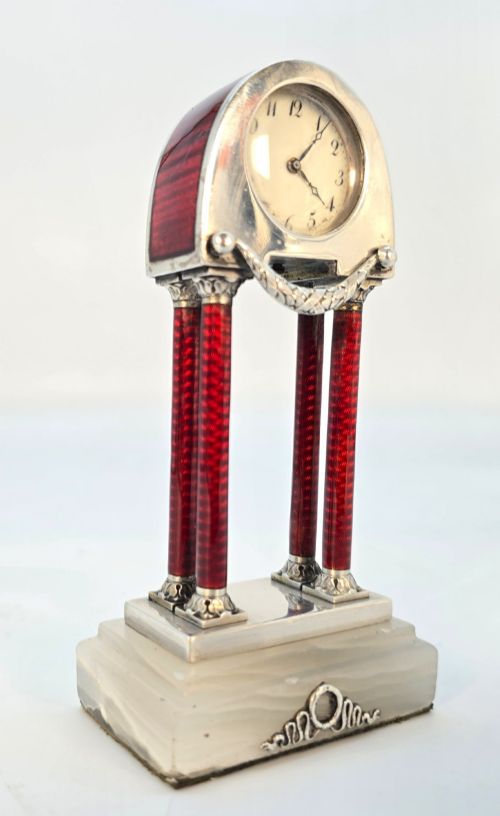
- A distinct architectural clock style featuring a flat top supported by two or four slender pillars. These typically house a pendulum swinging freely between the columns.
- Garniture
- A matching set consisting of a central clock flanked by two ornamental pieces such as urns or vases. They provide a balanced decorative display on a mantelpiece.
- Ormolu
- Finely chopped or powdered high-karat gold applied to a base metal object, usually bronze, using a mercury amalgamation process. This technique creates a rich, lasting metallic sheen.
- Grand Sonnerie
- A complex clock striking mechanism that sounds both the hours and the quarters automatically on every quarter hour. It represents high technical skill in horology.
- Carriage clock
- A small, spring-driven portable timepiece designed for travel during the 19th century, usually fitted with a folding handle and glass panels.
Column Mantel Clock: Frequently Asked Questions
How do I wind a column mantel clock?
Most mechanical column mantel clocks use a key inserted into winding holes on the enamel dial to tension the mainsprings. Care must be taken not to overwind the movement.
Heavier architectural pieces may require synchronising the pendulum after moving, ensuring the beat sounds even and steady.
Where should I place a heavy marble clock?
Due to the substantial weight of marble and slate bodies, place these clocks on sturdy, level furniture capable of supporting the load without warping. A firm surface prevents the movement from going out of beat.
Keep the clock away from direct sunlight and damp walls to preserve the marble polish and interior metalwork.
What is a portico clock?
A portico clock is an architectural timepiece where the dial is suspended or framed within a classical temple-like structure supported by columns. The pendulum is often visible, hanging centrally between the pillars.
Originating in France, these pieces frequently feature mahogany, rosewood or ormolu embellishments.
How do I clean the glass dome?
Glass domes protecting delicate portico clocks should be lifted off carefully using both hands and placed on a soft, flat surface before cleaning. Use a mild glass cleaner applied to a cloth rather than sprayed directly near the clock.
Ensure the base is completely stable before replacing the glass cover.