
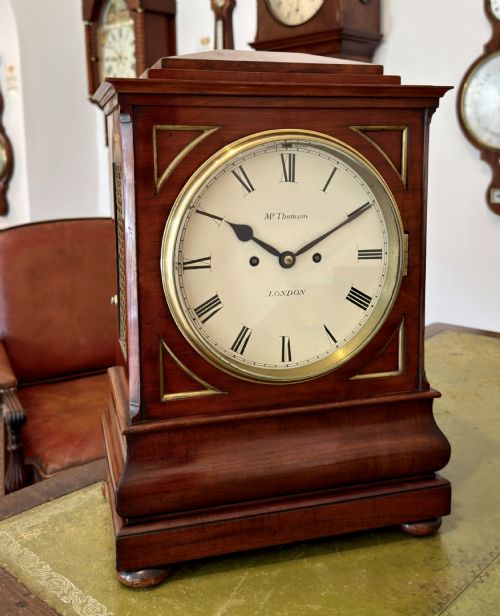
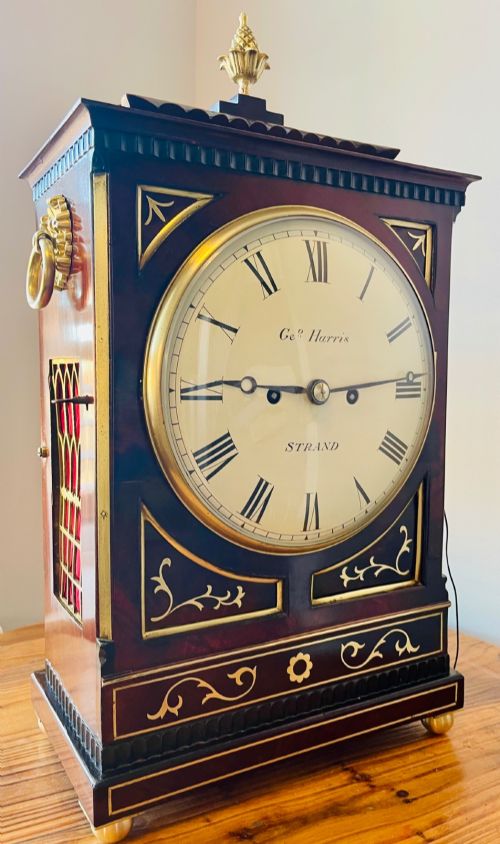
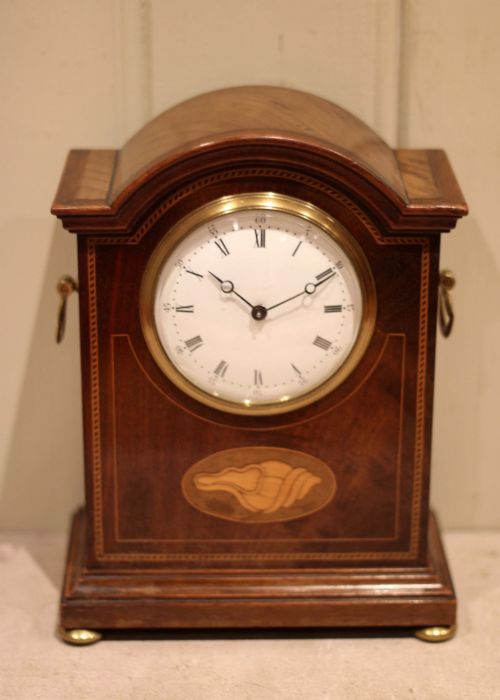
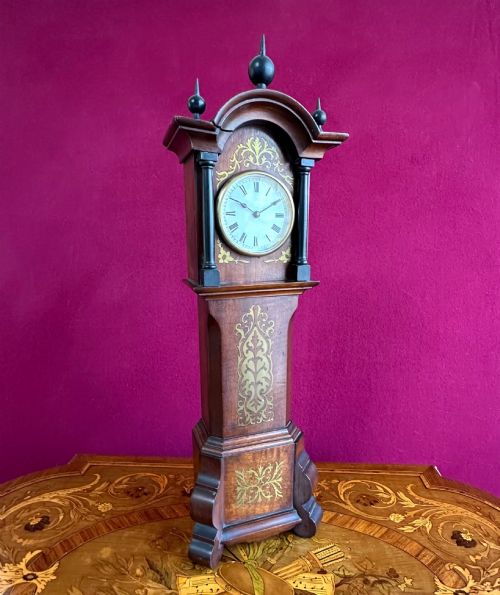


Inlaid Wood Mantel Clock
When you look for an inlaid wood mantel clock, you are choosing a timekeeper that brings warmth and meticulous joinery to a room.

Inlaid Wood Mantel Clock
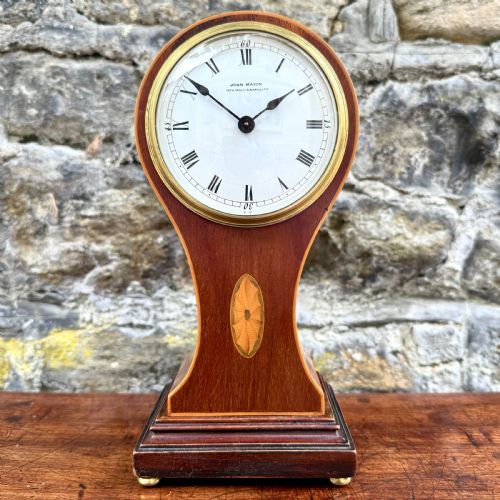
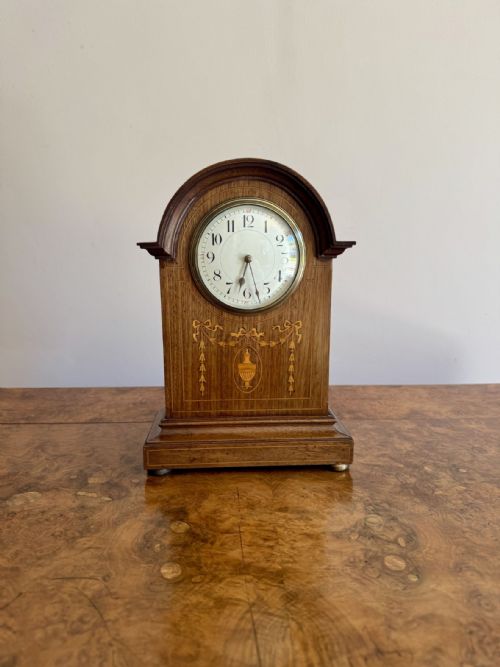
An inlaid wood mantel clock serves as a functional timepiece and a decorative centrepiece for a shelf or mantel. You will most frequently encounter Edwardian and Victorian examples on this page, often built in compact table formats or classic balloon silhouettes.
The materials span rich dark timbers alongside lighter contrasting accents, reflecting periods from the Regency era through to the early twentieth century. Makers housed these movements in mahogany, rosewood, and fruitwood cases adorned with delicate stringing or floral marquetry.
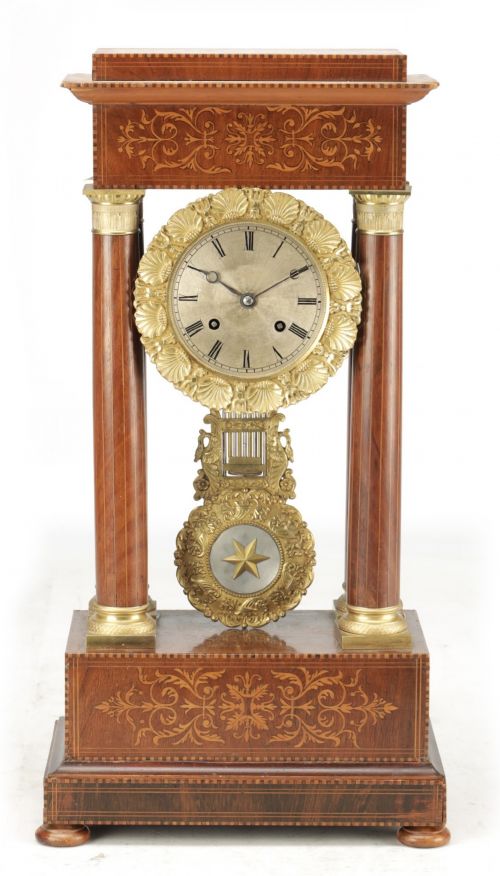
Beyond the standard domestic shelf designs, you will occasionally spot bracket clocks, portico forms, or architectural architectural shapes spanning Georgian craftsmanship to Art Nouveau styling.

Materials and construction
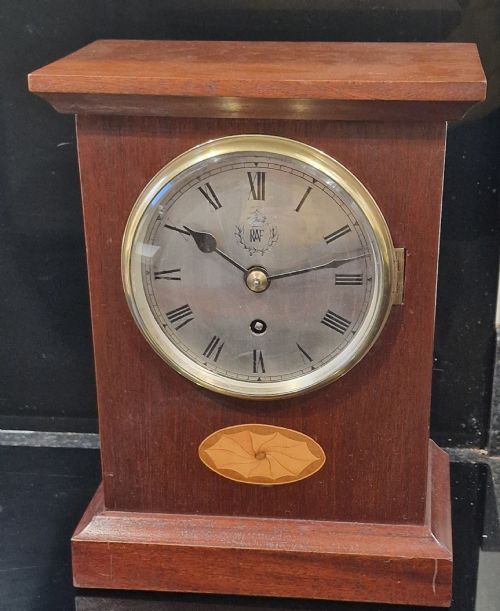
Cabinetmakers constructed the primary carcase using dense hardwoods such as mahogany and rosewood, ensuring structural stability for the internal mechanical movement. They then applied contrasting veneers and intricate stringing of satinwood, boxwood, fruitwood, and lemon wood into recessed channels.
Dials frequently featured contrasting metals like brass or silvered metal, often protected beneath a bevelled glass bezel and framed by cast brass or ormolu mounts. Intricate marquetry panels were painstakingly cut and fitted by hand into the wooden surfaces before polishing.
Listings feature mahogany and rosewood most frequently, complemented by decorative stringing in boxwood, satinwood, and lemon wood.
Judging the standard
Quality rests heavily on the precision of the cabinetwork and the crispness of the contrasting inlay. Sharply defined botanical motifs and tightly fitted stringing separate superior pieces from simpler utilitarian models.
The sophistication of the internal movement further dictates the tier of the piece, with fusee mechanisms and chiming trains representing higher workshop standards than basic timepieces.
Thomson of London·Paul Garnier·Thomas Connold·Joseph Jump·Henry Marc
The Inlaid Wood Mantel Clock Glossary
- Inlay
- The technique of inserting contrasting strips or pieces of wood into a prepared depression on the primary surface to form a decorative pattern. This method defines the primary aesthetic of these timepieces.
- Marquetry
- Elaborate veneer work forming pictorial or geometric designs using various coloured woods. It requires considerable skill to assemble the delicate pieces before gluing them to the carcase.
- Fusee
- A conical pulley used in mechanical clocks to maintain an even pull on the gear train as the mainspring unwinds. This mechanism ensures more accurate timekeeping.
- Stringing
- Very narrow strips of contrasting wood inlaid in thin lines around the edges of a clock case. It serves to outline panels and accentuate the architectural shape.
- Bezel
- The metal ring that holds the glass protecting the dial of the clock. It often opens on a hinge to allow hand-setting.
Inlaid Wood Mantel Clock: Frequently Asked Questions
How do I wind an antique clock?
Most mechanical clocks use a specialised key inserted into the dial to tension the mainsprings. Turn the key gently until you feel resistance, avoiding over-winding to protect the internal gears.
Ensure you match the correct key size to the winding squares to prevent slipping and damaging the delicate brass components over years of daily maintenance.
Where should I place my mantel clock?
Position the piece on a stable, level surface away from direct sunlight and draughty doorways. Wooden cases react poorly to sudden humidity shifts and rapid temperature changes.
Placing the timepiece on a sturdy shelf ensures the mechanical pendulum or balance wheel remains level, which helps the movement keep accurate time.
How do I tell Victorian from Edwardian clocks?
Victorian models tend to feature darker timbers, heavier proportions, and ornate carving alongside brass or rosewood finishes. The overall aesthetic leans towards traditional, formal symmetry.
Edwardian pieces often introduce lighter fruitwoods and satinwood, frequently accompanied by delicate Art Nouveau floral marquetry and more streamlined case silhouettes.
Why does my clock lose time?
Mechanical timepieces require regular servicing and proper levelling to maintain a steady beat. Changes in the room temperature can also cause the metal parts to expand or contract.
If the beat sounds uneven, adjusting the pendulum regulating nut or consulting a professional horologist will usually restore proper timekeeping functionality.