






Brass Mounted Bracket Clock
A brass mounted bracket clock brings architectural presence and precision engineering into a room, combining fine cabinet work with dependable mechanical movement.
What these pieces are
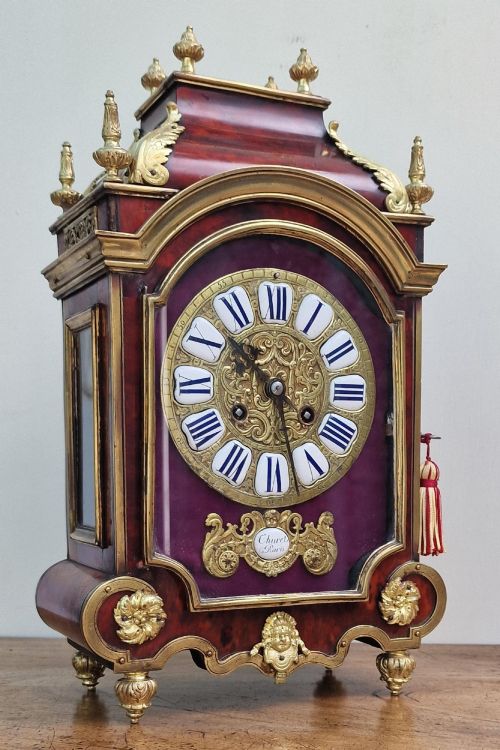
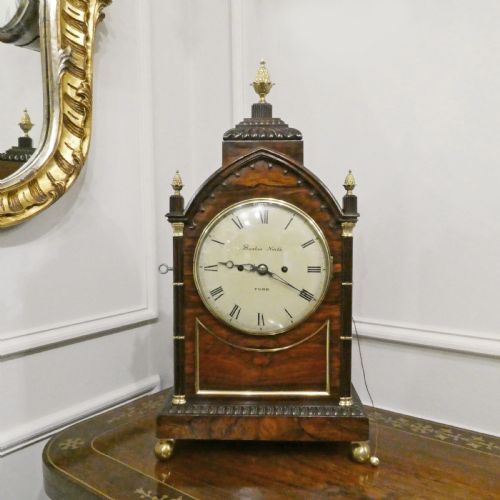
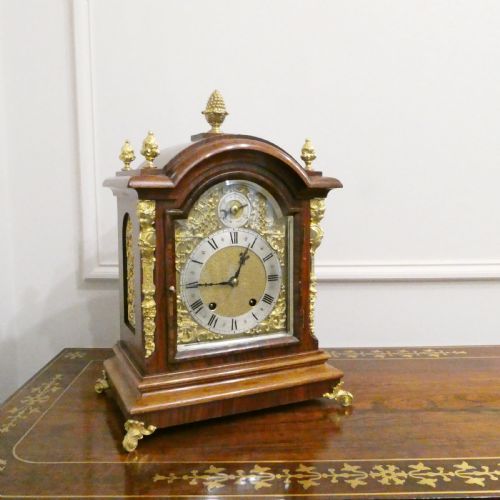
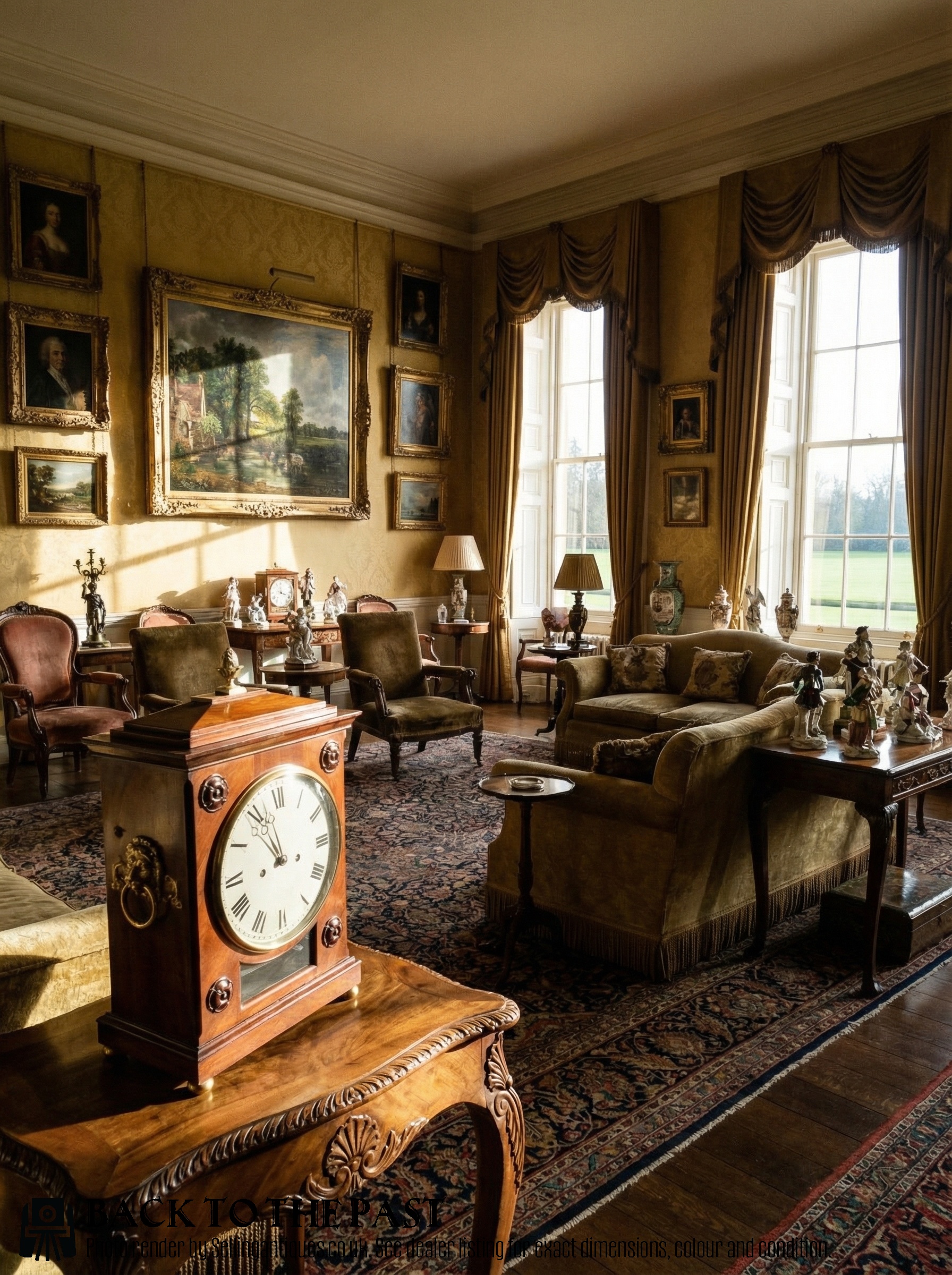
A brass mounted bracket clock is a portable table timekeeper typically housed in a wooden case designed to sit on a bracket or furniture surface. The selections here span the eighteenth century, the Regency period, and later revival styles, showing the enduring appeal of these mechanical objects.
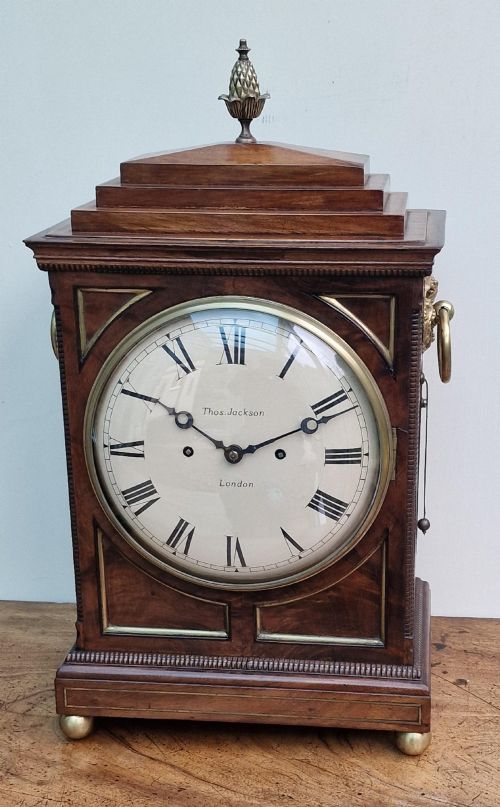
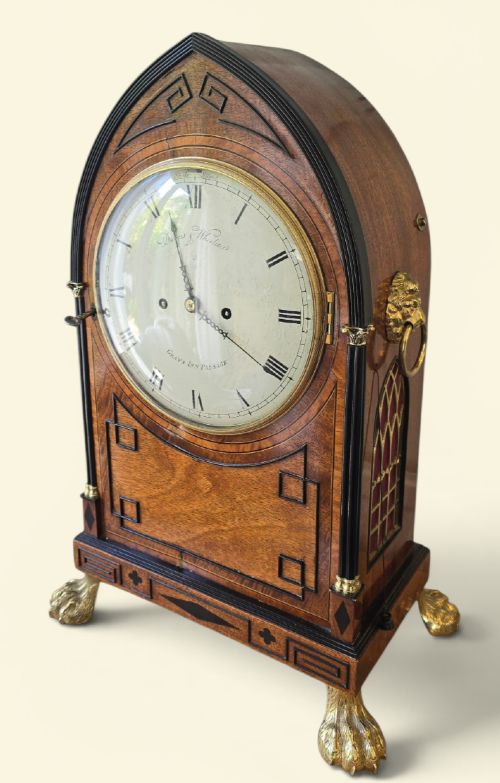
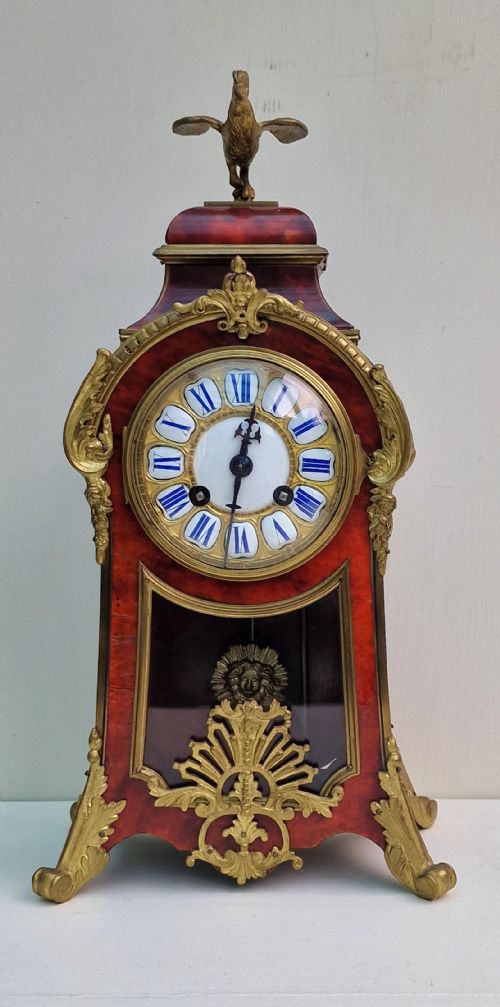
Mahogany cases dominate the available examples, often enriched with brass mounts, bezels, or ormolu details that frame the dial and movement. You will encounter classical Georgian proportions alongside bolder Regency designs and later Louis XIV style pieces.
Many of these bracket clocks feature silvered dials and visible pendulums, demonstrating both utilitarian function and decorative ambition. Makers from London feature prominently, marking these timepieces as products of skilled urban workshops.
How they were made
Cabinet makers constructed the timber cases using mahogany and ebonised wood, frequently applying wood veneer to create smooth, polished exterior surfaces. Glass panels protected the delicate dials while allowing a clear view of the face from various angles.
Metalworkers cast and chased brass and ormolu mounts to decorate the corners, feet, and crests of the wooden housings. Inside the case, complex movements such as twin-fusee mechanisms with multiple pillars provided the regulated power needed to keep accurate time.
Retail Price Guide 2026
Typical UK retail prices for brass mounted bracket clock, calculated from the Sellingantiques database of over a million retail prices indexed since 2003. This retail price guide relies exclusively on Sellingantiques data; no external sources or auction records are used, so the figures do not describe the wider market.
Listings feature woods like mahogany and ebonised wood alongside decorative brass, ormolu, and glass components.
What varies in quality
The sophistication of the internal movement dictates the baseline quality, with multi-pillar and twin-fusee setups representing higher levels of horological ambition. Simpler movements offer reliable timekeeping, while complex mechanisms reflect the peak of contemporary clockmaking skill.
Case construction and the integration of decorative mounts separate standard examples from exceptional ones. Finely figured mahogany, crisp ormolu casting, and well-proportioned brass mounts demonstrate the artisan's commitment to aesthetic harmony.

Perigal of London·Brockbanks of London·Berguer of the Strand·James McCabe
The Brass Mounted Bracket Clock Glossary
- Bracket clock
- A portable mechanical clock traditionally designed to stand on a wall bracket or table. These timepieces often feature striking mechanisms and elaborate wooden cases.
- Twin-fusee
- A mechanical arrangement using two conical pulleys and chains or cords to maintain even tension on the gear train as the mainspring unwinds. This system improves the timekeeping accuracy of the clock.
- Ormolu
- Gilded bronze ornamentation applied to furniture and clock cases. The technique involves a mercury-gilding process that produces a rich metallic lustre.
- Silvered dial
- A metal clock face treated with a silver solution to create a bright, readable surface. Engraved numerals and markers are typically filled with dark wax for contrast.
- Ebonised wood
- Timber treated to imitate the dark, dense appearance of ebony. This finish provides a sharp visual contrast against bright brass mounts.
Frequently Asked Questions
Where should a bracket clock sit?
These clocks were originally designed to rest upon a dedicated wall bracket or a sturdy piece of furniture where they could be easily wound and heard chiming.
Place the clock away from direct sunlight, moisture, and heavy vibrations to protect both the wooden case and the delicate internal movement.
What is Egyptian revival style?
Egyptian revival design incorporates motifs inspired by ancient Egyptian art, such as sphinxes, obelisks, and distinct architectural columns.
This style emerged strongly during the Regency period, lending an exotic and classical gravity to furniture and decorative objects.
How do I identify a Regency clock?
Regency timepieces often feature bold architectural lines, classical proportions, and restrained use of brass inlay or mounts.
Look for refined mahogany veneers, clean silvered dials, and details that reflect early nineteenth-century British taste.