
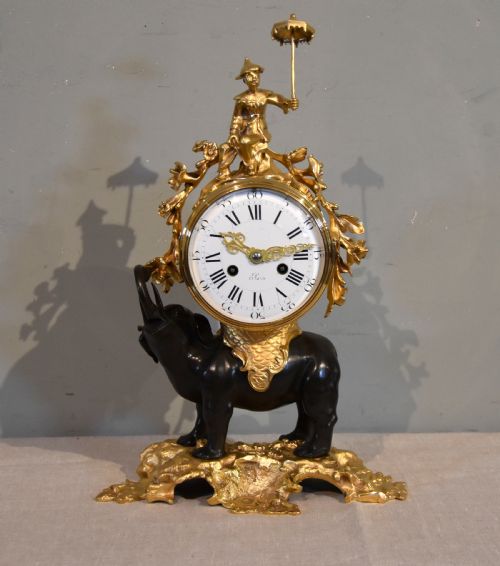


18th Century Table Clock
These 18th century table clocks are substantial brass and mahogany timekeepers built to command a room.
What these 18th century table clocks are
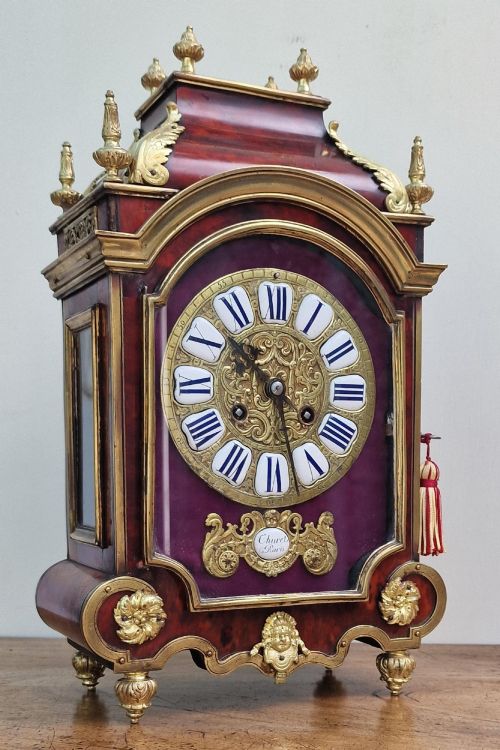
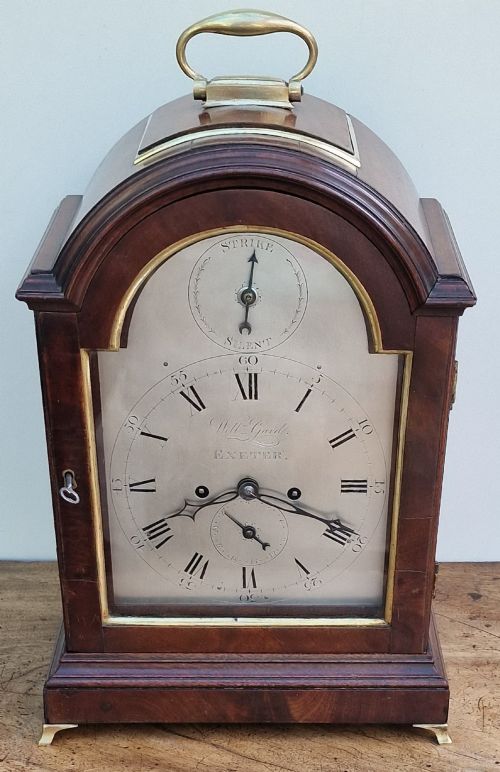
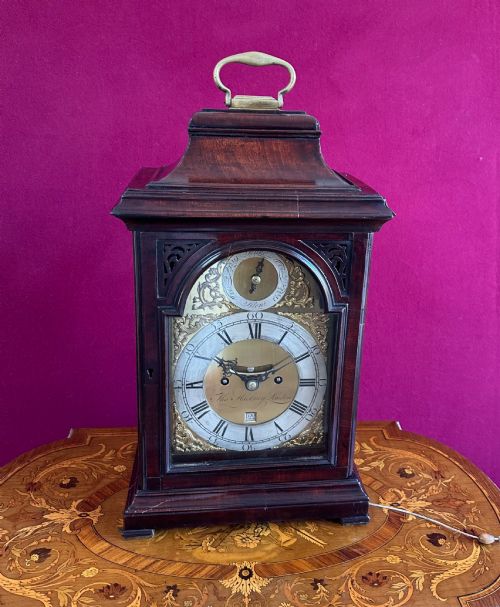
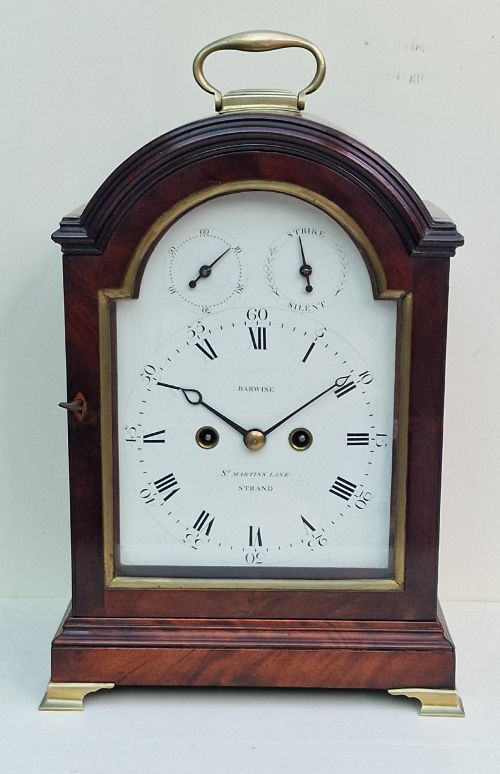
An 18th century table clock is typically encountered as a bracket clock housed in a mahogany case with a brass and silvered metal dial. These pieces span the Georgian period, including examples from around 1750 up to 1800, alongside French mantel or table forms.
The primary forms found here are bracket clocks featuring bell-top designs and verge movements, built to sit upon furniture surfaces rather than hang on walls. London and provincial makers both contributed to this tradition, producing substantial wooden cases glazed with glass panels.
A buyer examining this selection encounters objects defined by their mechanical movements and rich timber housings. The geographical origins range from English workshops in London and Exeter to continental makers in Paris.
How they were made
Makers constructed the housing using solid mahogany, often shaping the timber into bell-top silhouettes designed to house intricate brass movements. Glass panels were fitted to protect the interior while allowing visibility of the dial and mechanics.
Dials were commonly produced from silvered metal, providing a contrasting surface against the dark mahogany woodwork and brass mounts. The internal mechanisms relied upon verge escapements and striking systems driven by hand-assembled brass gear trains.
Retail Price Guide 2026
Typical UK retail prices for 18th century table clock, calculated from the Sellingantiques database of over a million retail prices indexed since 2003. This retail price guide relies exclusively on Sellingantiques data; no external sources or auction records are used, so the figures do not describe the wider market.
What varies in quality
The distinction between standard examples and superior pieces rests upon the originality of the internal movement and the crispness of the mahogany case carving. Retaining the original verge escapement and untouched silvered dial elevates a clock far above one with replaced components.
Provenance and signature also shape the standing of a piece, with named London or provincial makers demonstrating distinct levels of workshop proficiency. The harmony between the proportion of the bell-top case and the finesse of the brass dial engraving dictates the overall success of the object.
William Gard Exeter·Perigal of London·Vandercruse of Paris
The 18th Century Table Clock Glossary
- Bracket clock
- A portable timekeeper originally designed to sit on a wall bracket or table surface. These pieces usually feature a carrying handle on top and a glazed wooden case.
- Verge escapement
- An early type of mechanical escapement mechanism used to regulate the speed of a clock. It works in conjunction with a balance spring or pendulum to control the gear train.
- Silvered metal
- A metal dial surface treated with a silver compound to create a bright, legible finish. It is often engraved with numbers and makers' names.
- Bell-top
- A distinctive arched wooden roof style found on Georgian clock cases. This curved profile mimics the shape of a church bell.
- Georgian
- The period spanning the reigns of the first four Georges, covering the 18th century and early 19th century. Furniture and clocks from this era display classical proportions and fine mahogany usage.
Frequently Asked Questions
What is an 18th century table clock?
These pieces are mechanical timepieces housed in wooden enclosures, primarily designed to rest on tables or brackets rather than stand on the floor.
They combine brass movements with mahogany cases and silvered dials, reflecting the domestic horology of the Georgian era.
How do I wind an old bracket clock?
Winding requires a matching key inserted into the dial winding holes to tension the internal springs or weights gently. Care must be taken not to overwind the mechanism to preserve the vintage brass teeth.
Consulting a professional horologist for initial setup ensures the verge movement operates correctly without damaging the historic components.
Where were these clocks made?
The examples here originate from English workshops in London and Exeter, as well as continental centres like Paris.
Provincial makers worked alongside metropolitan craftsmen to supply these substantial timekeepers to affluent households.