




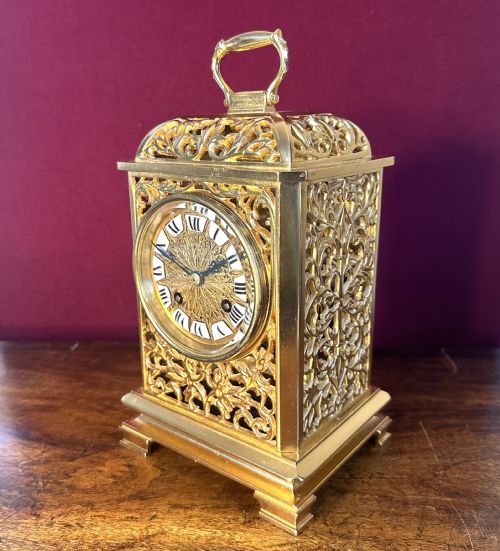


Brass Handle Mantel Clock
A brass handle mantel clock brings heavy timber cases and polished brass into a room, offering mechanical reliability alongside period presence.

Brass Handle Mantel Clock
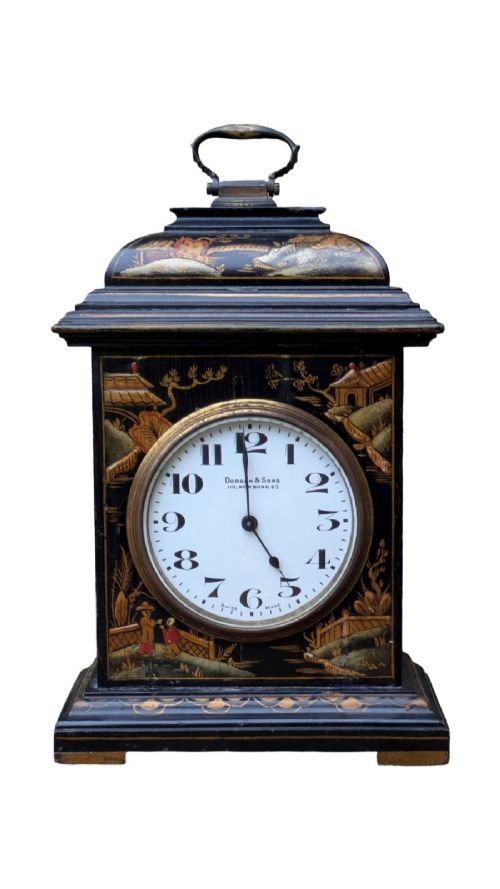
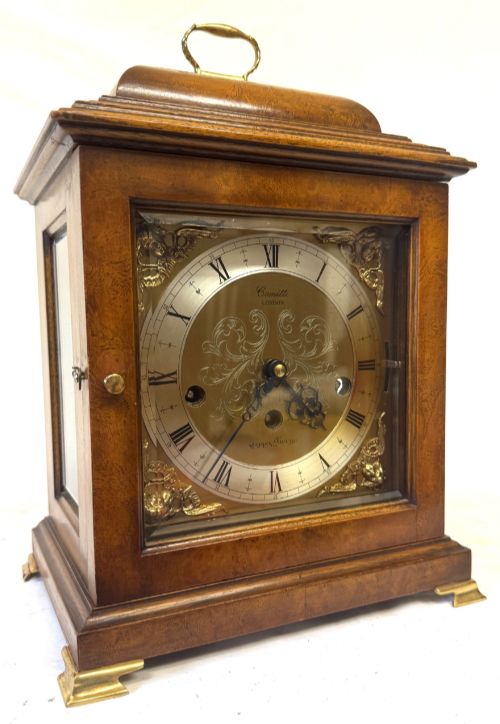
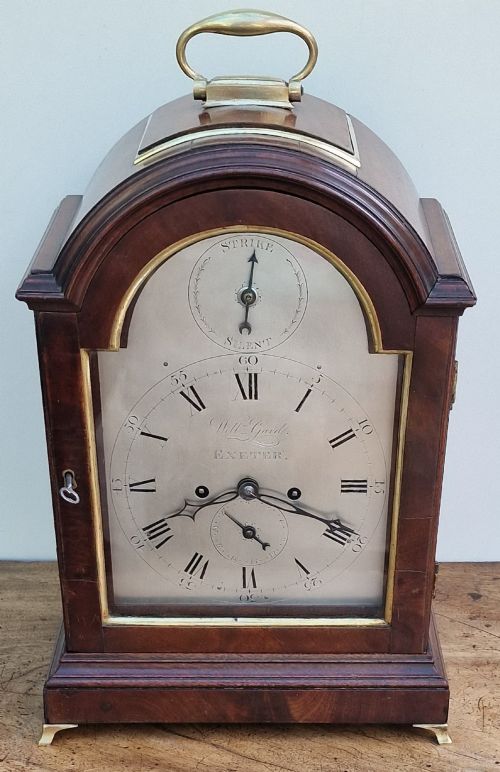
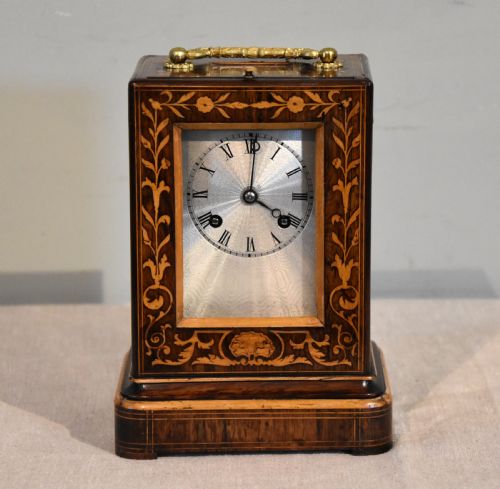
A brass handle mantel clock encompasses wooden bracket clocks, mahogany or rosewood table pieces, and portable carriage clocks with integrated metal carrying handles. Buyers searching this phrase look for timepieces where the metal handle forms an integral part of the transportable design.
The most common versions met on this page are the 19th-century French carriage clock with bevelled glass panels and the traditional English mahogany or rosewood bracket clock.
Examples span periods from the 18th century through the Georgian, Regency, and Victorian eras up to mid-century examples from 1960.
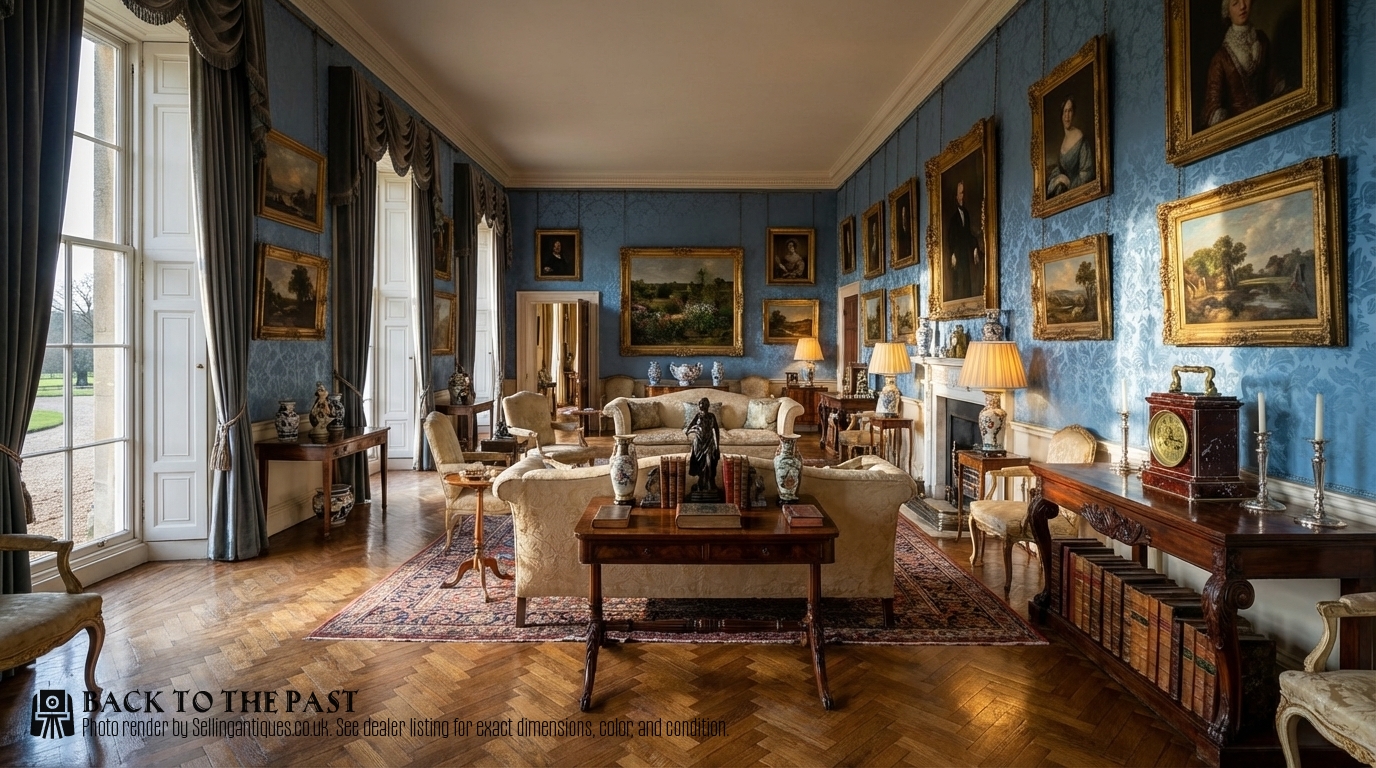
Materials and construction
Cases utilise dense hardwoods including mahogany, walnut, and rosewood, alongside ebonised wood and occasional marble, paired with heavy cast brass frames and mounts.
Enamel dials, silvered metal chapters, and intricate glass panels combine with mechanical fusee, spring-driven, or platform escapement movements to construct each clock.
Brass Handle Mantel Clock Retail Price Guide 2026
Typical asking prices for brass handle mantel clock among the pieces listed under this phrase on Sellingantiques today, from the lower quarter to the upper quarter. They describe what is for sale here now, not the wider market.
Materials recorded across the inventory include mahogany, rosewood, walnut, brass, enamel, and rouge marble.
Quality variations
The distinction between tiers rests upon the crispness of the brass casting, the depth of marquetry or wood grain, and the complexity of the internal striking or chime movement.
Early makers signal their standard through hand-engraved backplates, original verge or platform escapements, and heavier timber cases.
Mappin and Webb·Paul Garnier·Arnold and Frodsham·James Smith·Robert Higgs
The Brass Handle Mantel Clock Glossary
- Bracket clock
- A portable table clock originally designed to sit on a wall bracket. They typically feature wooden cases with brass carrying handles.
- Carriage clock
- A small, spring-driven timekeeper developed for travel. They incorporate brass frames with glass panels and a folding handle on top.
- Platform escapement
- A miniature regulating mechanism mounted on its own small platform inside portable clocks. This allows accurate timekeeping regardless of orientation.
- Fusee
- A conical pulley connected to the mainspring by a cord or chain. It ensures even power delivery to the movement as the spring unwinds.
Brass Handle Mantel Clock: Frequently Asked Questions
What is a brass handle mantel clock?
These timepieces are portable mechanical clocks housed in wood or glass cases fitted with a sturdy metal handle on top for carrying. They include traditional English bracket clocks and French brass carriage clocks.
Most examples sit on mantelpieces, tables, or desks, combining functional timekeeping with decorative woodwork or polished metal.
How do I wind my clock?
Winding requires using the correct key inserted into the dial holes to tension the mainspring gently. Care must be taken not to over-wind the movement.
Different models require winding at weekly or eight-day intervals depending on whether they are timepieces or striking movements.
How do I date a bracket clock?
Dating relies on examining the timber species, case silhouette, dial signature, and the construction of the internal movement. Georgian pieces often show bell tops and painted dials.
Later Victorian and Edwardian examples incorporate different woods, marquetry, and revised escapement technologies.
Where should I place a carriage clock?
Carriage clocks need a stable, level surface away from direct sunlight, moisture, and extreme temperature fluctuations. Mantelpieces and steady side tables suit them best.
Because they feature glass panels on multiple sides, positioning them away from busy household traffic protects the case.