


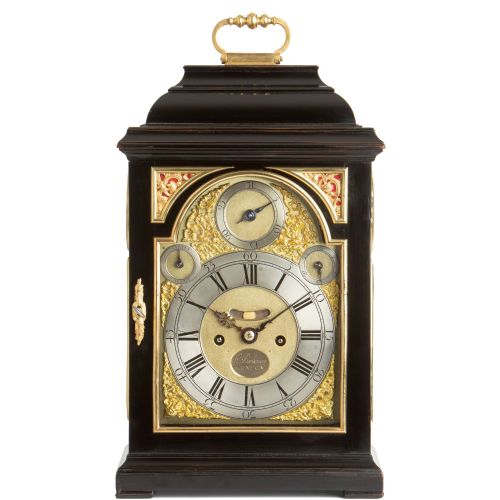


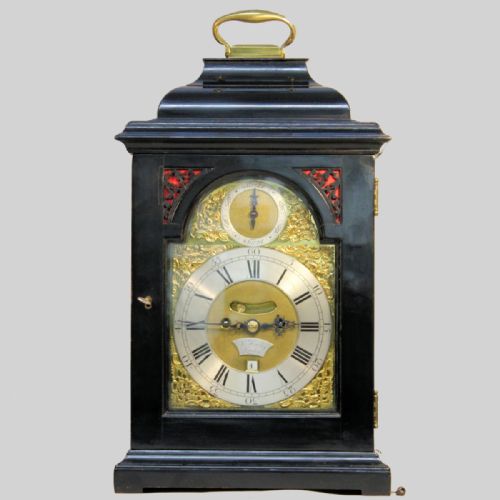


Bell Top Bracket Clock
A bell top bracket clock brings architectural eighteenth century presence and mechanical depth into a room, making it the proper choice for serious horological collectors.
Understanding a bell top bracket clock
A bell top bracket clock is an eighteenth century or Georgian timekeeper housed in a distinct timber case with a shaped, domed upper section. Buyers searching for a bell top bracket clock will encounter traditional table clocks and mantel clocks originating primarily from London makers during the Georgian period.
The objects span walnut, mahogany, and ebonised wood cases enclosing complex mechanical movements. Most examples on this page date from the eighteenth century, demonstrating the classic proportions and dial layouts typical of that era.
Forms include striking mechanisms, quarter repeating functions, and verge escapements mounted behind silvered metal dials. These pieces represent the height of British domestic clockmaking before nineteenth century industrialisation changed workshop production.
Materials and construction
Cases are constructed from mahogany, walnut, or ebonised wood, frequently fitted with glass panels and brass carrying handles or mounts. The distinctive bell top shape requires precise timber joinery to form the curved upper arches.
Internal movements combine steel, brass, and silvered brass or metal components driven by chain fusee mechanisms. Escapements such as verge or tic tac regulate the movement, while bells mounted within the dome sound the hours and quarters.
Retail Price Guide 2026
Typical UK retail prices for bell top bracket clock, calculated from the Sellingantiques database of over a million retail prices indexed since 2003. This retail price guide relies exclusively on Sellingantiques data; no external sources or auction records are used, so the figures do not describe the wider market.
Listings feature mahogany, walnut, and ebonised wood cases housing verge escapements across the Georgian period.
Discerning quality in mechanical timepieces
Quality rests in the originality of the movement and the crispness of the timber case carving. Retaining the original verge escapement and signature dial work distinguishes an exemplary piece from one with later replacement parts.
The refinement of the engraving on the silvered dial and backplate indicates the standing of the maker. Heavier cast brass mounts and well figured mahogany or walnut veneers elevate the visual authority of the clock.
Somersall London·John Taylor·Watson London·Richard Peckover·Joseph Lum·Robert Brown·John Richardson·Junghans
The Bell Top Bracket Clock Glossary
- Verge escapement
- An early mechanical regulator using a crown wheel and pallet axis. This is the traditional escapement found in eighteenth century bracket clocks.
- Fusee
- A conical pulley used to maintain equal force on the train as the mainspring unwinds. It ensures consistent timekeeping across the duration of the wind.
- Quarter repeating
- A mechanism that sounds the hours and quarters on bells when a cord is pulled. This complex addition was valued for telling time in dark rooms.
- Silvered dial
- A brass dial plate treated with a mixture of silver, salt, and tartar to produce a frosted metallic finish. Numerals and maker signatures are typically engraved and blackened through this surface.
Frequently Asked Questions
How often should a bell top bracket clock be wound?
Most eighteenth century fusee movements require winding once a week to maintain proper tension on the chain and mainspring.
Regular winding at the same time each day preserves the rhythm of the verge escapement and keeps the striking train synchronised.
Where should I place a bracket clock?
These clocks were designed for sturdy tables, desks, or specialised wall brackets where the sound of the bell could carry clearly through a room.
Avoid placing them in areas subject to heavy vibrations, direct sunlight, or fluctuating humidity which can affect the timber and brass.
How do I identify a Georgian movement?
Georgian movements are characterised by hand cut brass wheels, engraved backplates bearing the maker signature, and fusee driven gear trains.
Inspect the interior through the glass side panels or back door to observe the distinct hand finishing on every steel and brass component.
What does ebonised wood mean?
Ebonised wood is timber, often pear or fruitwood, treated with a dark stain or finish to imitate expensive ebony.
This technique was favoured by eighteenth century makers seeking a deep, uniform dark surface that contrasted sharply with brass dial furniture.