
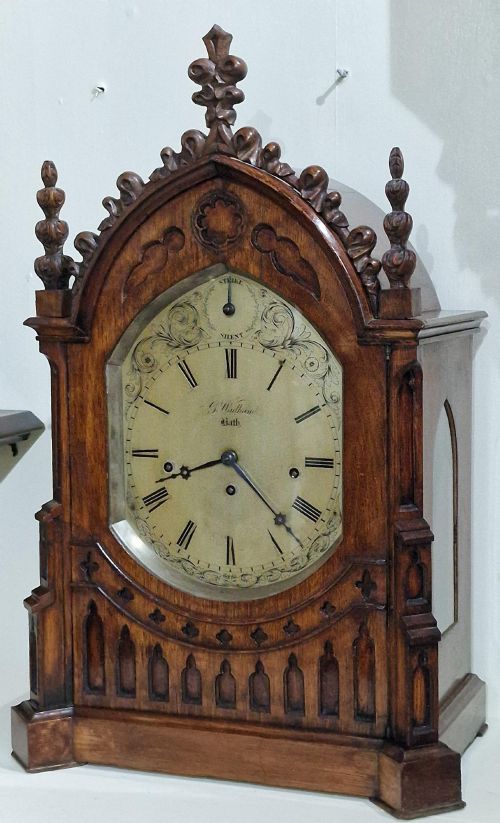
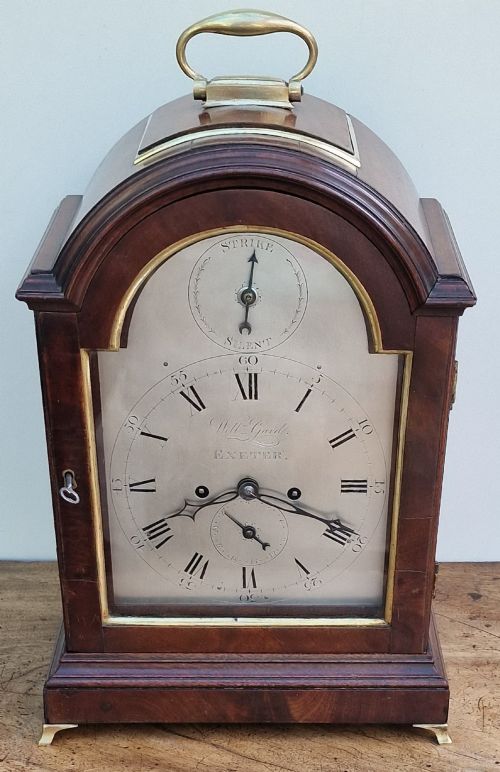
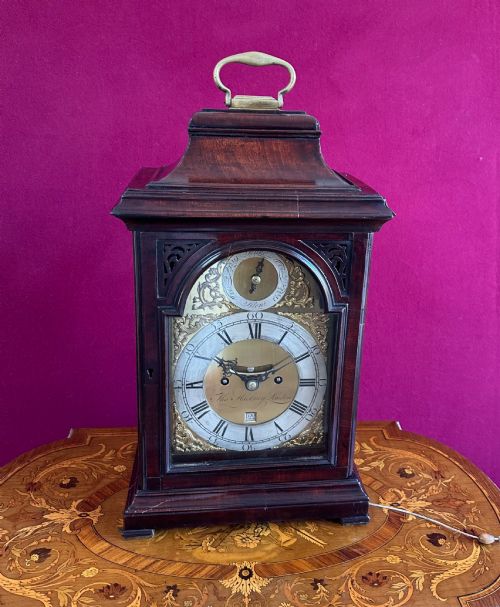
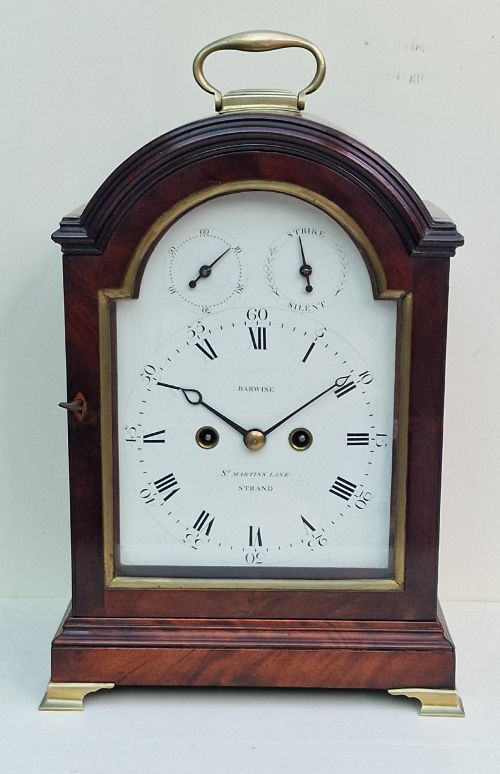
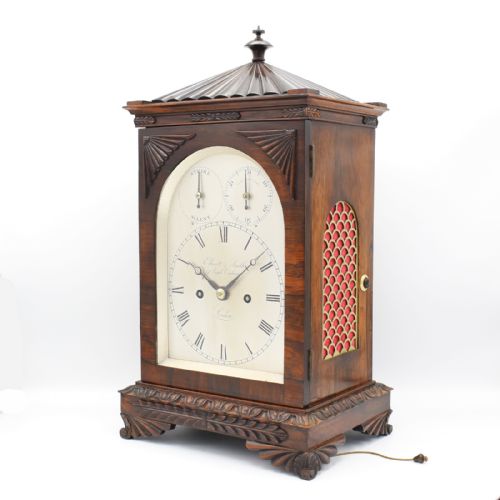


Strike Silent Bracket Clock
A strike silent bracket clock is a table timepiece that lets you silence the chime on demand, prized for its intricate mechanics and handsome cabinet work.
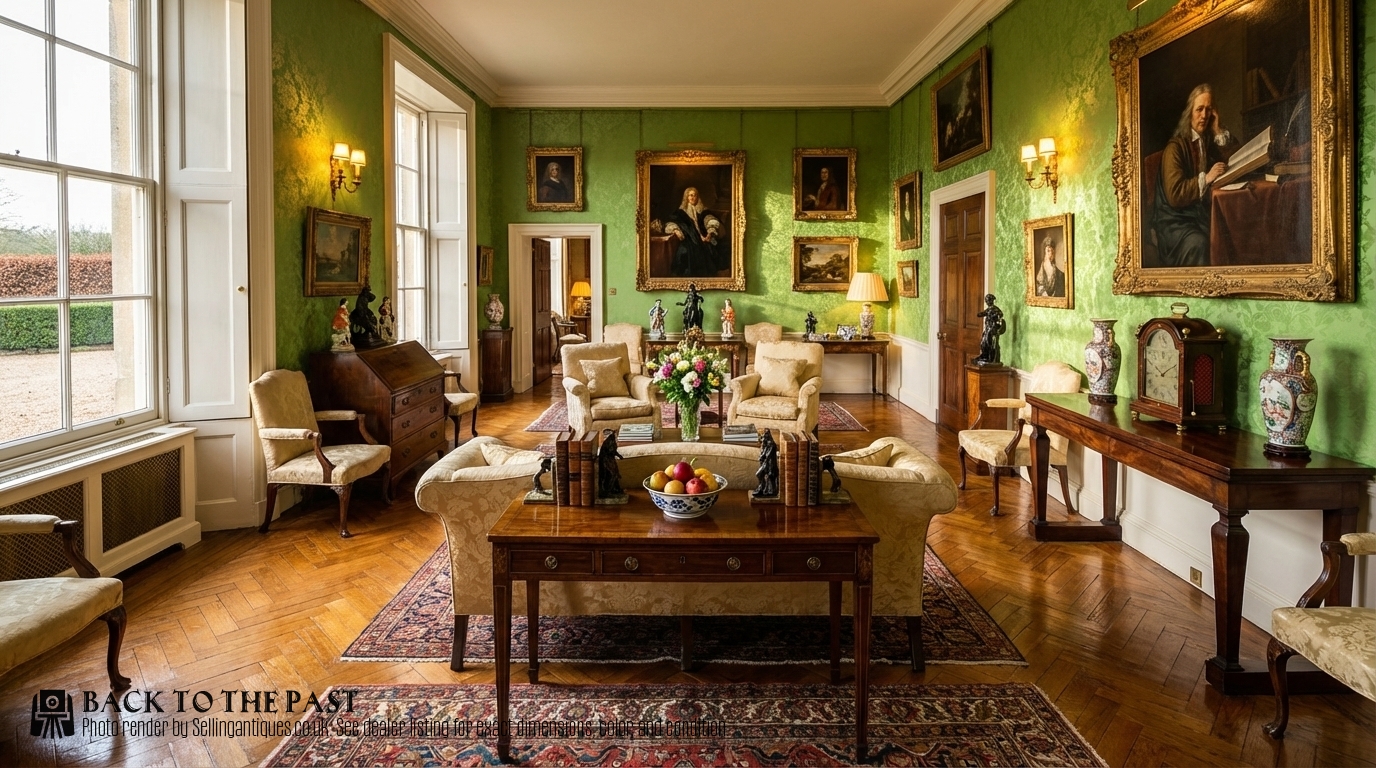
Strike Silent Bracket Clocks
A strike silent bracket clock brings together precise timekeeping and cabinet craftsmanship from the eighteenth and nineteenth centuries. These pieces appear in forms spanning the Georgian, Regency, and Victorian eras, often housed in rich mahogany or ebonised wood.
The objects listed here predominantly take the form of table clocks and mantel clocks originating from London and regional makers. Buyers encounter break-arch cases alongside smaller proportions designed for domestic placement.
The materials visible across these examples include brass, glass, mahogany, ebonised wood, ebony, enamel, steel, and silvered brass. Each piece reflects the dominant styles of its period, from George III refinements to later nineteenth-century interpretations.

Construction and Materials
Maker workshops utilised dense timbers such as mahogany and ebony to build robust cases that protected the delicate movements inside. Glass panels often permitted a view of the dial, while brass and silvered brass formed the decorated faces and chapter rings.
The mechanical interiors rely on steel components driven by fusee mechanisms, paired with enamel dials for clear legibility. Verge escapements and twin chain automation setups appear among the structural details recorded in these examples.
Retail Price Guide 2026
Typical UK retail prices for strike silent bracket clock, calculated from the Sellingantiques database of over a million retail prices indexed since 2003. This retail price guide relies exclusively on Sellingantiques data; no external sources or auction records are used, so the figures do not describe the wider market.
Listings feature items spanning the eighteenth century, the nineteenth century, and the Regency period, constructed in mahogany, ebony, and brass.
Evaluating Quality
Distinction across the range rests in the fidelity of the cabinet work and the reputation of the horologist whose signature appears on the dial. Cases executed in figured mahogany or precise ebonised wood with clean lines mark out the superior examples.
The refinement of the movement, such as twin fusee configurations and strike silent mechanisms executed with precision, separates standard production from exceptional work. Maker provenance, particularly involving London workshops, adds considerable weight to an item.

Des Granges Of London·Louis Recordon·Somersall London·Agar Of Malton·John McGregor·James Maitland·John Rapton Of London
The Strike Silent Bracket Clock Glossary
- Fusee
- A conical pulley used in spring-driven clocks to equalise the torque of the mainspring as it unwinds. This ensures consistent power delivery to the movement.
- Verge escapement
- An early type of escapement mechanism that controls the release of the gear train in mechanical clocks. It regulates the swing of the pendulum or balance.
- Silvered brass
- A metal dial surface treated with a silver compound to create a matte, reflective finish for engraved numerals. It provides high contrast against dark clock hands.
- Break-arch case
- A clock case design featuring an arched top above a rectangular door, typical of eighteenth and nineteenth-century forms. The architectural profile frames the dial.
- Strike silent
- A mechanical function allowing the user to disable the hourly chime via a lever or dial selector. This feature prevents unwanted noise during sleeping hours.
Frequently Asked Questions
What is a strike silent bracket clock?
A strike silent bracket clock is a portable timepiece designed for domestic use, featuring a mechanism to silence the hour chime.
These pieces date primarily from the eighteenth and nineteenth centuries, housed in timber cases suited for placement on brackets or tables.
How do I operate the strike silent feature?
The mechanism is typically controlled by a small lever or a dial on the clock face that engages or disengages the striking train.
This allows the owner to choose whether the clock chimes the hours or remains completely quiet throughout the night.
Where were these clocks made?
The pieces recorded here originate from workshops in London as well as regional centres such as Malton and Wick in Scotland.
Master horologists of the Georgian and Regency periods signed the dials of these table clocks.
What materials are used in the cases?
Clockmakers utilised hardwoods including mahogany, ebony, and ebonised wood to construct durable and decorative outer enclosures.
Glass windows, brass fittings, and silvered brass dials frequently complete the exterior presentation.
How do I identify the period of a clock?
Dating relies on stylistic clues within the cabinet design, such as George III proportions or later Victorian architectural details.
Inscribed signatures on enamel or brass dials also connect the piece to specific active working dates of the maker.