





Brass Handle Table Clock
A brass handle table clock brings together sturdy metal casework and portable mechanical timekeeping across Georgian, Regency and Victorian eras.
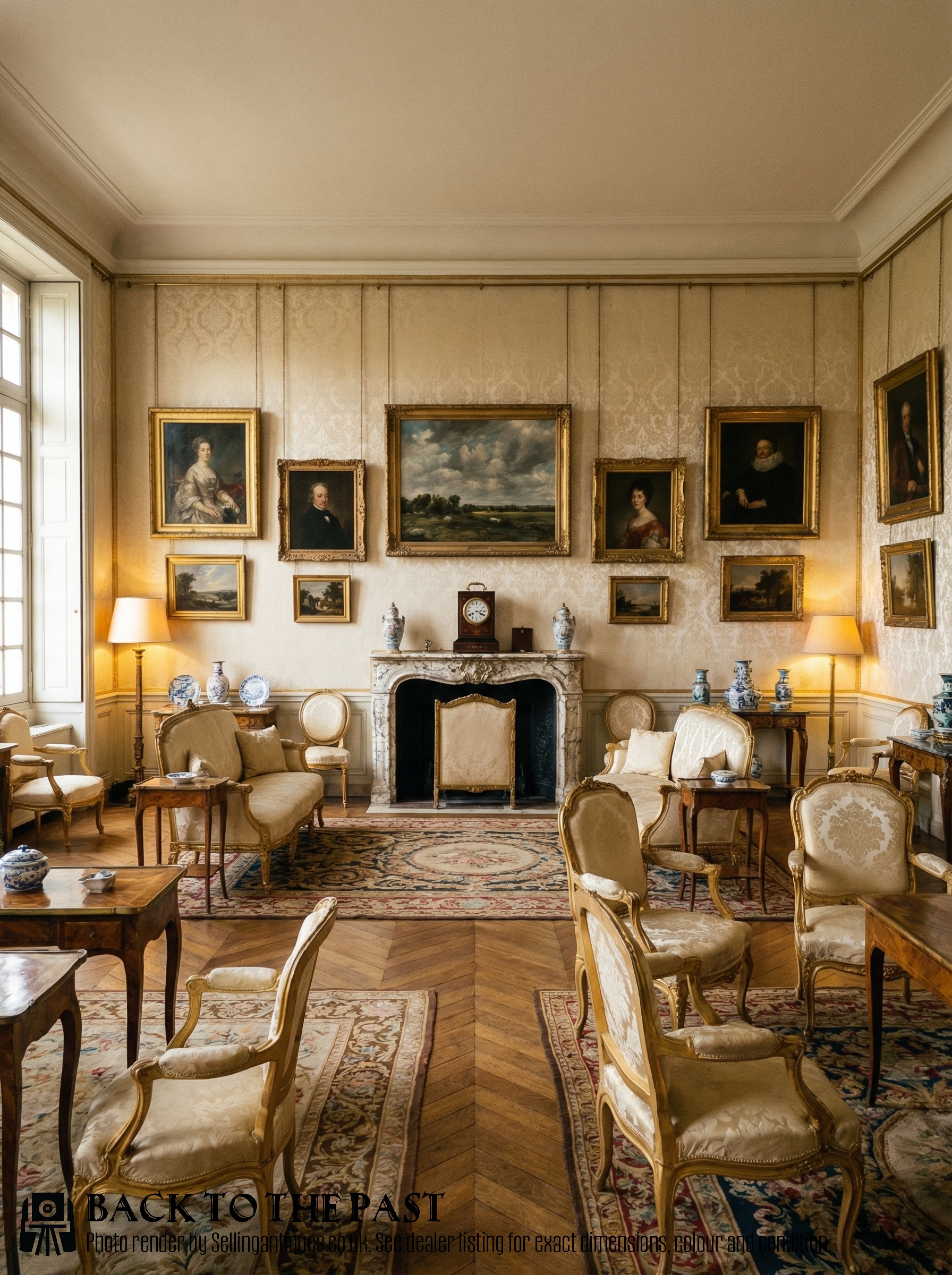
Brass Handle Table Clock
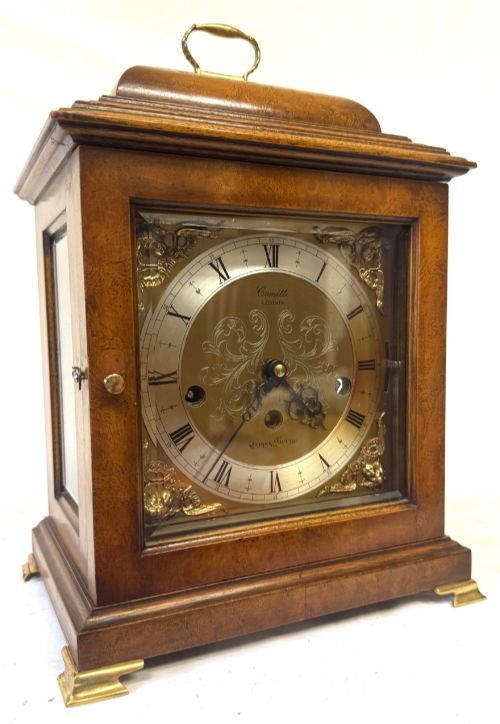
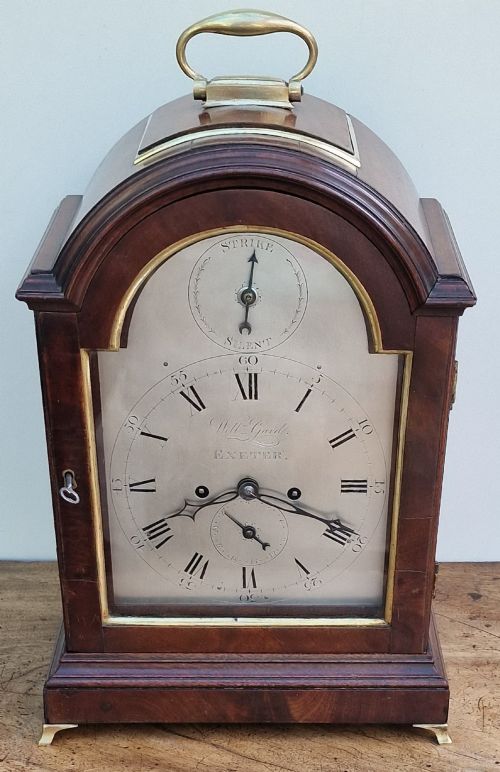
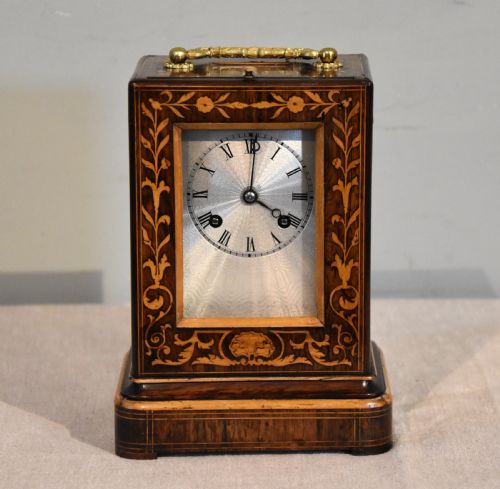
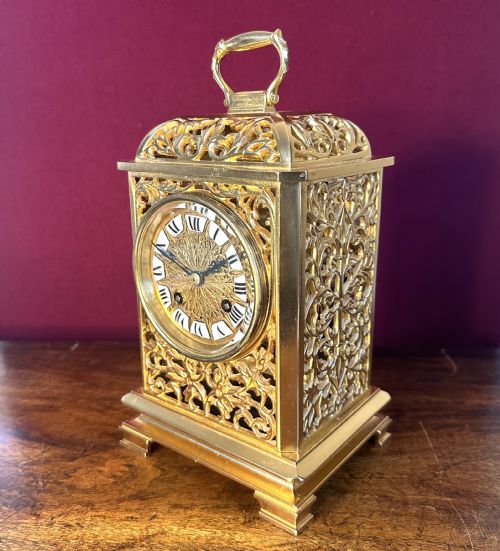
When you search for a brass handle table clock, you encounter bracket clocks, carriage clocks and mantel clocks built to sit on furniture and move between rooms. The selection includes architectural mahogany and rosewood bracket styles alongside freestanding glass-panelled carriage timepieces.
The pieces span the eighteenth, nineteenth and twentieth centuries, originating from English workshops and French makers. Mahogany and ebonised wood cases dominate the English bracket clocks, while bevelled glass and polished brass define the French carriage designs.
You meet miniature travel pieces with platform escapements as well as larger bell-top and caddy-top shelf clocks. Each object relies on a portable footprint and a metal carrying handle designed for utility and transport.
Materials and Construction
Watchmakers and cabinetmakers combined dense timbers like mahogany, rosewood and burr walnut with cast brass mounts, hinges and handles. Cases often feature inlaid marquetry, silvered metal dials and gilt bronze panels.
Movements incorporate verge, anchor and platform escapements driven by fusee or spring mechanisms, frequently striking bells or gongs. Glass panels protect the dial and expose the inner gear train to view.
Brass Handle Table Clock Retail Price Guide 2026
Typical asking prices for brass handle table clock among the pieces listed under this phrase on Sellingantiques today, from the lower quarter to the upper quarter. They describe what is for sale here now, not the wider market.
Listings feature eighteenth-century mahogany bracket clocks alongside nineteenth-century French carriage clocks in brass and glass.
Markers of Quality
The calibre of a brass handle table clock rests in the crispness of the brass casting, the thickness of the bevelled glass and the figure of the timber veneer. Finer cases exhibit hand-cut brass mounts, precise fretwork sound frets and clean silvered dials without re-engraving.
Mechanical integrity distinguishes superior examples, seen in original verge or fusee movements that retain their signing and serial numbers. The harmony between the weight of the brass handle, the heft of the case and the complexity of the striking train defines the upper tier.
Mappin And Webb·Thomas Moss·Arnold And Frodsham·Paul Garnier·John Ellicott·Comitti Of London
The Brass Handle Table Clock Glossary
- Bracket clock
- A portable spring-driven clock originally designed to sit on a wall bracket to project sound. Later examples rested directly on tables and mantelpieces.
- Carriage clock
- A small, spring-driven clock with a carrying handle on top, developed for travelling in the nineteenth century. They frequently feature glass panels that reveal the interior escapement.
- Fusee
- A conical pulley used in spring-driven clocks to equalise the torque of the mainspring as it unwinds. This mechanism maintains steady timekeeping power as the clock runs down.
- Verge escapement
- An early type of mechanical escapement controlled by a balance wheel or foliot. It creates the traditional ticking rhythm in eighteenth-century bracket clocks.
- Platform escapement
- A small, self-contained escapement unit fitted to carriage clocks and smaller French timepieces. It replaces the pendulum to allow portable operation.
Brass Handle Table Clock: Frequently Asked Questions
What is a brass handle table clock?
These timepieces are portable mechanical clocks housed in wooden or brass-mounted cases featuring an integrated carrying handle on top.
They encompass bracket clocks designed for furniture placement and carriage clocks built for travel during the eighteenth and nineteenth centuries.
How do you wind a bracket clock?
Winding requires a matching key inserted into the dial holes to tension the internal springs or pull up the fusee lines.
Care must be taken not to over-wind the mechanism, respecting the natural stop of the spring.
Where were carriage clocks placed?
Carriage clocks were built for travellers to carry in coaches or place on hotel bedside tables.
The sturdy brass frame and glass panels protected the delicate movement during journeys.
How do I identify a Georgian clock?
Georgian bracket clocks typically feature mahogany or ebonised wood cases with bell tops, brass carrying handles and silvered brass dials.
They often house fusee movements signed by London makers on the backplate.