





Miniature Table Clock
These small timekeepers scale down grand horology into domestic objects that sit neatly on a desk or mantelpiece.
Miniature Table Clock
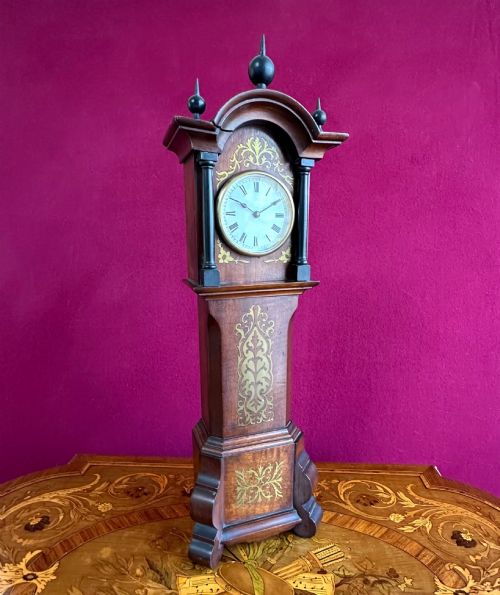
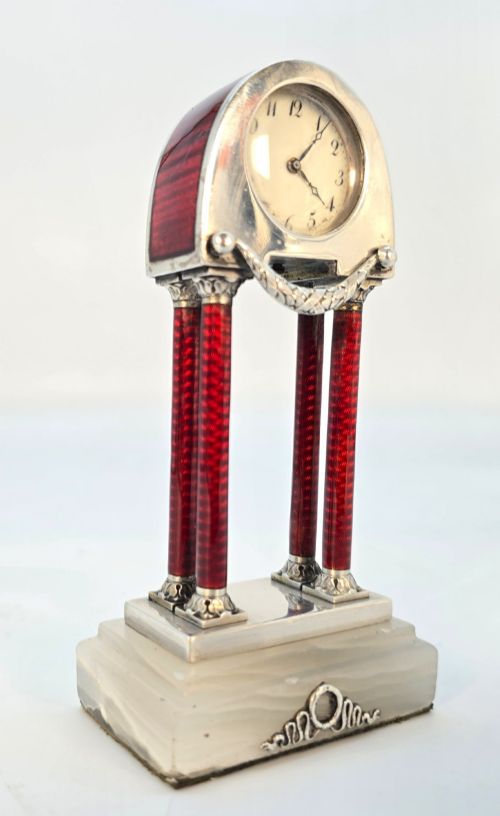
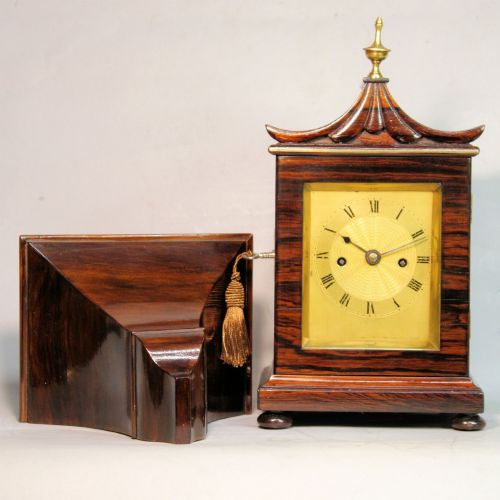
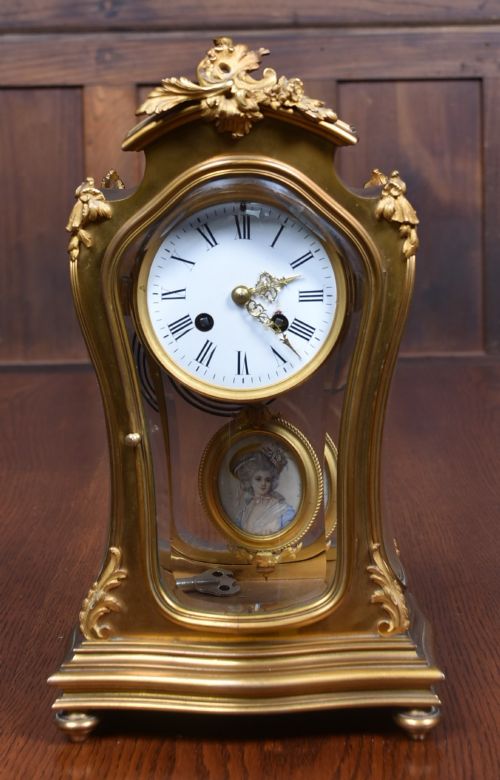
A miniature table clock compresses the mechanics of larger horology into portable formats suited for desks, mantels and bedside tables. You will encounter carriage clocks in brass and glass, bracket clocks in timber cases, and delicate silver or enamel desk timepieces.
The pieces on this page span the nineteenth and twentieth centuries, taking in Victorian, Edwardian and Art Deco tastes alongside earlier Regency and George II styles. French and English workshops dominate the selection, offering everything from simple skeleton movements to striking bracket mechanisms.
How they were made
Cases combine metals such as brass, gilt bronze and solid silver with glass panels, timber veneers like mahogany and rosewood, and tortoiseshell. Many incorporate decorative finishes including champleve enamel, guilloche enamel, or ornate cast ormolu mounts.
Movements rely on traditional horological techniques, ranging from simple spring-driven platforms to chain fusee systems and eight-day striking trains. Enamelled dials, finely engraved brass plates, and signed movements reflect the meticulous hand-assembly required at such a small scale.
Materials range from solid silver and mahogany to delicate guilloche enamel and gilt bronze.
What varies in quality
The refinement of the case work and the crispness of any hand engraving set finer examples apart from standard production pieces. Heavy cast brass, genuine champleve enamel, and well-executed ormolu mounts indicate superior craftsmanship.
Movement complexity and signature provenance also distinguish the range, with signed English fusee movements or fully engraved French platforms commanding attention. Original fitted travelling cases and undamaged enamel dials further elevate a piece.
Mappin & Webb·Georg Adam Scheid·J Batson & Son·Henry Matthews·J C Vickery
The Miniature Table Clock Glossary
- Fusee
- A conical pulley used in clock movements to maintain an even pull as the mainspring unwinds. This mechanism helps ensure steady timekeeping throughout the power reserve.
- Carriage clock
- A small, spring-driven clock originally designed for travelling, featuring a glass-panelled brass case and a folding handle on top. Most include a platform escapement.
- Champleve
- An enamelling technique where troughs or cells are hollowed out of a metal surface and filled with vitreous enamel before firing. The resulting design sits flush with the surrounding metal.
- Bracket clock
- A portable table clock historically placed on a matching wall bracket or a furniture surface. They often feature arched wooden cases and striking movements.
- Skeleton clock
- A timepiece with an openwork frame designed to expose the gear train and movement plates. This style highlights the mechanical complexity of the inner workings.
Miniature Table Clock: Frequently Asked Questions
What is a fusee movement?
A fusee movement incorporates a conical drum connected to the mainspring via a fine chain or cord. As the spring loses tension, the chain rides higher up the cone's wider radius to maintain constant torque.
This clever mechanical adjustment compensates for the decreasing power of an uncoiling spring, helping the clock maintain more accurate time over its running period.
How should I clean silver cases?
Silver cases benefit from gentle dusting with a soft, lint-free cloth to remove everyday surface particles. Avoid aggressive commercial dips that can strip patination or damage adjacent enamel.
If polishing is necessary, use a specialist silver cloth and keep cleaning compounds well away from the clock face, glass panels and delicate mechanical joints.
Can these clocks run daily?
Many antique timepieces remain fully operational and can be set running for daily use. However, older mechanisms often require professional servicing and oiling if they have sat idle for long periods.
Treating them with care, avoiding over-winding, and having a horologist inspect the escapement will help preserve the delicate brass gears for years to come.