
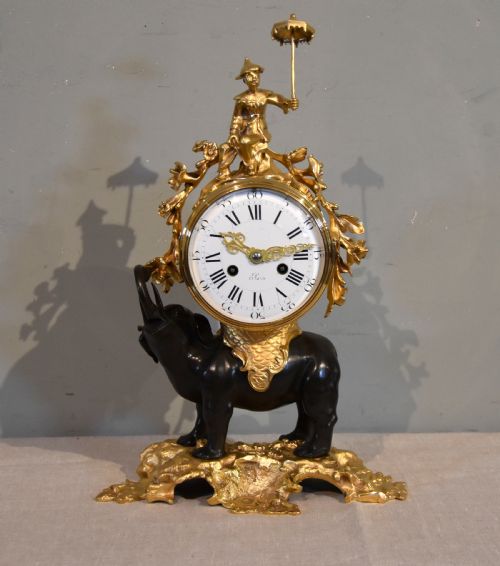


Chinoiserie Table Clock
A chinoiserie table clock brings hand-painted lacquer and gilded detail to the mantel, offering centuries of decorative craft in a single timepiece.
Chinoiserie Table Clock
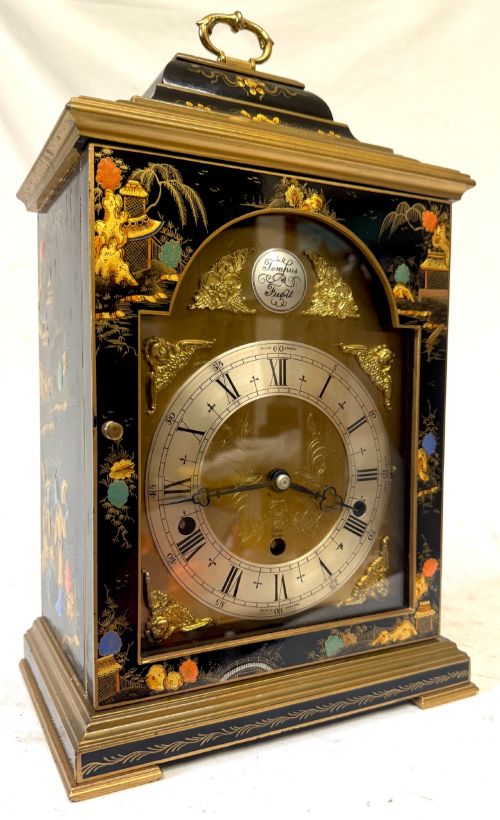
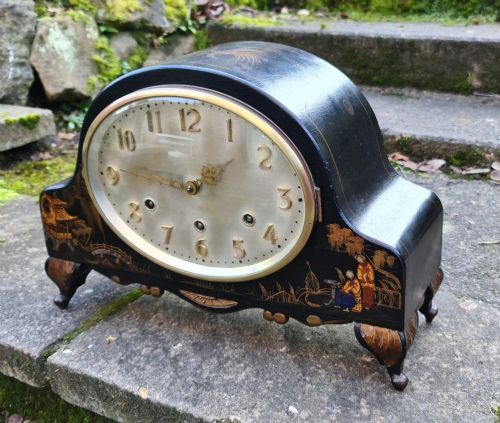
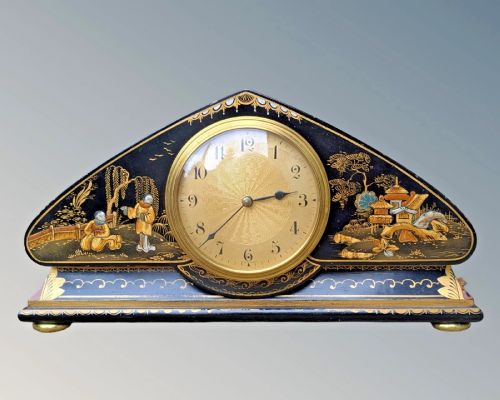
A chinoiserie table clock combines European clockmaking movements with decorative schemes inspired by Asian art, spanning bracket clocks and smaller mantel pieces. These horological objects appear in forms from the seventeenth century style down to mid-century modern productions, reflecting changing tastes across several centuries.
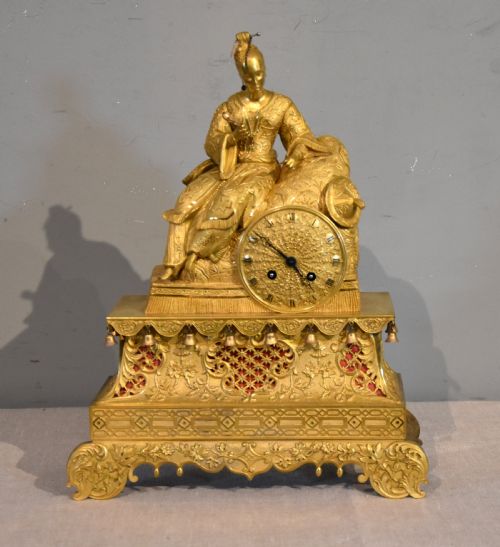
The buyer meets pieces ranging from early London bracket clocks in red and gold lacquer to twentieth-century mantel clocks in cream, green, or black lacquer. French ormolu and bronze examples also occur alongside English three-train musical models and smaller desk clocks.
How they were made
Construction relies on wood carcasses finished with lacquer, often built as bracket clocks or mantel clocks housing mechanical movements in brass and steel. Makers applied multiple layers of lacquer before hand-painting or gilding decorative scenes.
Metal mounts in gilt bronze or ormolu frequently accent the wooden cases, while glass protects the dial face and enamel components form the chapter rings.
Periods represented span from the eighteenth century through Victorian times and the early twentieth century up to the nineteen-sixties.
What varies in quality
Quality rests upon the execution of the lacquerwork and the depth of the gilding applied to the wooden or bronze cases. Hand-painted details show varying degrees of precision, from finely articulated figures and landscapes to simpler surface decoration.
The sophistication of the movement, whether an eight-day striking mechanism, an alarm function, or a French movement housed in an English case, distinguishes the standard of manufacture.
James Smith London·Chater And Son·Jaeger Le Coultre·Lenzkirch
The Chinoiserie Table Clock Glossary
- Bracket clock
- A portable table clock originally designed to sit on a wall bracket to aid projection of sound. These domestic timepieces often feature elaborate brass carrying handles.
- Ormolu
- Gilded bronze used for decorative mounts and figural cases. The technique involves applying a mercury and gold amalgam to a bronze base before heating.
- Three train
- A clock movement with three separate gear trains to drive the timekeeping, striking, and musical or quarter-chiming functions.
- Chinoiserie
- The European interpretation and imitation of Chinese and East Asian artistic traditions. This decorative style flourished in furniture, ceramics, and clock cases.
- Enamel
- A glassy substance fused to metal surfaces under high heat to create smooth, durable dials with painted numerals.
Chinoiserie Table Clock: Frequently Asked Questions
Where should I place a bracket clock?
These clocks suit sturdy tables, mantelpieces, or dedicated wall brackets where their painted surfaces remain visible. Ensure the placement provides enough clearance for winding keys and pendulum movement.
Keep the clock away from direct sunlight and damp walls to protect the delicate lacquer finishes and gilt metal mounts over time.
How do I wind an antique clock?
Use the correct matching key to wind the barrels gently until you feel firm resistance, taking care not to overwind the springs. Different trains control the timekeeping and the strike, so check which arbor corresponds to each function.
Allow the pendulum to settle into a level beat after winding to ensure the mechanism keeps accurate time throughout the day.
How do I date a lacquer clock?
Examine the materials of the case, the style of the painted decoration, and the construction methods visible inside the movement housing. Eighteenth-century pieces often feature traditional bracket clock proportions and London signatures, while twentieth-century examples display different lacquer palettes.
Compare the dial numerals, brass bezel design, and movement stamps with documented examples from the same period to narrow down the decade of production.
What maintenance do these movements need?
Mechanical clocks require professional cleaning and lubrication every few years to prevent wear on the brass pivots and steel gears. Regular servicing keeps the striking train and escapement functioning correctly.
Dust the exterior lacquer and gilt bronze gently with a soft, dry cloth without applying modern liquid polishes that might damage the antique surface.