


Hand Painted Chinoiserie Clock
A hand painted chinoiserie clock brings quiet narrative and rich colour to a room, drawing the eye with lacquered figures and delicate gilding.
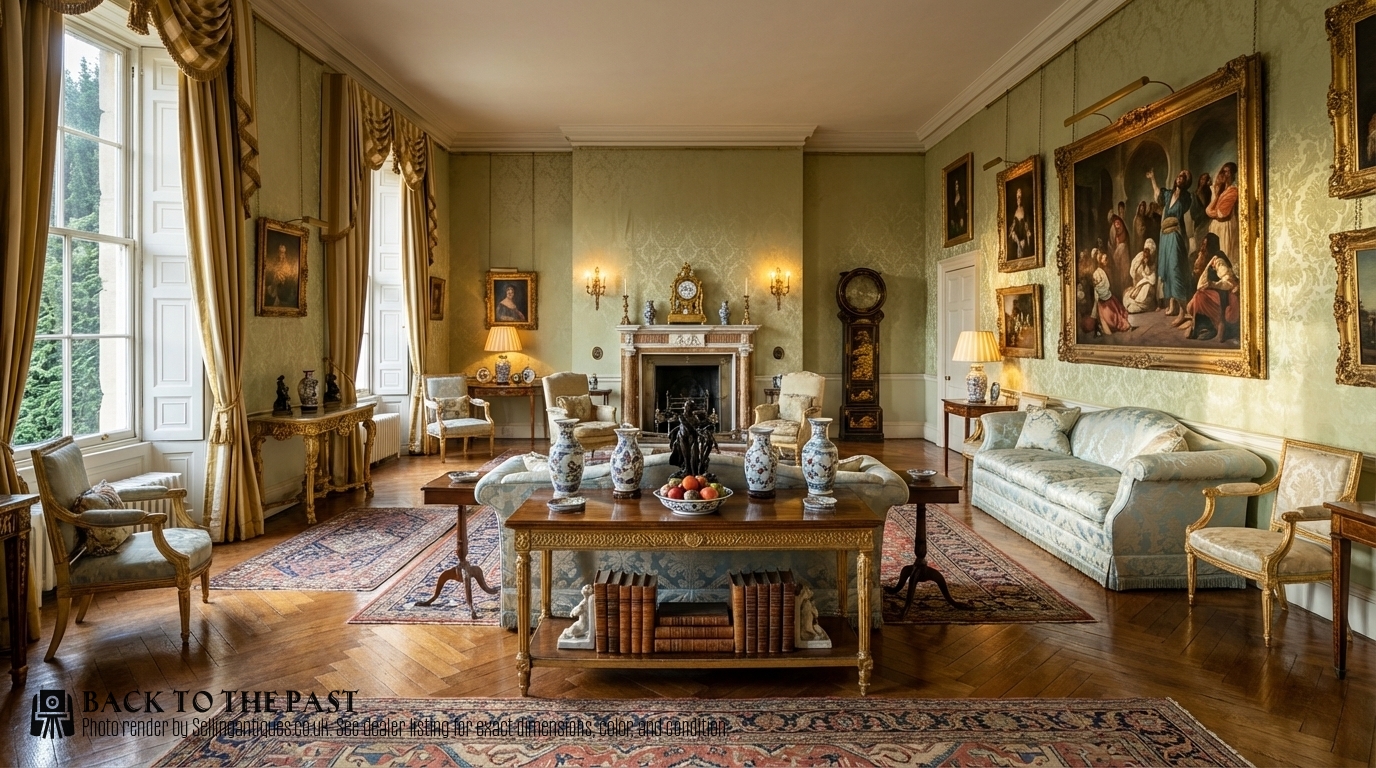
Hand Painted Chinoiserie Clock
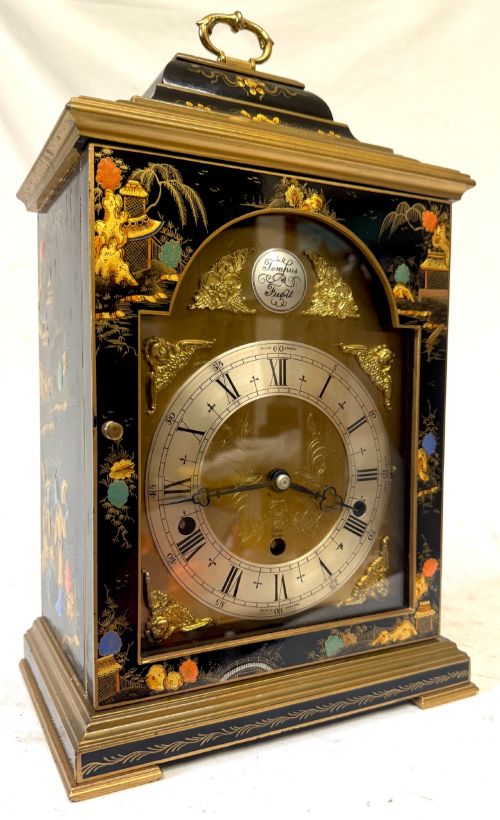
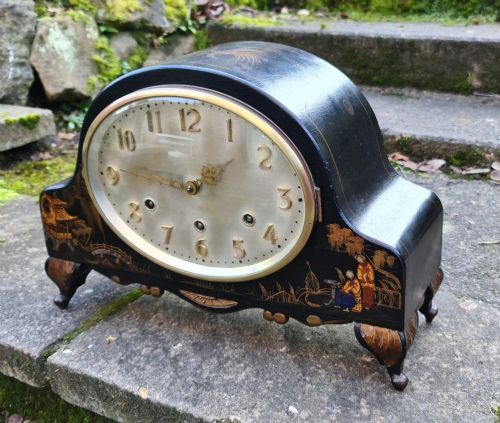
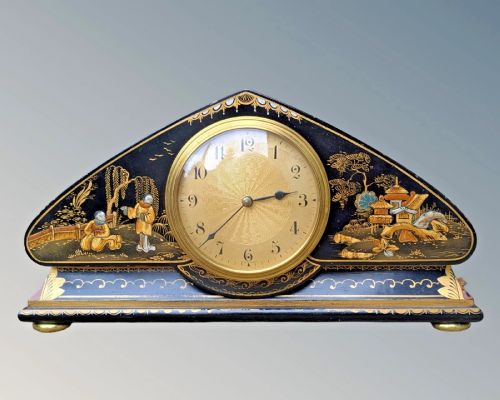
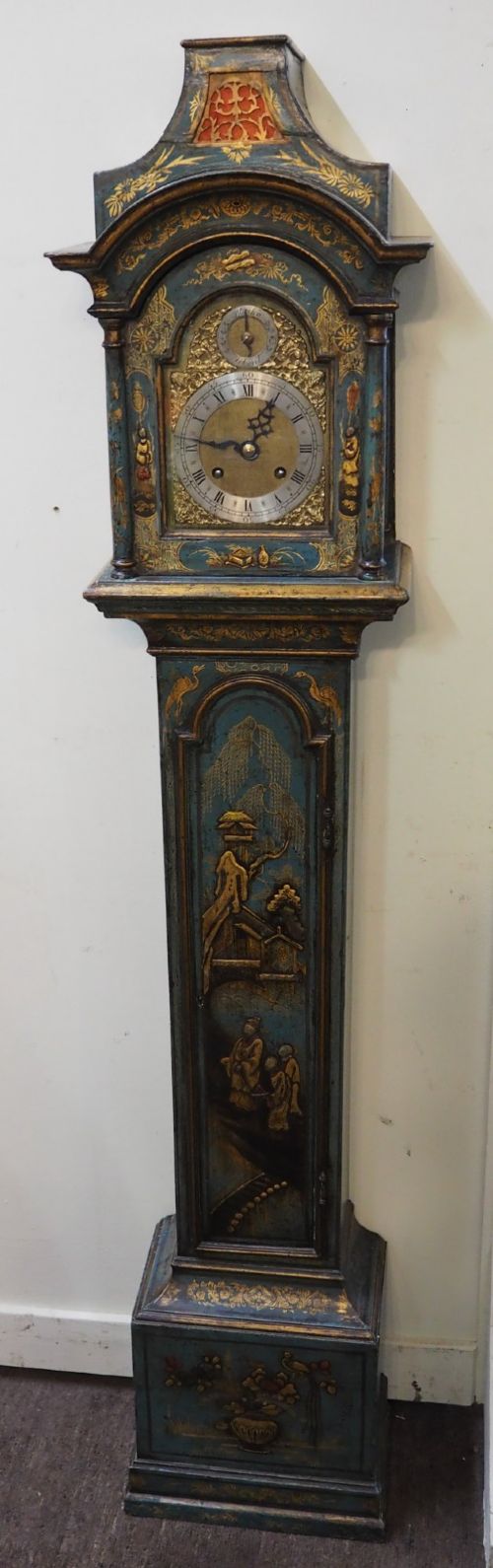
A hand painted chinoiserie clock combines horology with decorative lacquerwork, presenting figurative scenes in the distinctive style associated with European interpretations of East Asian motifs. These timepieces appear in several distinct forms across the selection, ranging from compact mantel clocks to taller grandmother and longcase clocks. Pieces span multiple eras, including the eighteenth century, the Georgian period, and twentieth-century decades up to nineteen sixty.
Buyers meet variations in scale and colour palette, with cream, black, blue, green, and red lacquered wood dominating the selection. Mantel versions sit easily on surfaces, while larger longcase and grandmother clocks anchor the floor space of a room. The integration of hand-painted details ensures that each timepiece carries individual character shaped by its period of origin.
How they were made
Construction relies on wood bases finished with layers of lacquer, upon which artists applied hand-painted details and gold leaf or gilt ornamentation. Many examples incorporate brass components, such as decorative dials and movement parts, paired with glass panels to protect the face.
The casing technique required patient building of lacquer surfaces before artists executed the characteristic chinoiserie scenes. Movements varied from standard time-keeping mechanisms to three-train chiming systems, housed within cases designed to complement the decorative exterior.
Hand Painted Chinoiserie Clock Retail Price Guide 2026
Typical asking prices for hand painted chinoiserie clock among the pieces listed under this phrase on Sellingantiques today, from the lower quarter to the upper quarter. They describe what is for sale here now, not the wider market.
Listings feature mantel, grandmother, and longcase clocks produced across periods including the eighteenth century, Georgian era, and the nineteen twenties through to nineteen sixty.
What varies in quality
Quality reveals itself in the depth and preservation of the lacquer finish, the precision of the hand-painted decoration, and the integrity of the gilding. Finer examples display crisp detail in the figurative scenes and harmonious proportions across the wooden case.
The sophistication of the internal movement also distinguishes the range, with more complex mechanisms, such as Westminster chimes or three-train Elliott movements, marking out superior production standards. The relationship between the decorative exterior and the mechanical housing determines the overall standing of an individual piece.
The Hand Painted Chinoiserie Clock Glossary
- Chinoiserie
- European decorative style reflecting Chinese artistic influences, characterised by whimsical figures, pavilions, and landscapes. This aesthetic dominated lacquer furniture and clock cases during various historical revivals.
- Lacquer
- A durable resin finish applied in multiple layers to wood surfaces, providing a smooth base for painting and gilding. Historic pieces often show subtle crazing or ageing within this protective coating.
- Grandmother Clock
- A slender, scaled-down version of a longcase clock, typically standing shorter than standard floor-standing models. These pieces offer the presence of a tall clock in more compact domestic spaces.
- Gilt
- A thin layer of gold or gold-like material applied to surfaces for ornamentation. On these clocks, gilt highlights the painted scenes and architectural mouldings of the case.
- Three-Train
- A clock movement featuring three separate gear trains to drive the time-keeping, the hour strike, and the musical chimes. This complexity allows the clock to play melodies such as Westminster chimes.
Hand Painted Chinoiserie Clock: Frequently Asked Questions
What is a hand painted chinoiserie clock?
A hand painted chinoiserie clock is a timepiece housed in a lacquered wooden case decorated with traditional European interpretations of Asian motifs.
These pieces range from small mantel clocks to tall grandmother and longcase clocks, spanning periods from the eighteenth century to the mid twentieth century.
Where should I place a mantel clock?
Mantel clocks sit comfortably on fireplaces, sideboards, or bookshelves where their compact proportions remain visible.
Ensure the surface is stable and level to keep the internal pendulum or balance wheel operating correctly.
How do I care for lacquered wood?
Dust lacquered surfaces gently with a soft, dry cloth and keep the clock away from direct sunlight and fluctuating heat sources.
Avoid using liquid polishes or chemical cleaners that might damage the delicate hand-painted finish and gilding.
How do I tell different periods apart?
Earlier eighteenth-century and Georgian pieces often display different proportions and hand-mixed lacquer techniques compared to twentieth-century revivals.
Examining the construction of the wooden case, the style of the brass dial, and the type of movement helps indicate the likely era of manufacture.