
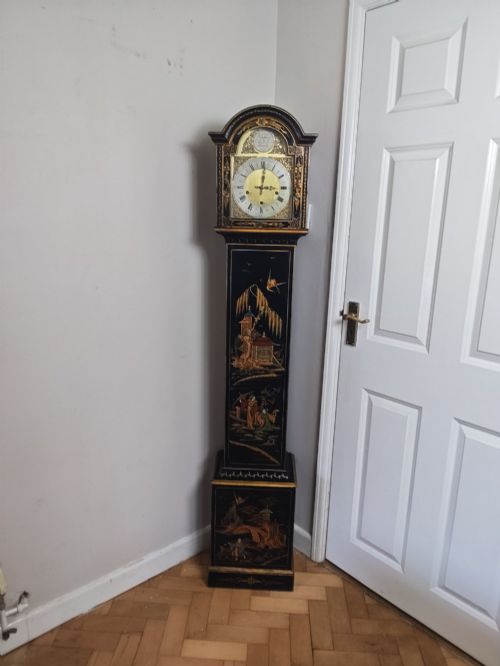
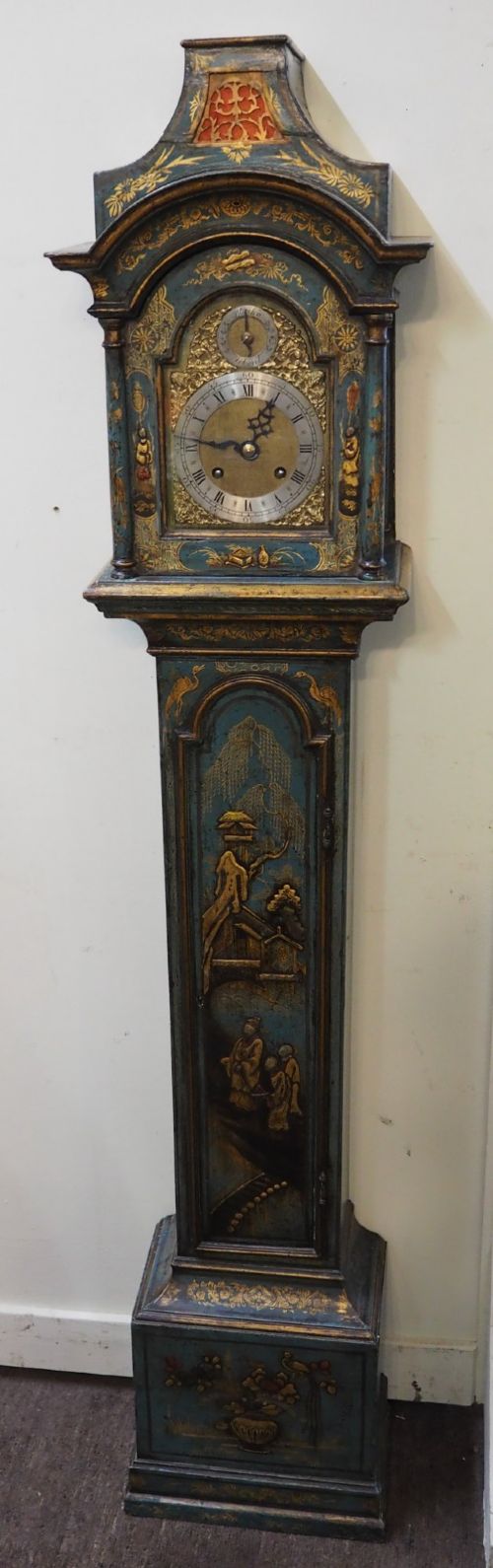
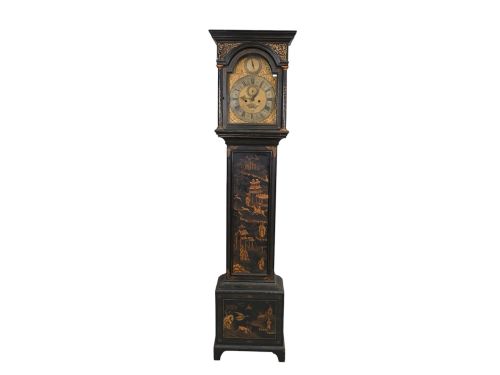


Gilt Chinoiserie Tall Clock
A gilt chinoiserie tall clock brings striking lacquerwork and decorative gilded motifs into a room, offering both traditional timekeeping and intricate visual depth.
Gilt Chinoiserie Tall Clock
A gilt chinoiserie tall clock combines tall wooden cabinetry with lacquered surfaces, gold leaf decoration, and brass dial work. These pieces function as both timekeepers and major decorative focal points within domestic interiors.
Most examples found here date across the Georgian and eighteenth-century periods, alongside later twentieth-century revivals from the nineteen-twenties and nineteen-thirties. Formats range from full-sized grandfathers to more compact grandmother clocks originating from London, Edinburgh, and regional workshops.
The decorative scheme typically depicts figures, pavilions, and landscapes derived from oriental motifs executed in gold or gilt upon dark or coloured lacquer grounds. Such clocks reflect a longstanding European fascination with eastern aesthetic traditions interpreted through eighteenth-century craftsmanship.
How they were made
Construction relies upon seasoned timber carcasses prepared to receive successive layers of lacquer and varnish. Artisans applied gold leaf and gilt paint to build up raised pictorial scenes featuring figures, flora, and architectural elements.
Mechanical movements featuring brass plates, wheels, and escapements were housed within the upper trunk behind glass-fronted doors. Many incorporate specialised gear trains to drive musical chimes, automated figures, or eight-day duration timekeeping.
Some timepieces contain mechanical automata designed to move tiny figures across the dial face while the clock chimes.
What varies in quality
The fineness of the gilt decoration and the complexity of the lacquerwork establish the primary visual hierarchy among these clocks. Superior examples display crisp, detailed painting and well-preserved relief work across the cabinet exterior.
Movement sophistication and dial execution further differentiate standard models from exceptional pieces. Clocks featuring automata, musical capability, or signed dials by notable makers demonstrate higher levels of original horological ambition.
William Kipling London·Gardner of London
The Gilt Chinoiserie Tall Clock Glossary
- Chinoiserie
- European decorative style reflecting imaginative interpretations of Chinese and East Asian artistic traditions. It appears frequently on furniture and clock cases through painted scenes of figures and landscapes.
- Japanned wood
- Timber finished with specialised varnishes and lacquers intended to emulate Asian lacquerware. This technique produced glossy surfaces decorated with raised gilt motifs.
- Longcase clock
- Tall floor-standing pendulum clock enclosed within a protective wooden case comprising a hood, trunk, and base. They are also commonly referred to as grandfather or grandmother clocks depending on their height.
- Automaton
- Mechanical device integrated into a clock that produces movement in figures or scenery concurrently with the timekeeping. These mechanisms animate scenes on the dial face.
- Eight-day movement
- Clock mechanism designed to run for eight days between successive windings. This required heavier weight drops and larger gear ratios than standard thirty-hour clocks.
Gilt Chinoiserie Tall Clock: Frequently Asked Questions
Where should I place a tall clock?
These clocks require a stable, plumb wall surface where the pendulum can swing freely without floor vibrations. Hallways and principal reception rooms traditionally housed them to allow easy access for winding.
Ensure the selected spot avoids direct sunlight and dramatic temperature fluctuations to protect the lacquer finish and timber case from warping.
How do I wind the clock?
Winding involves inserting a key into the winding holes on the dial face and turning it slowly until the weights reach their upper limit. Care must be taken not to overwind the movement.
Clocks with eight-day durations require weekly attention, while musical or automaton complications may have separate trains that need independent winding.
How do I distinguish eighteenth-century pieces from later revivals?
Eighteenth-century examples exhibit authentic period dial construction, hand-beaten brass components, and wear patterns consistent with extensive age. Timber selection and cabinet proportions follow Georgian conventions.
Twentieth-century interpretations, such as those from the nineteen-twenties and thirties, often utilise cleaner internal mountings and uniform surface ageing while retaining traditional chinoiserie motifs.
What is the difference between grandfather and grandmother clocks?
Grandfather clocks are full-sized tallcase clocks standing typically over six feet tall to accommodate long pendulums and heavy weights. Grandmother clocks are scaled-down versions produced in smaller proportions.
Both formats utilise similar lacquered cabinetry and movement types, but grandmother clocks suit restricted ceiling heights or smaller rooms.