


Chinoiserie Floor Clock
A chinoiserie floor clock brings centuries of painted lacquer and mechanical precision together, transforming a room with striking height and orientalist detail.
Chinoiserie Floor Clock
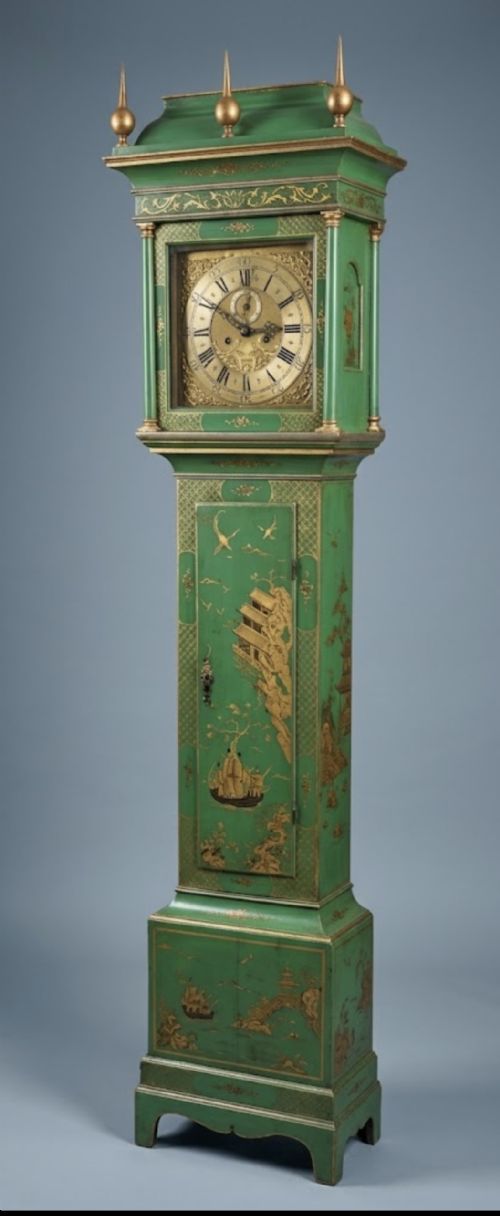
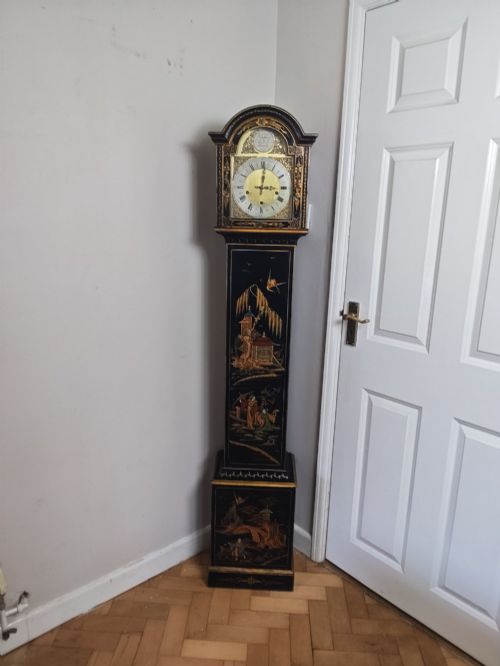
A chinoiserie floor clock appears in forms such as longcase clocks, grandfather clocks, and grandmother clocks, spanning periods from the 18th century and the Georgian era through to the 1920 and 1930 revivals. These tall upright timepieces take inspiration from Qing Dynasty aesthetics, translating traditional motifs into domestic British timekeeping.
Most examples found on this page display the classic tall wooden case configuration, house brass movements, and range from full-sized longcase structures down to more compact 20th-century grandmother clocks.
Origins stretch from London workshops to provincial makers in Alton, Reading, Edinburgh, and beyond, showing both grand metropolitan ambition and regional cabinet-making skill.
Materials and construction
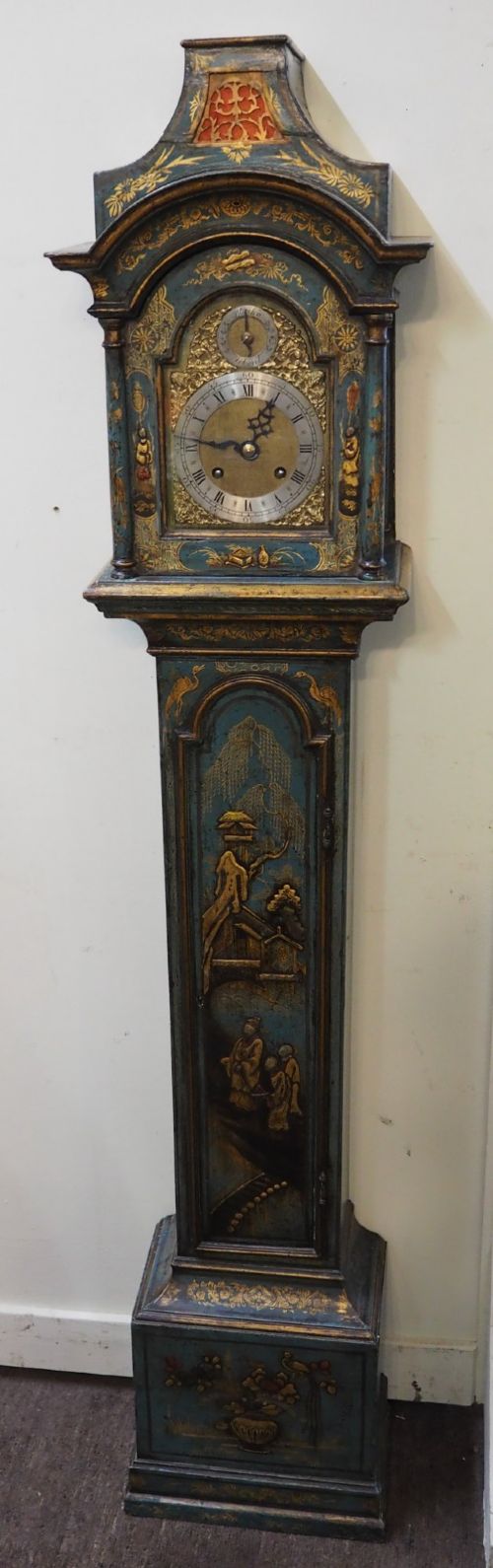
Makers built the structural cases from wood, applying layers of lacquer, japanned wood, and gold leaf or gilt details to create deeply textured, pictorial surfaces.
Intricate decorative scenes depict figures, pagodas, and landscapes rendered in gold and coloured pigments against dark green, blue, cream, or black grounds.
Mechanical components rely on brass movements, often paired with glass dials or face covers to protect the hands and indicators.
Judging the range
The distinction between a standard piece and a superior example rests in the depth and preservation of the japanned decoration, alongside the reputation of the horologist.
The integrity of the lacquered wooden case, the richness of the gold leaf application, and the original harmony between dial and movement dictate the upper tier of the market.
John fielder of Alton·William Kipling London·Wise of Reading·Gardner of London·Robert Berry
The Chinoiserie Floor Clock Glossary
- Longcase clock
- A tall, weight-driven pendulum clock housed in a wooden case designed to stand directly on the floor. These pieces are commonly referred to as grandfather clocks depending on their height.
- Japanned wood
- European craftsmanship mimicking East Asian lacquerwork through the application of layered varnishes and raised metallic decorations. This technique gives chinoiserie cases their characteristic relief and sheen.
- Grandmother clock
- A more slender and compact version of the traditional longcase clock, typically manufactured during the 20th century. They offer similar decorative painted surfaces on a reduced scale.
- Automaton clock
- A timekeeper incorporating moving figures or mechanical scenes that animate at set intervals, such as a rocking Father Time. These mechanisms demonstrate high technical skill.
- Brass movement
- The internal mechanical brass works driving the clock's gears, strikes, and chimes. Master clockmakers signed these plates to record their workshop origin.
Chinoiserie Floor Clock: Frequently Asked Questions
Where should I place a floor clock?
These tall timepieces need a stable, level floor away from direct sunlight and fluctuating heat sources to protect the wooden case and lacquer finish.
Position them in a hallway, drawing room, or study where the height and decorative painted panels can be appreciated without obstruction.
How do I wind the movement?
Most antique mechanical clocks require a key or pull cord to draw up the hanging weights at regular weekly intervals. Care must be taken not to over-wind the mechanism.
Consulting the specific requirements of the brass movement ensures the gear train and pendulum continue to keep accurate time.
What is a grandmother clock?
A grandmother clock is simply a smaller, more slender variant of the traditional longcase clock. They retain the painted lacquer and decorative style of their taller predecessors.
Their reduced proportions make them suitable for rooms with lower ceilings or tighter wall spaces where a standard grandfather clock would overwhelm the interior.