

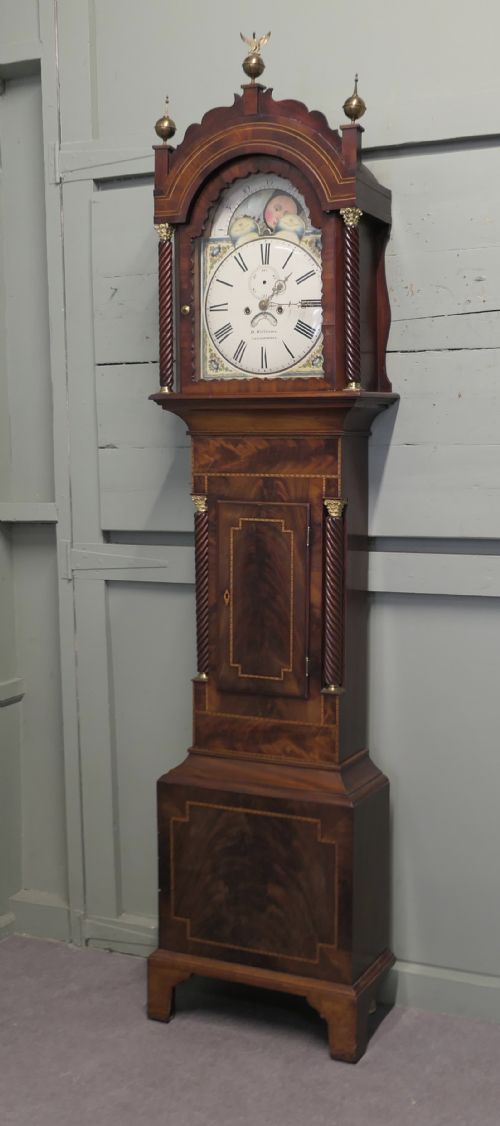


Antique Long Case Clock
An antique long case clock brings a measured gravity to a room through tall timber proportions and rhythmic pendulum movement.

Antique Long Case Clock
An antique long case clock, frequently termed a grandfather clock, houses a pendulum and weight-driven movement within a tall wooden floor-standing enclosure. The form developed across the seventeenth and eighteenth centuries, evolving from modest proportions to grand architectural cases.
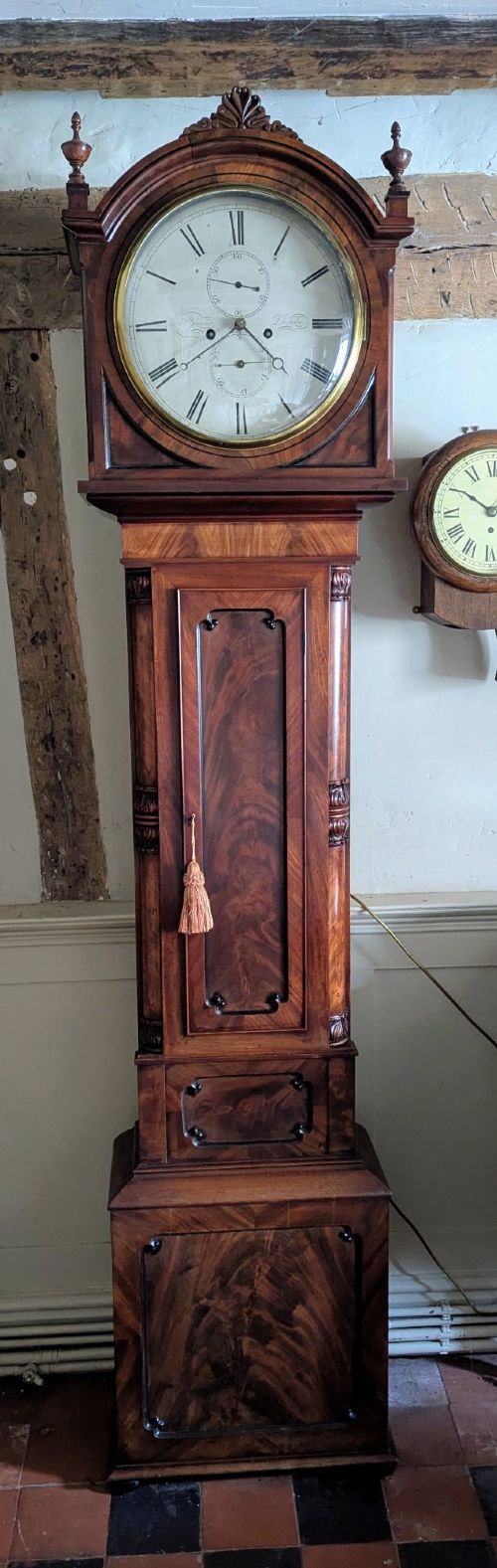
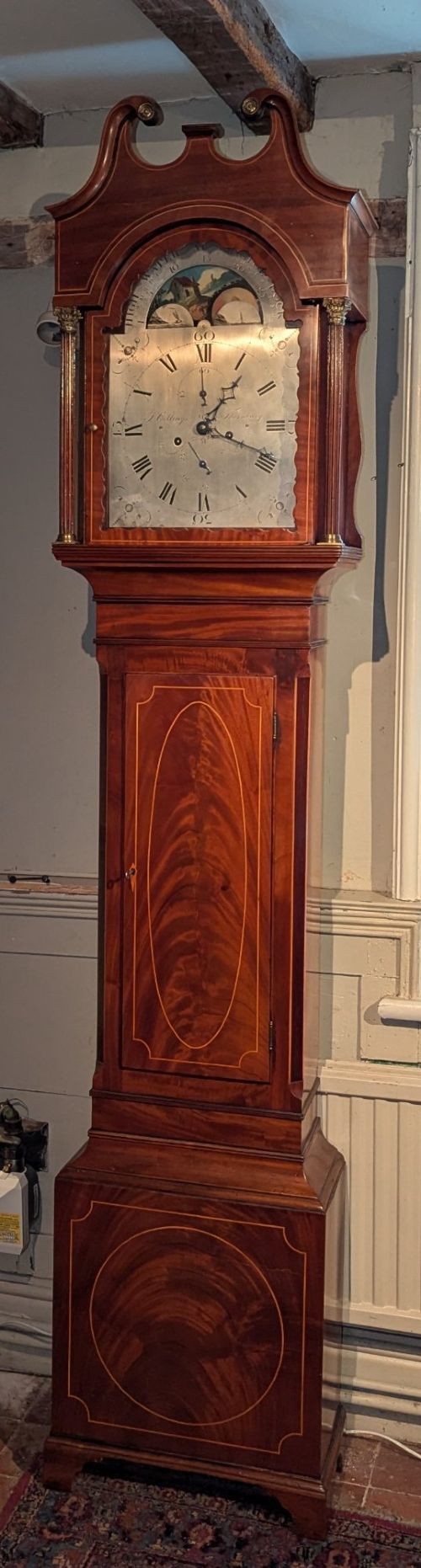
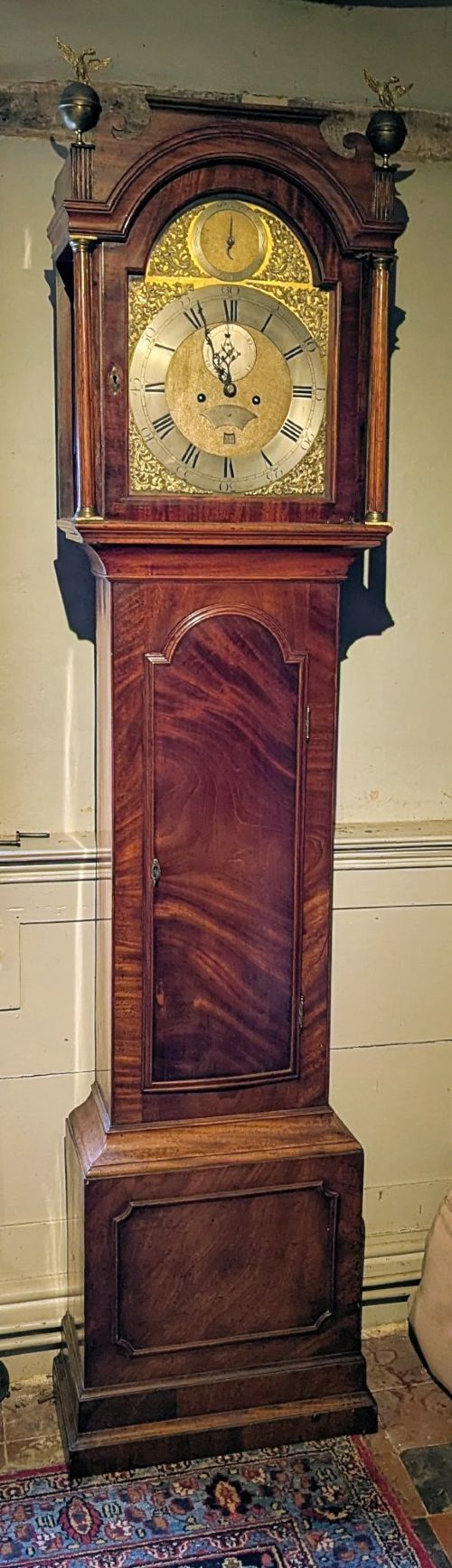
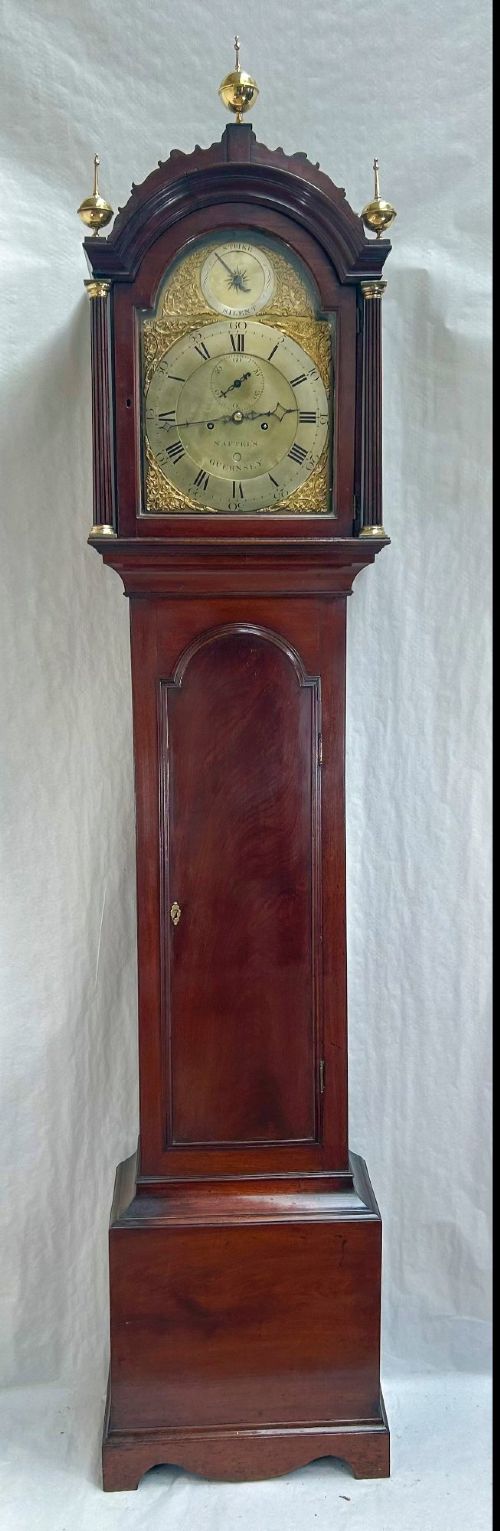
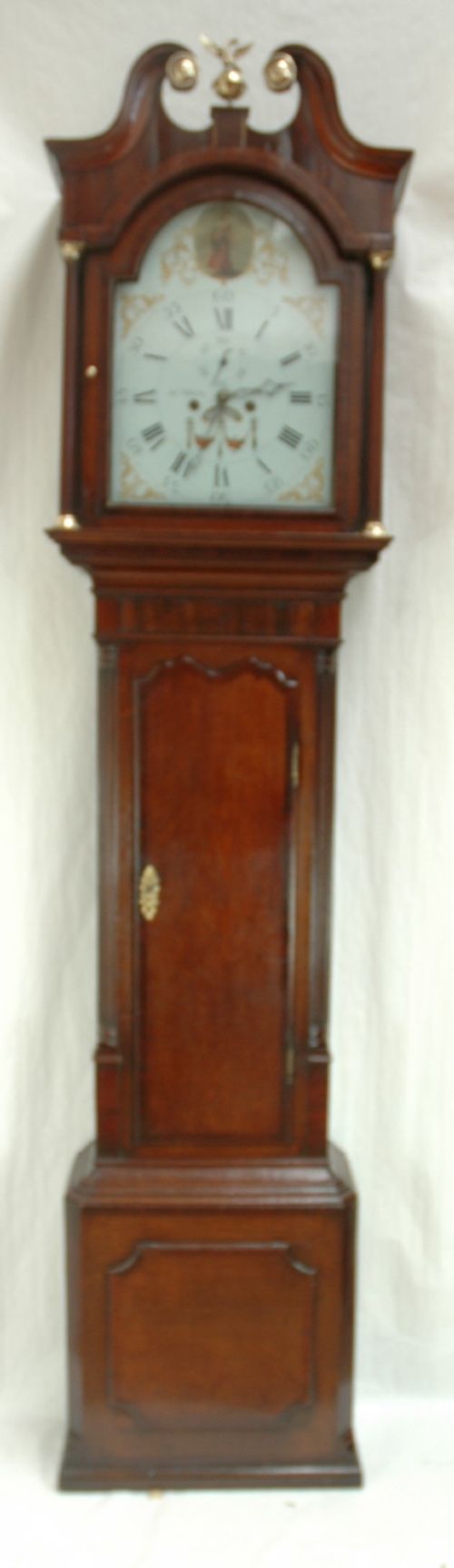
Georgian examples in oak and mahogany dominate the available pieces, often featuring brass or painted moon dials that track lunar phases alongside the hours. Regional variations from Scottish and English makers show distinct local preferences in dial decoration and hood design.
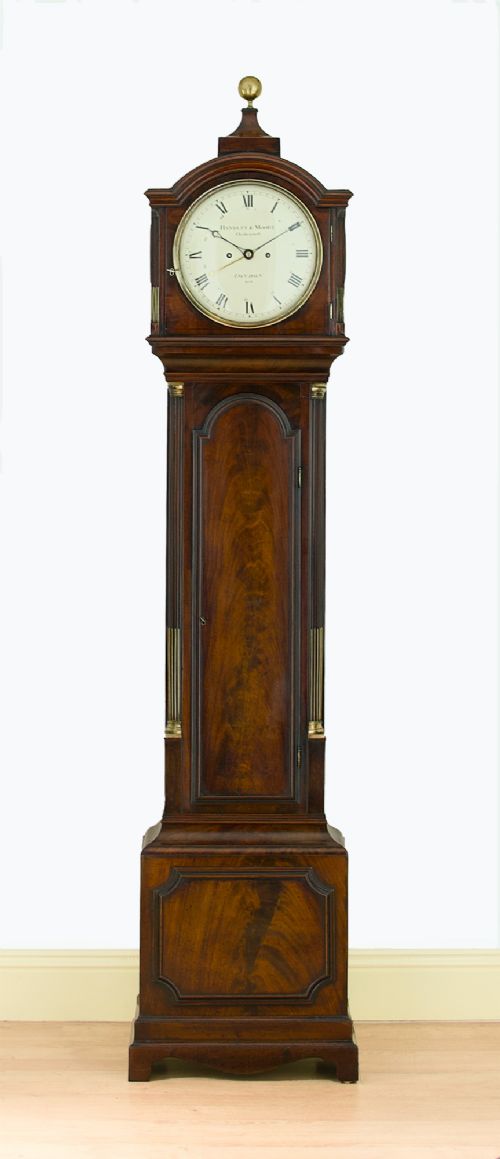
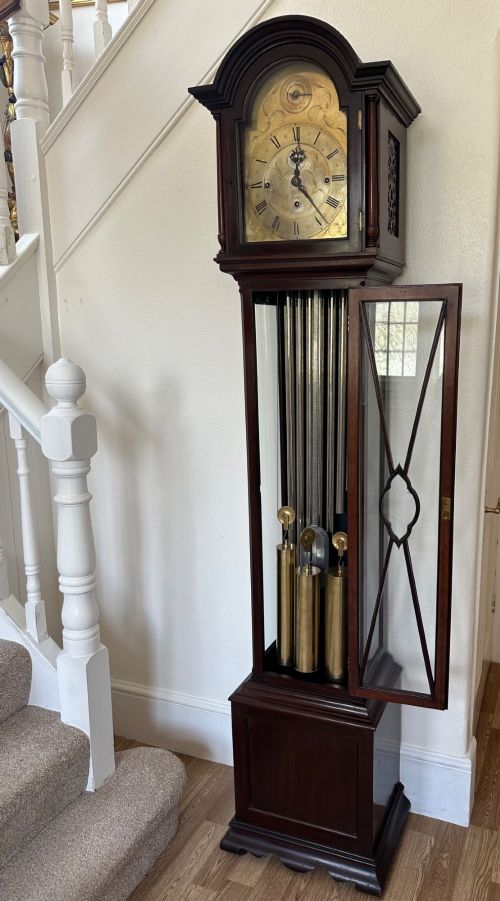
Later Edwardian and early twentieth-century versions appear alongside the dominant eighteenth-century pieces, offering chiming mechanisms and inlaid mahogany surfaces. Each piece combines timekeeping utility with furniture craftsmanship that anchors a hallway or reception room.
Materials and construction
Cabinetmakers constructed the tall cases primarily using solid oak and mahogany, occasionally employing walnut, burr oak, or lacquered chinoiserie finishes over pine or deal carcases. Regional cabinet shops selected native timbers like oak for earlier pieces, while later Georgian workshops favoured imported mahogany with decorative veneer banding.
Movement plates, gear trains, and dials relied heavily on brass, steel, and cast components fashioned by specialist horologists working independently from the cabinetmakers. Dials combined engraved brass chapters, silvered hour rings, and painted subsidiary chapters illuminated behind flat or curved glass panes.
Listings feature oak, mahogany, walnut, and lacquered wood cases spanning from the seventeenth century through the Edwardian period.
Judging quality in long case clocks
Proportion and timber selection dictate the baseline of quality, separating straightforward utilitarian timepieces from ambitious cabinet work with figured veneers and carved architectural hoods. Superior pieces maintain harmonious dial layouts where engraved or painted details retain crisp definition without later repainting.
The integration between movement and case reveals the maker's original intent, ensuring the dial fits the trunk aperture correctly and the weight drops freely without interference. Signed movements by established provincial or London makers carry distinct mechanical execution that elevates the horological merit.
Handley & Moore·Thwaites·Edward Shepley·Thomas Vernon·Nathaniel Pyne·Gillett & Johnston·Charles Shuckburgh·Benjamin Reeves
The Antique Long Case Clock Glossary
- Moon dial
- A secondary arched dial showing the lunar cycle through two painted moons rotating behind the chapter ring. This complication required mechanical gearing to track the synodic month.
- Longcase
- The correct horological term for the tall clock form commonly called a grandfather clock. The design protects the long pendulum and descending weights from ambient drafts.
- Regulator
- A high-precision clock designed for exact timekeeping and used as a standard to calibrate other timepieces. These movements often feature separated minute and hour dials.
- Chinoiserie
- Decorative lacquerwork mimicking Asian designs, popular on eighteenth-century cases. Artisans applied raised metallic motifs over pigmented varnish grounds.
- Chapter ring
- The circular metal ring affixed to the dial face displaying the numerals for the hours and minutes. Engraved brass rings often feature black wax infill for legibility.
Antique Long Case Clock: Frequently Asked Questions
How do I wind an eight-day long case clock?
Winding involves inserting a crank key into the winding holes on the dial face and turning it clockwise until the internal weights reach the top of the trunk. Care must be taken not to overwind the mechanism once resistance is felt.
Most eight-day movements require this attention weekly. Ensuring the weights hang clear of the pendulum cord prevents stopping.
Why do some clocks have arched dials?
Arched dials appeared during the eighteenth century to accommodate auxiliary moving mechanisms like rolling moon phases or tidal indicators above the main time ring. This upper space allowed clockmakers to showcase mechanical complexity.
Cabinetmakers adapted the hood design with a corresponding swan neck or arched pediment to frame the expanded brass face.
How do I tell an 18th-century clock from a 19th-century one?
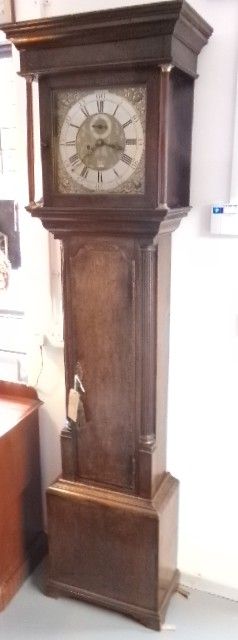
Eighteenth-century examples typically display square brass dials with cast spandrels in the corners, housed in heavy oak or figured walnut cases. Proportions tended to be robust with flat-topped hoods.
Nineteenth-century pieces frequently employ painted white dials, arched hoods, and mahogany veneers with string inlay. The casework reflects changing Regency and Victorian furniture fashions.
Where should I place a long case clock in my home?
Positioning requires a stable interior wall away from direct sunlight, central heating vents, and exterior doors where temperature swings can affect the wood and timing. A firm, level floor ensures the pendulum swings evenly.
Securing the upper trunk to the wall prevents accidental tipping while maintaining the vertical alignment necessary for the escapement to beat regularly.