


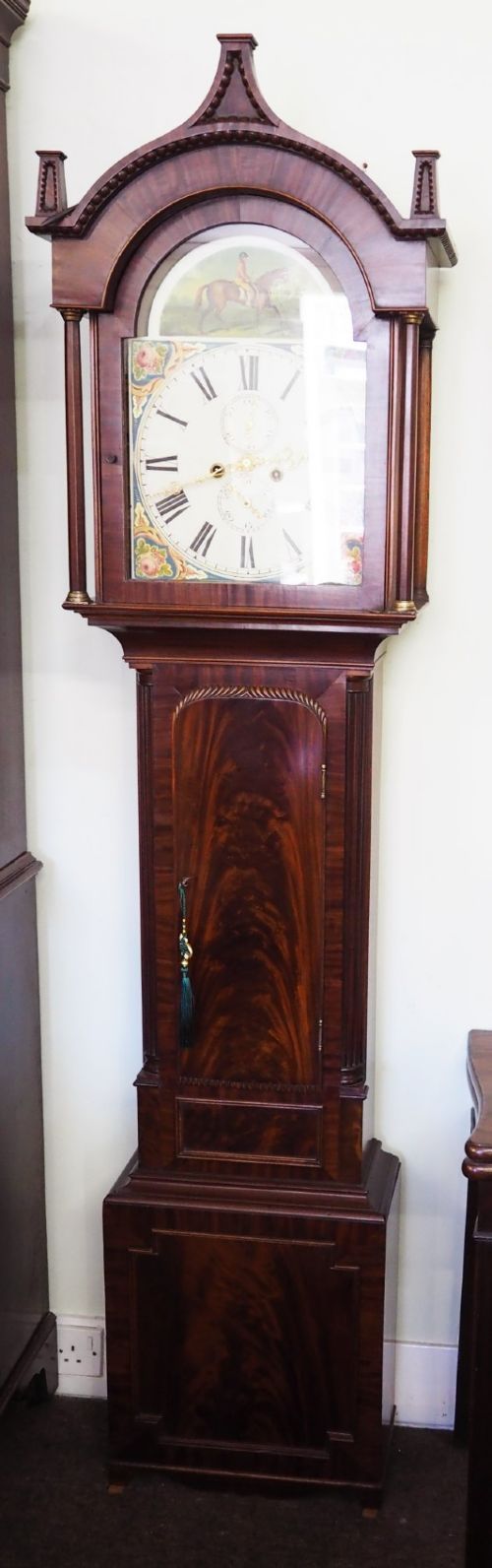


Regency Tall Case Clock
A regency tall case clock brings striking architectural presence and precision engineering into a room.
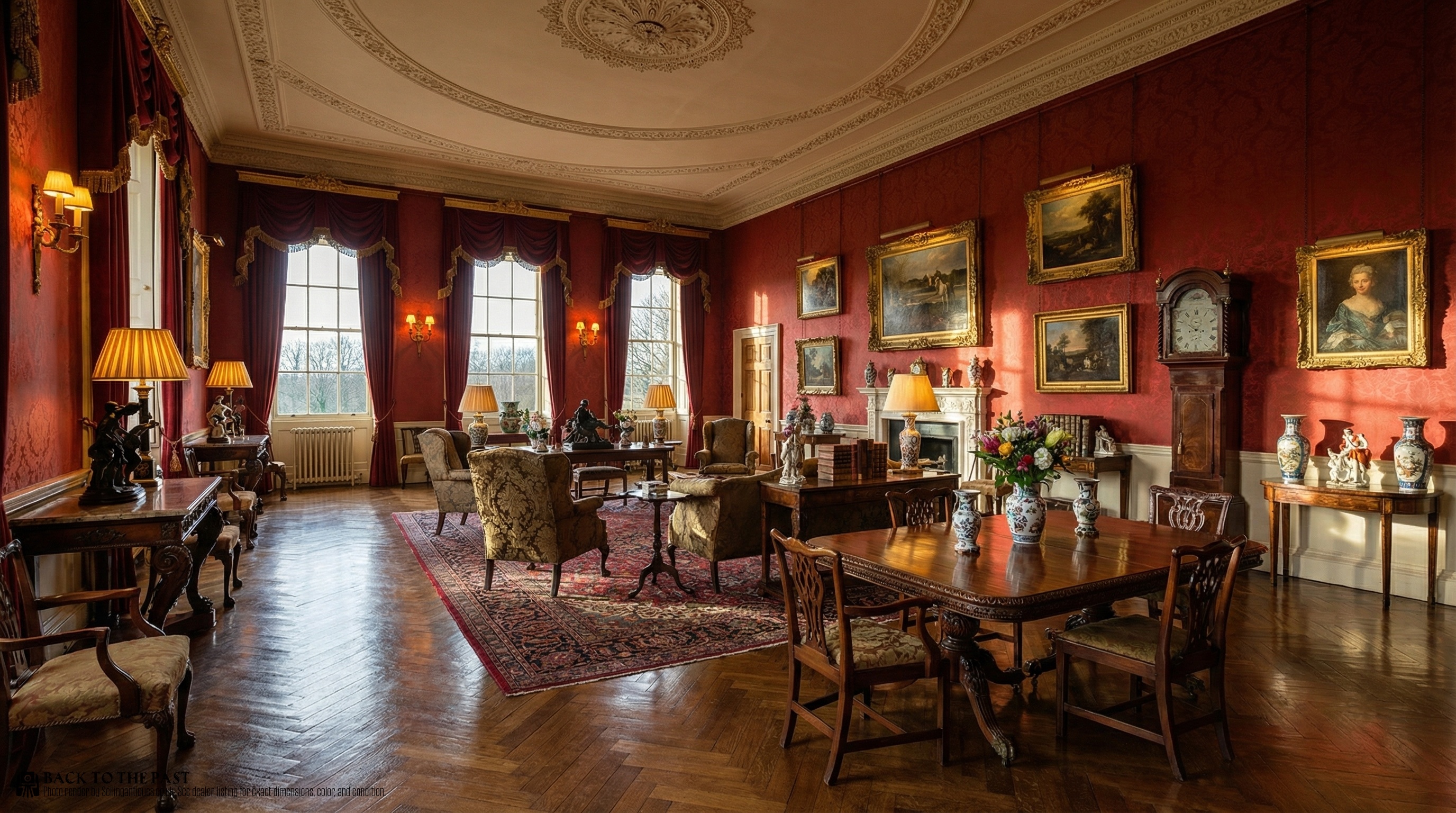
What a regency tall case clock is
A regency tall case clock stands as a commanding floor-standing timekeeper originating from the early nineteenth century and the Regency period.
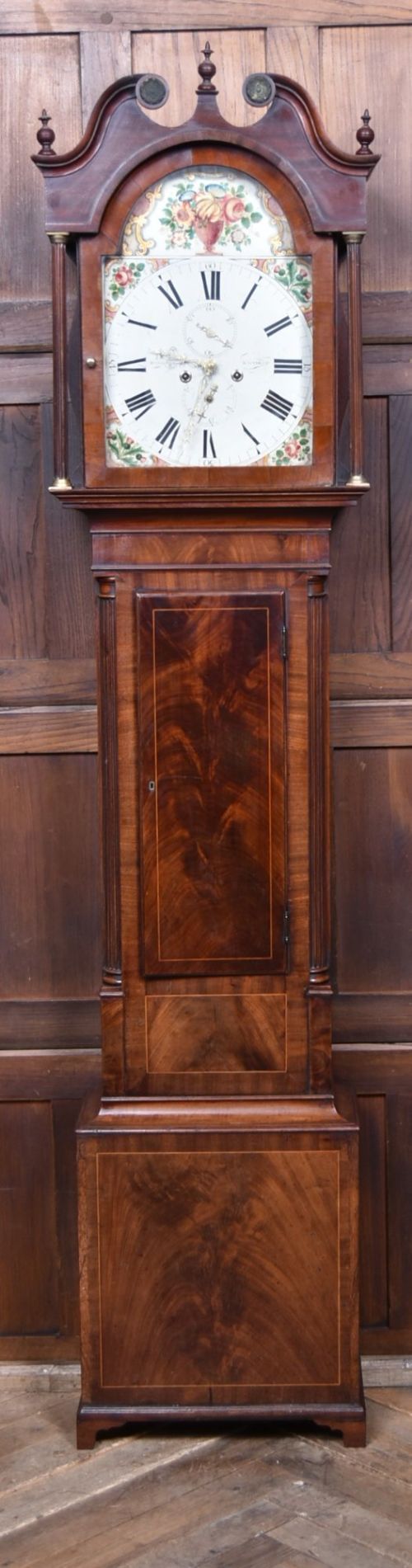
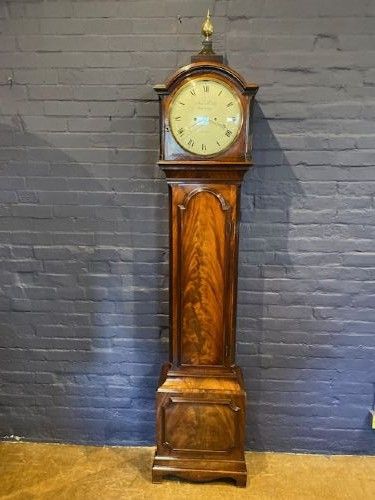
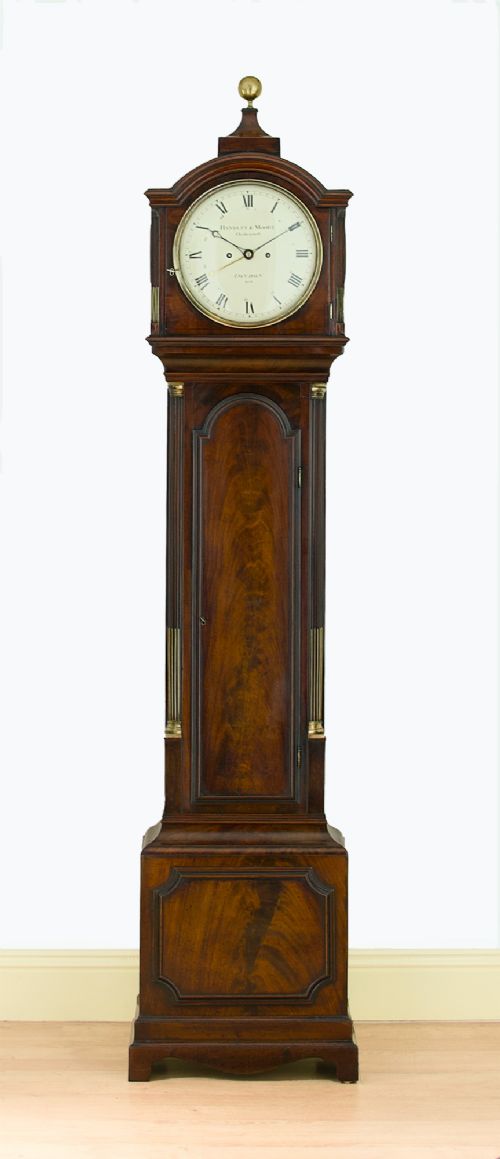
The pieces listed on this page include longcase clocks and regulators produced around eighteen hundred, capturing the monumental scale typical of the era.
Makers such as Parkinson and Frodsham, Dwerrihouse and Carter, and Thos. Newsom of Tottenham represent the standard forms found within these listings.

How they were made
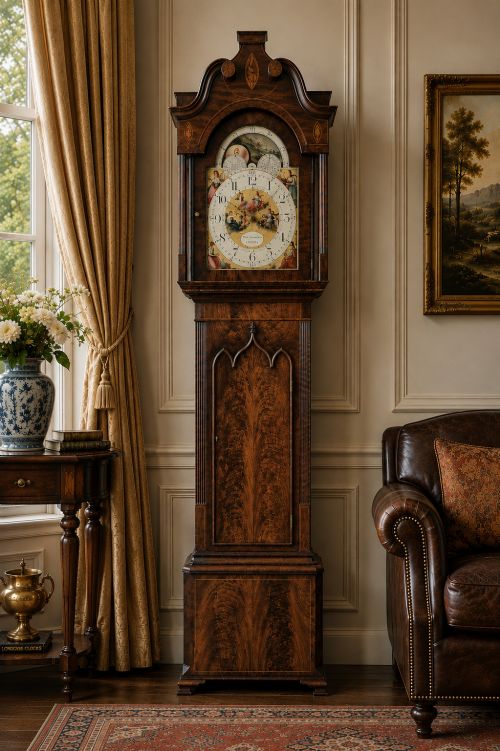
Cabinetmakers utilised timber such as mahogany, oak, and flame mahogany veneer to construct the tall wooden cases that enclose the weight-driven movements.
The exteriors feature intricate inlay work while the upper hoods incorporate glass panels to protect the painted dials and brass components.
Mechanical construction relied on robust iron and brass gear trains designed to drive eight-day movements with accurate timekeeping.
Retail Price Guide 2026
Typical UK retail prices for regency tall case clock, calculated from the Sellingantiques database of over a million retail prices indexed since 2003. This retail price guide relies exclusively on Sellingantiques data; no external sources or auction records are used, so the figures do not describe the wider market.
Every time the weights drop, a small brass key brings the silent giant back to life.
What varies in quality
The refinement of the cabinetwork dictates the distinction between standard examples and superior pieces, particularly in the selection of flame mahogany veneer and delicate string inlay.
Dial execution separates workshops, where hand-painted numerals and fine subsidiary hands demonstrate the skill of the horologist rather than mass production.
The reputation of the maker inscribed on the dial directly influences the standing of the clock, as London firms achieved exceptional standards in both movement and case design.
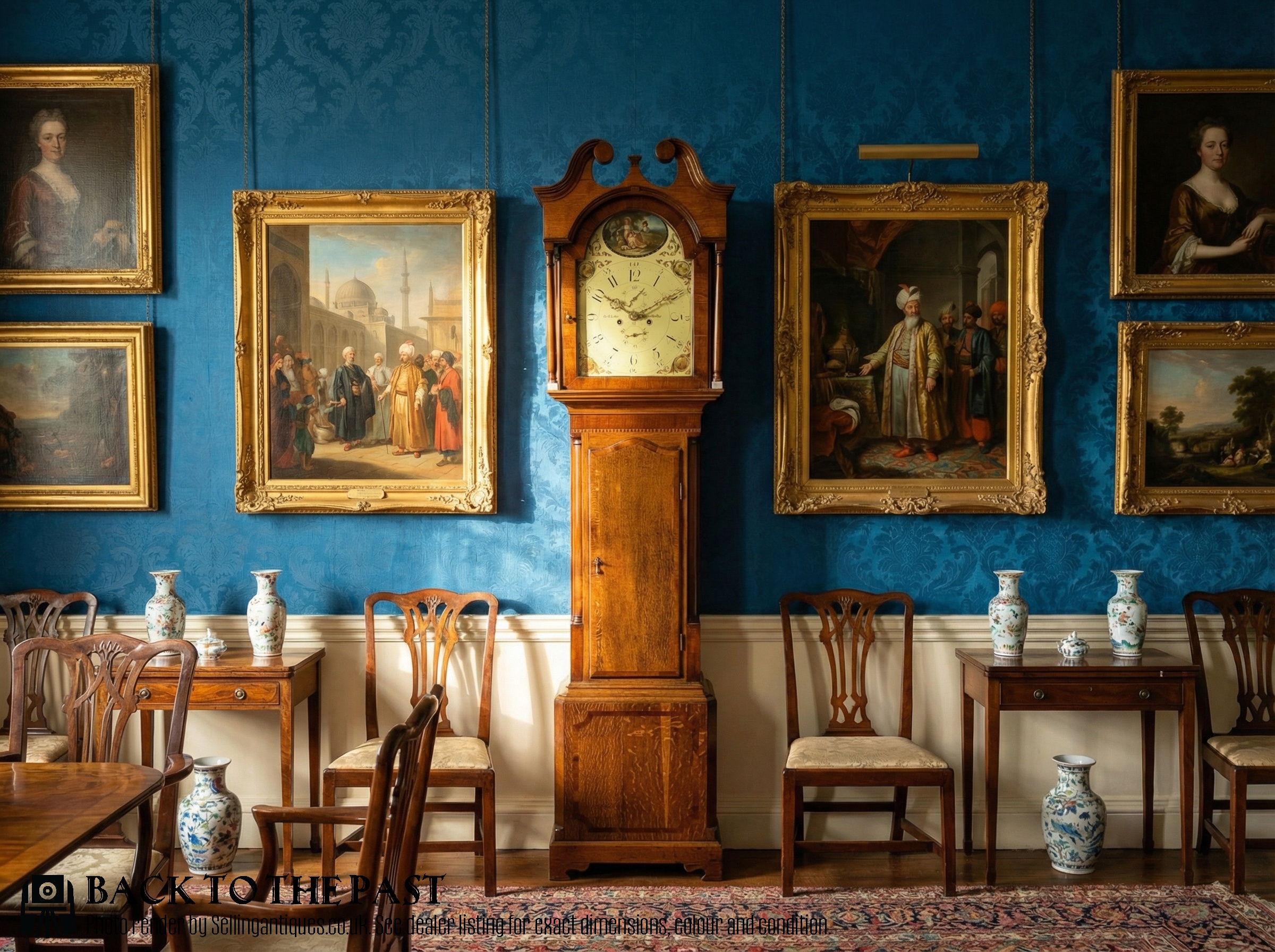
Parkinson and Frodsham·Dwerrihouse and Carter·Thos. Newsom of Tottenham·French Royal Exchange
The Regency Tall Case Clock Glossary
- Longcase clock
- A tall pendulum clock enclosed in a wooden case that stands directly on the floor. These instruments usually measure over six feet in height to allow the weights adequate drop.
- Regulator
- A precision pendulum clock designed for extreme accuracy, often utilised as a standard for time comparison. These movements feature distinct dials and meticulous gear construction.
- Flame mahogany veneer
- A decorative wood slicing chosen for its fiery, swirling grain pattern. Cabinetmakers applied these thin sheets over a stable secondary timber base to create striking visual depth on the door and trunk.
- Eight day movement
- A mechanical clock movement that requires winding approximately once a week. This system uses two suspended weights housed within the long trunk.
Frequently Asked Questions
Where should a regency tall case clock go?
These tall timepieces require a stable, level floor and a secure fixing to the wall behind the upper trunk to prevent any movement that might interfere with the pendulum.
Placement in hallways, studies, or principal reception rooms allows the architectural case and the steady tick to become a natural part of the interior.
How do eight day movements work?
Two heavy iron weights are suspended by cords or chains inside the trunk, slowly descending over the course of a week to power the gear train and escapement.
Winding involves using a key to pull the weights back to the top of their drop via the winding holes on the dial face.
What is flame mahogany?
Flame mahogany is a specific cut of wood taken from the fork of the tree where the branches join the main trunk, producing a dramatic, flickering grain pattern.
Cabinetmakers during the Regency period prized this timber for central door panels and friezes, creating a rich contrast against straighter grain borders.
How do you date a longcase clock?
Dating relies on stylistic details of the case, such as the shape of the hood and the presence of inlay, combined with the signature and address of the maker inscribed on the dial.
Clocks from eighteen hundred often display crisp Regency proportions and painted metal dials rather than the earlier brass square faces.