


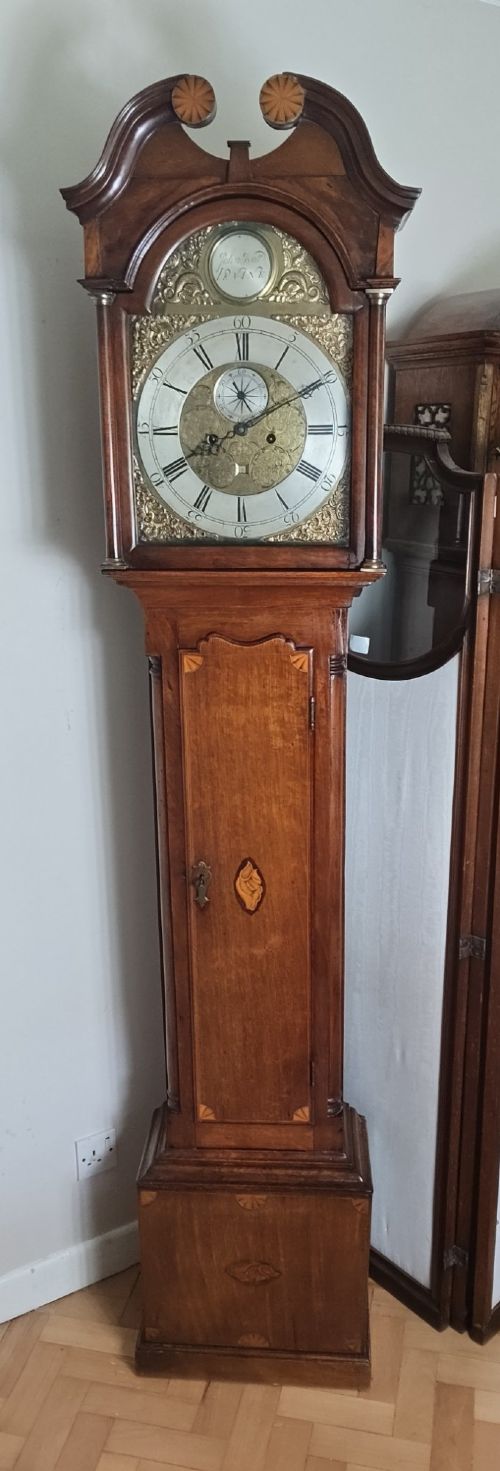
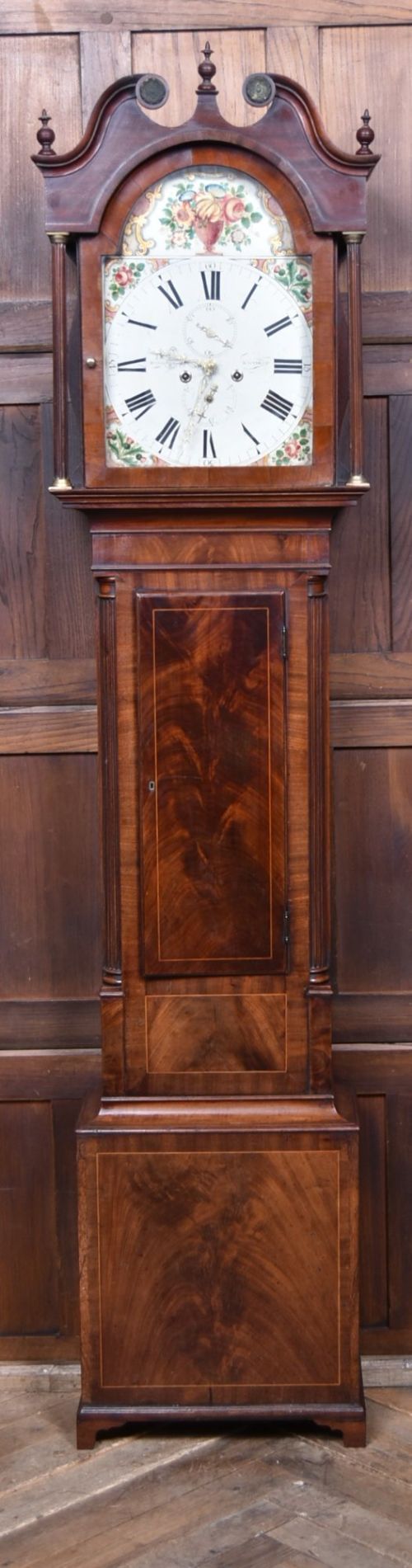
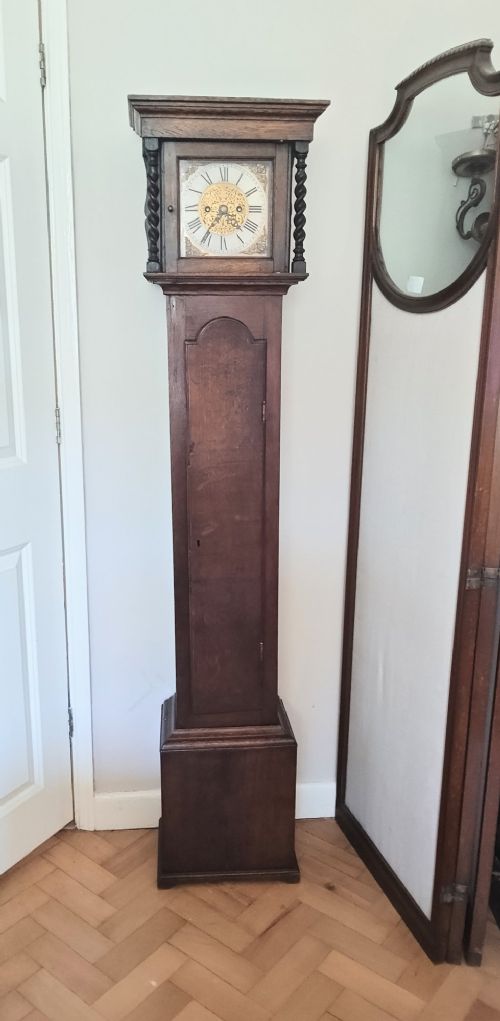


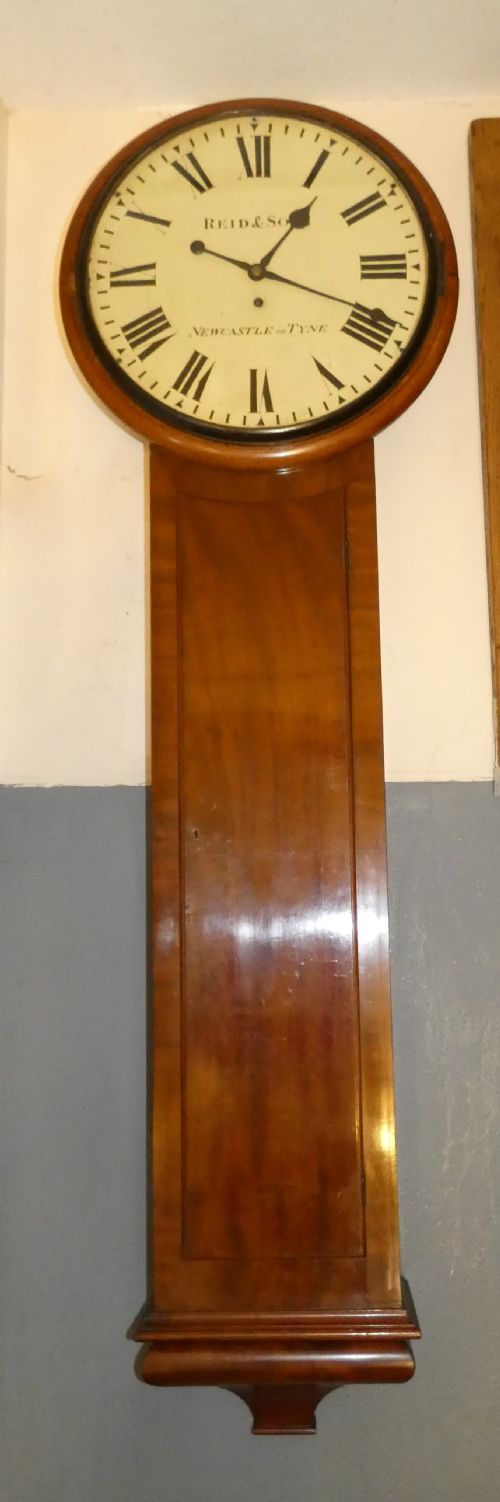
19th Century Grandfather Clock
When you search for a 19th century grandfather clock, you enter a world of tall timber cases and measured mechanical time.

19th Century Grandfather Clock
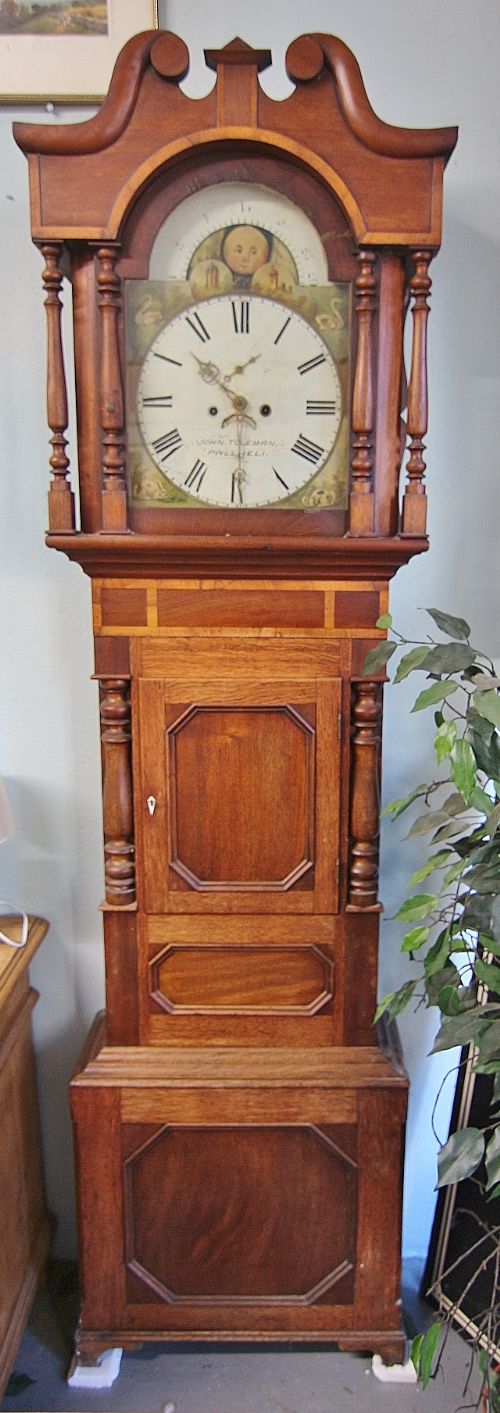
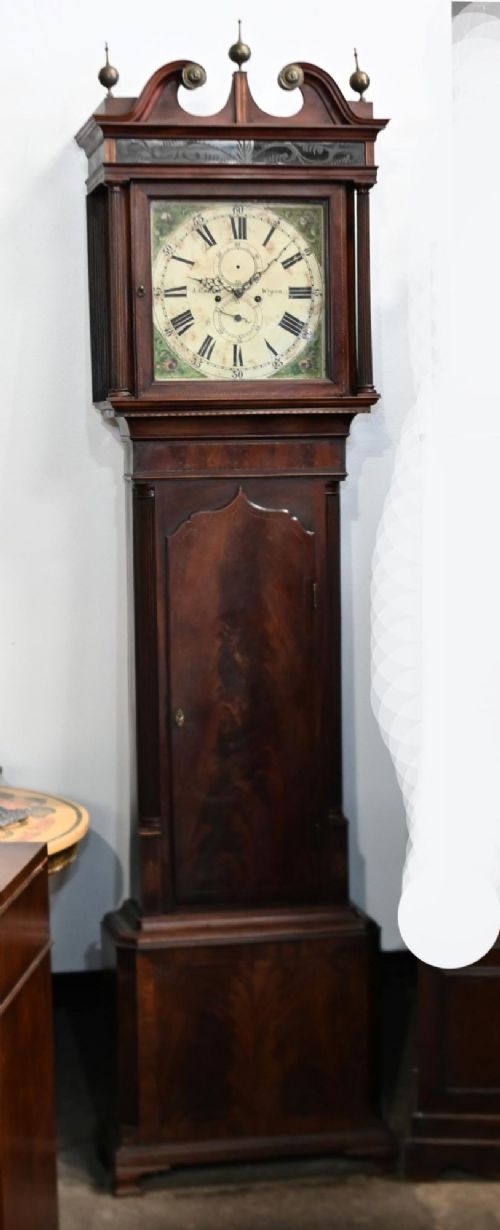
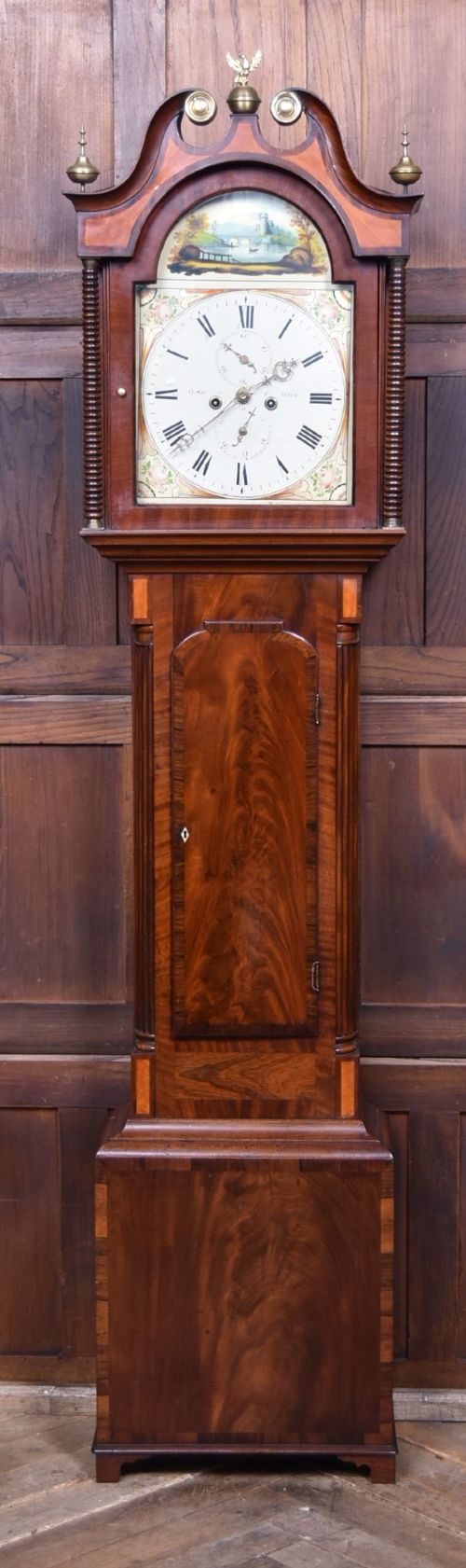
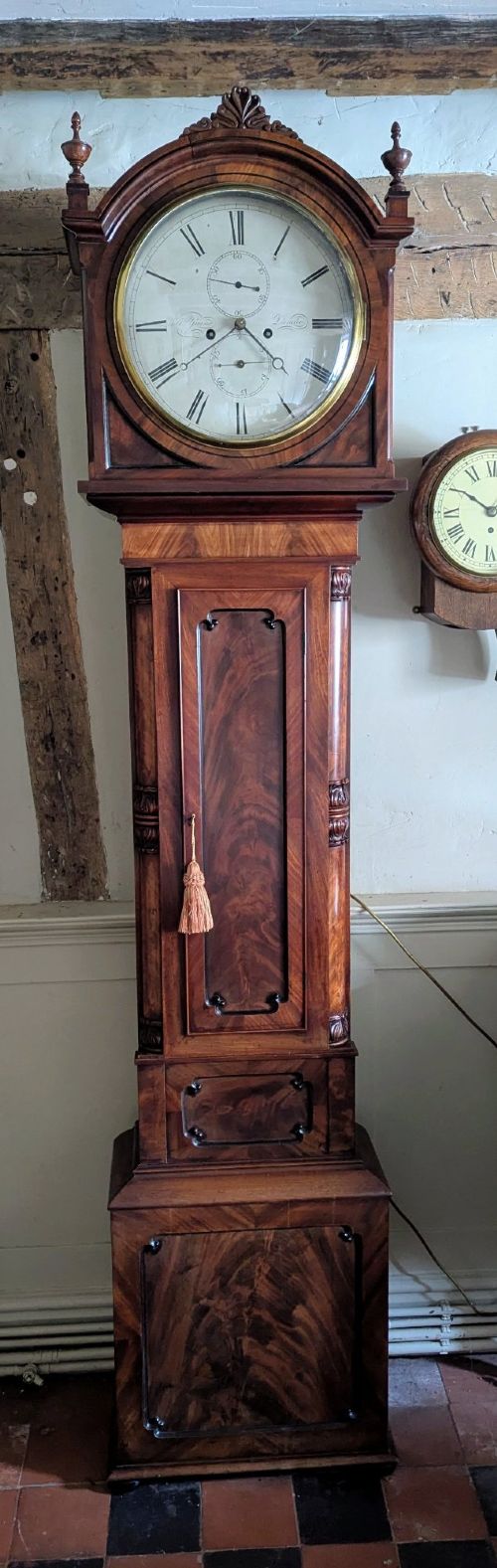
A 19th century grandfather clock is a tall, floor-standing timepiece housed in a wooden trunk designed to protect the weights and pendulum that drive the movement. These pieces originate from various regional centres across Britain and Scandinavia, reflecting local cabinet-making traditions alongside metropolitan clockmaking skill.
The versions most frequently met on this page combine tall mahogany or oak cases with brass or painted iron dials. Alongside standard eight-day movements, you will encounter simpler thirty-hour variants and more compact grandmother clocks built for smaller rooms.
How They Were Made
Cabinet makers constructed the tall cases using native and imported hardwoods such as mahogany, flame mahogany, oak, and pine, frequently adding satinwood stringing, marquetry stars, or brass paterae. The timber boards were joined using traditional pegged and dovetailed joints to house the heavy mechanical movements securely.
The timekeeping mechanisms rely on brass wheels, pinions, and escapements driven by suspended iron or lead weights or tensioned springs. Dials were formed from sheet brass, silvered chapter rings, or painted iron plates, often featuring hand-painted lunar complications or subsidiary seconds rings.
19th Century Grandfather Clock Retail Price Guide 2026
Typical asking prices for 19th century grandfather clock among the pieces listed under this phrase on Sellingantiques today, from the lower quarter to the upper quarter. They describe what is for sale here now, not the wider market.
Several clocks carry the signatures of provincial makers who quietly recorded their names on painted iron dials for future centuries to uncover.
What Varies in Quality
The calibre of the movement largely determines the standing of a piece, with eight-day rack-striking mechanisms and precision regulators representing higher complexity than basic thirty-hour trains. Provincial maker signatures also influence the character of the piece, connecting the clock to specific regional workshops.
Hendrie Ogg·D. Straiton·Thomas Webbe·Thwaites·Parkinson & Frodsham·William Chisholm·Ganthony·Maple & Co
The 19th Century Grandfather Clock Glossary
- Longcase clock
- An alternative term for a tall floor-standing pendulum clock housed within a protective wooden case. These items range from modest provincial thirty-hour examples to grand London eight-day regulators.
- Grandmother clock
- A smaller, more slender variant of the traditional tallcase clock produced during the later periods. They occupy less floor space while retaining similar weight-driven or spring-driven mechanisms.
- Regulator
- A precision timekeeper designed for exceptional accuracy, often featuring a heavy gridiron pendulum and separate dials for hours, minutes, and seconds. They represent the pinnacle of mechanical clockmaking skill.
- Moon dial
- A rotating painted disc positioned above the main chapter ring that tracks the phases of the lunar cycle. Makers often painted these discs with maritime or pastoral scenes.
- Chapter ring
- The circular ring fixed to the clock face that bears the numeric hour markers. These rings are typically engraved on brass or rendered in silvered metal.
19th Century Grandfather Clock: Frequently Asked Questions
How do eight-day and thirty-hour movements differ?
Eight-day movements require winding approximately once a week and typically utilise two heavy weights suspended by cords or chains. They often include striking mechanisms to mark the hours on a bell or gong.
Thirty-hour movements require daily or near-daily winding and are generally simpler in their gear trains. These versions were widely produced for more modest homes and country cottages.
Where should a longcase clock be placed?
Longcase clocks require a stable, level floor and a firm attachment to a wall through the backboard to prevent swaying. Placing them away from direct sunlight and strong draughts helps preserve the timber case and oil lubrication.
Because the pendulum must hang plumb to keep accurate time, uneven floorboards require careful adjustment using packing beneath the base. Proper positioning also ensures the striking train chimes clearly without interference.
What is a rolling moon complication?
A rolling moon complication is a secondary dial mechanism that tracks the twenty-nine-and-a-half-day lunar cycle. As time progresses, two painted moons rotate behind shaped arches to display the phase of the moon.
This feature required skilled hand-painting and intricate gear calculations by the clockmaker. It added significant cost and decorative appeal to the finished timepiece.