
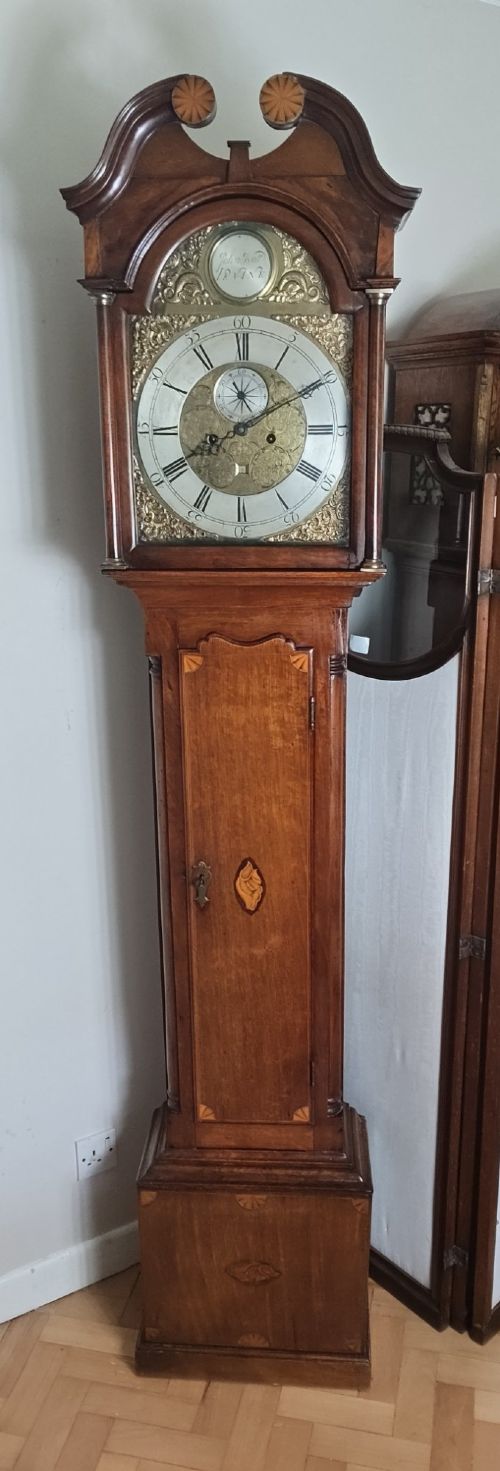
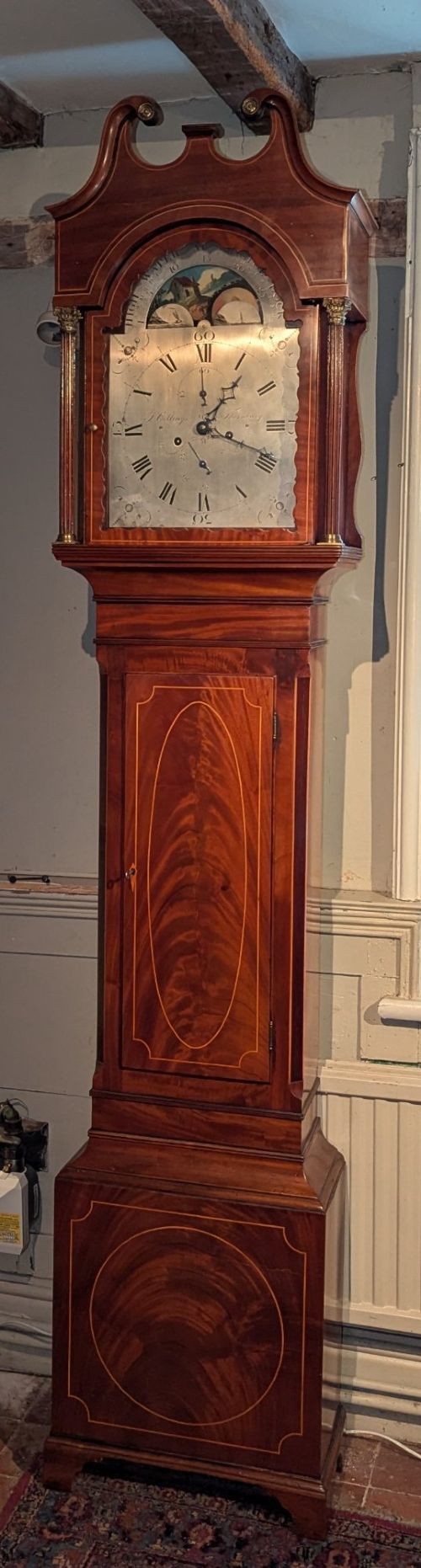
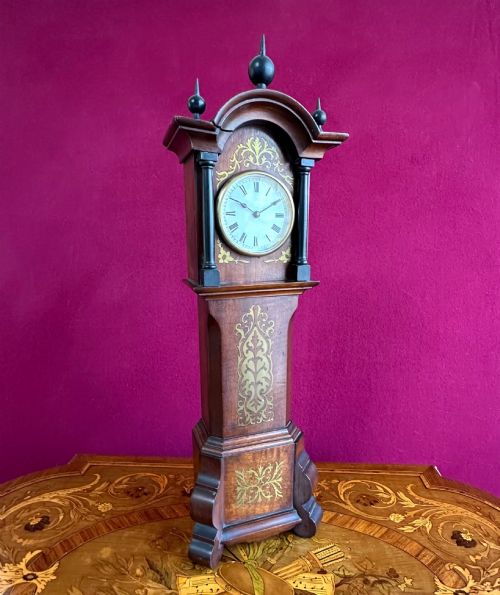
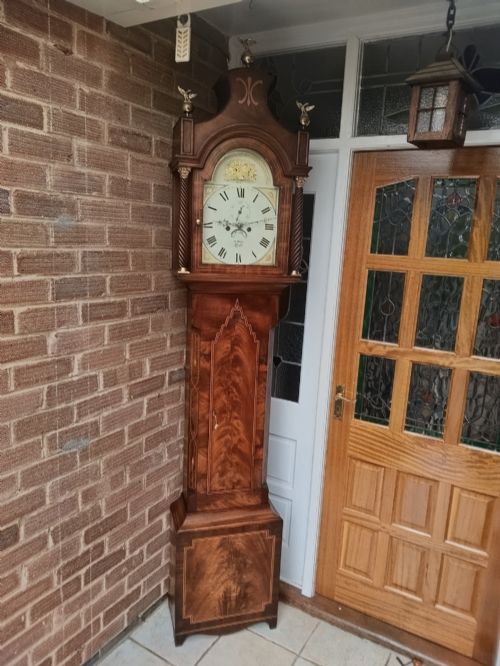
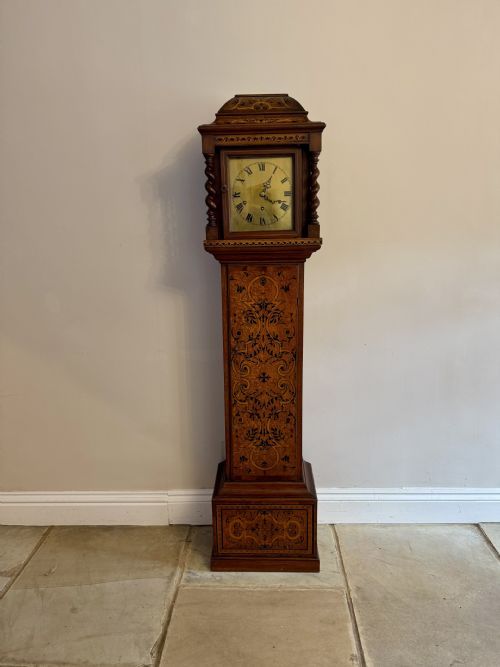


Inlaid Mahogany Longcase Clock
An inlaid mahogany longcase clock is a tall floor-standing timepiece combining timber and precision mechanics, sought after for its imposing presence and domestic utility.
Forms and Periods
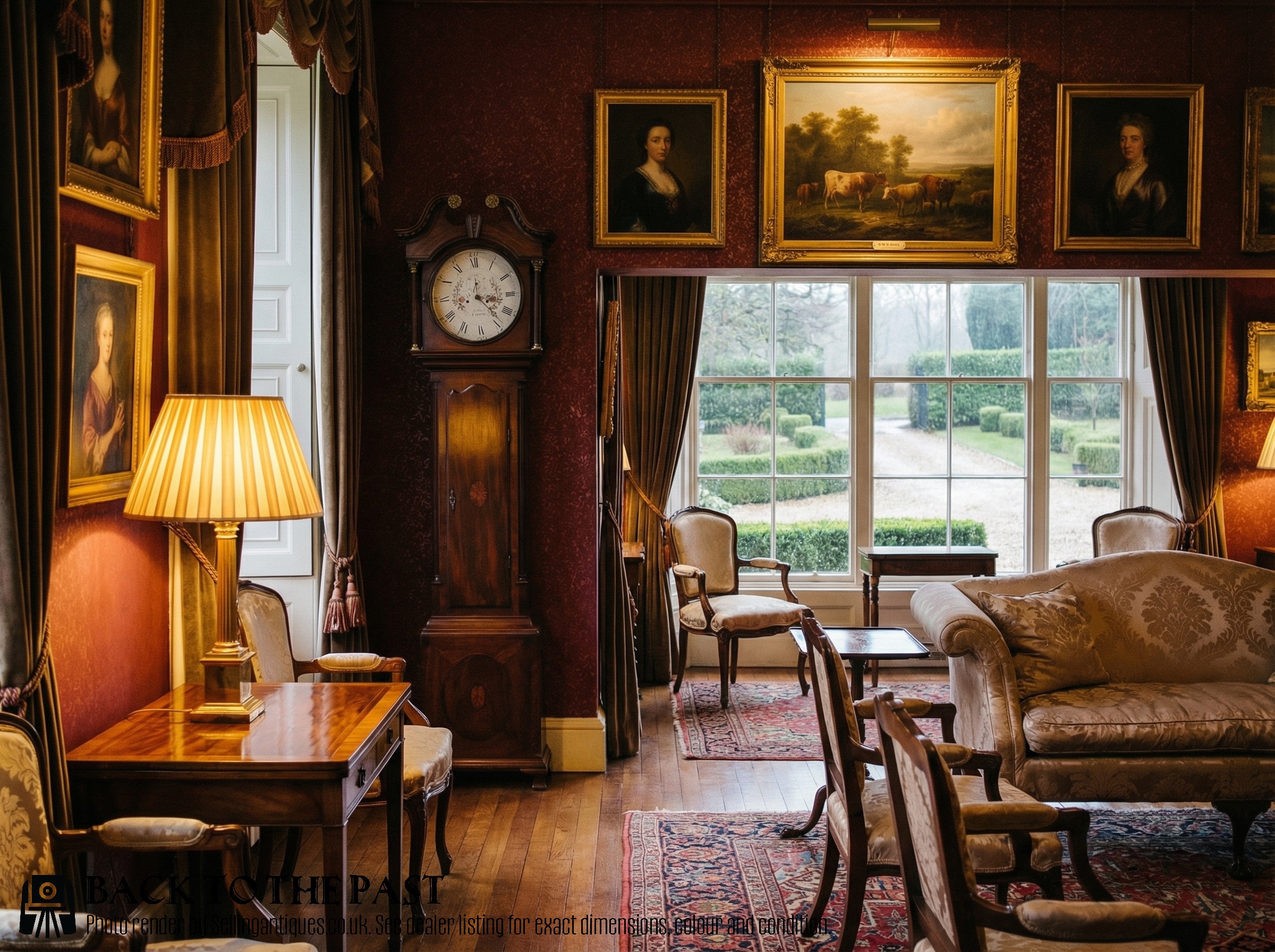
An inlaid mahogany longcase clock primarily spans the Georgian and Edwardian periods, stretching from the late eighteenth century into the early twentieth century. These tall clocks appear in full-sized grandfather formats as well as smaller grandmother and miniature proportions.
The pieces on this page originate from diverse regions, including English provincial workshops, Scottish burghs, Welsh towns, the Channel Islands, and continental makers. The case designs range from simple linear geometry to sophisticated architectural hoods with arch details.
Materials and Construction
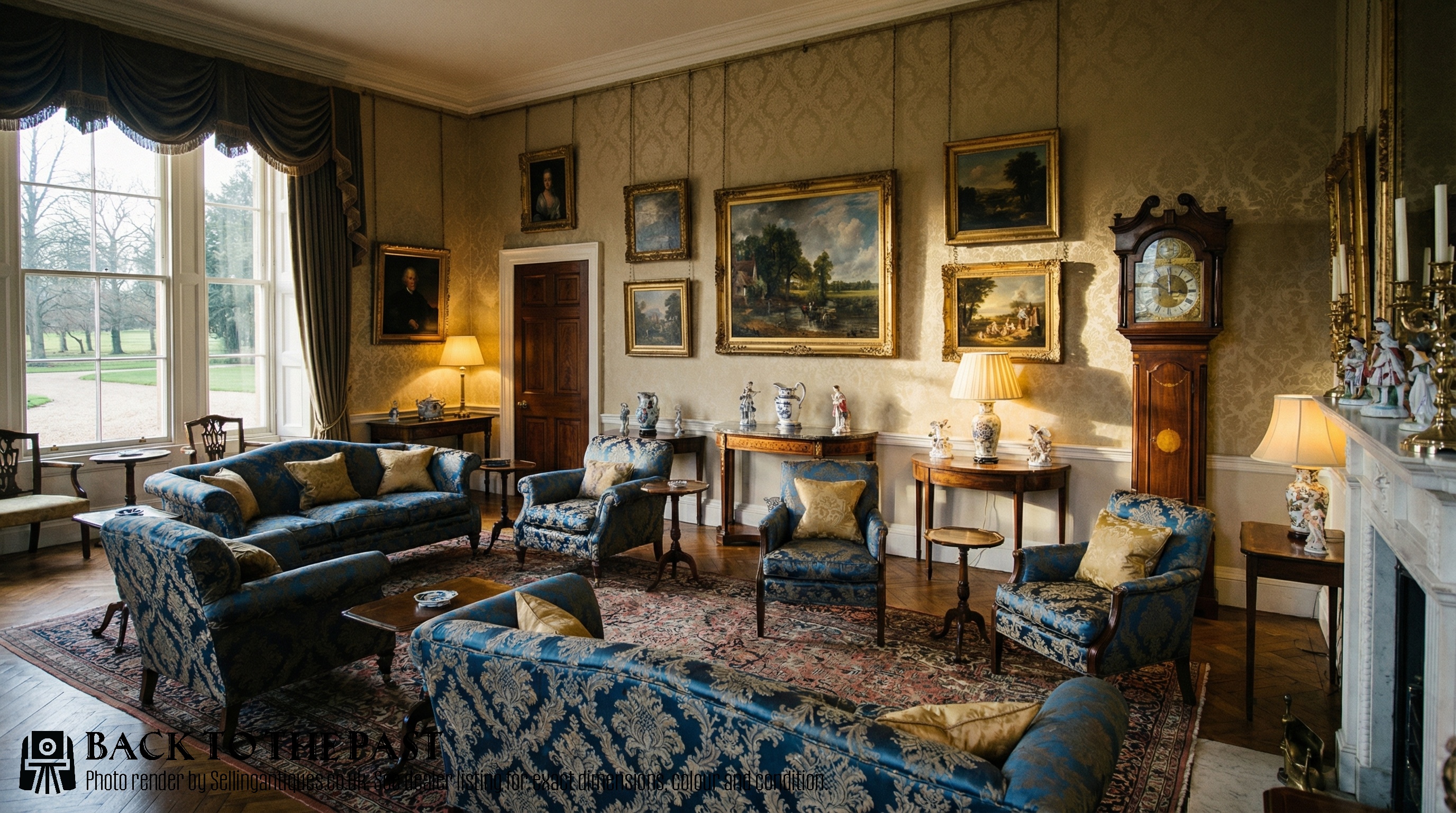
Makers constructed these tall cases using solid timber, frequently utilising flame mahogany and oak carcases embellished with satinwood inlay and fan decorations. Glass protected the dial face within an opening hood or glazed door.
Mechanically, these timepieces housed brass movements, painted dials, and occasionally moon phase indicators or chiming systems. Movements were powered by weights, governing the rotation of the hands and the striking of hours or quarters.
Retail Price Guide 2026
Typical UK retail prices for inlaid mahogany longcase clock, calculated from the Sellingantiques database of over a million retail prices indexed since 2003. This retail price guide relies exclusively on Sellingantiques data; no external sources or auction records are used, so the figures do not describe the wider market.
The listings span the Georgian, Victorian, and Edwardian periods, incorporating mahogany, oak, brass, glass, and painted dials.
Distinctions in Grade
The standard of an inlaid mahogany longcase clock rests in the crispness of the cabinetwork and the execution of the marquetry or stringing. Superior examples display balanced proportions, finely figured timber, and intricate brass dial work signed by established makers.
Movement complexity further defines the hierarchy, distinguishing simple time-only or hour-striking variants from eight-day movements, moon phase complications, and multi-hammer chiming mechanisms.
John Denbigh Merton Park·Benjamin Peers Chester·David Morice Auchtermuchty·Edward Renouf Jersey·Harford Bristol·Darling Edinburgh·Rowntree York·Ganz Swansea·Gustav Becker Germany·William Pridgin Hull·Charles Campbell Boness·Lott Barwise Cockermouth·J.O. Ingram Cardiff
The Inlaid Mahogany Longcase Clock Glossary
- Longcase clock
- A tall, weight-driven pendulum clock housed in a wooden case designed to stand directly on the floor. These pieces are frequently referred to as grandfather clocks.
- Satinwood inlay
- A decorative technique inserting contrasting pale timber into the mahogany surface to create geometric borders or pictorial motifs. This ornamental detail defines the visual character of the case.
- Moon phase dial
- A specialised secondary dial tracking the lunar cycle through painted representations of the moon. It appears beneath the arch of the main clock face on select examples.
- Grandmother clock
- A smaller, more slender variation of the traditional longcase clock produced during later periods. These shorter versions fit domestic spaces with lower ceilings.
- Chiming movement
- An internal mechanism designed to play musical melodies or quarter-hour chimes using gongs or bells. Edwardian models frequently incorporate this acoustic feature.
Frequently Asked Questions
What is a grandmother clock?
A grandmother clock is a scaled-down version of the traditional longcase clock, standing noticeably shorter and possessing a slender silhouette.
These compact timepieces suit domestic interiors that lack the ceiling height required for a full-sized grandfather clock.
How do eight day clocks work?
An eight day clock utilises a weight-driven movement that requires manual winding only once every week.
This mechanical refinement freed owners from the daily chore associated with thirty-hour timepiece mechanisms.
What is a moon phase dial?
A moon phase dial is a rotating painted disc visible through an arch on the clock face that tracks the lunar cycle.
Clockmakers added this complication to help farmers and mariners monitor tides and moon illumination.
Where were these clocks made?
These timepieces originated in workshops across England, Scotland, Wales, and the Channel Islands, alongside continental makers.
Provincial horologists signed their dials, anchoring individual pieces to specific towns and regional manufacturing traditions.
How do I identify an Edwardian piece?
Edwardian examples typically date from the early twentieth century and frequently feature mechanical advancements such as Westminster chiming movements.
The cabinetwork from this era often combines mahogany with delicate satinwood stringing and glazed trunk doors.