


Brown Wood Floor Clock
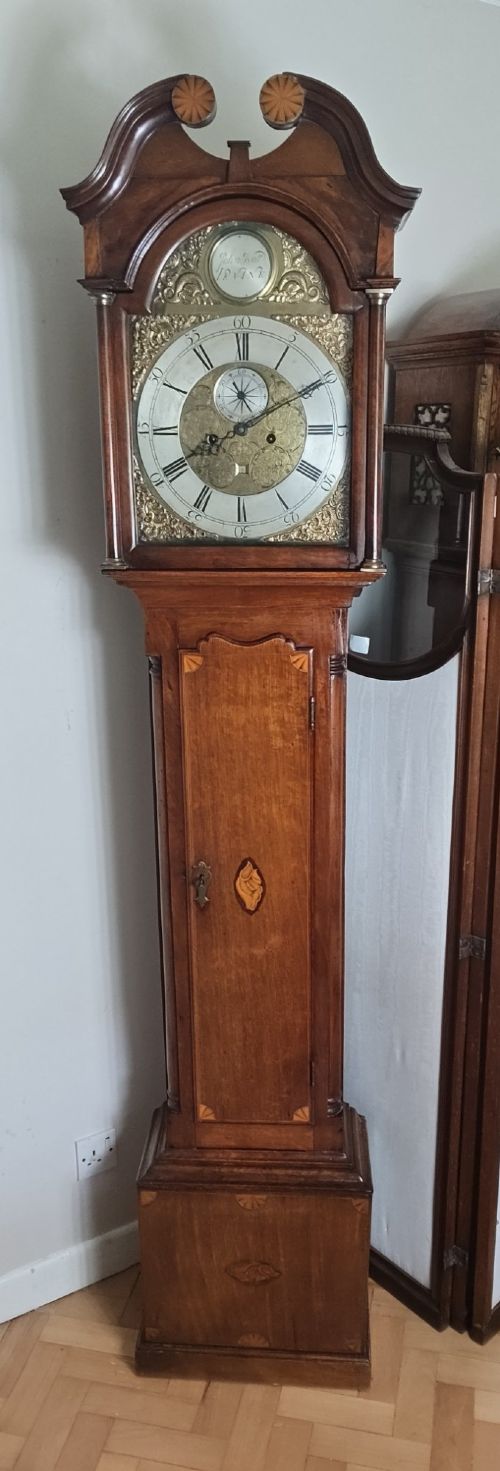
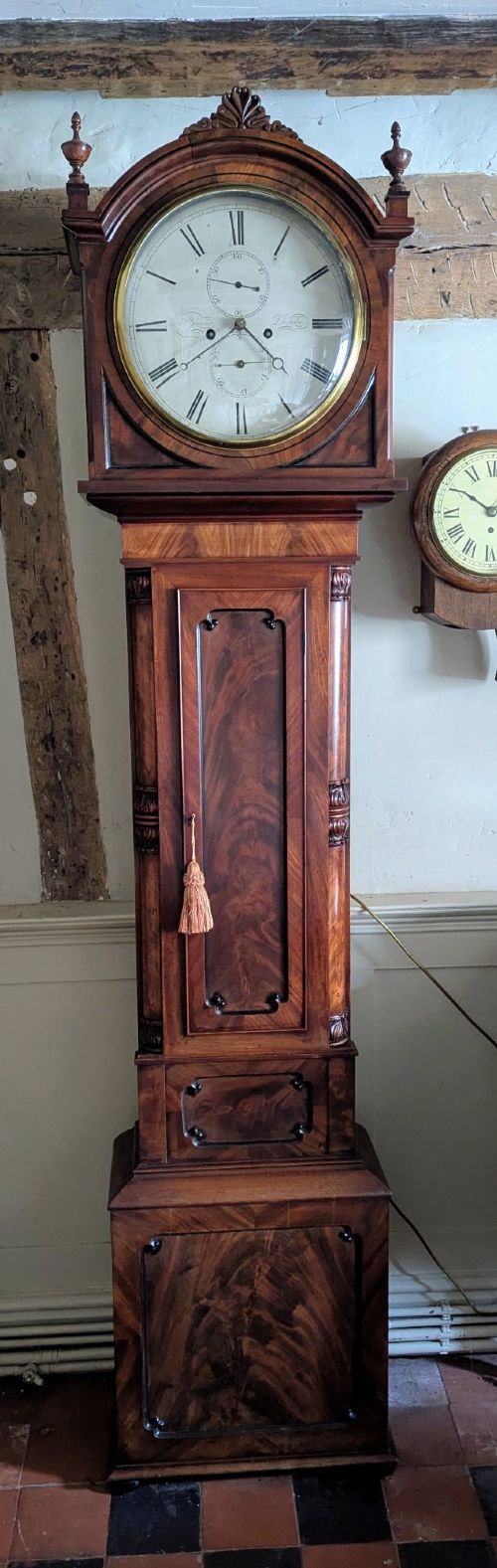
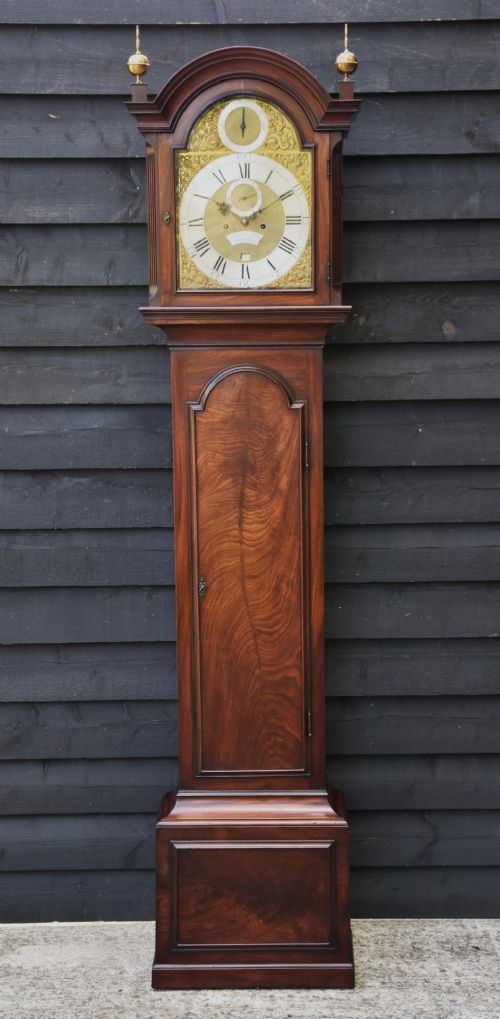
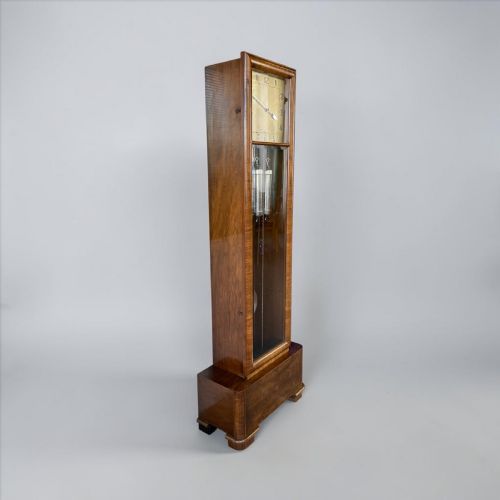
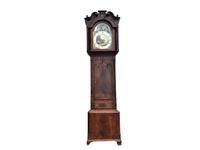
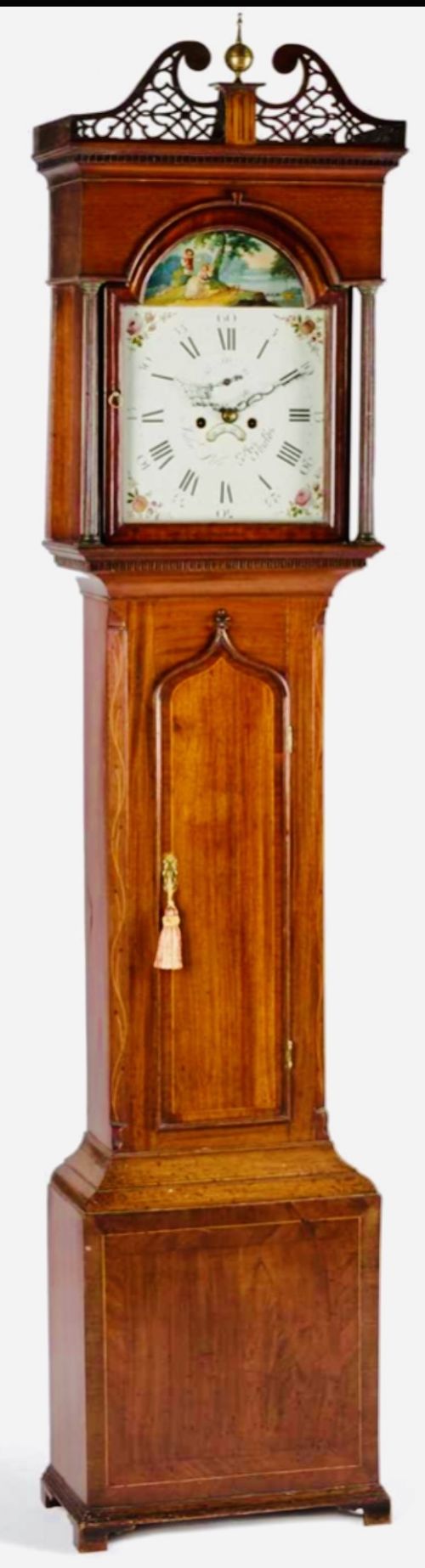
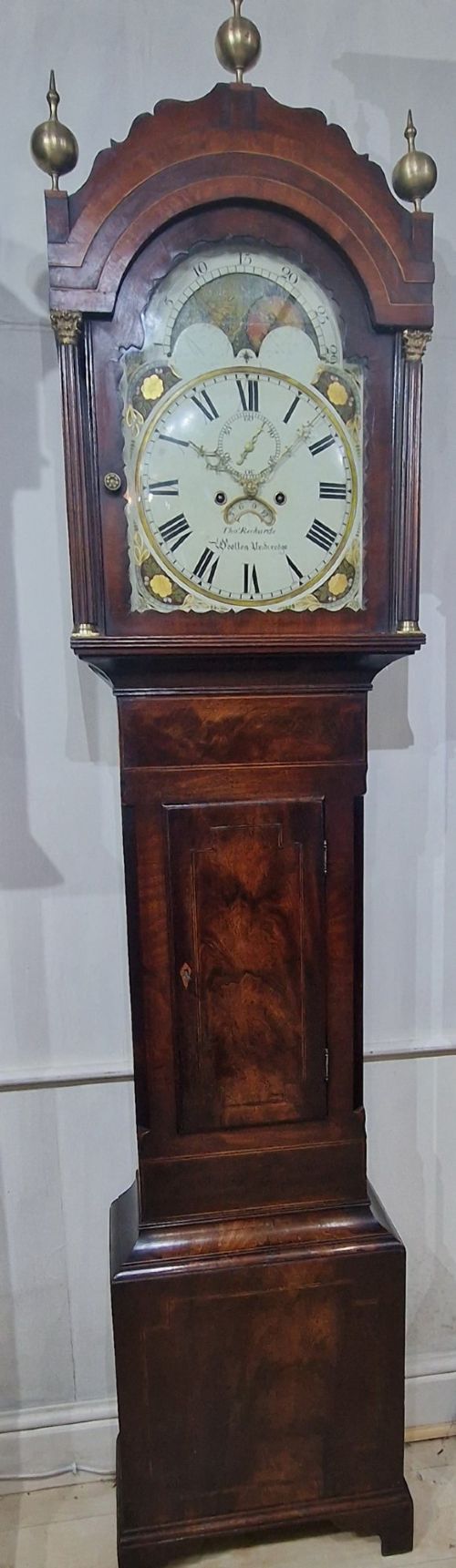
A brown wood floor clock stands tall in a hallway, bringing centuries of mechanical timekeeping and cabinetmaking into a room.

Brown Wood Floor Clock
A brown wood floor clock, often known as a longcase or grandfather clock, is a tall pendulum-driven timepiece housed in a wooden case. These vertical cases protect the delicate weights and swinging pendulum while displaying the dial.
The pieces seen here span from the seventeenth century through to the twentieth century, encompassing Georgian, Victorian, and Edwardian eras. Mahogany and oak dominate the selection, frequently paired with brass dials and glass door panels.
Buyers will most commonly encounter Georgian and Victorian examples in mahogany or oak. Grandfather clocks and smaller grandmother clocks make up the bulk of the forms available on this page.
How they were made
Cabinetmakers built these tall cases primarily using timbers such as mahogany, oak, and walnut, often applying flame veneers and marquetry details. Woodworkers constructed the tall housings to accommodate long pendulums and heavy driving weights.
Clockmakers fitted brass movements, enamel or brass painted dials, and glass hoods to house the face. Iron and steel components formed the internal gear trains and escapements that kept time over eight-day or shorter durations.
Brown Wood Floor Clock Retail Price Guide 2026
Typical asking prices for brown wood floor clock among the pieces listed under this phrase on Sellingantiques today, from the lower quarter to the upper quarter. They describe what is for sale here now, not the wider market.
Periods represented span from the 17th century through the 18th, 19th, and 20th centuries.
What varies in quality
The refinement of the cabinetwork and the complexity of the dial separate standard examples from exhibition grade pieces. Rich figured veneers, intricate marquetry, and carved wooden details indicate higher skill in the workshop.
Complications in the movement, such as moon rollers, rocking ship automata, or musical mechanisms, elevate a piece above a standard timekeeper. The crispness of the painted or brass arched dial and the proportion of the wood case define the upper tier of the range.
Rickards Wotton Under Edge·Richard Biggs Romsey·Richard Alexander Devizes·James Coster Henley·Hay Wolverhampton·Dan Williams Crickhowell·W Prior Skipton
The Brown Wood Floor Clock Glossary
- Longcase clock
- A tall pendulum clock enclosed in a wooden case resting directly on the floor. This term is often used interchangeably with grandfather clock.
- Grandfather clock
- A large floor-standing pendulum clock typically standing over six feet tall. These tall cases house the weights and pendulum.
- Moon roller
- A mechanism behind the dial showing the phases of the lunar cycle. It rotates slowly to display the moon's age.
- Marquetry
- Decorative veneer work arranged in intricate patterns using various woods. Craftsmen applied these patterns to the surface of the clock case.
- Grandmother clock
- A smaller version of the longcase clock, built with reduced proportions. These shorter floor clocks suit rooms with lower ceilings.
Brown Wood Floor Clock: Frequently Asked Questions
How do I wind a floor clock?
Most eight-day clocks require you to pull the chains or use a crank key to lift the weights back to the top every week. Take care not to overwind the movement when tending to the clock.
Matching the weight cords and handling the pendulum with steady hands ensures the beat remains even after winding.
Where should I place a grandfather clock?
Position the clock on a stable, level floor away from direct sunlight, heating vents, and exterior doors. A firm foundation prevents vibrations that can disrupt the pendulum swing.
Securing the tall wooden case to the wall using discreet brackets provides extra stability in busy hallways or rooms.
How do I tell Georgian from Victorian clocks?
Georgian clocks tend to feature cleaner, simpler architectural lines with classical proportions and understated mahogany or oak surfaces. Victorian examples often display heavier proportions, more ornate carvings, and elaborate arched painted dials.
Looking at the construction of the interior trunk and the style of the dial lettering helps clarify the period of manufacture.
What is the difference between a grandfather and grandmother clock?
Grandfather clocks are tall floor clocks usually measuring over six feet in height to accommodate long pendulums. Grandmother clocks are significantly shorter versions built with compact proportions.
Both types share the same mechanical principles, but the smaller grandmother clocks were designed for tighter spaces.