
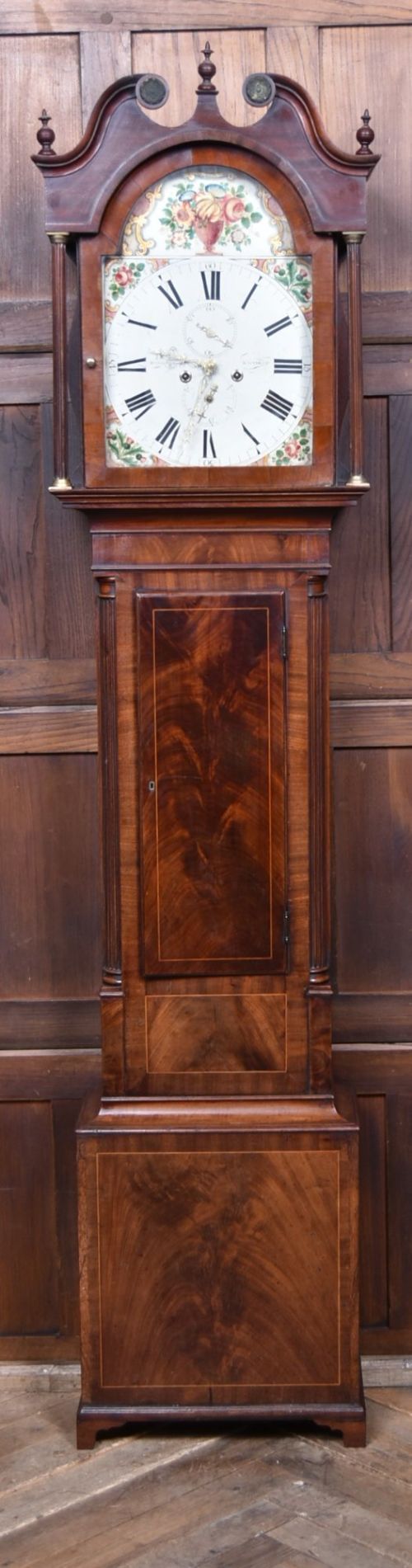
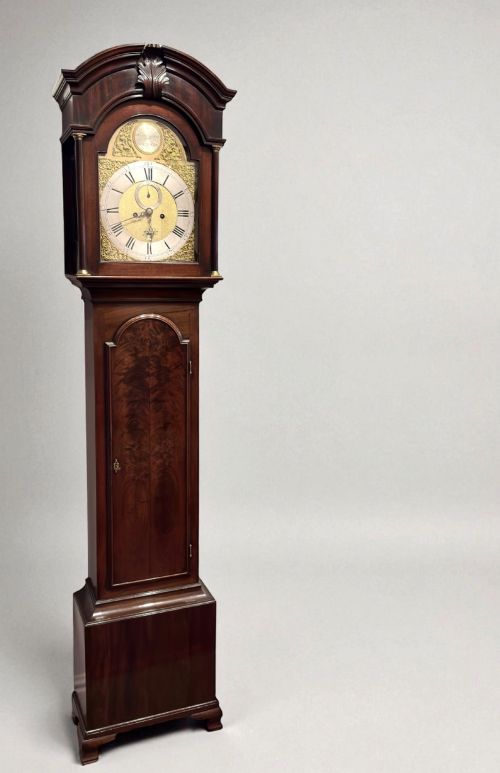
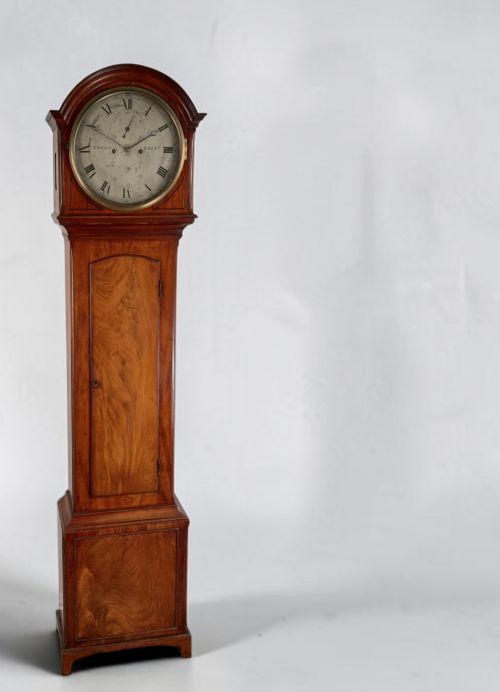
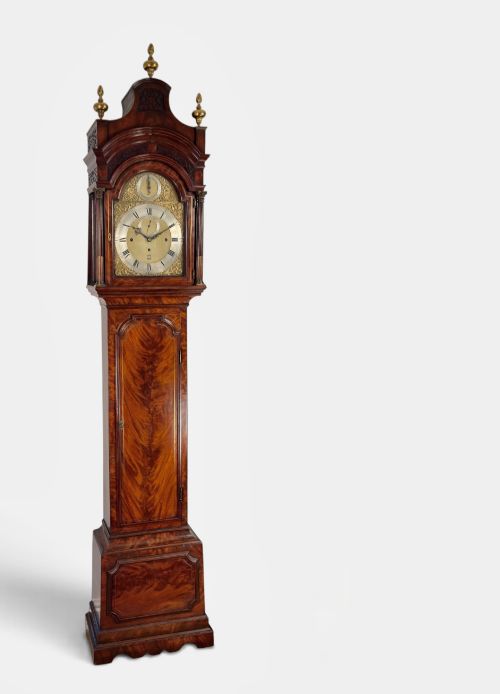
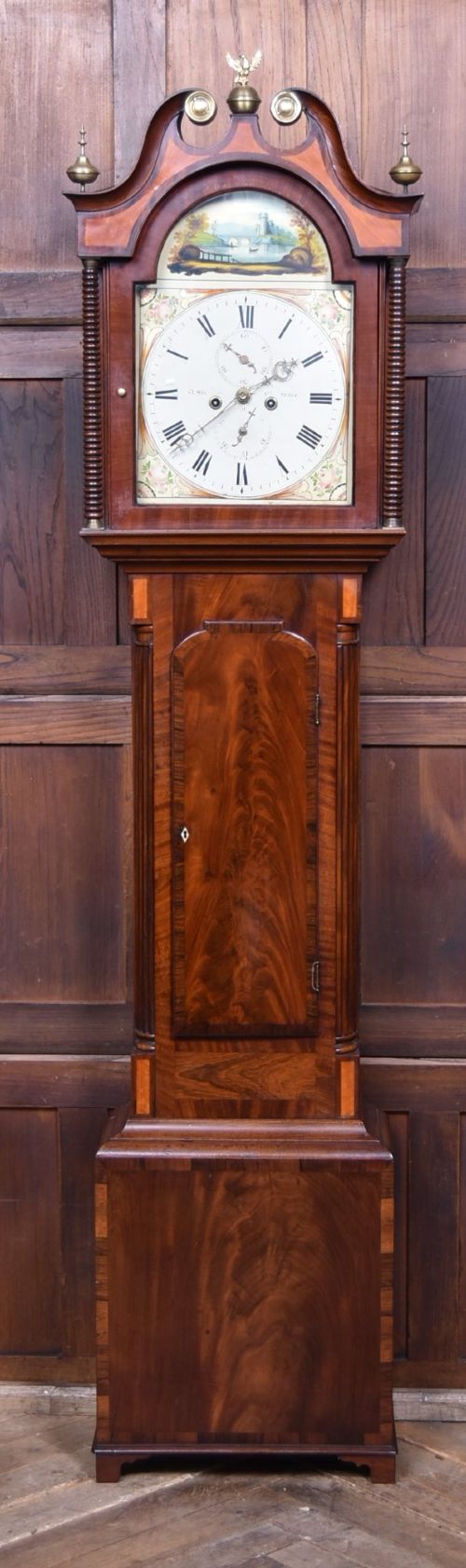

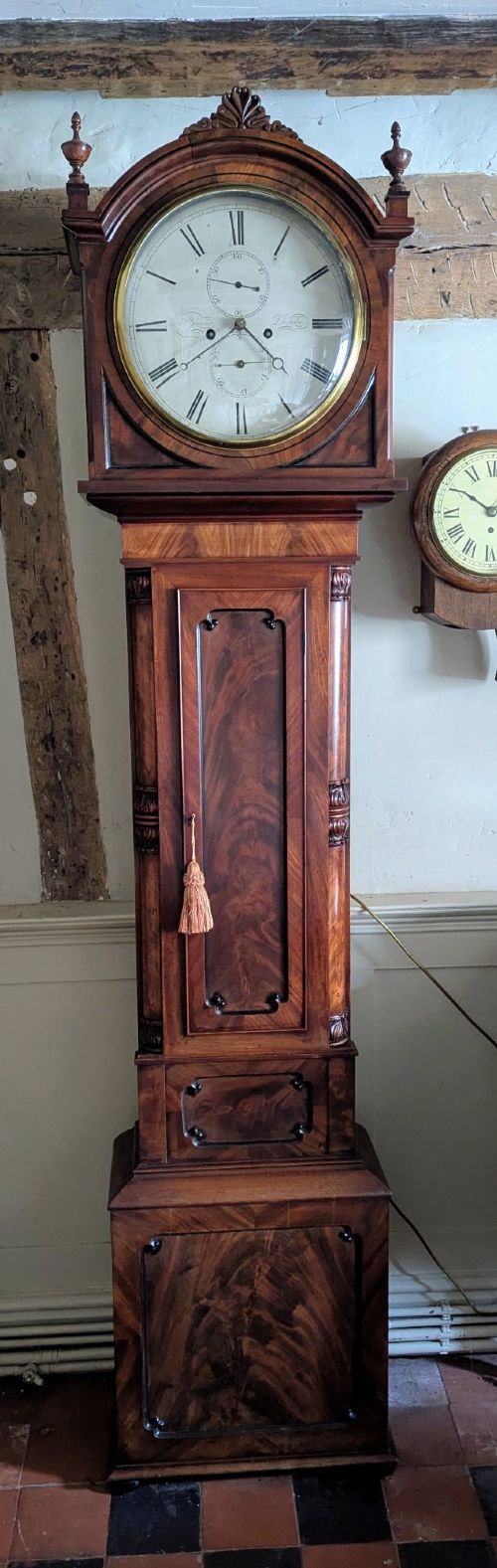
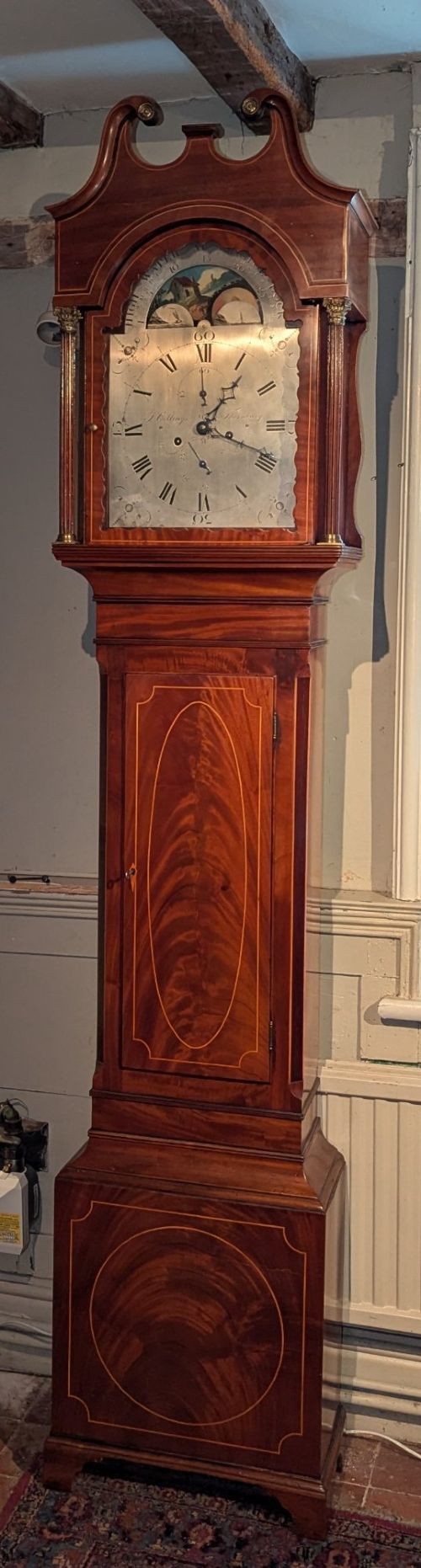
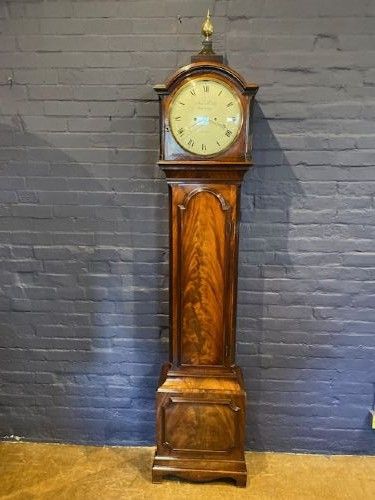
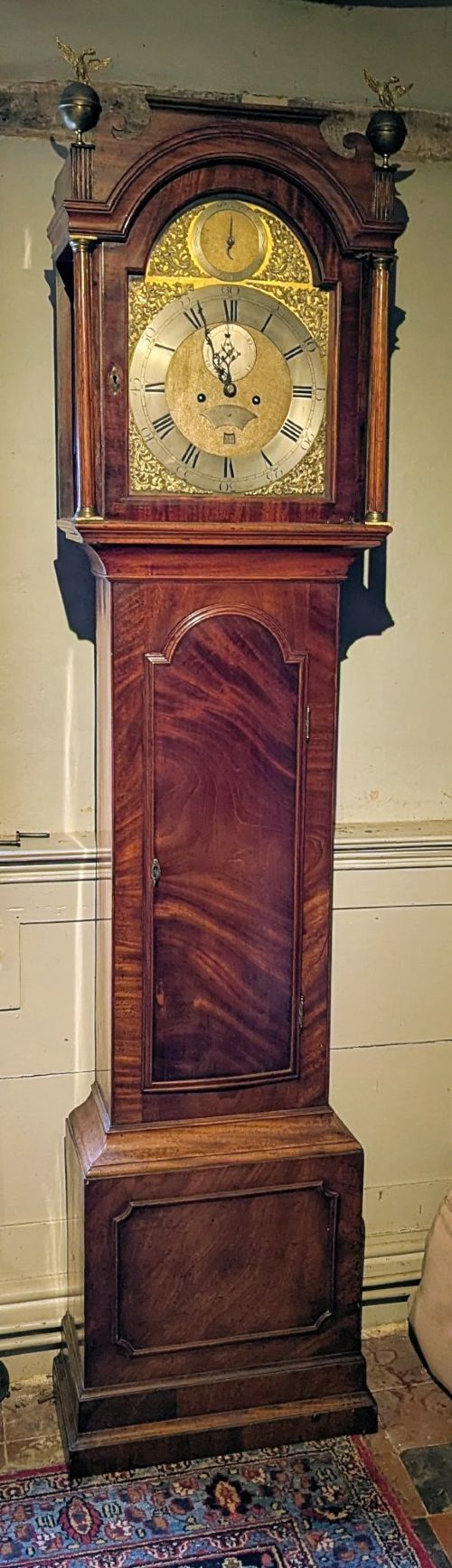
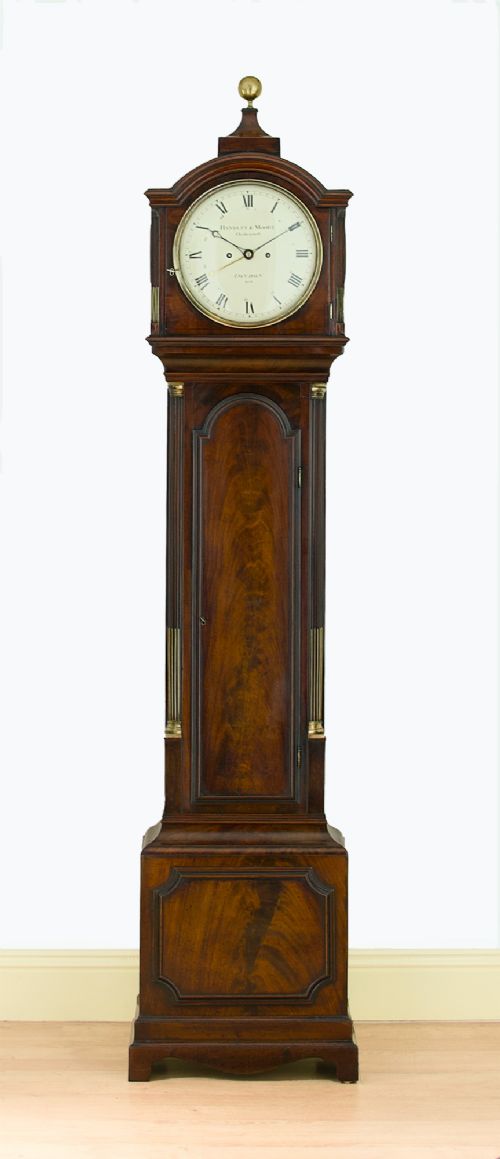
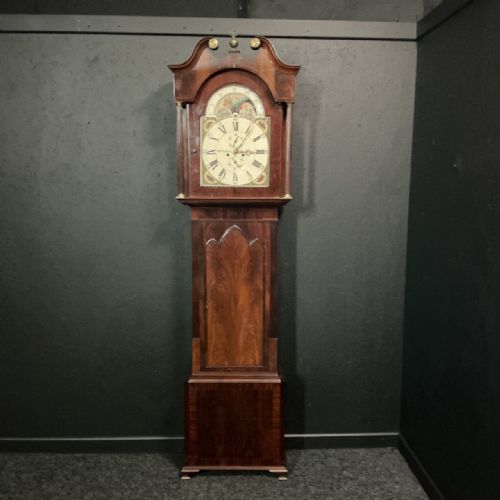
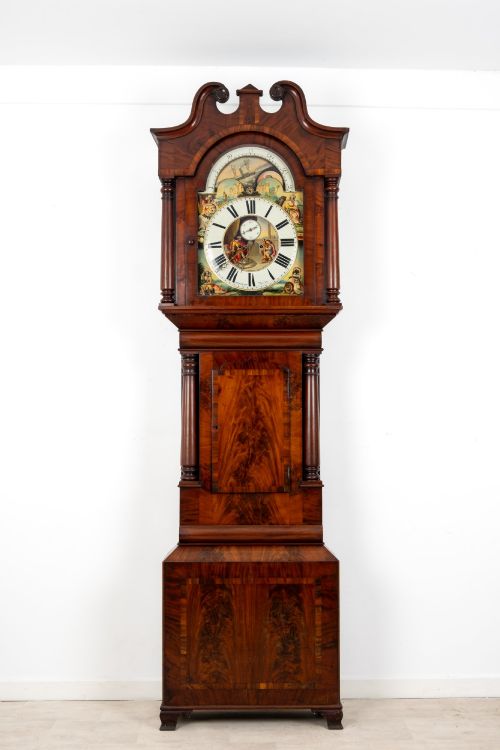
Flame Mahogany Longcase Clock
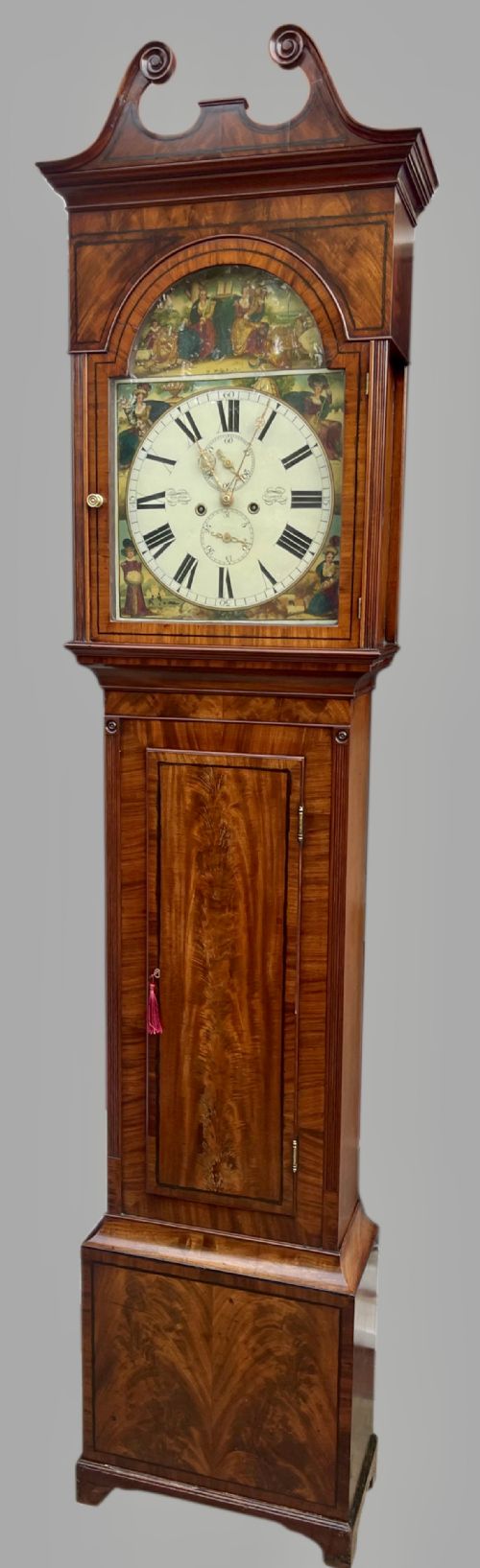
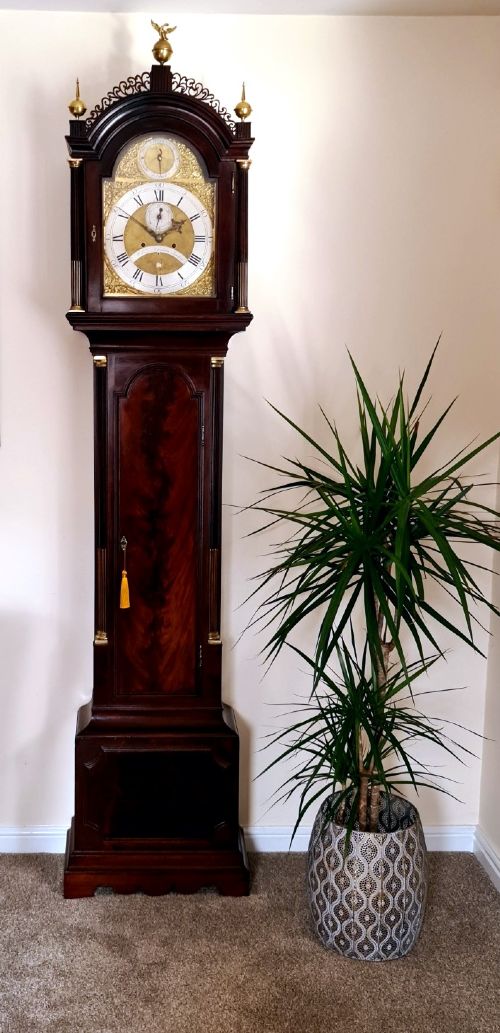
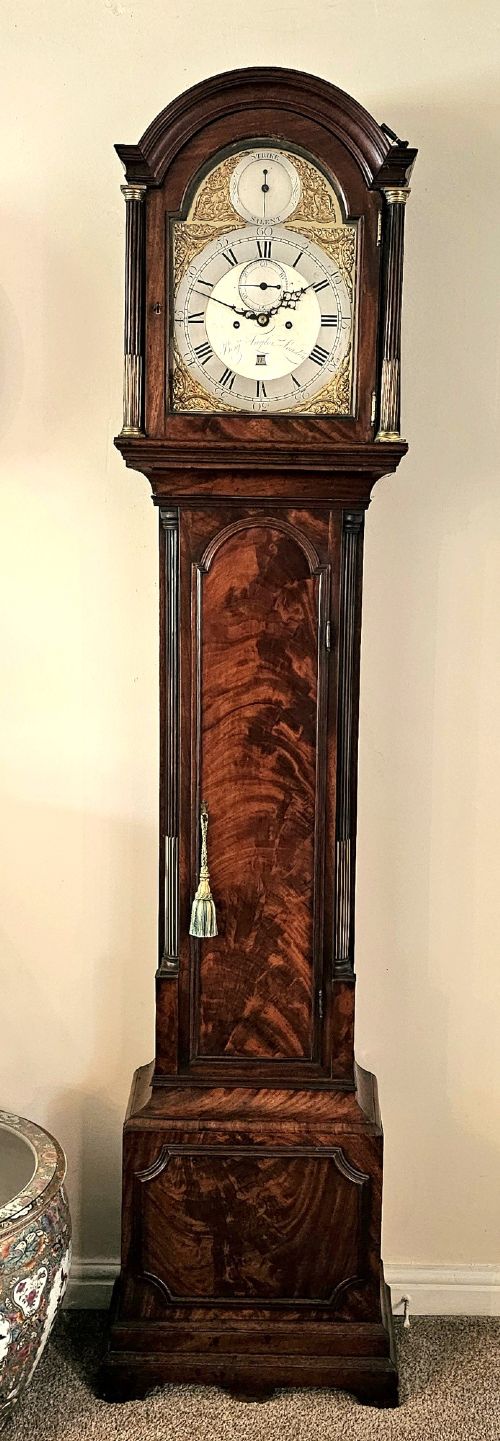
A flame mahogany longcase clock combines monumental architectural presence with the mesmerizing, variegated grain patterns of prized tropical timber.
Flame Mahogany Longcase Clock
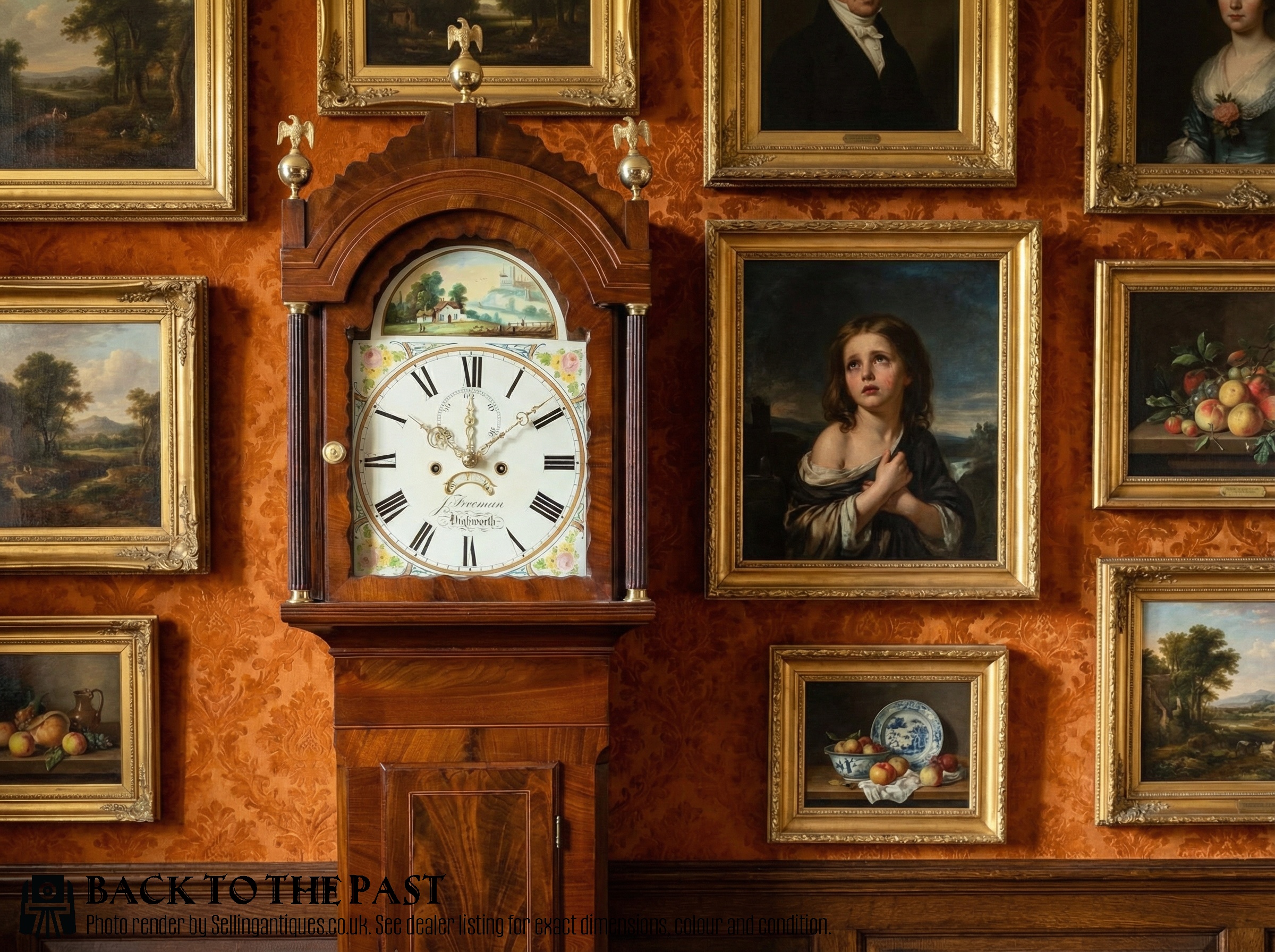
A flame mahogany longcase clock stands as a towering timepiece housed in a tall wooden case, designed to protect the pendulum and weights while serving as a commanding focal point in a domestic interior.
The pieces catalogued here span the Georgian, Regency, and Victorian periods, originating from English workshops as well as numerous Scottish regional centres.
Makers housed these precision movements in tall wooden housings featuring glazed dial doors, arched faces, and frequently brass or painted iron dials showing phases of the moon.
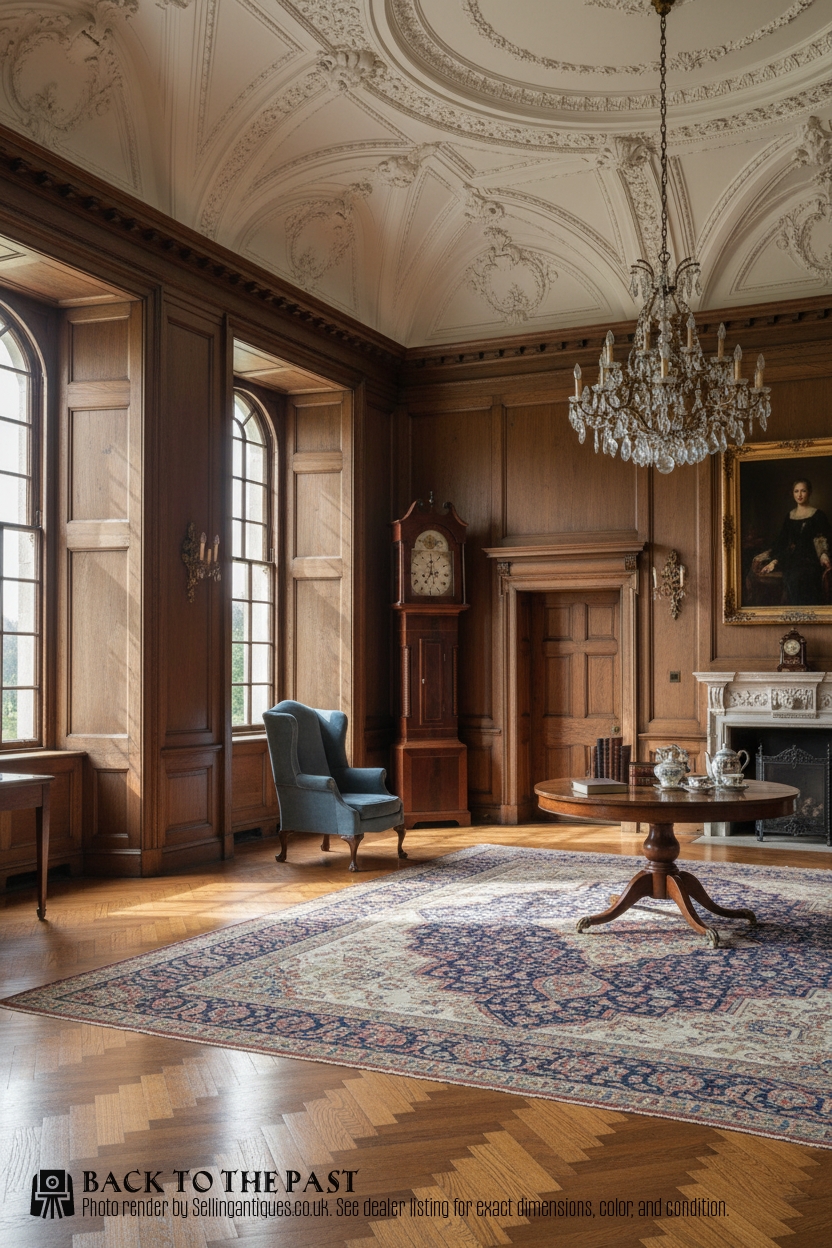
Materials and construction methods
Cabinetmakers constructed the tall cases using solid timbers for structural integrity, applying highly figured flame mahogany veneers to the trunk doors and plinths to achieve dramatic, fiery grain patterns.
Movements incorporate brass gears, steel pinions, and cast lead or iron weights, housed behind dials of brass, painted iron, or enamel featuring subsidiary seconds and calendar rings.
Flame Mahogany Longcase Clock Retail Price Guide 2026
Typical asking prices for flame mahogany longcase clock among the pieces listed under this phrase on Sellingantiques today, from the lower quarter to the upper quarter. They describe what is for sale here now, not the wider market.
Several dials feature animated maritime scenes where a painted ship rocks gently across rolling waves in time with the pendulum.
Factors determining quality
The visual hierarchy depends heavily on the symmetry, intensity, and book-matching of the flame mahogany veneer across the long door panel.
Horological excellence rests on the sophistication of the movement, distinguishing standard eight-day strikes from specialised mechanisms like deadbeat escapements, month-long durations, or rocking ship automata.
John Ellicott·James McCabe·Handley and Moore·William Jourdain·Benjamin Taylor·Thwaites·Francis Perigal·John Williamson
The Flame Mahogany Longcase Clock Glossary
- Flame mahogany
- A veneer cut from the fork of the mahogany tree where branch meets trunk, producing a distinctive plume or flame-like grain pattern.
- Moon phase
- A dial mechanism tracking the lunar cycle through a rotating disc painted with two moons.
- Regulator
- A high-precision clock designed for extreme timekeeping accuracy, often featuring a deadbeat escapement and heavy gridiron pendulum.
- Trunk
- The long central body of the clock case enclosing the hanging weights and swinging pendulum.
- Arch dial
- An upper semicircular extension to the square clock face used to house subsidiary complications like strike-silent indicators.
Flame Mahogany Longcase Clock: Frequently Asked Questions
How do I wind an eight day longcase clock?
Winding requires inserting a key into the winding holes on the dial face and turning it slowly until the weight reaches its upper limit near the top of the trunk.
Care must be taken not to overwind the movement, stopping firmly as soon as resistance is felt against the key.
Why do some clocks show Scottish origins?
Scottish horology developed distinct regional characteristics, with makers in Edinburgh, Glasgow, Dundee, and smaller towns producing robust movements housed in characteristic local case designs.
These pieces often display regional dial painting styles and distinct bonnet proportions compared to their London counterparts.
What is the difference between a grandfather and grandmother clock?
Grandfather clocks are full-sized tallcase clocks typically standing six to seven feet high, designed to accommodate long pendulums and heavy weights.
Grandmother clocks are scaled-down versions, significantly shorter and narrower, produced primarily during the nineteenth and twentieth centuries.
How should I position a longcase clock in a room?
Longcase clocks require a stable, dry environment away from direct sunlight, central heating vents, and exterior walls subject to extreme temperature fluctuations.
Placing the case on a level floor against a solid wall ensures the pendulum swings evenly and the escapement maintains an even tick.