


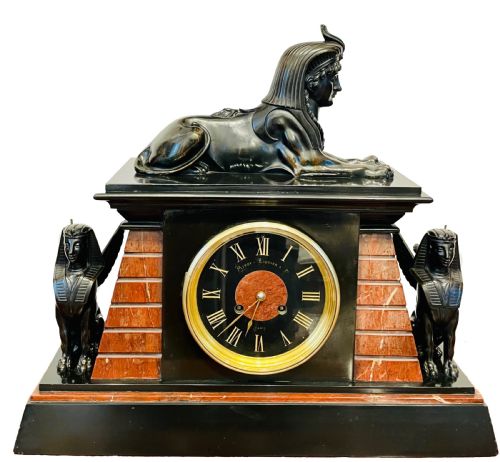


Egyptian Revival Clock
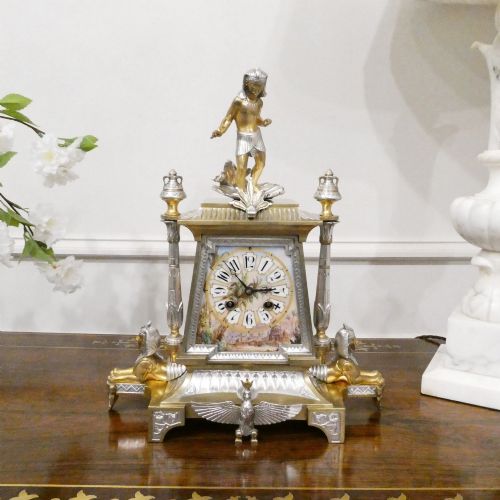
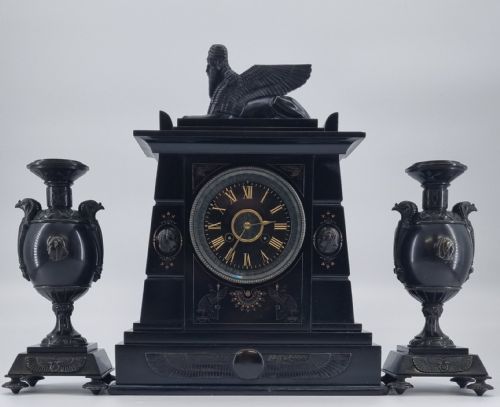
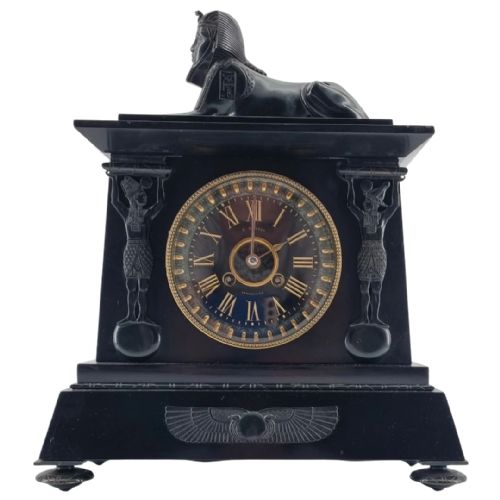
These Egyptian revival clock examples capture the nineteenth-century fascination with pharaonic design through architectural forms and symbolic bronzes.
Egyptian Revival Clock
An egyptian revival clock combines classical horology with architectural motifs drawn from pharaonic art, such as obelisks, sphinxes, and hieroglyphic details. Buyers searching for an egyptian revival clock will most frequently encounter nineteenth-century mantel clocks fashioned from dark slate or polished marble.
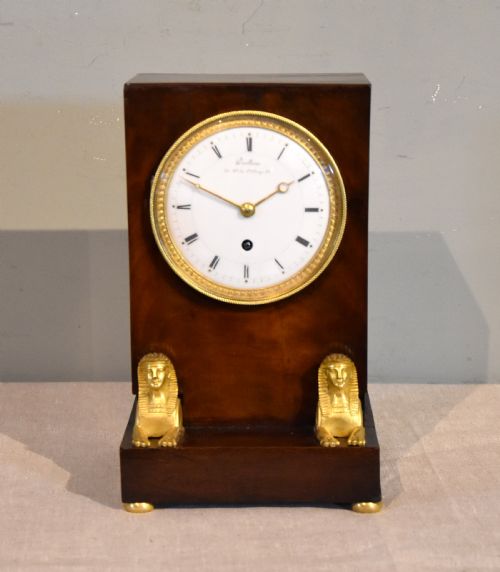
The recorded forms range from compact desk pieces and bracket clocks to substantial mantel timepieces often accompanied by garnitures or bronze figures. Regency and French Empire interpretations also appear, showing how cabinetmakers and horologists adapted classical proportions to suit exotic themes.
Makers and retailers from London and Paris produced these pieces using durable stones and cast metals to create striking centrepieces. Surviving examples demonstrate both strict architectural symmetry and more decorative interpretations influenced by designers like Thomas Hope.
How They Were Made
Makers utilised contrasting materials such as black slate, white marble, and flame mahogany to build robust clock cases that housed intricate mechanical movements. Cast bronze and gilt bronze provided the medium for sculptural sphinxes, pilasters, and mounts.
Enamel dials with delicate numerals were fitted behind protective glass doors, while precision components like chain fusee movements regulated the timekeeping. Gilder's work and silver gilt finishes highlighted specific architectural details on the metal elements.
Egyptian Revival Clock Retail Price Guide 2026
Typical asking prices for egyptian revival clock among the pieces listed under this phrase on Sellingantiques today, from the lower quarter to the upper quarter. They describe what is for sale here now, not the wider market.
The documented object forms span mantel clocks, desk clocks, bracket clocks, and tall longcase clocks.
What Varies in Quality
The distinction between standard production and superior work lies in the crispness of the bronze casting and the depth of the material selection. Finer examples display hand-chased surface details on figurative elements like sphinxes and unified dial designs.
Cabinetwork also dictates worth, as demonstrated by well-figured flame mahogany cases or finely polished slate matched with heavy marble bases. Movement signatures from recognised makers further elevate an object's standing within the market.
Richard et Cie·D Munsey of Cambridge·Paul Philip Barraud·Brockbanks of London·Achille Brocot·Barraud and Lund London·Perigal Bond Street·Hamilton and Inches
The Egyptian Revival Clock Glossary
- Garniture
- A set of matching decorative objects, typically comprising a clock flanked by two matching ornaments such as obelisks or vases.
- Chain Fusee
- A mechanism using a conical pulley and chain to ensure even power delivery as the mainspring unwinds.
- Mantel Clock
- A portable clock designed to sit on a fireplace mantelpiece, often featuring an architectural or decorative case.
- Bracket Clock
- A portable spring-driven clock historically designed to sit on a wall bracket or a tabletop.
- Timepiece
- A clock that indicates the time without striking hours or quarters.
Egyptian Revival Clock: Frequently Asked Questions
How do I wind an antique clock safely?
Turn the key gently in the correct direction until you feel firm resistance, taking care not to over-wind the mainspring.
Consult the specific movement type to ensure you do not turn the hands backward if striking mechanisms are engaged.
What materials were used for these clock cases?
Black slate, white marble, and cast bronze form the primary structures for nineteenth-century architectural designs.
Earlier Regency pieces frequently utilise flame mahogany timbers with gilded metal mounts and enamel dials.
Where should I place an antique mantel clock?
Position the piece on a stable, level surface away from direct sunlight, excessive moisture, and temperature fluctuations.
Heavy slate and marble models require sturdy furniture capable of supporting their substantial weight securely.
How do I identify the period of an egyptian revival clock?
Examine the case construction, dial style, and signature engravings to correlate the piece with recorded horological periods.
Nineteenth-century examples often combine classical pharaonic motifs like sphinxes with slate or bronze housings.