


Black Slate Table Clock
A black slate table clock brings architectural presence and reliable timekeeping to a room, driven by heavy stone and classical styling.
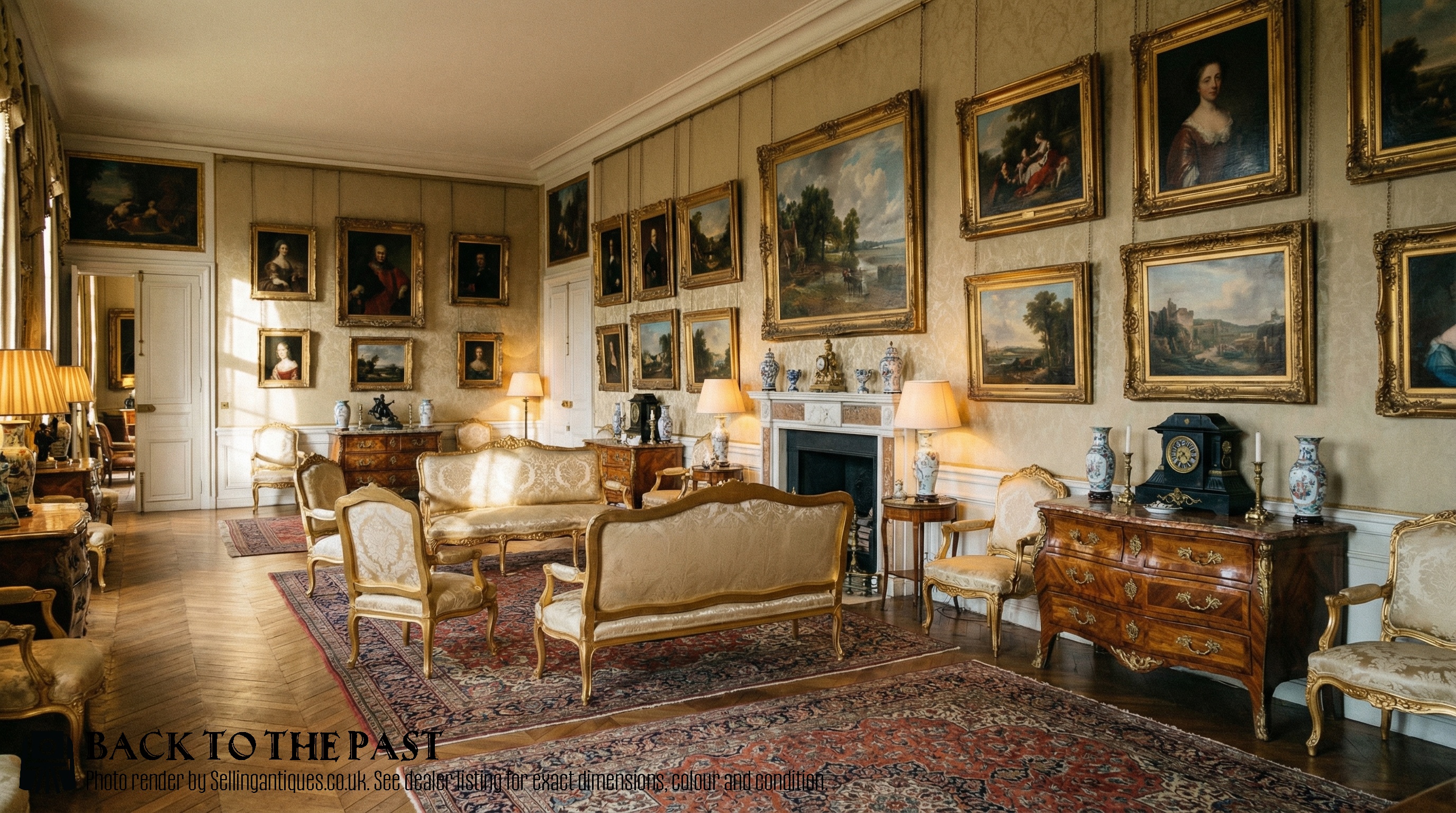
What these pieces are
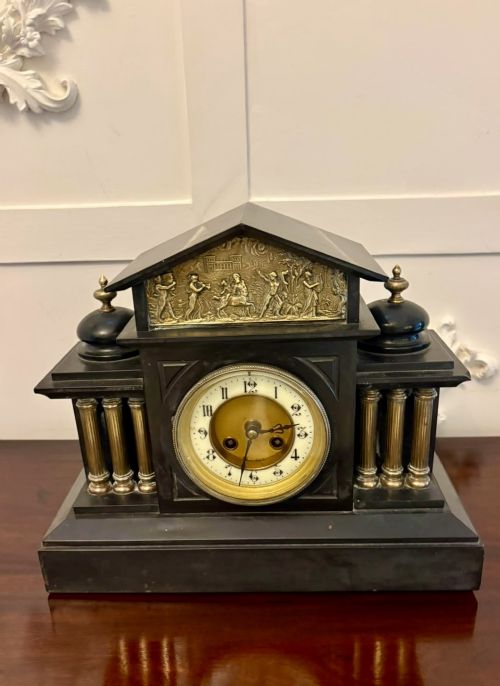
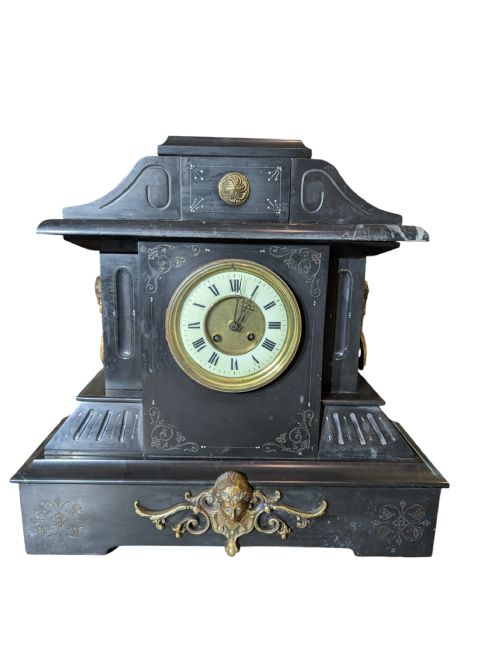
A black slate table clock sits heavy and solid on a mantelpiece or sideboard, designed to anchor a room with architectural dignity. When you search for a black slate table clock, you find substantial nineteenth-century pieces that often incorporate marble, bronze, and ormolu mounts. The most common examples on this page date from the Victorian era and the late nineteenth century, built with robust eight-day movements.
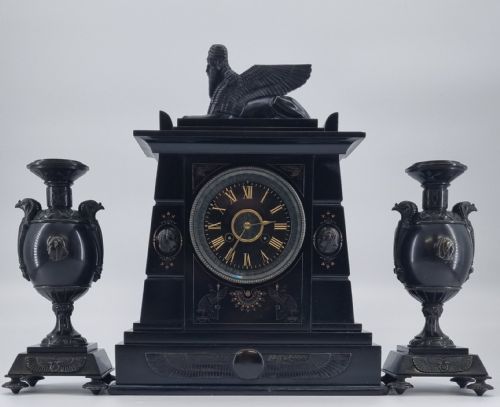
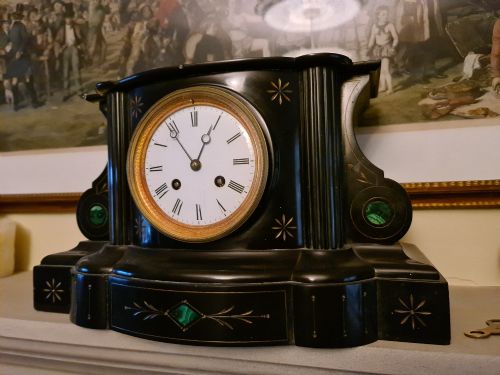
Many of these timepieces draw heavily on classical design traditions, including Louis XVI, French Empire, and Egyptian Revival styles. Makers sometimes added incised decoration or contrasting marble insets to break the dark surface of the slate. They serve as both functional instruments and striking decorative objects for a traditional interior.

How they were made
Masons shaped dense blocks of black slate and marble to mimic classical architecture, urns, and temple facades. Metalworkers cast brass and ormolu mounts to accent the heavy stone bodies, securing them with threaded pins.
Enamel dials with delicate numerals sit behind protective glass bezels, housing brass gear trains driven by weight or spring power. Skilled horologists assembled these mechanical movements to strike the hours and half-hours reliably.
Retail Price Guide 2026
Typical UK retail prices for black slate table clock, calculated from the Sellingantiques database of over a million retail prices indexed since 2003. This retail price guide relies exclusively on Sellingantiques data; no external sources or auction records are used, so the figures do not describe the wider market.
Listings feature pieces spanning the eighteenth century through to the high Victorian period, utilising brass, glass, and marble alongside slate.
What varies in quality
The distinction between standard domestic timepieces and exceptional works lies in the ambition of the design and the crispness of the stonework. Superior examples feature fine incising, matched marble panels, and high-status bronze or ormolu ornamentation rather than plain slate boxes.
Movement quality separates workshop output, with fusee movements and signed backplates representing a higher tier of horological ambition than standard pendulum clocks. The integration of the dial, bezel, and cast metal mounts dictates whether a clock feels unified or assembled from parts.
Philippes Paris·Sacre·Barraud & Lund London
The Black Slate Table Clock Glossary
- Slate
- A fine-grained metamorphic rock that takes a smooth matte polish and forms the heavy body of these clocks.
- Ormolu
- Gilded bronze used for decorative mounts, feet, and bezel surrounds on French and English mantel clocks.
- Fusee
- A conical pulley connected to the mainspring by a chain, designed to equalise the drive force as the spring unwinds.
- Bezel
- The metal ring, often hinged and glazed, that holds the protective glass front over the enamel dial.
Frequently Asked Questions
How do I wind a black slate clock?
Use the matching winding key gently on the arbors set into the enamel dial, turning clockwise until you feel resistance.
Take care not to overwind the mainspring, as this can snap the steel inside the movement housing.
Where should I place a heavy slate clock?
Position the clock on a stable, level surface such as a deep mantelpiece or a sturdy sideboard where the weight is fully supported.
Avoid placing it in direct sunlight or near damp exterior walls to protect the delicate enamel dial and metal mounts.
Why does my clock run fast or slow?
Mechanical clocks require regular regulation using the small adjustment nut located on the pendulum rod.
Turning the nut raises or lowers the bob slightly to fine-tune the beat over a twenty-four-hour period.