


Green Marble Mantel Clock
A green marble mantel clock brings solid weight and striking presence to a room, uniting functional timekeeping with classical architectural form.
Green Marble Mantel Clock
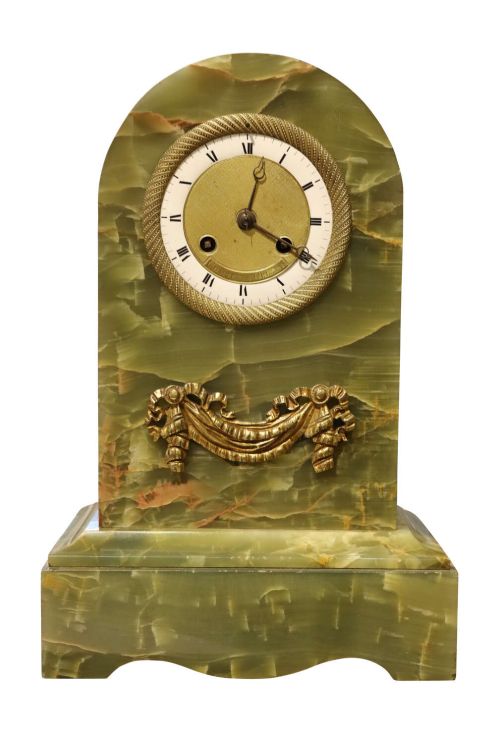
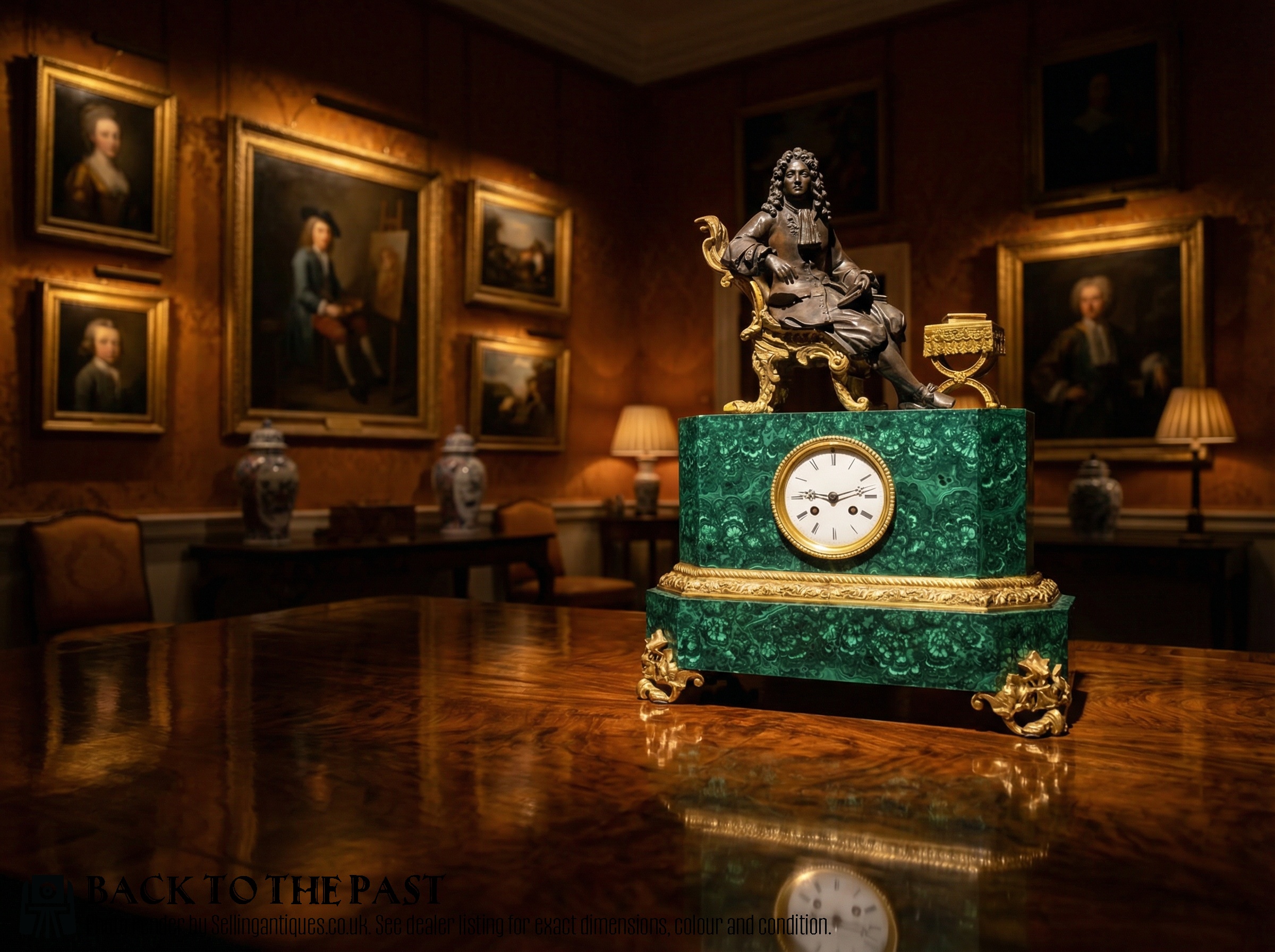
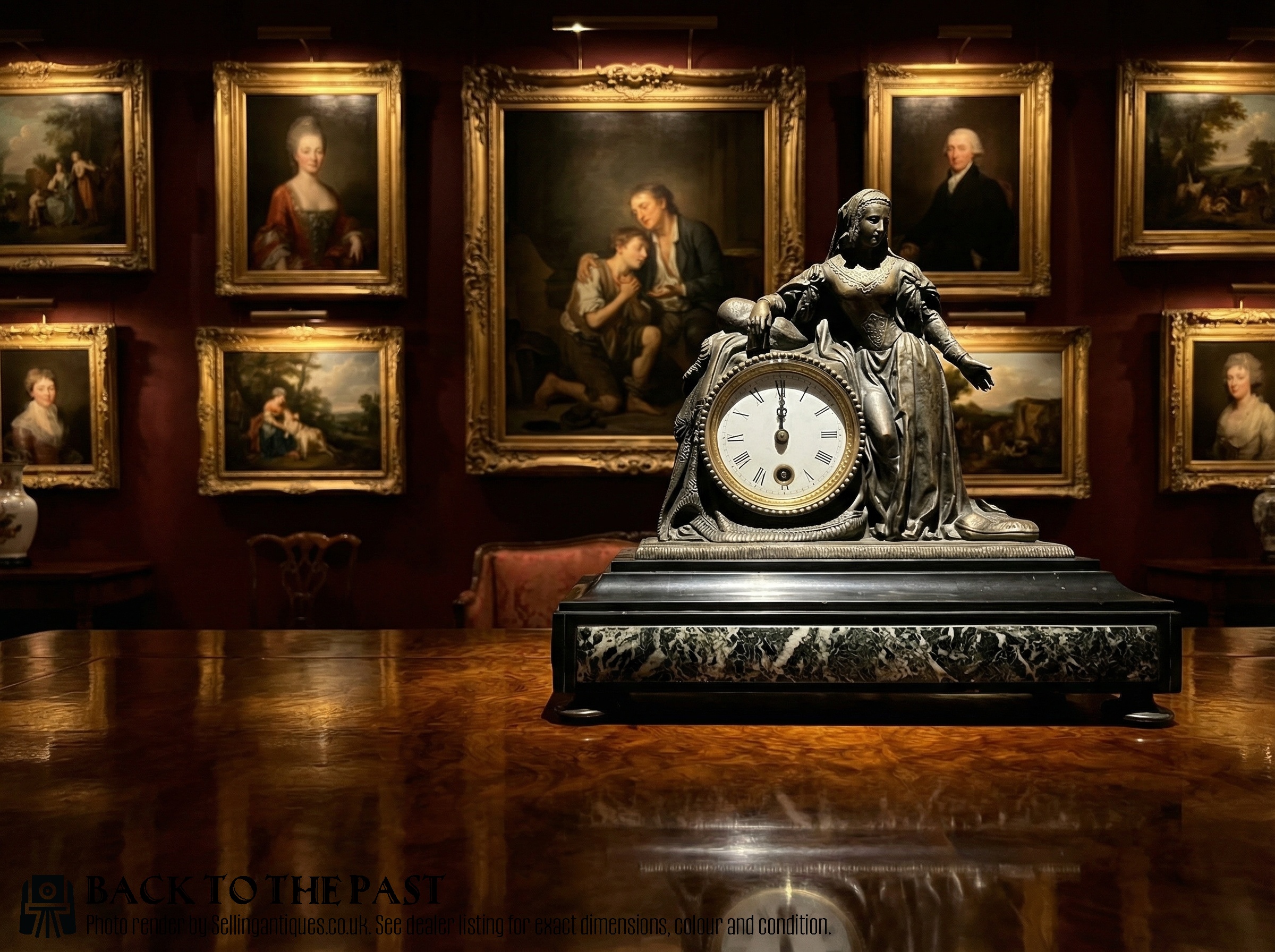
A green marble mantel clock typically takes the form of a substantial architectural case housing a circular dial, frequently accompanied by matching garniture sets or side ornaments. These pieces emerge predominantly from nineteenth century French workshops and Victorian English makers, spanning periods from the Regency era through to the Art Deco decades. You will encounter architectural temple designs, ornate garnitures featuring bronze sculptures, and streamlined geometric onyx bodies.
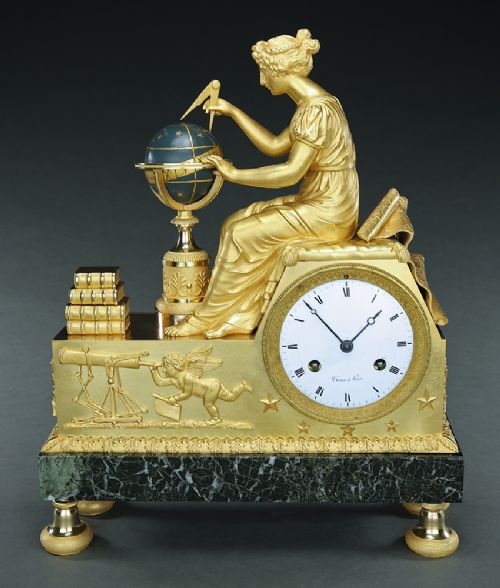
The materials span deep green marble and onyx combined with slate, brass, gilt bronze, and champleve enamel details. Dials often feature white enamel with delicate numerals, protected beneath bevelled glass bezels. Many examples integrate decorative elements such as gilt mounts, animal figures, or classical bronzes after makers like Auguste Moreau.
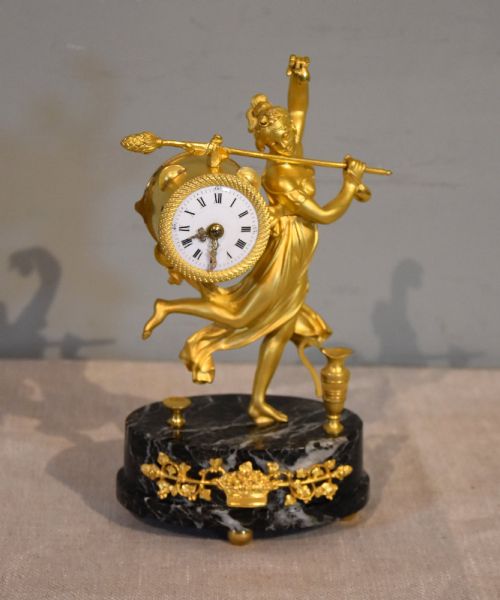
Forms range from intimate desk clocks to large, imposing garniture sets designed to command the centre of a fireplace surround. The nineteenth century examples favour neoclassical or French Empire symmetry, whereas later pieces embrace Art Deco angles and chrome accents.
Evaluating Quality
The distinction between ordinary production and superior work lies in the depth of hand-chasing on the bronze mounts and the structural integrity of the stone housing. Finer examples display crisply cast gilt bronze figures and meticulous marble inlay that sits completely flush with the main body.
Movement sophistication also dictates value, where complex mechanisms involving calendar displays, premium escapements, or specialised makers elevate the piece beyond a standard timekeeper. Heavy, solid stone cases without clumsy repairs or mismatched garniture components represent the upper tier of the range.
Green Marble Mantel Clock Retail Price Guide 2026
Typical asking prices for green marble mantel clock among the pieces listed under this phrase on Sellingantiques today, from the lower quarter to the upper quarter. They describe what is for sale here now, not the wider market.
Listings feature materials spanning green marble, green onyx, slate, brass, and gilt bronze across Victorian and Art Deco periods.
Charles à Orléans·Victor Paillard·Pinchon Fils Paris·Charpentier Foundry·Thos Agnew and Sons·Ferdinand Priess·Michel Decoux·Auguste Moreau·Brocot·Garrards·Elliott·Reiche
The Green Marble Mantel Clock Glossary
- Garniture set
- A mantel clock accompanied by matching side ornaments, such as vases or candelabra, designed to form a symmetrical arrangement on a fireplace. These matching suites are frequently cast in bronze or carved from matching stone.
- Ormolu
- Gilding technique involving the application of finely ground high-carat gold to a bronze base. This finish provides a warm, enduring lustre characteristic of high-status nineteenth-century pieces.
- Silk suspension
- An early method of hanging the pendulum by a fine silk thread rather than a steel spring. It appears primarily in better nineteenth-century French movements.
- Champleve
- An enamelling technique where troughs are dug into a metal surface and filled with coloured glass paste before firing. The resulting patterns frame the clock dials with rich, jewel-like colour.
- Single fusee
- A movement mechanism utilising a conical pulley and chain to equalize the driving force of the mainspring as it unwinds. This system promotes more accurate timekeeping throughout the duration of the wind.
Green Marble Mantel Clock: Frequently Asked Questions
How do I wind an antique mantel clock?
Most mechanical models require a specialised key inserted into the winding arbours on the dial face, turning gently until a firm resistance is felt. Care must be taken not to overwind the mainspring.
Striking clocks should be allowed to complete their chime cycle between adjustments to avoid damaging the internal rack and snail mechanisms.
Where should I place a heavy marble clock?
Position the piece on a sturdy, level surface such as a mantelpiece, sideboard, or heavy table that can safely support its substantial weight. Uneven surfaces can cause the heavy stone case to warp or the pendulum to catch.
Keep the clock away from direct sunlight and damp environments to protect the marble polish and the delicate enamel dial.
How do I identify the period of a green marble clock?
Examine the overall architectural style, the materials used for mounts, and any signature stamps on the movement backplate. Nineteenth-century examples often lean towards neoclassical or Empire bronze work, whereas nineteen-thirties pieces adopt geometric Art Deco lines.
Dial typography and the presence of makers' marks provide additional clues for dating the piece accurately.
What is a clock garniture set?
A garniture set consists of a central mantel clock flanked by two matching decorative objects, such as urns, candelabra, or sculptural figures. These pieces share identical materials, styles, and casting motifs.
They were designed to create a balanced, formal display across a fireplace mantel or large console table.