





Antique Slate Clock
An antique slate clock brings heavy architectural presence to a mantelpiece, cast in dark stone and built to last generations.

Antique Slate Clock
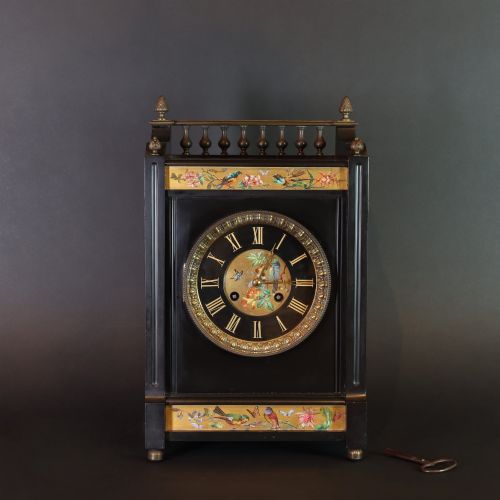
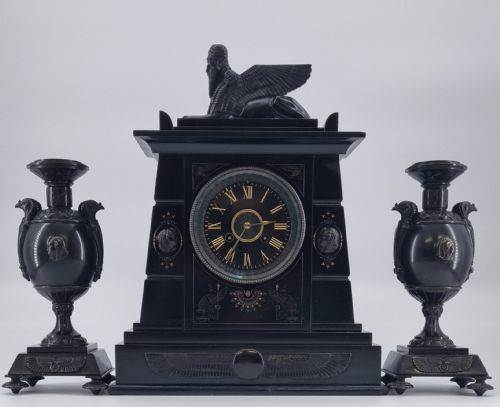
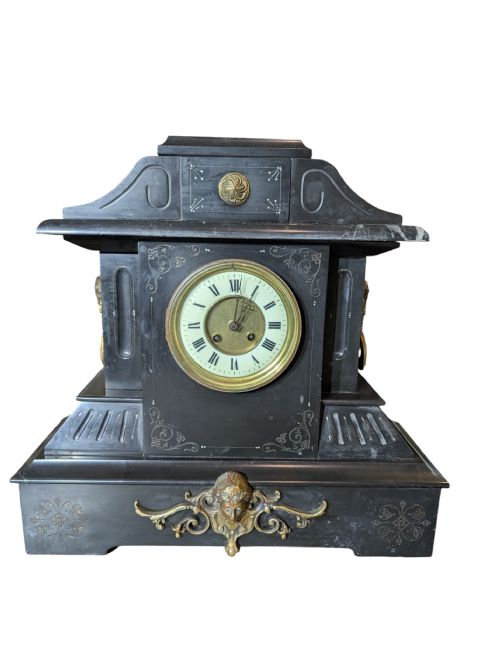
An antique slate clock is a heavy domestic timekeeper constructed primarily from black slate or marble, frequently styled with architectural details such as pillars and pediments. These objects appear across nineteenth-century Victorian and French workshop output, taking the form of mantel clocks, drumhead clocks, and complete garniture sets.
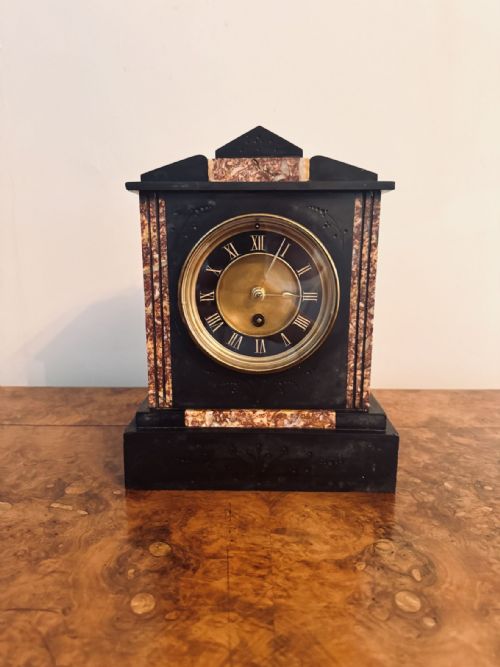
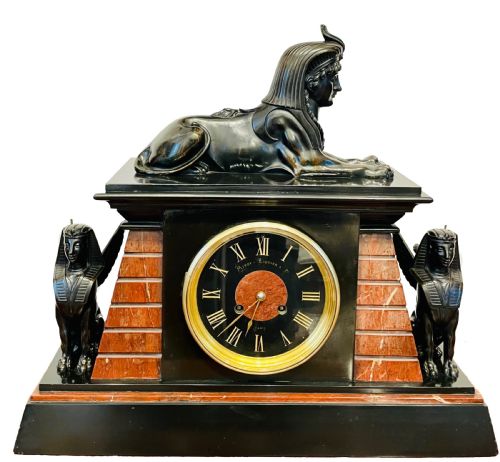
The version most commonly met on this page is the Victorian mantel clock, often inlaid with contrasting marble or metal details and driven by an eight-day mechanical movement. Alongside these sit French architectural and Egyptian Revival pieces, reflecting broader European taste for monumental stone cases during the period.
Originating predominantly from British workshops and French centres such as Paris, these clocks served as centrepieces for principal rooms. Their substantial weight and solid stone construction separate them immediately from lighter wooden or ceramic timepieces of the era.
Materials and construction methods
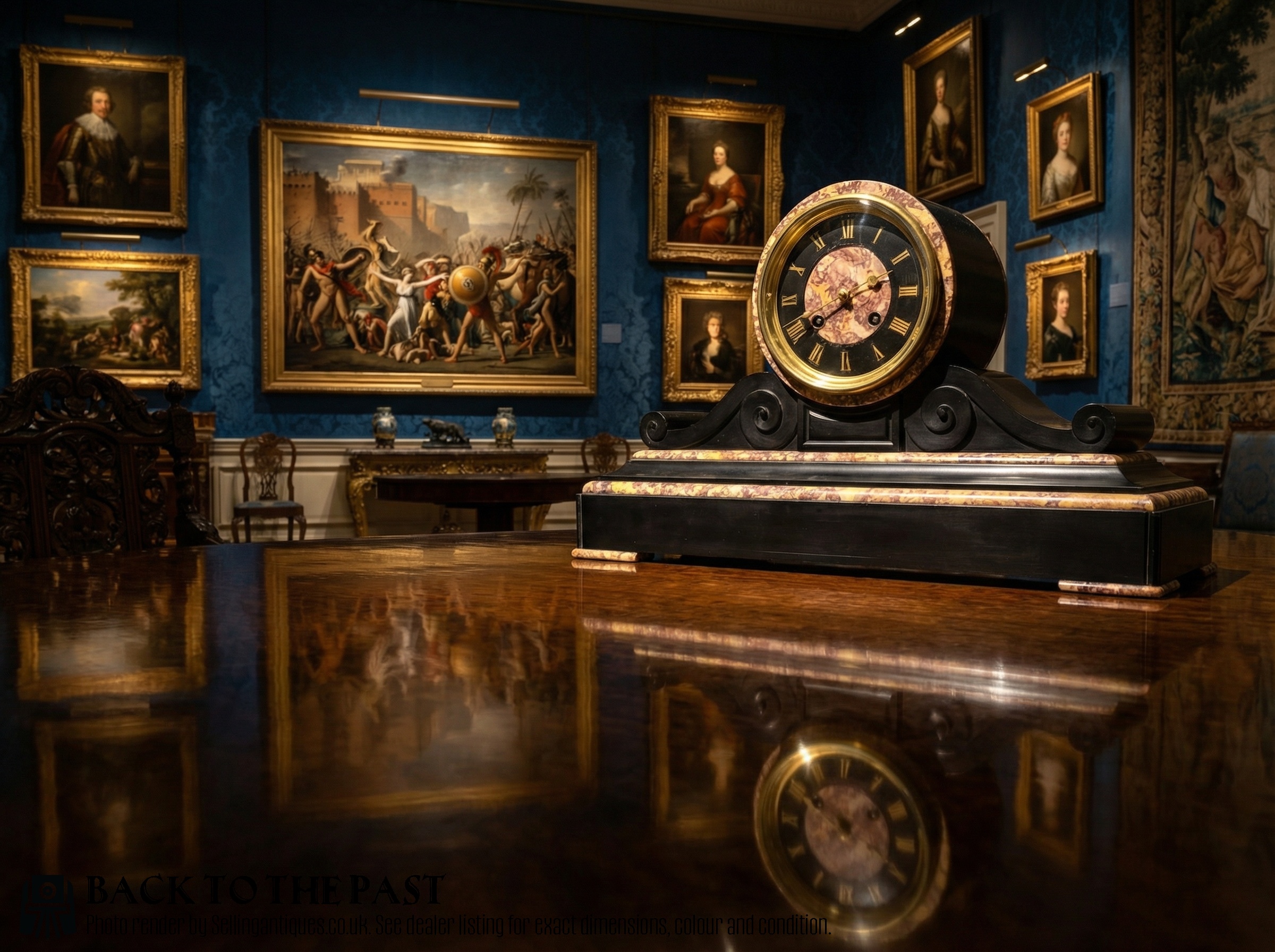
The primary material is dense black slate, often shaped, polished, and artificially blackened or veined to imitate prized marbles. Craftsmen combined this solid stone with cast bronze, gilt brass, and enamel dials to create striking contrasts in texture and colour.
Movements were mechanically driven, ranging from standard eight-day French escapements to single chain fusee mechanisms produced by notable London horologists. Stone cases were heavily carved, turned, and sometimes inlaid with incised coloured stones or gilt motifs to achieve an imposing decorative finish.
Antique Slate Clock Retail Price Guide 2026
Typical asking prices for slate clock among the pieces listed under this phrase on Sellingantiques today, from the lower quarter to the upper quarter. They describe what is for sale here now, not the wider market.
Maritime history meets stonemasonry in surviving pieces like the specific ship clock recorded from eighteen seventy-four.
Distinguishing quality in stone timepieces
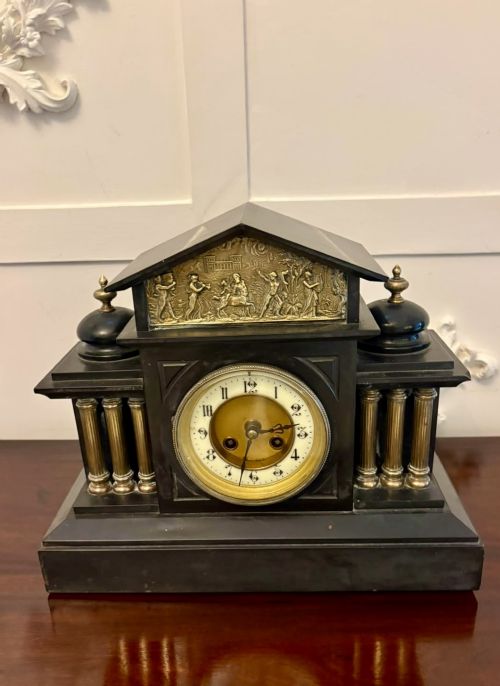
Quality rests significantly in the ambition of the case design and the crispness of its execution, moving from simple drumhead models to elaborate architectural compositions with bronze mounts and garnitures. Finer examples display meticulous stone inlay, well-balanced proportions, and integrated calendar or perpetual functions rather than plain slate boxes.
The caliber of the movement inside determines mechanical longevity, separating standard production pieces from signed London or Paris workshop creations. Heavier bronze figural mounts, original enamel dials, and matching garniture urns elevate the entire ensemble.
Philippes Paris·Sacre·Baby and Jannings·D. Munsey of Cambridge·Achille Brocot·Barraud & Lund London·Vulliamy London
The Antique Slate Clock Glossary
- Garniture set
- A central clock accompanied by matching side ornaments, such as urns or vases, designed to display together on a mantelpiece.
- Fusee movement
- A mechanical clock drive utilising a conical pulley to maintain equal power as the mainspring unwinds.
- Drumhead clock
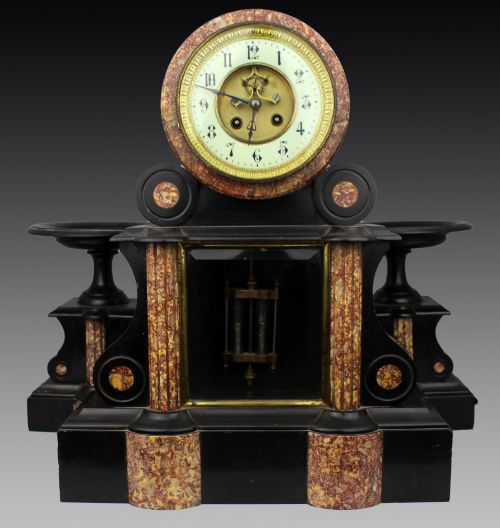
- A timepiece featuring a circular clock case mounted atop a rectangular stone plinth, resembling the shape of a drum.
- Egyptian Revival
- A nineteenth-century decorative style incorporating pharaonic motifs, hieroglyphs, and sphinxes following archaeological discoveries.
- Architectural clock
- A timepiece styled to mimic classical buildings, complete with columns, pediments, and entablatures carved directly into the stone.
Antique Slate Clock: Frequently Asked Questions
What maintenance does a slate clock movement need?
Mechanical eight-day movements require periodic cleaning and oiling by a professional horologist to ensure accurate timekeeping and prevent wear on the brass gears.
Setting the hands carefully and avoiding rapid adjustments will protect the delicate escapement inside.
Are garniture sets sold complete?
Many listings include the central clock alongside its original matching side garnitures, such as decorative stone or bronze urns designed to create a symmetrical display.
Finding a complete matched set is typical for formal nineteenth-century French and Victorian drawing-room pieces.
How do I distinguish French and British models?
French pieces frequently exhibit gilt bronze mounts, architectural themes, or workshop signatures on the movement backplate, while British examples often lean towards simpler slate and marble drumhead designs.
Examining the dial signature and overall case styling usually reveals the origin of manufacture.