



Victorian Marble Clock
A victorian marble clock brings heavy architectural presence and precise nineteenth-century mechanics to a room, offering both reliable timekeeping and striking mineral texture.
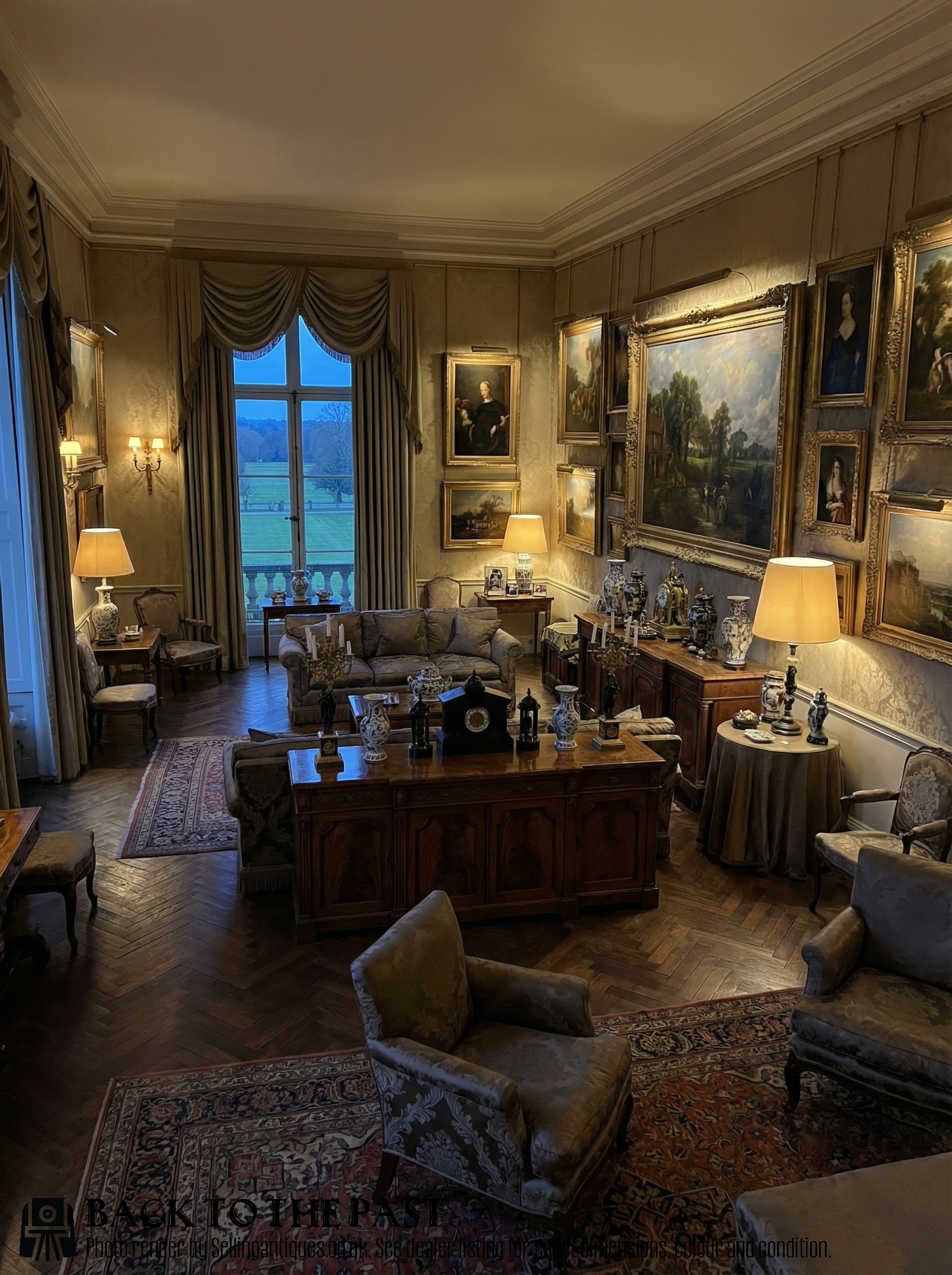
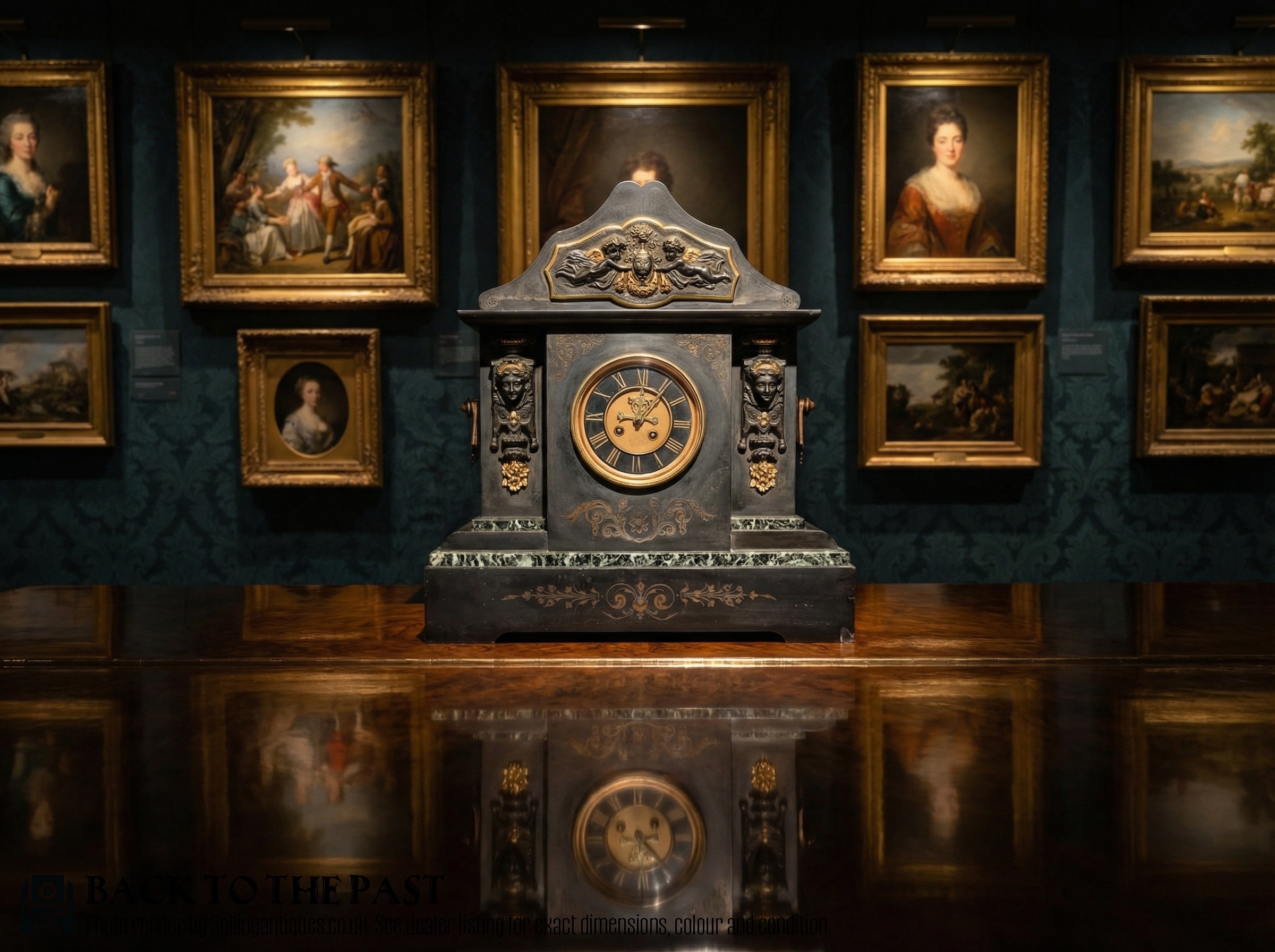
Victorian Marble Clock
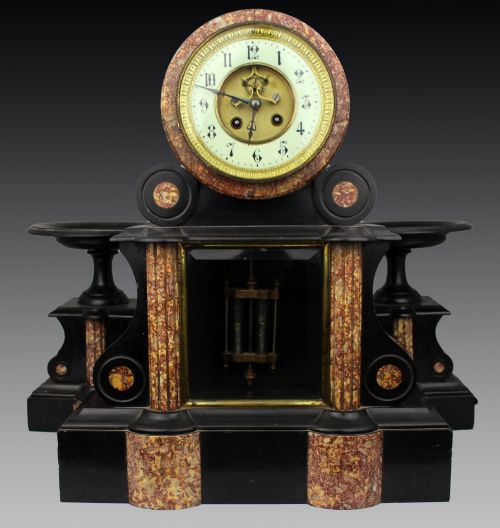
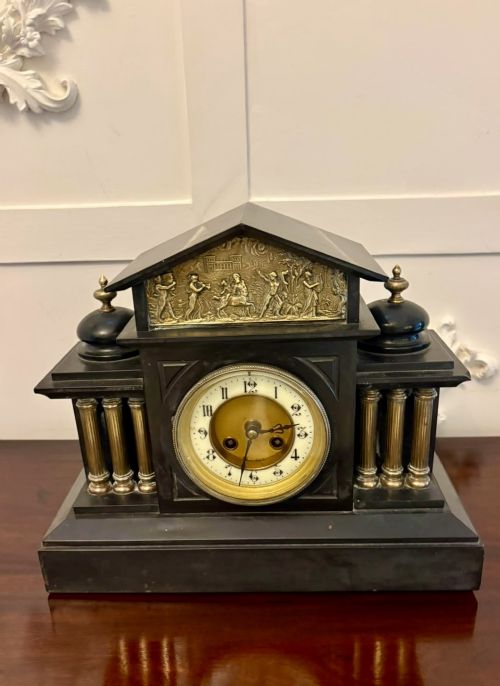
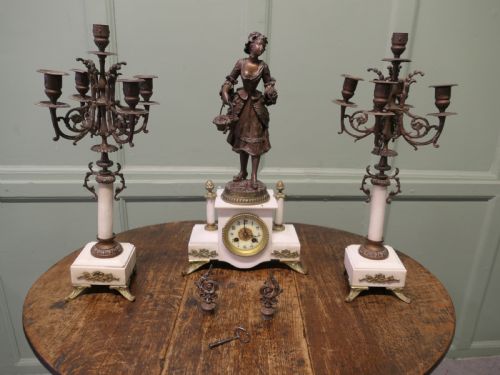
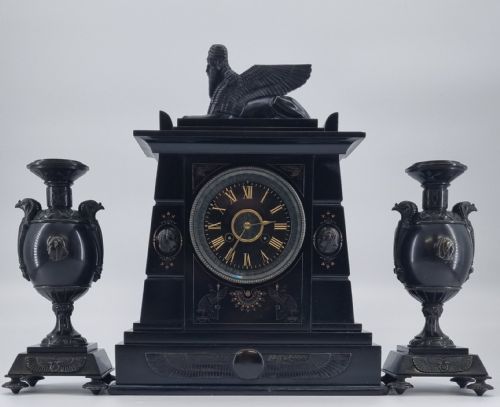
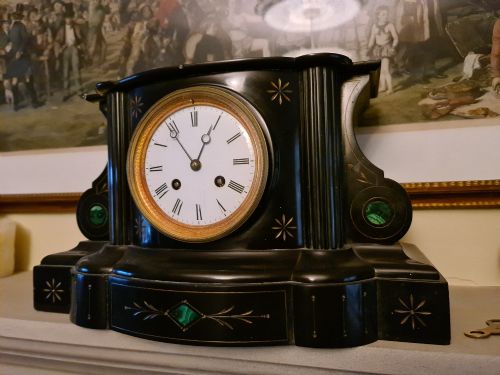
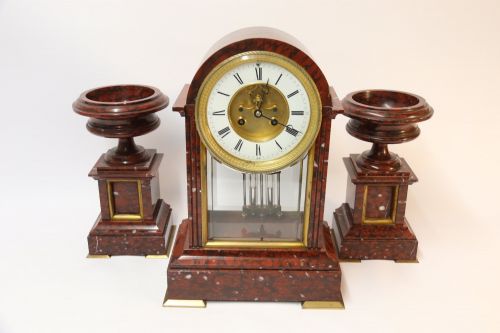
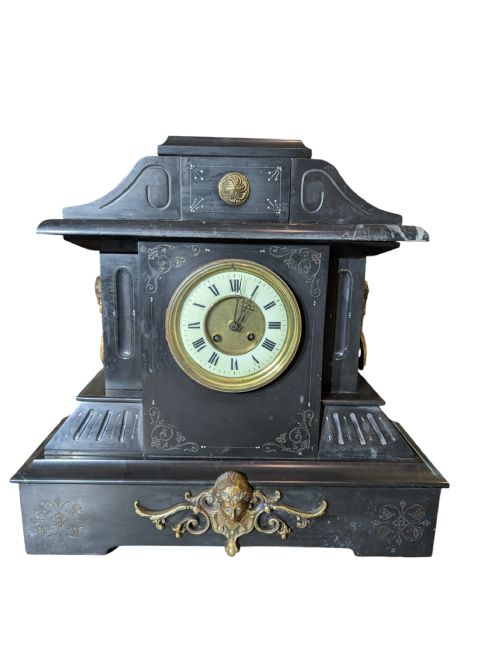
A victorian marble clock is a substantial timepiece housed in heavy stone, most frequently encountered in architectural black slate, deep rouge marble, or speckled sienna varieties. These pieces range from simple drumhead designs to grand garniture sets accompanied by matching side urns or candelabra.
Originating across the nineteenth century, these clocks reflect both British domestic production and elaborate French importing tastes. Buyers often find French movement makers paired with heavy stone cases, showing influences from Neoclassical to Egyptian Revival styles.
The format serves as a permanent architectural anchor on a mantelpiece or desk. The enduring appeal lies in the contrast between polished cold stone and warm gilt bronze or brass mounts.

Distinctions in Quality
Quality rests upon the ambition of the stone cutting and the precision of the cast metal mounts rather than mere scale. Superior examples display crisp architectural lines, harmonious multi-coloured marble inlays, and robust bronze figures rather than simple painted decoration.
The distinction also lives in the movement itself, where signed French or English makers indicate higher workshop standards. A well-balanced garniture set with matching stone and uniform patination commands greater presence than an assembled pair.
Victorian Marble Clock Retail Price Guide 2026
Typical asking prices for victorian marble clock among the pieces listed under this phrase on Sellingantiques today, from the lower quarter to the upper quarter. They describe what is for sale here now, not the wider market.
Listings feature 19th-century materials including brass, marble, glass, enamel, black slate, slate, bronze, and gilt bronze.
Japy Frères·Samuel Marti·Thwaites of London·Philippes Paris·Baby and Jannings·D. Munsey of Cambridge·P L Hausburg Paris·Guilmet
The Victorian Marble Clock Glossary
- Garniture set
- A central clock flanked by two matching ornamental pieces, such as vases or candelabra, designed to sit together on a mantelpiece. These matched assemblies create a symmetrical decorative display.
- Black slate
- A fine-grained metamorphic rock heavily utilised by nineteenth-century clockmakers as a dark, uniform substitute for marble. It took a high polish and could be easily carved into architectural pediments.
- Rouge marble
- A rich red ornamental limestone featuring varied white and grey veining. French makers frequently employed this material for striking contrast against black slate cases.
- Drumhead clock
- A timepiece featuring a circular clock case mounted centrally upon a rectangular stone base. This specific silhouette was popular across the Victorian period.
Victorian Marble Clock: Frequently Asked Questions
How do I wind a Victorian marble clock?
Most of these timepieces utilise an eight-day movement requiring a key inserted into the dial holes once a week. Care should be taken not to over-wind the mainspring.
Moving the hands should be done slowly and strictly in a clockwise direction to avoid jamming the striking train.
Why do some clocks come with garnitures?
Garniture sets were manufactured to provide a balanced, symmetrical arrangement across a grand fireplace or sideboard. The matching side pieces often mirrored the marble and bronze motifs of the central clock.
This tradition reflects nineteenth-century interior design tastes for formal, coordinated mantel displays.
How can I tell slate from marble?
Black slate offers a uniform, dark matte or polished surface without the distinct crystalline structure or dramatic veining found in true marbles. Rouge and sienna varieties display unmistakable natural mineral swirls and colour variations.
Both materials share significant weight, but slate tends toward grey-black uniformity while marble shows varied geological deposits.
Where were these clocks made?
Production was split between British workshops and major French centres like Paris and provincial hubs. Many movements were imported from France and housed in domestic stone cases.
Signatures on the enamel dials or back plates usually reveal whether a piece originated in London or across the Channel.