
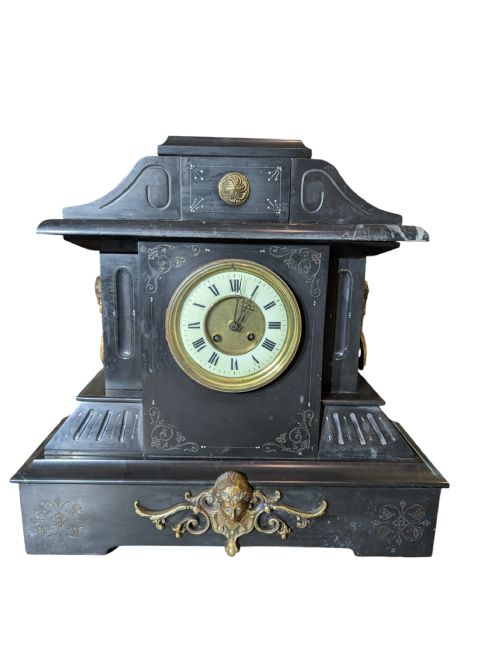


French Slate Clock
These heavy french slate clock examples combine monumental stone cases with precise movements, offering a striking centrepiece for any mantel.
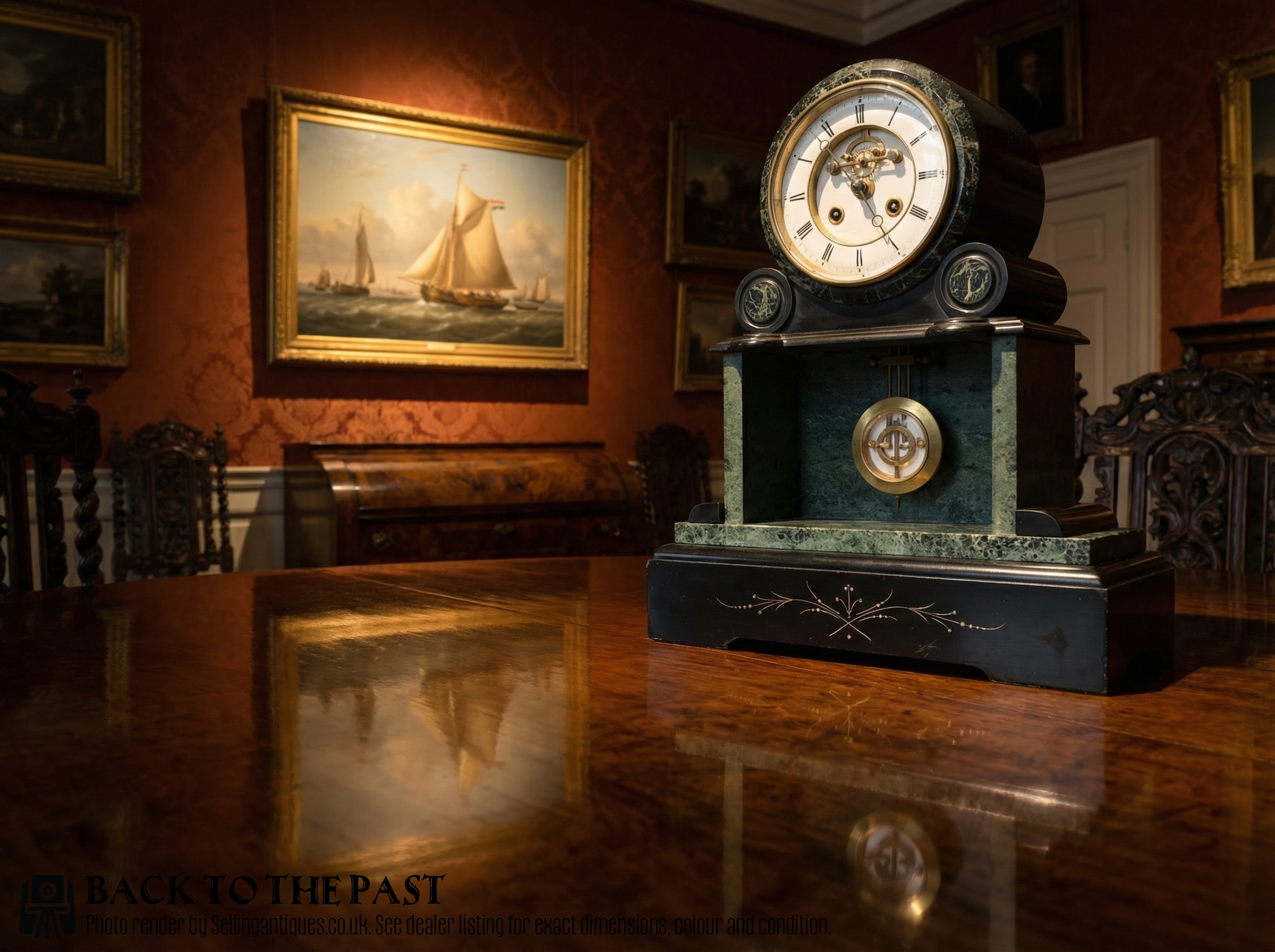
What french slate clock examples are
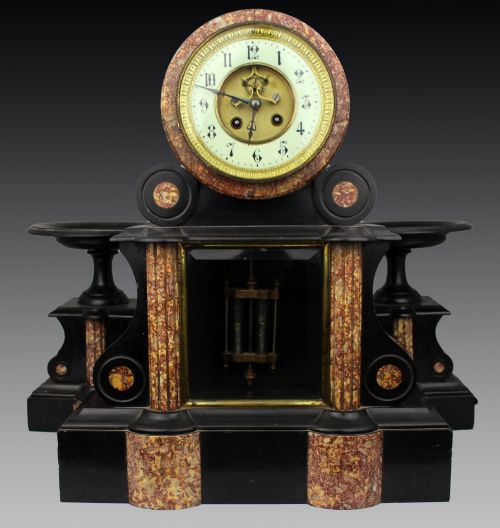
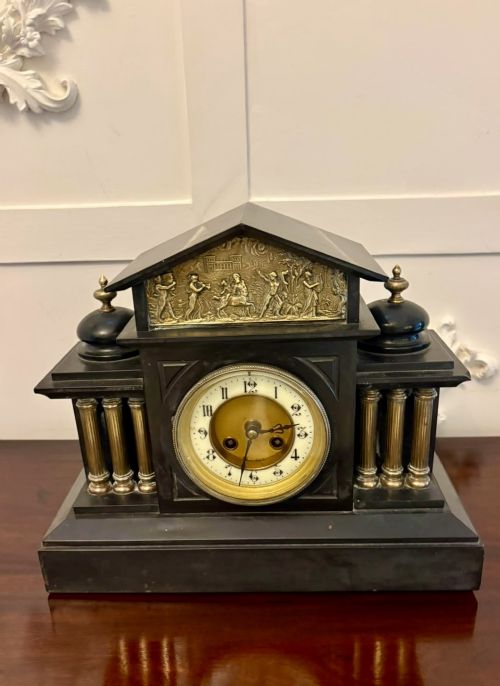
When you search for french slate clock pieces, you are looking at substantial timepieces housed in dark stone cases, frequently enriched with contrasting marble or metal mounts. These architectural objects date from the nineteenth century, spanning Victorian and Belle Epoque periods.
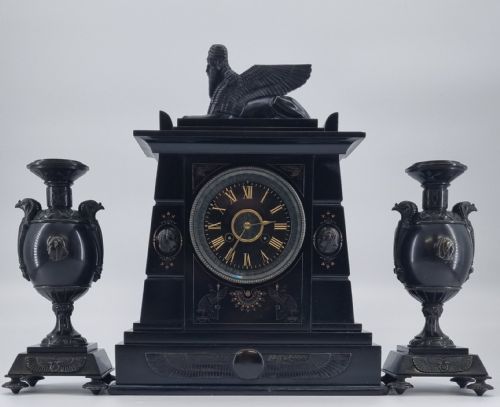
The pieces you are most likely to meet on this page include architectural mantel clocks and garniture sets featuring black slate and marble. Makers combined the heavy stone with bronze, brass, or gilt details to create imposing domestic ornaments.
Many examples utilise robust eight day movements, combining practical timekeeping with heavy decorative stone housings. Styles range from classical revival and Egyptian revival to rococo and empire designs.
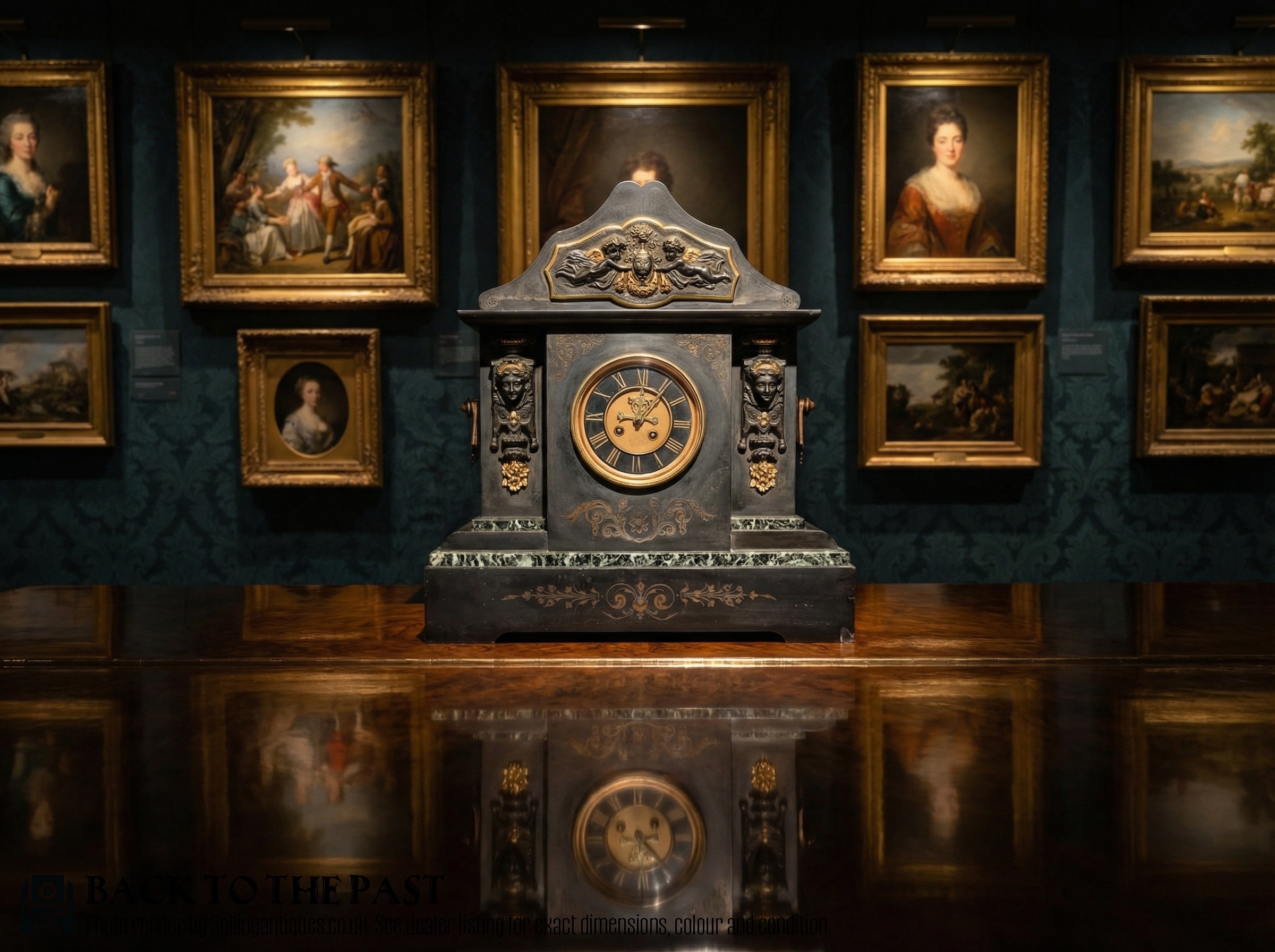
How they were made
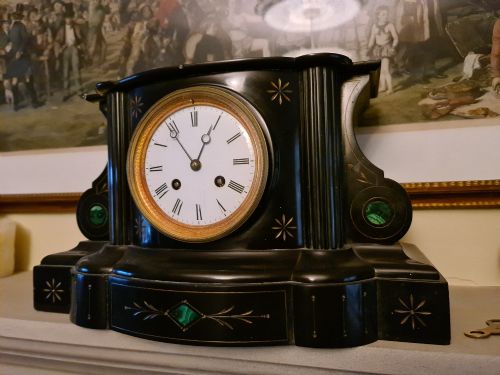
Cases were constructed from solid black slate and polished marble, often shaped into architectural facades or drumhead profiles. Stonemasons cut and polished the heavy materials to achieve smooth, dark surfaces that mimicked black marble.
Metals such as bronze, brass, ormolu, and gilt bronze were cast and applied as mounts, feet, and figural ornaments. Dial surrounds and bezels often incorporated glass to protect the face of the clock.
Retail Price Guide 2026
Typical UK retail prices for french slate clock, calculated from the Sellingantiques database of over a million retail prices indexed since 2003. This retail price guide relies exclusively on Sellingantiques data; no external sources or auction records are used, so the figures do not describe the wider market.
What varies in quality
The standard of a french slate clock depends upon the complexity of its architectural case and the harmony of its mixed materials. Pieces that combine black slate with rouge marble, malachite inlays, and cast bronze mounts demonstrate superior ambition.
Maker attribution also elevates an object, with signed movements by established French workshops commanding greater attention from collectors. The crispness of the cast metal mounts and the polish of the stone surfaces distinguish finer examples.

Achille Brocot·Japy Freres
The French Slate Clock Glossary
- Slate
- A fine-grained metamorphic rock used to form the heavy dark cases of these timepieces. It takes a smooth polish and provides a solid architectural foundation.
- Garniture
- A set consisting of a clock accompanied by matching side ornaments such as urns or vases. These matched groups were designed to sit together on a mantelpiece.
- Ormolu
- Gilt bronze ornamentation applied to the stone cases. This technique involves coating bronze mounts with a gold amalgam.
- Drumhead
- A circular clock case shape resembling a drum, mounted upon a rectangular stone base. This specific form appears frequently among nineteenth-century examples.
- Eight day
- A movement type requiring winding once a week. This mechanical capability was standard for quality domestic clocks of the period.
Frequently Asked Questions
How do I wind a french slate clock?
These timepieces use a key inserted into winding holes on the dial to tension the springs. Care must be taken not to overwind the movement.
Most models house an eight day movement requiring attention on a weekly schedule to maintain accurate timekeeping.
Why are these clocks so heavy?
The substantial weight comes from solid black slate and marble housing materials used to construct the architectural cases. Stonemasons built these heavy frames to provide a stable base for mechanical movements.
This mass requires a sturdy mantelpiece or shelf capable of supporting significant stone weight safely.
What is a clock garniture set?
A garniture comprises a central timepiece accompanied by matching decorative side pieces, such as urns or vases. These sets were designed to create a balanced display across a fireplace mantel.
Materials match the central clock, combining slate, marble, and bronze mounts for a unified decorative scheme.
How do I identify the period of a slate clock?
Stylistic clues such as Egyptian revival motifs, classical columns, or rococo curves help determine the era of manufacture. Nineteenth-century examples often feature specific combinations of cast bronze and polished stone.
Maker signatures on the movement or dial also provide precise dating evidence for individual pieces.