

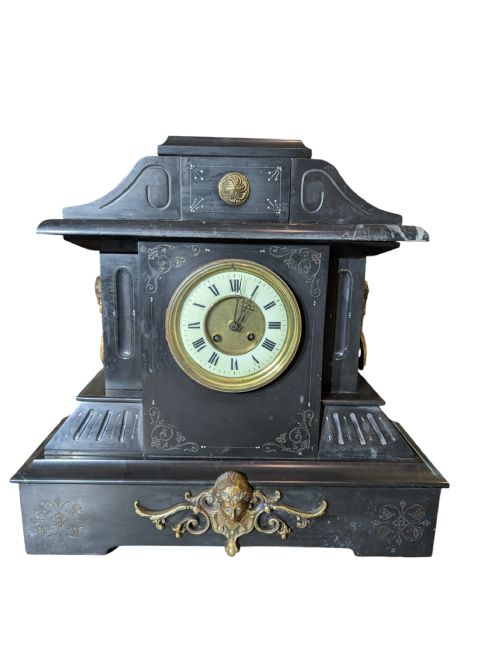


Antique Marble Shelf Clock
An antique marble shelf clock brings weight, precision and undeniable presence to a room, which is why collectors seek out these heavy stone timepieces.

What these clocks are
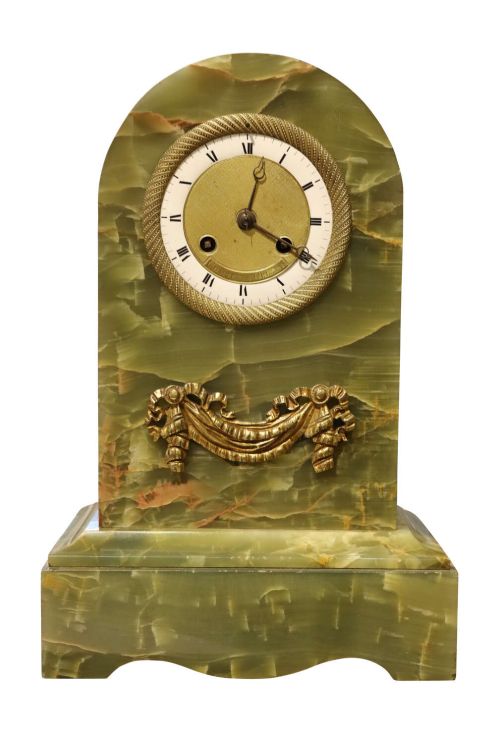
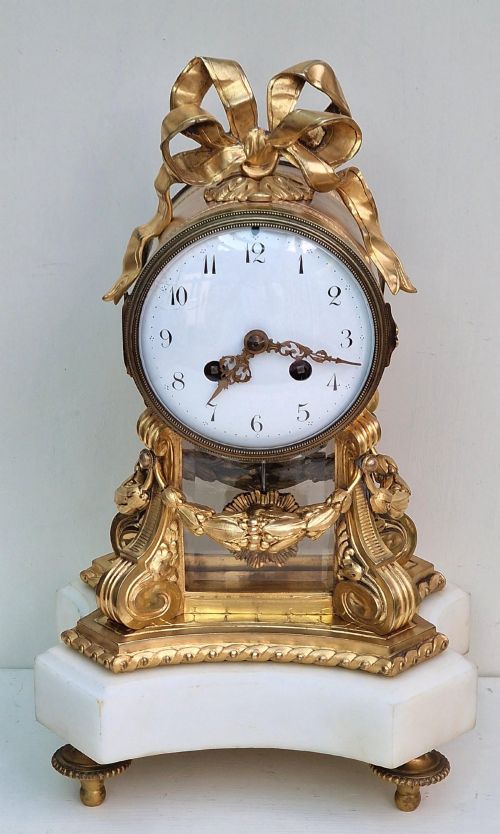
An antique marble shelf clock is a substantial timekeeper designed to sit steadily on a mantelpiece, shelf or cabinet. The selections here span the nineteenth century, including Victorian English examples and French pieces from the Empire, Louis XVI and Neoclassical periods.
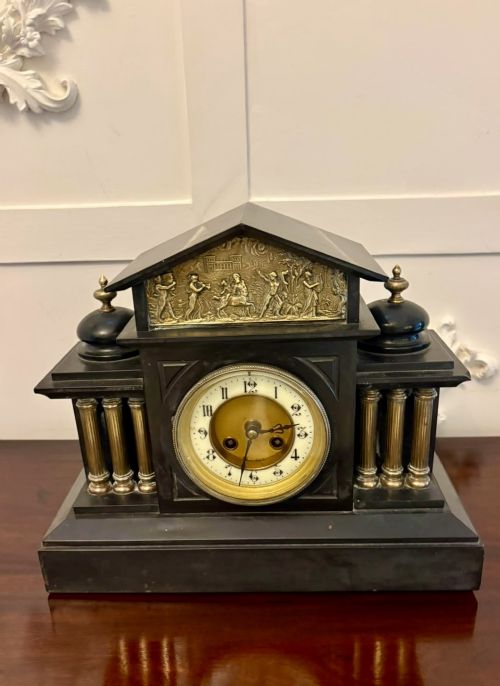
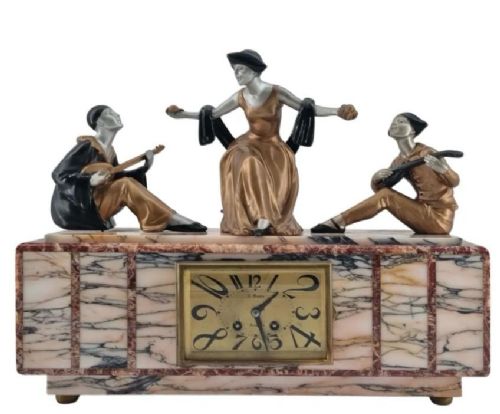
The version most commonly encountered on this page is the Victorian marble inlaid mantle clock, often housing a substantial slate or marble body accented with contrasting inlay. Alongside these sit French pink and white marble pieces, frequently paired with ormolu, gilt bronze and brass mounts.

Materials and construction
These clocks rely on heavy natural stones, primarily black slate, black marble, green marble, pink marble and white marble. Masons shaped these dense materials into architectural cases, frequently incorporating inlaid stone work of contrasting colours.
The stone bodies house mechanical movements and enamel dials, protected behind glass bezels. Many French and Victorian designs incorporate brass, gilt and ormolu mounts, cast and applied to the stone cases.
Retail Price Guide 2026
Typical UK retail prices for marble shelf clock, calculated from the Sellingantiques database of over a million retail prices indexed since 2003. This retail price guide relies exclusively on Sellingantiques data; no external sources or auction records are used, so the figures do not describe the wider market.
Judging quality
Quality in these timepieces rests upon the selection and mass of the stone itself. Finer examples display precise stone inlay, balanced proportions and heavy, uncompromised marble or slate rather than thin veneers.
The distinction between ordinary and exceptional pieces also lies in the accompanying metalwork. Superior French clocks integrate finely chased ormolu or gilt bronze mounts, whereas simpler pieces rely on basic brass fittings and plain dials.

Baby and Jannings
The Antique Marble Shelf Clock Glossary
- Ormolu
- Gilt bronze mounted onto decorative objects, created by applying a mercury and gold amalgam to bronze. This technique imparts a rich golden finish to metal mounts on French clocks.
- Slate
- A fine-grained metamorphic rock often used as a dense black base for nineteenth-century mantel clocks. It mimics black marble and holds crisp architectural lines.
- Dial
- The face of the clock where the hours and minutes are displayed. On these pieces, dials are typically enamelled with Roman numerals.
- Bezel
- The metal ring that holds the glass protecting the clock face. It often swings open on a hinge to allow hand-setting.
Frequently Asked Questions
Where should I place an antique marble shelf clock?
These clocks require a sturdy surface such as a deep mantelpiece, a heavy sideboard or a strong table. Because solid stone and slate cases carry considerable weight, the support must be entirely stable.
Keep them away from direct heat sources and damp walls to protect the internal mechanical movement and the enamel dial over time.
How do I wind an antique mantel clock?
Winding depends on the specific mechanical movement housed inside the stone case. Most use a key inserted into holes on the enamel dial to tension the springs.
Turn the key gently until you feel firm resistance, avoiding over-winding, which can damage the internal springs. Regular, careful winding keeps the movement ticking reliably.
How do I tell a Victorian clock from a French one?
Victorian examples tend to use heavy black slate or marble with geometric inlaid stone patterns, reflecting British domestic interiors of the nineteenth century. They often present a sturdy, architectural silhouette.
French pieces from the Empire, Louis XVI and Neoclassical styles frequently feature lighter pink or white marble combined with decorative ormolu, gilt bronze and softer classical motifs.
What maintenance do these heavy stone clocks need?
Dust the marble and slate surfaces regularly with a soft, dry cloth to prevent grime settling into the stone or around the brass mounts. Avoid chemical cleaners that might harm the polish.
For the mechanical movement, professional servicing every few years ensures the gears remain clean and oiled, preserving the accurate operation of the clock.