
Antique Black Clock
An antique black clock brings deep contrast and steady rhythm to a room, ranging from architectural slate to carved walnut.

Antique Black Clock
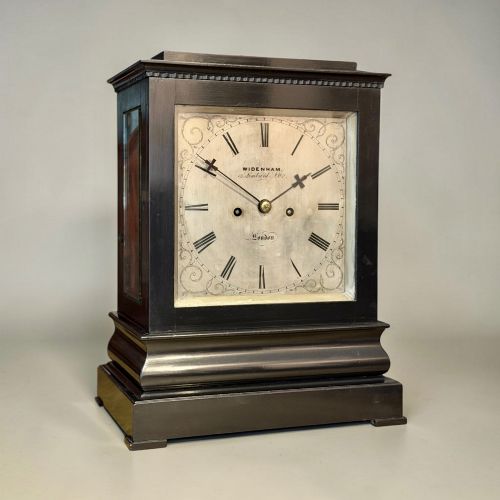
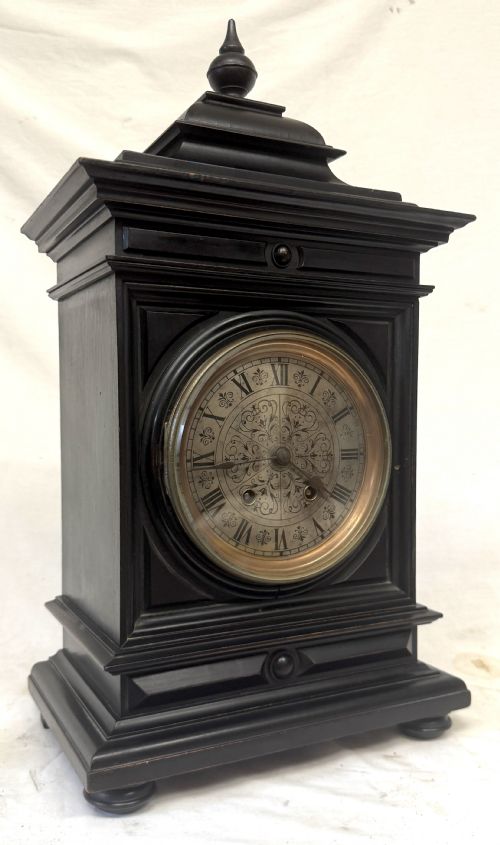
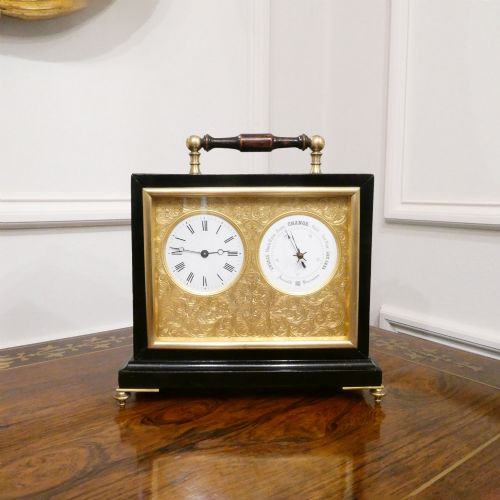
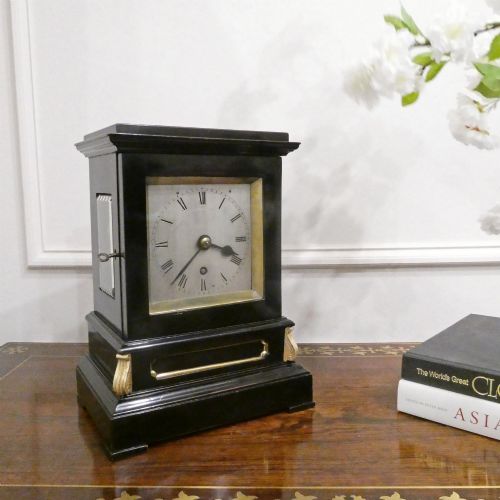
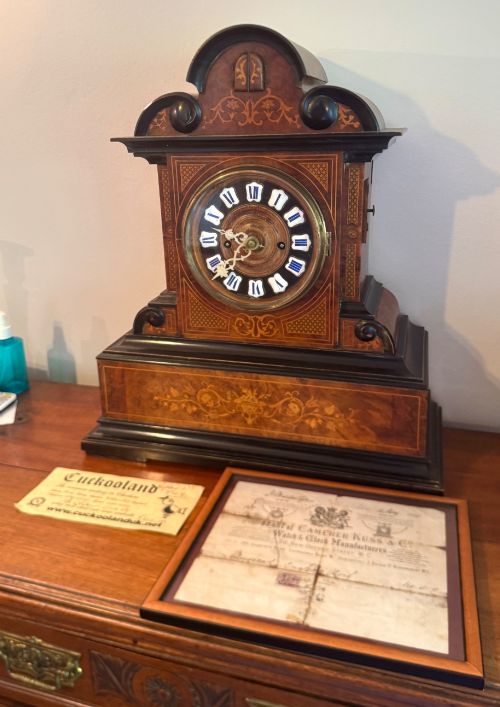
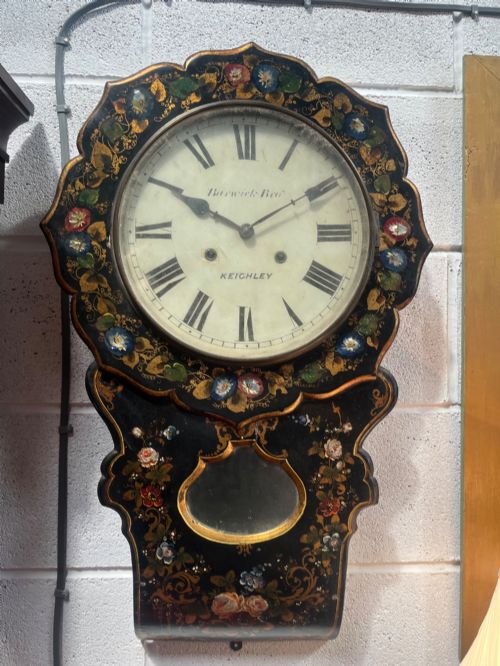
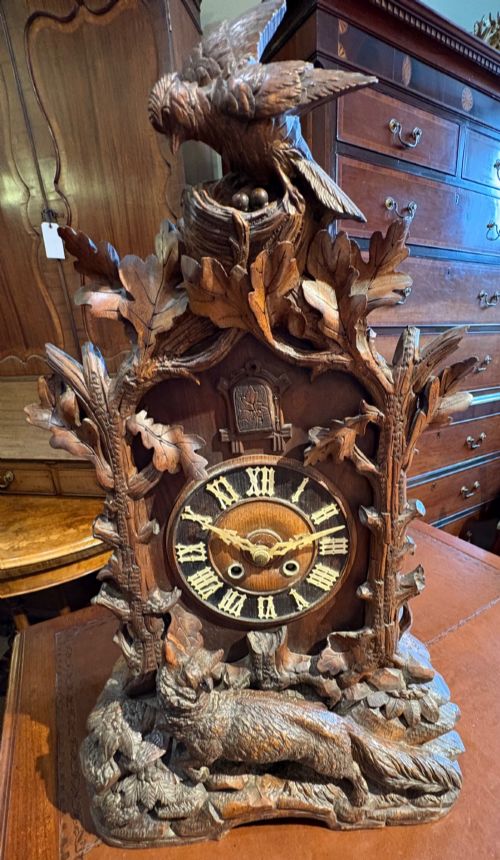
When searching for an antique black clock, collectors encounter a diverse group of timepieces spanning mantel clocks, wall clocks, and grandfathers originating from the seventeenth to the twentieth centuries. The selection encompasses heavy stone cases, ebonised wood, lacquered surfaces, and intricately carved Black Forest designs.
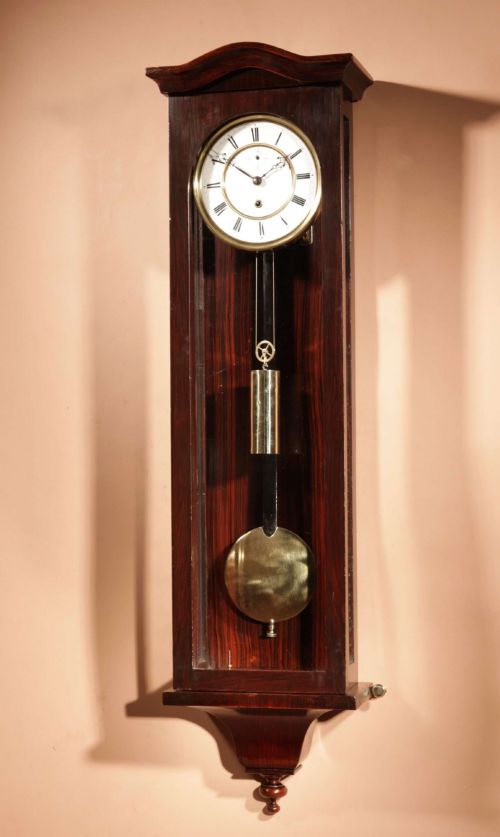
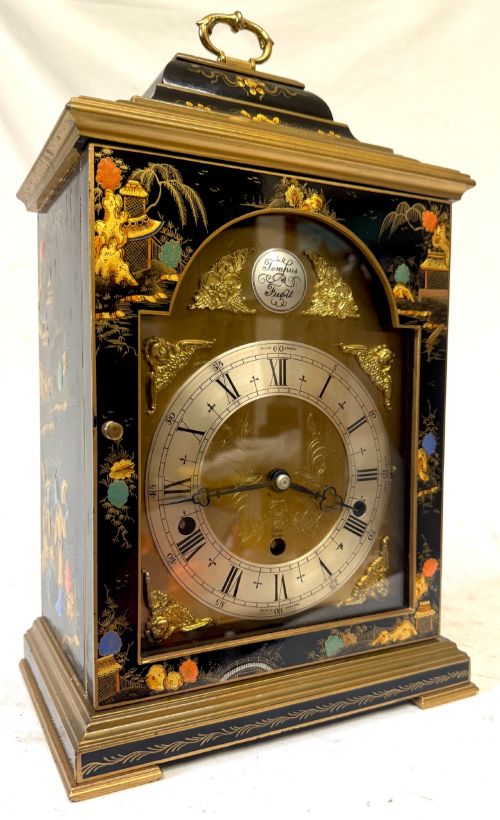
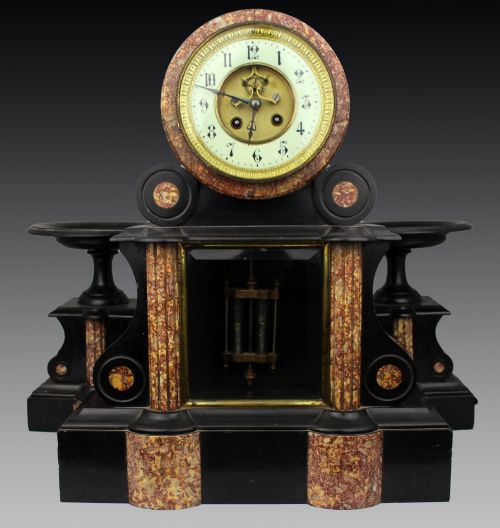
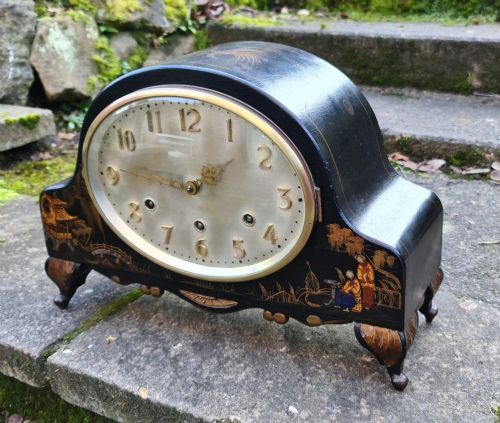
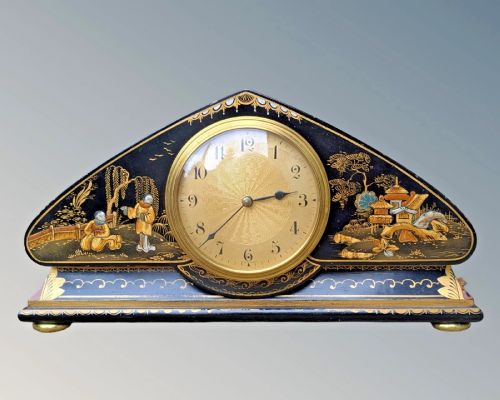
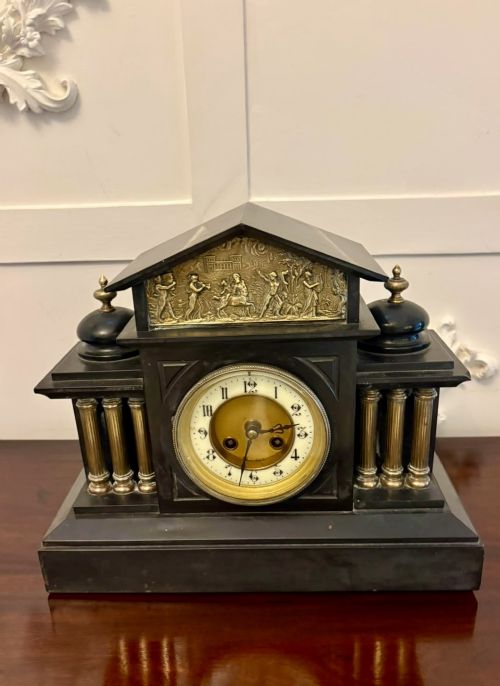
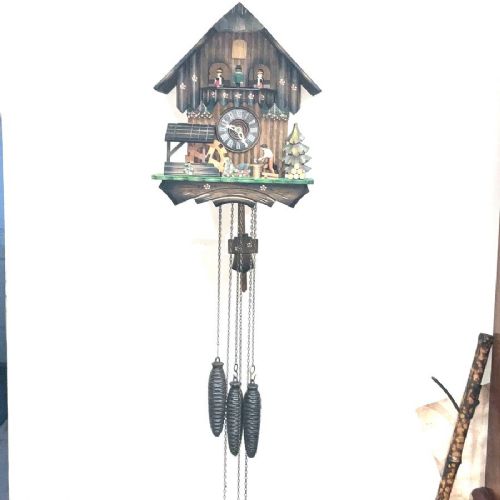
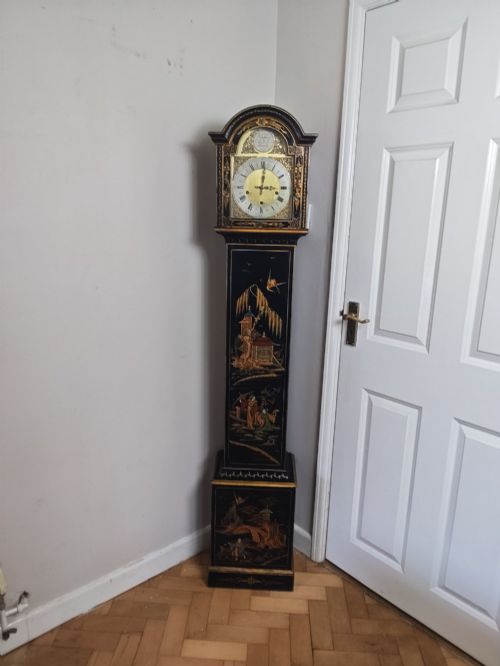
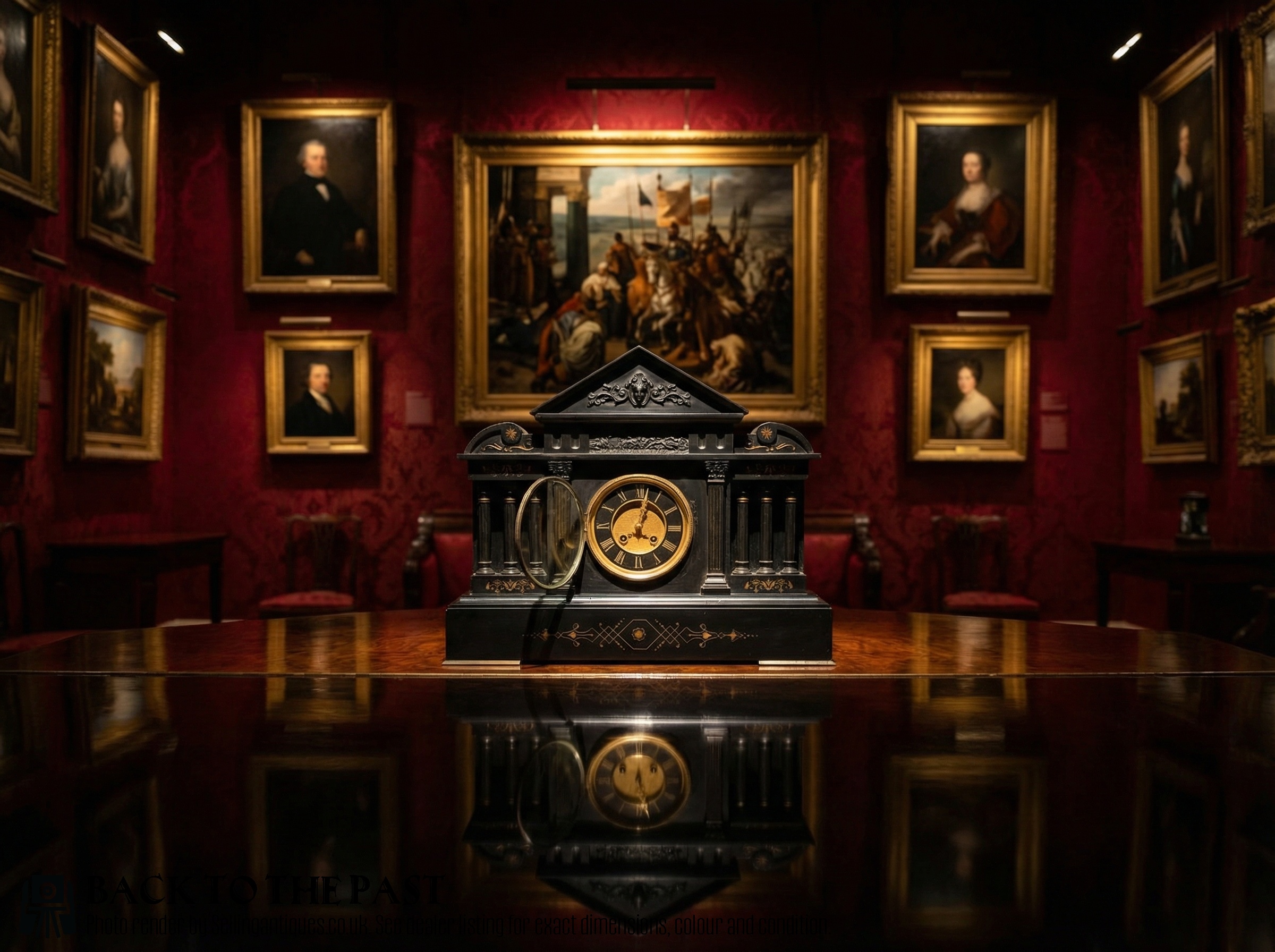
The most frequent versions met on this page are nineteenth-century mantel clocks rendered in black slate or marble, alongside German wall-hanging cuckoo and Vienna regulators featuring dark woods. French garniture sets and Chinoiserie lacquered pieces also appear regularly across the periods.
Materials and construction
Clockmakers utilised heavy natural stones like black slate and marble for architectural mantel pieces, often pairing them with gilt bronze, brass, or ormolu mounts. Woodworkers employed ebonised timber, walnut, and oak for cases, applying lacquer and painted decorations in Chinoiserie and Japanned styles.
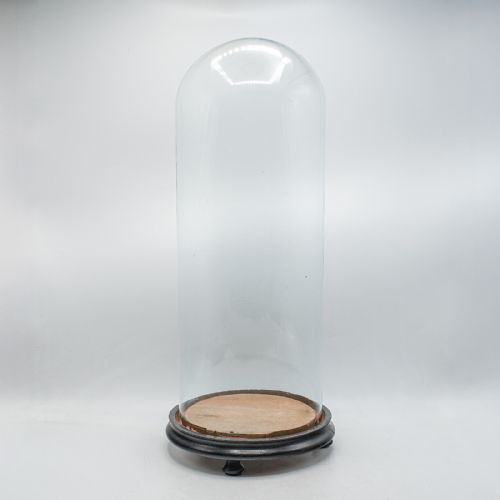
Movements relied on brass gear trains driven by springs or weights, housed securely behind silvered, enamel, or painted dials protected by glass doors and display domes.
Listings feature clocks spanning the seventeenth through to the twentieth centuries, utilising materials from black slate to lacquered wood.
What separates the best pieces
Quality rests in the crispness of the case carving, the depth of the marble polish, and the integration of decorative mounts. Superior examples demonstrate meticulous hand-finishing on metal dials and bronze details rather than mass-produced casting.
The complexity of the movement itself dictates value, where quarter-striking mechanisms, musical carillons, and signed maker plates elevate a piece far above standard time-only alternatives.
Widenham of London·Lenzkirch·Japy Frères·Baetens London·Philipp Haas·Philippes Paris·Sacre·William Speakman·Vulliamy London·George Blackie·Samuel Smart·Junghans
The Antique Black Clock Glossary
- Ebonised
- Wood stained or painted to imitate dense, black ebony. This finish was widely applied to nineteenth-century pine and walnut cases.
- Garniture set
- A clock accompanied by matching decorative side ornaments such as urns or vases. These sets were designed to sit centrally on a mantelpiece.
- Fusee
- A conical pulley used in spring-driven clocks to equalise the power of the mainspring as it winds down. It ensures even timekeeping throughout the week.
- Portico clock
- A monumental clock design supported by four freestanding columns, popular during the French Empire and nineteenth-century periods.
- Vienna regulator
- A precision wall clock with a visible pendulum and long glass door, prized for accurate timekeeping and high-grade movement construction.
Antique Black Clock: Frequently Asked Questions
How do I wind an antique black clock?
Most spring-driven models require a matching key inserted gently into the dial holes to tension the mainspring clockwise until resistance is felt.
Weight-driven wall clocks use a crank or pull cords to raise the weights back to the top of the case without forcing the mechanism past its natural stop.
Where should I place a marble clock?
Heavy stone and slate pieces demand a sturdy, level surface such as a solid mantelpiece or heavy sideboard to support their substantial weight safely.
Keep them away from direct sunlight and damp walls to preserve the polished stone finish and prevent internal metal components from oxidizing.
What is a fusee movement?
A fusee is a conical drum connected to the mainspring via a fine chain or cord that regulates the force delivered to the gear train.
This clever mechanical device maintains steady torque as the spring unwinds, resulting in much more accurate timekeeping across the running cycle.
How do I identify a Black Forest clock?
These German and Swiss pieces are distinguished by heavily carved wooden cases featuring foliage, animals, or cuckoo birds built around wooden or brass plate movements.
Many incorporate musical boxes or bellows that activate on the hour to produce the traditional bird call.