
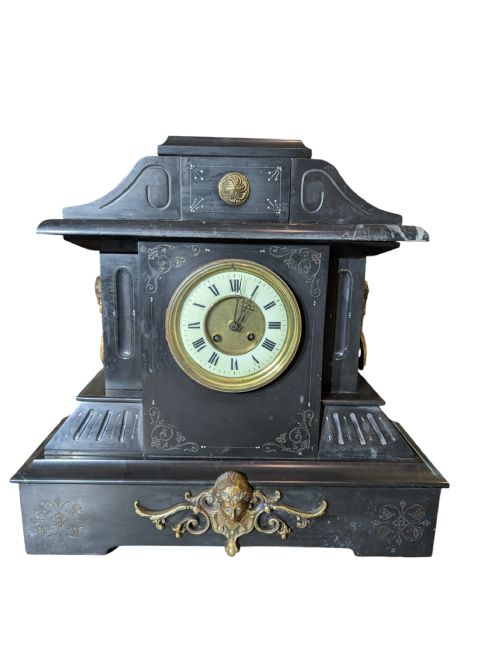


French Black Slate Clock
A french black slate clock brings substantial weight and architectural presence to a room, cast in deep stone and built to last generations.
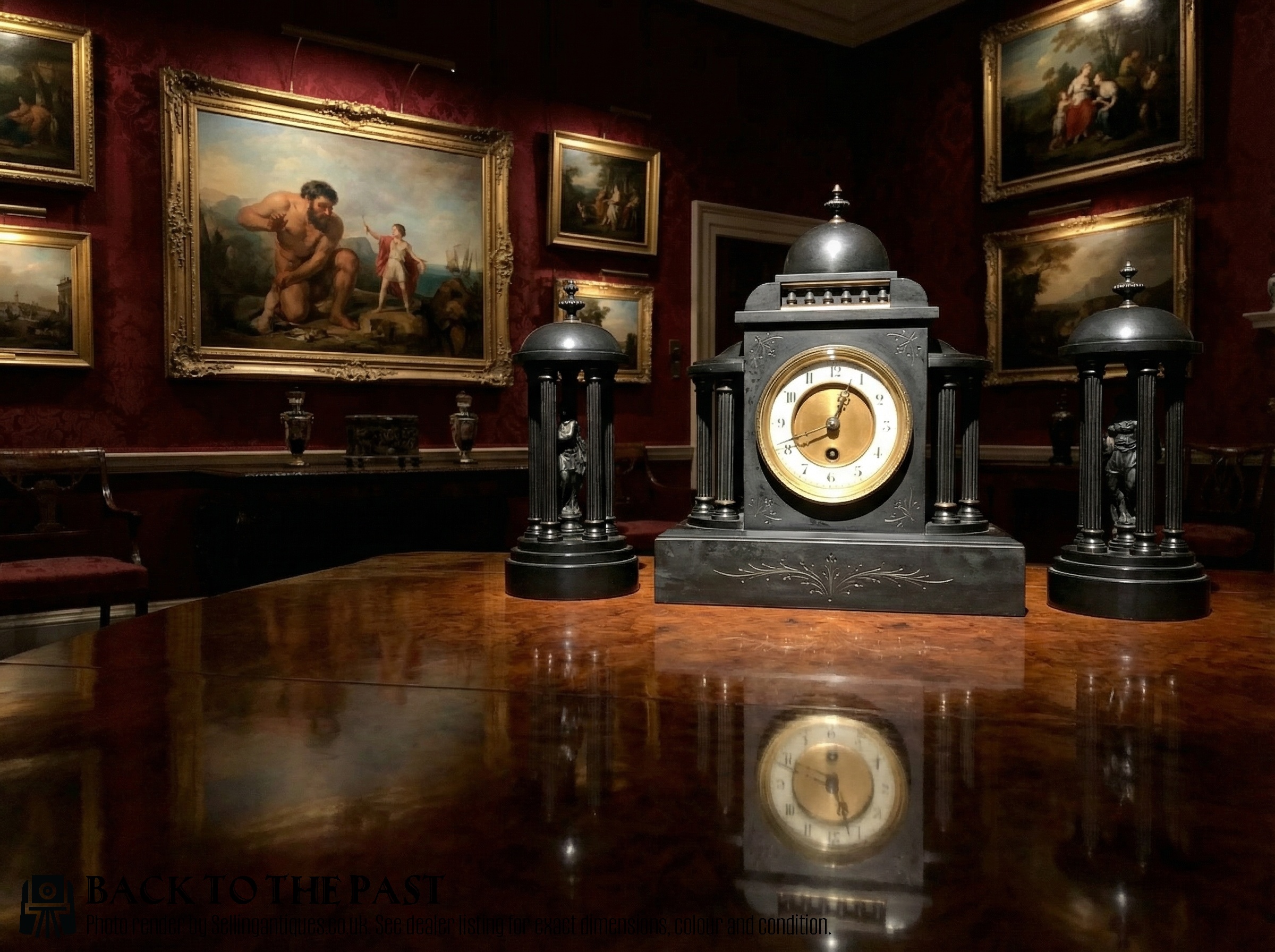
French Black Slate Clock
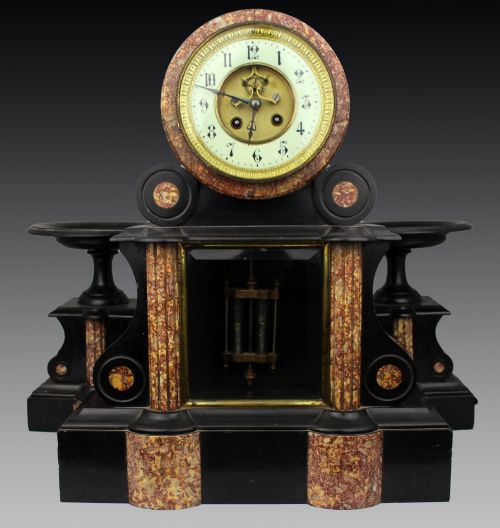
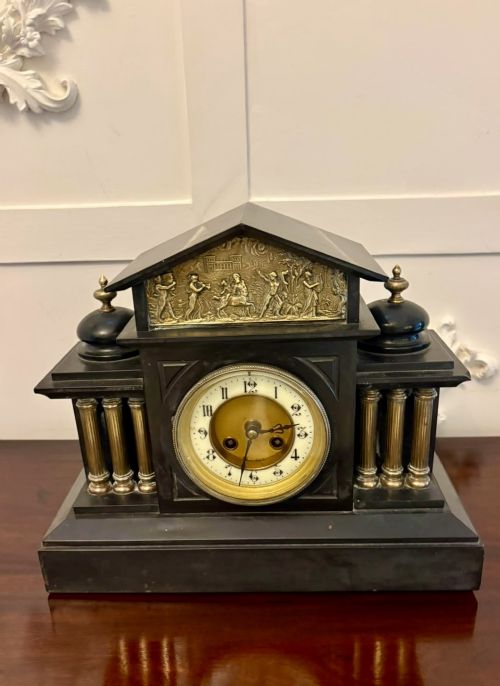
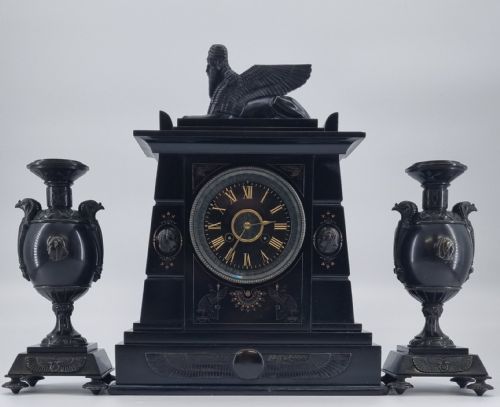
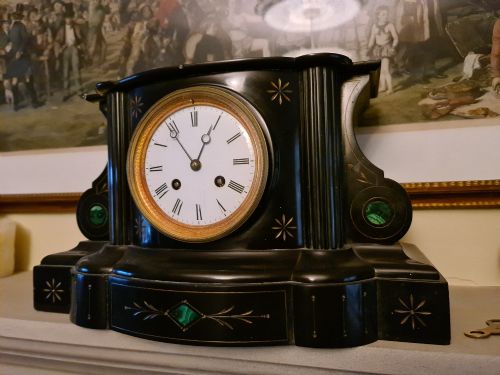
A french black slate clock is a sturdy timepiece designed to sit on a mantelpiece, often accompanied by matching garnitures or urns. The pieces seen here span the Victorian era and the nineteenth century, taking forms that range from simple drumhead models to monumental architectural cases.
Makers drew on classical, Egyptian revival, and neoclassical styles, combining the dense black stone with contrasting marble inlays, gilt brass, and bronze accents. You will frequently encounter heavy architectural facades, columnar supports, and occasionally intricate perpetual calendar dials or moon phases within the evidence.
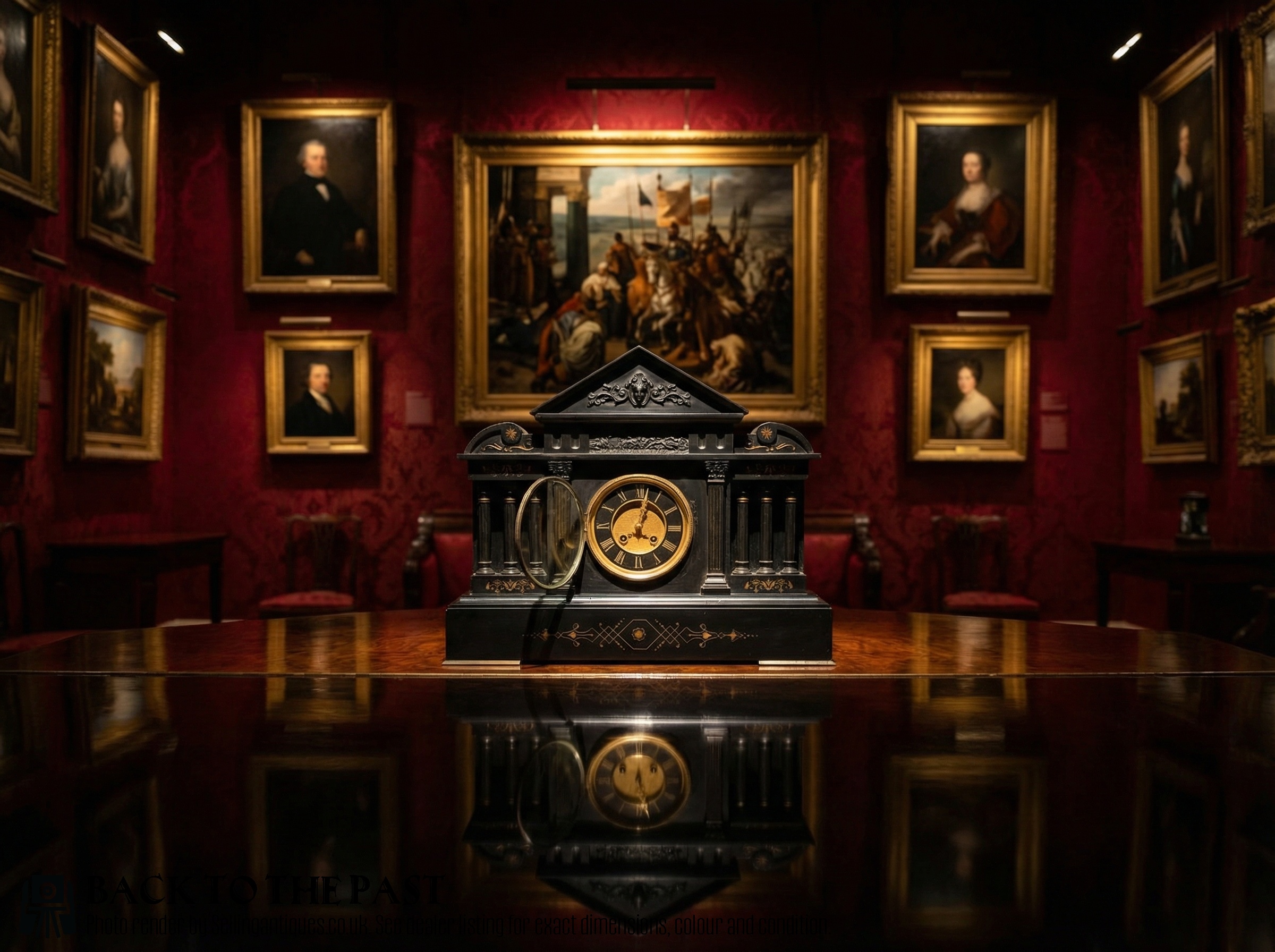
How they were made
These timepieces rely on dense black slate and marble as the primary structural body, frequently shaped to imitate heavier masonry or classical buildings. Enamel dials and bevelled glass protect the face, while brass and bronze components form cast bezels, feet, and sculptural embellishments.
Movements are predominantly mechanical eight-day mechanisms, often driving striking trains and occasionally specialised complications such as perpetual calendars. The heavy stone cases provide a stable housing for these intricate brass gear trains.
What varies in quality
Quality rests in the architectural ambition of the case and the crispness of any inlaid marble or incised decoration. Finer examples display balanced proportions, integrated garniture sets, and substantial cast bronze or gilt brass mounts rather than simpler pressed metal.
The sophistication of the movement also dictates standing, with eight-day duration and specialist complications like penny moon phases or perpetual calendars marking the upper tier of production.
Japy Frères·Philippes Paris·Sacre·Baby and Jannings·D. Munsey of Cambridge·Achille Brocot
The French Black Slate Clock Glossary
- Garniture
- A matching set of ornamental pieces, typically comprising a clock flanked by a pair of urns or vases designed to sit together on a mantelpiece.
- Drumhead clock
- A timepiece featuring a circular dial housing shaped like a drum, mounted upon a rectangular slate or marble plinth base.
- Egyptian revival
- A decorative style incorporating motifs such as sphinxes, obelisks, and hieroglyphic patterns inspired by archaeological discoveries.
- Movement
- The mechanical inner workings of a clock, consisting of gears, springs, and escapements that drive the hands and striking mechanism.
French Black Slate Clock: Frequently Asked Questions
How do I wind my clock?
Most of these mechanical clocks utilise a key inserted into winding holes on the dial to tension the springs for the time and strike trains.
Take care not to overwind the mechanism, stopping as soon as resistance is felt to preserve the antique springs.
What is a garniture set?
A garniture set consists of the central clock accompanied by matching side ornaments, such as urns or vases, designed to create a balanced display.
These sets were popular in Victorian interiors to decorate large mantelpieces and sideboard tops uniformly.
How do I identify the period?
Stylistic clues such as Egyptian revival motifs or classical columns often point towards mid to late nineteenth-century Victorian manufacturing.
Examining the backplate of the brass movement can also reveal maker stamps or serial numbers that help narrow down the date of production.