



Antique Slate Shelf Clock
An antique slate shelf clock brings heavy architectural presence to a room, forged from solid stone to keep steady time on a Victorian mantelpiece.

Antique Slate Shelf Clock
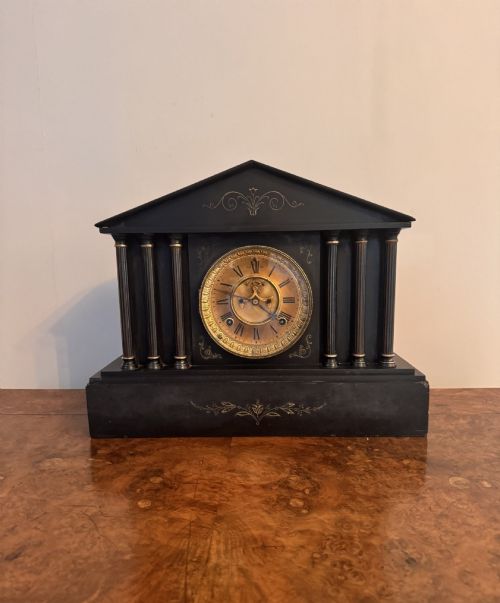
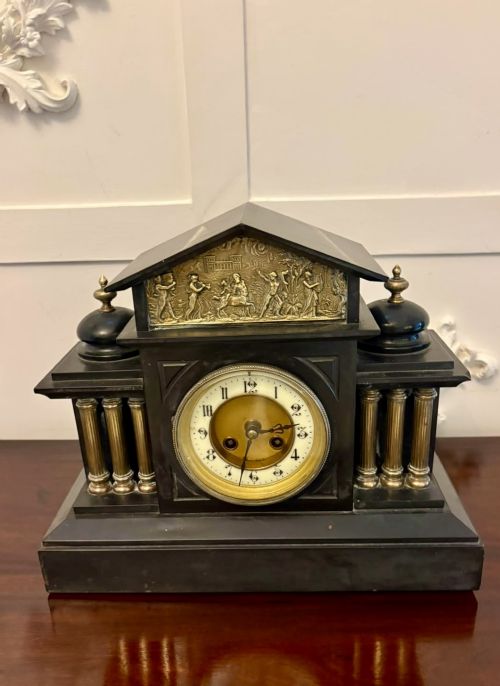
An antique slate shelf clock is a sturdy domestic timepiece designed to sit firmly upon a mantelpiece or shelf, originating predominantly from the Victorian era. These heavy timekeepers take various structural forms, ranging from simple drumhead shapes to grand architectural designs inspired by classical and Egyptian revivals.
How they were made
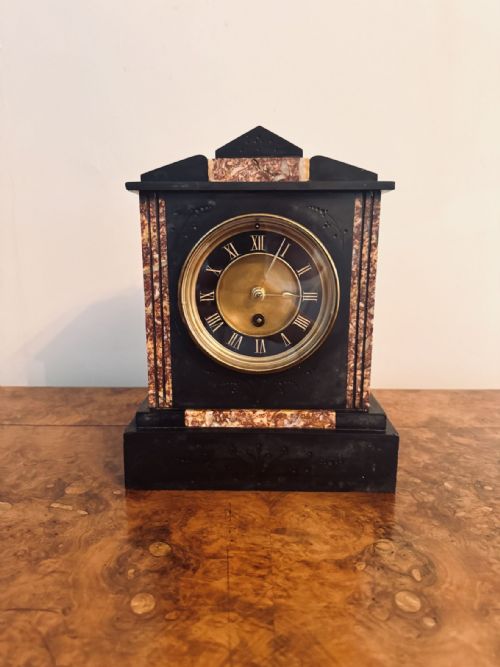
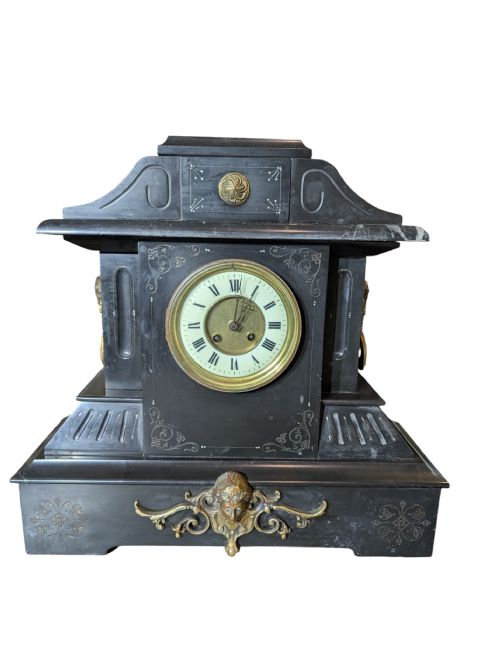
Makers shaped dense black slate and marble into solid architectural cases, frequently polishing the stone to a smooth, dark finish that resembled fine metal or lacquer. Enamel dials, brass bezels, and glass covers protect the clock face, while cast bronze or gilt brass mounts add decorative contrast to the stone body.
Many of these timepieces house eight-day mechanical movements that require periodic winding by key. Inlaid marble panels, often in contrasting colours, are precisely fitted into recessed channels within the slate body to create geometric or floral patterns.
Antique Slate Shelf Clock Retail Price Guide 2026
Typical asking prices for slate shelf clock among the pieces listed under this phrase on Sellingantiques today, from the lower quarter to the upper quarter. They describe what is for sale here now, not the wider market.
Listings feature Victorian slate and marble clocks alongside French architectural models spanning from 1860 to 1890.
What varies in quality
The sophistication of the stone cutting and the integration of architectural details set the superior pieces apart from plain domestic models. Better examples display crisp carving, precise marble inlay work, and substantial bronze mounts rather than simple painted decoration.
The calibre of the internal movement also dictates value, with signed French mechanisms or eight-day movements demonstrating greater horological ambition. Furthermore, the selection of high-grade black marble or unblemished slate creates a more unified, imposing visual weight.
Philippes Paris·Baby and Jannings·D. Munsey of Cambridge·Achille Brocot
The Antique Slate Shelf Clock Glossary
- Drumhead clock
- A timepiece featuring a circular dial housing mounted directly on a matching stone base, resembling the shape of a side drum. This form is common among Victorian slate and marble designs.
- Architectural mantel clock
- A style of clock built to resemble a miniature building, complete with columns, pediments, and cornices. Makers utilised slate and marble to emulate masonry.
- Egyptian Revival
- A design style inspired by ancient Egyptian motifs, including hieroglyphs, sphinxes, and pyramidal geometry. These elements appear on specific Victorian slate and bronze clocks.
- Eight day movement
- A mechanical clock movement that runs for eight days on a single wind before requiring attention. This indicates a more complex spring-driven mechanism than standard daily clocks.
- Ebonised wood
- Timber treated with a dark finish to imitate expensive ebony wood. It appears alongside slate and marble in certain Victorian clock cases.
Antique Slate Shelf Clock: Frequently Asked Questions
How heavy are these clocks?
These timepieces are exceptionally heavy due to the solid blocks of black slate and marble used in their construction.
Because of this weight, they require a sturdy mantelpiece or shelf capable of supporting dense stone safely.
Do they tick loudly?
The mechanical movements produce a steady, audible tick that varies depending on the size of the escapement and the resonance of the stone case.
Heavier slate and marble dampens the sound more effectively than wooden clock cases, resulting in a deeper tone.
How do I wind the clock?
A dedicated winding key is inserted into specific arbors on the enamel dial to tension the internal springs.
Care must be taken not to overwind the mechanism, ensuring the eight-day movement maintains accurate time.
Are all these clocks French?
Many movements and assembled pieces originated in France before being retailed or cased in Britain during the Victorian period.
Maker signatures on the dial or movement often point to French workshops, while retailers operated across British towns.
How should I clean the slate?
The stone surface requires only a gentle wipe with a dry or slightly damp cloth to remove dust from the carved details.
Harsh chemical cleaners should be avoided to preserve the polished finish of the black slate and marble inlay.