



Classical Architectural Clock
A classical architectural clock brings stone and metal together to anchor a room with the severe lines of antiquity.

Classical Architectural Clock
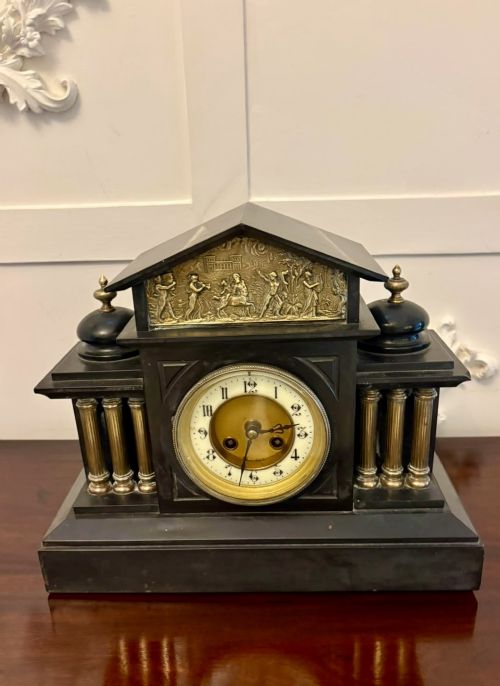
A classical architectural clock takes its cues from the temple fronts and porticoes of Greece and Rome, translated into domestic timepieces during the Victorian era and the nineteenth century. These objects function primarily as mantel clocks, portico clocks, and clock garnitures designed to command attention on a shelf or sideboard.
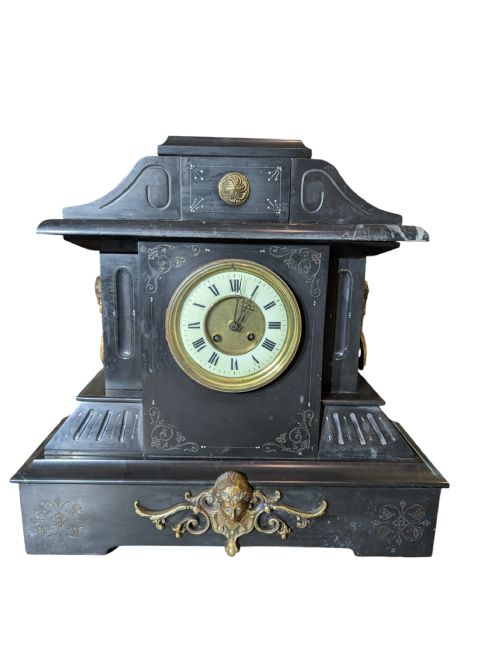
The versions most commonly met on this page combine heavy stone bodies in black slate, rouge marble, and alabaster with gilt bronze or brass mounts. Such pieces reflect the French Second Empire, Victorian Classical Revival, and Neoclassical tastes that dominated European design from eighteen sixty through nineteen hundred.
Makers housed these movements within timber cases like Cuban mahogany or oak, alongside marble and slate structures. Whether configured as a strict portico clock with columns supporting a pediment or a solid marble block carved as a miniature monument, each piece uses symmetry and classical proportion to project permanence.
Distinctions in Execution
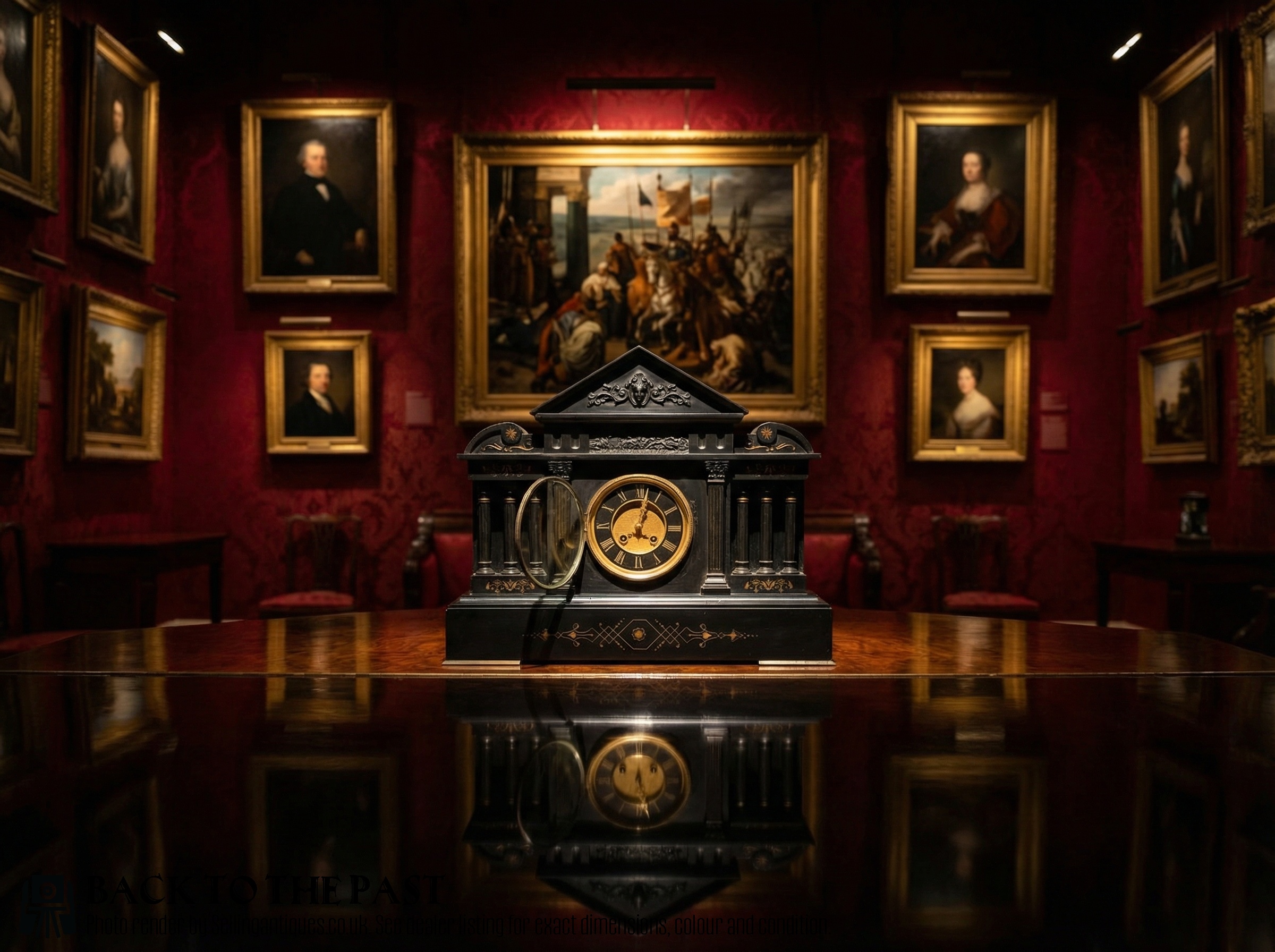
The distinction between ordinary and superior examples lies in the depth of stone carving, the crispness of the gilt bronze or ormolu mounts, and the integration of the architectural elements. Finer specimens display precisely fitted marble blocks, crisply cast bronze capitals and friezes, and matched garniture pieces that share the same material.
Movement quality separates the standard production piece from the workshop creation bearing a named maker. Signed dials and movements, substantial eight-day mechanisms, and sophisticated escapements demonstrate the higher tier of nineteenth-century horological achievement.
Classical Architectural Clock Retail Price Guide 2026
Typical asking prices for classical architectural clock among the pieces listed under this phrase on Sellingantiques today, from the lower quarter to the upper quarter. They describe what is for sale here now, not the wider market.
Listings on this page span the Victorian era, featuring works from eighteen sixty to nineteen hundred constructed in marble, slate, and bronze.
Philippes Paris·Baby and Jannings·Fatton Eleve De Breguet London·Benson Ludgate Hill London
The Classical Architectural Clock Glossary
- Portico clock
- A clock featuring a freestanding architectural case supported by columns or pillars beneath a flat entablature. This design style became popular in France and Britain during the nineteenth century.
- Garniture
- A set consisting of a central clock flanked by matching decorative objects such as urns or vases. These matched sets were designed to sit symmetrically on a mantelpiece.
- Fusee
- A conical pulley used in mechanical clocks to maintain an even pull on the movement as the mainspring unwinds. This mechanism improves timekeeping accuracy over the duration of the wind.
- Ormolu
- Finely ground high-carat gold applied to a bronze base using a mercury amalgamation technique. This decorative finish produces a rich, warm metallic lustre characteristic of luxury French metalwork.
- Pediment
- A triangular or curved architectural element placed above the door or portico of a building. Clock makers borrowed this shape to cap the top of architectural clock cases.
Classical Architectural Clock: Frequently Asked Questions
What is a classical architectural clock?
A classical architectural clock is a timepiece built to resemble a miniature building, incorporating columns, pediments, and porticoes into its case design. These pieces draw directly on ancient architectural motifs.
They were produced extensively during the nineteenth century in Britain and France, utilising materials such as marble, slate, and bronze.
How were these clocks used?
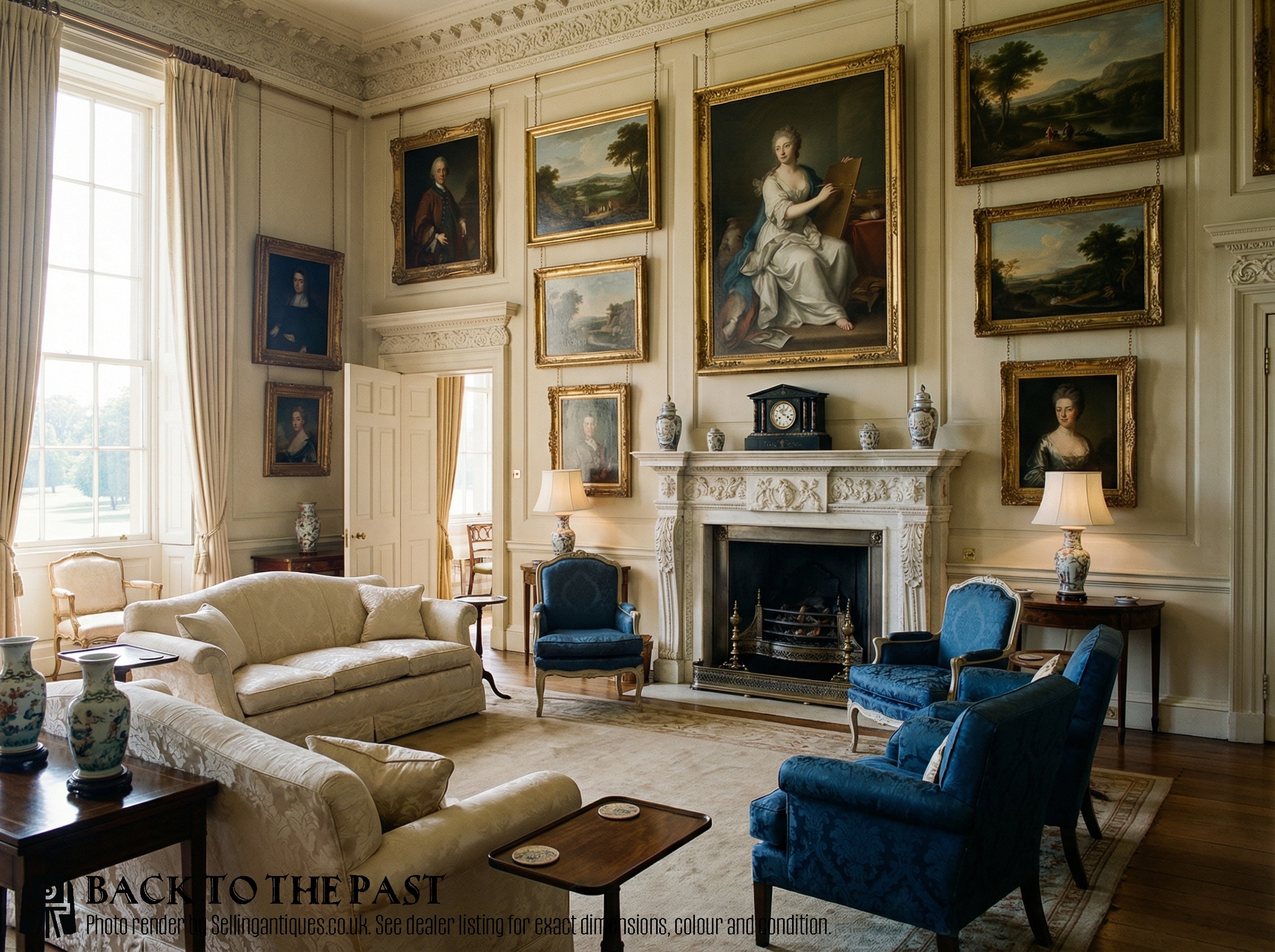
These clocks served as the primary timekeeper and decorative centrepiece in Victorian drawing rooms and libraries. Placed prominently on mantelpieces, they often stood alongside matching garniture urns.
Beyond telling time, they functioned as status symbols that demonstrated the owner's appreciation for classical art and culture.
How do I care for a marble clock?
Marble and slate cases require only dusting with a soft, dry cloth to maintain their surface finish. Avoid using chemical cleaners or abrasive polishes that can damage the stone.
Movements should be wound carefully and serviced periodically by a professional horologist to ensure the mechanical parts remain clean and functional.
How can I tell the period?
Dating relies on examining the materials, dial construction, and style of the case architecture. Victorian and nineteenth-century pieces often feature specific combinations of black slate, gilt bronze, and enamel dials.
Signatures on the dial or movement backplate often provide direct evidence of the maker and the active working period.