


Black Marble Mantle Clock
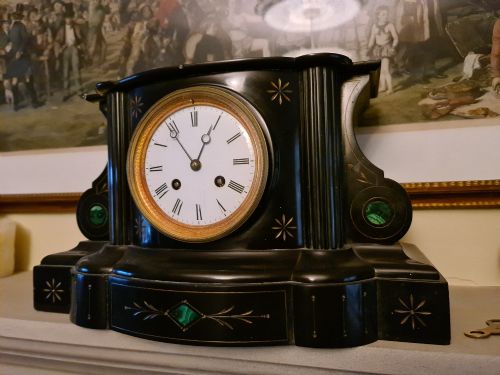
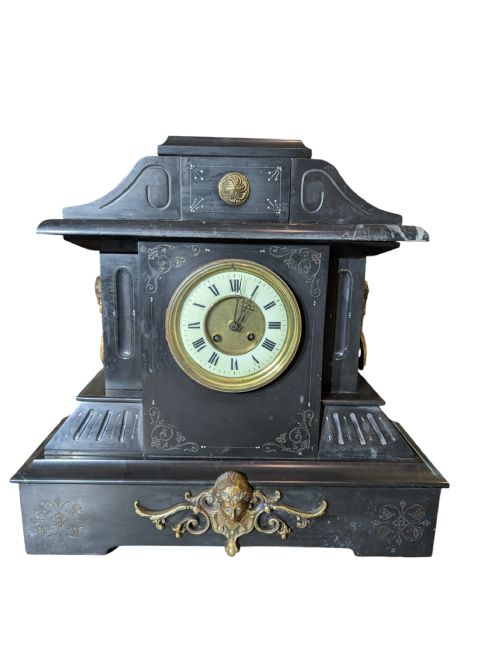
A black marble mantle clock brings weighty nineteenth-century engineering and sombre stone presence straight onto a mantelpiece.
Black Marble Mantle Clock
When you search for a black marble mantle clock, you look at heavy architectural timepieces built predominantly during the nineteenth century. Most pieces on this page stem from the Victorian era and French workshops, though you also encounter pieces from the eighteen-eighties, eighteen-nineties, and nineteen-twenties.
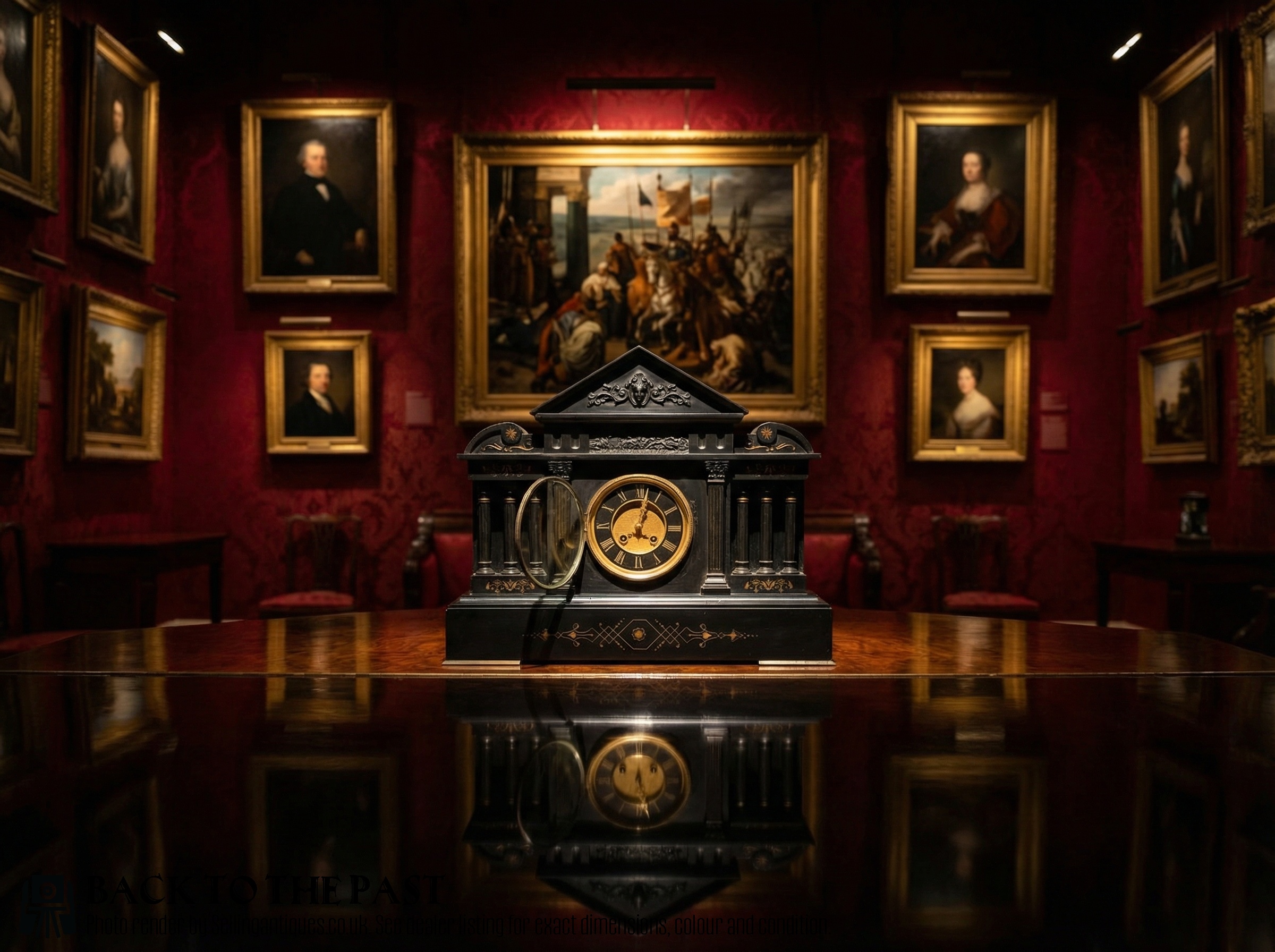
The form ranges from simple block cases to elaborate garniture sets complete with side urns or bronze figures. You find classical revival designs, Egyptian influence motifs, and industrial series pieces sitting alongside standard mantel clocks.
Materials extend beyond pure stone to include black slate, brass, glass, enamel, and gilt bronze mounts. These clocks served as serious domestic timekeepers in substantial Victorian and continental interiors.
How they were made
Makers constructed these heavy cases from solid black marble or slate, often shaping them into architectural temple facades or simple geometric blocks. Artisans inlaid contrasting marbles into the stone faces and fitted visible enamel dials behind protective glass bezels.
Internal mechanics relied on eight-day movements, sometimes featuring perpetual calendars, equation of time complications, or penny moon dials showing phases of the moon. Metalwork details involved cast bronze, brass components, and gilt highlights applied to figures and mounts.
Some nineteenth-century dials tracked more than mere hours, displaying the literal phases of the moon through a tiny painted aperture.
What varies in quality
The division between ordinary and exceptional pieces rests on the ambition of the case architecture and the sophistication of the movement. Simple block marble cases contrast with ambitious architectural structures featuring bronze figures, Egyptian revival details, and complete garniture sets.
Horological complexity also separates the range, moving from standard time-only mechanisms up to eight-day movements with specialised Brocot escapements, calendar functions, and moon phase indicators. The crispness of the stone polish and the integration of gilt bronze mounts determine the visual success of the piece.
Philippes Paris·Baby and Jannings·Guilmet·Achille Brocot·Brocot
The Black Marble Mantle Clock Glossary
- Garniture set
- A clock accompanied by matching side ornaments, typically urns or vases designed to sit together on a mantelpiece.
- Slate
- A dense grey or black stone frequently used as the structural core for these heavy nineteenth-century clock cases.
- Brocot suspension
- An adjustable clock pendulum suspension system invented by Louis Brocot, allowing fine regulation of the beat.
- Portico clock
- A distinct architectural clock style featuring supporting columns reminiscent of classical temple design.
- Enamel dial
- A metal watch or clock face coated with fused glass powder, providing a durable white or coloured surface for painted numerals.
Black Marble Mantle Clock: Frequently Asked Questions
How heavy is a black marble mantle clock?
These clocks are remarkably heavy because they are built from solid stone rather than wood or veneer. You need a sturdy surface and adequate mantel space to support their substantial weight.
Lifting them requires care and two hands to distribute the mass of the marble and internal movement safely.
Do these clocks require special winding care?
Most models feature an eight-day movement that requires winding via the dial holes roughly once a week. Using the correct key and avoiding overwinding preserves the tension in the mainsprings.
Professional servicing helps keep the mechanical gears running accurately after long periods of stationary display.
What is a garniture clock set?
A garniture set consists of the central mantel clock accompanied by two matching side pieces, such as decorative urns or bronze figures. These matched groupings create a balanced, symmetrical display across a fireplace opening.
They represent more ambitious household furnishing schemes from the nineteenth century.
How do I distinguish French pieces from Victorian ones?
French pieces often display distinct continental styling, such as Empire influences, architectural portico designs, or specialised makers' signatures on the movements. Victorian pieces frequently lean towards classical revival or heavy block stone forms produced for British homes.
Examining the back movement plate usually reveals stamps or numbers indicating the origin of manufacture.