

Antique Marble Table Clock
An antique marble table clock anchors a room with quiet mass, offering a heavy stone housing for precise mechanical timekeeping.
Antique Marble Table Clock
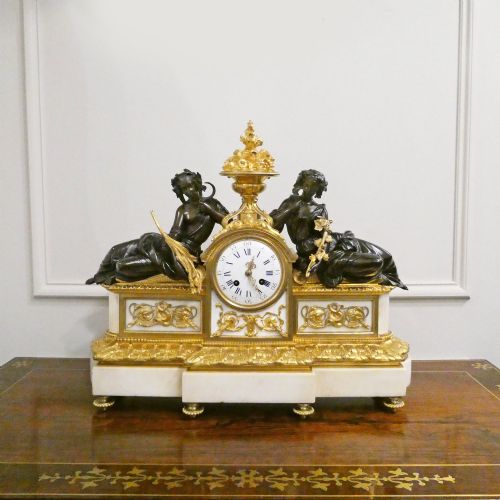
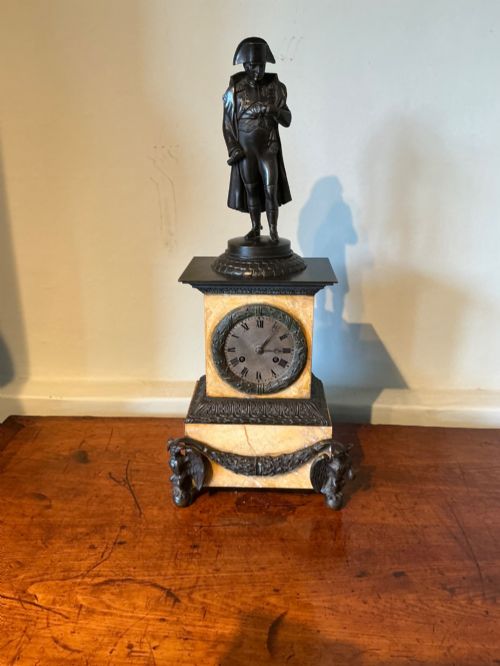
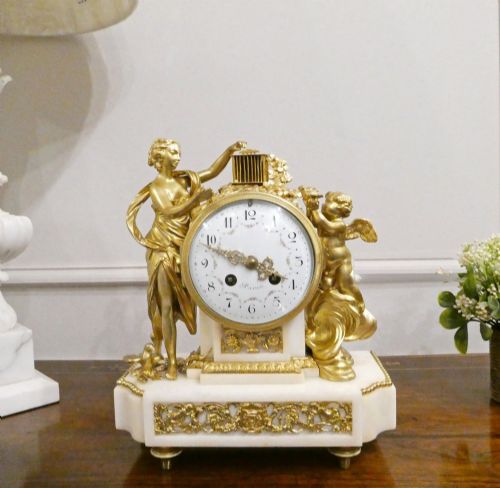
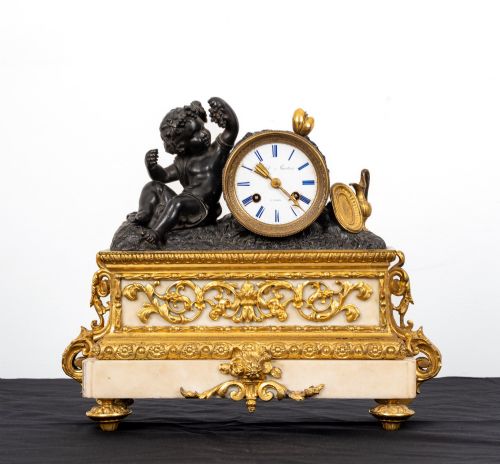
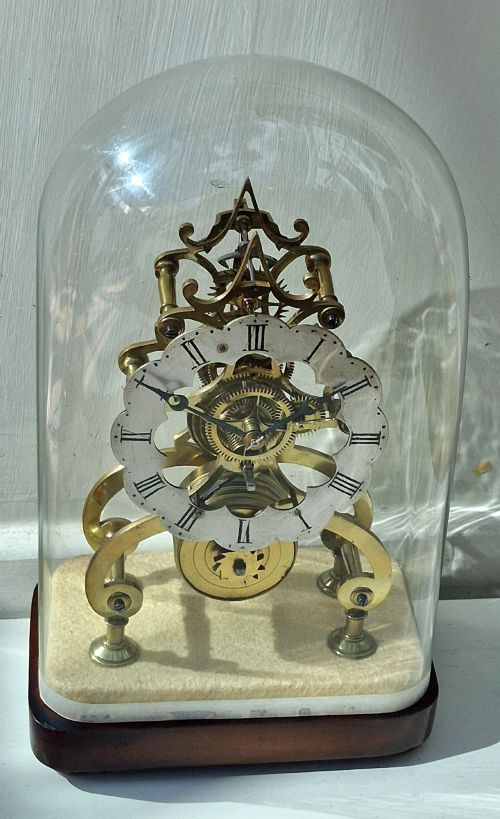
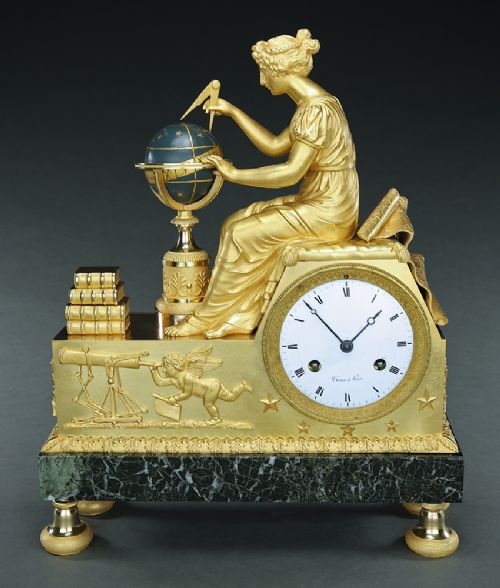
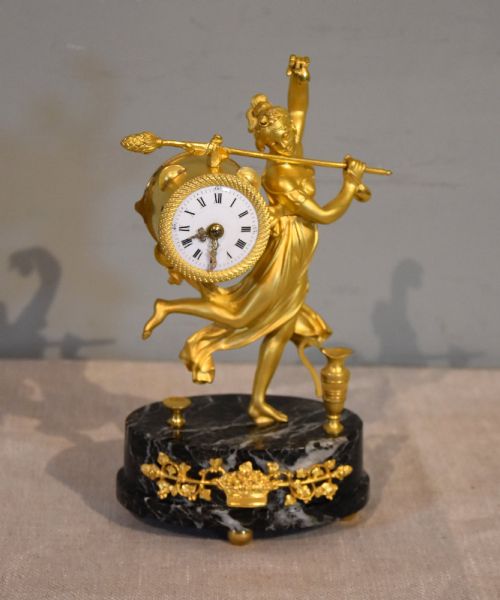
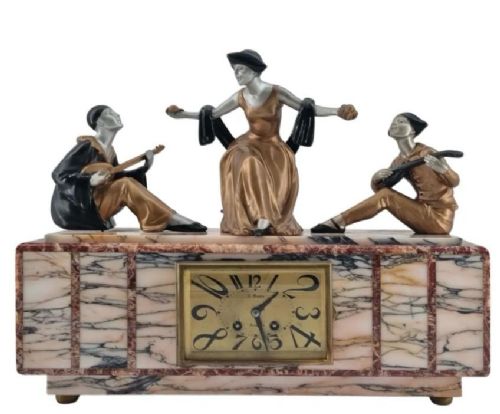
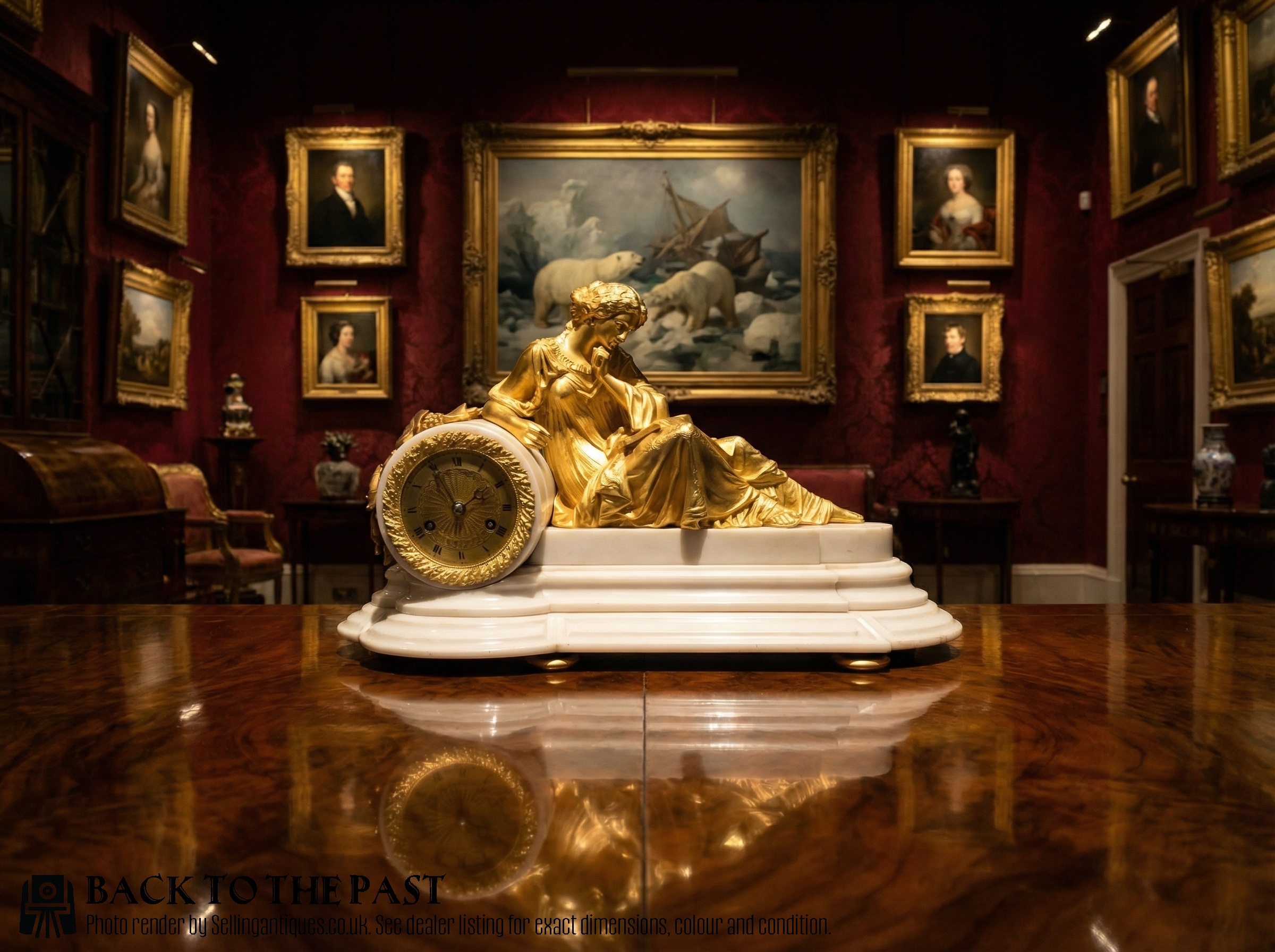
An antique marble table clock stands as a substantial domestic timepiece, housed in natural stone rather than wood or ceramic. These objects range from severe architectural forms to ornate sculptural compositions featuring classical figures or cast mounts.
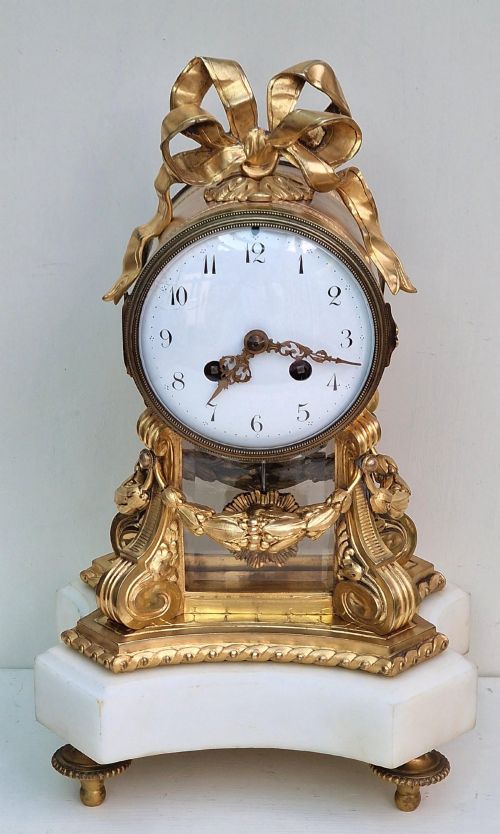
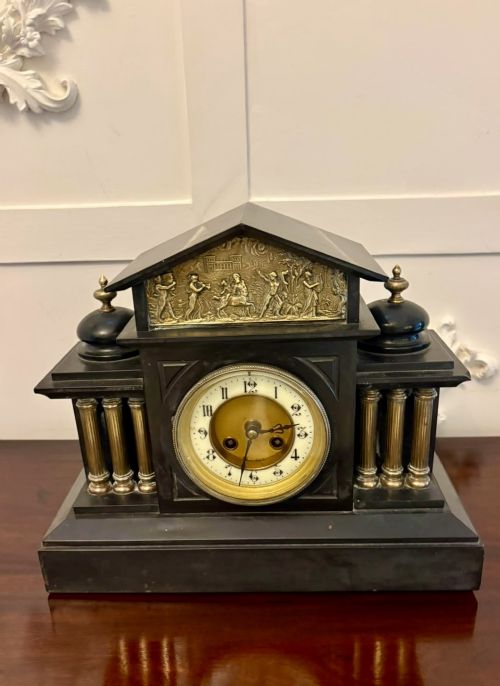
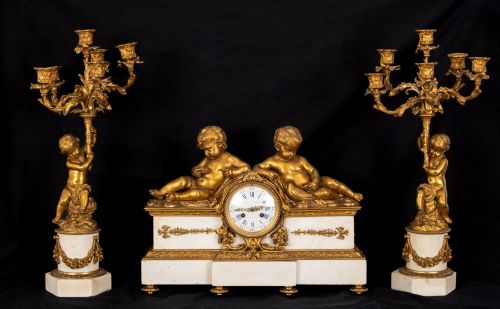
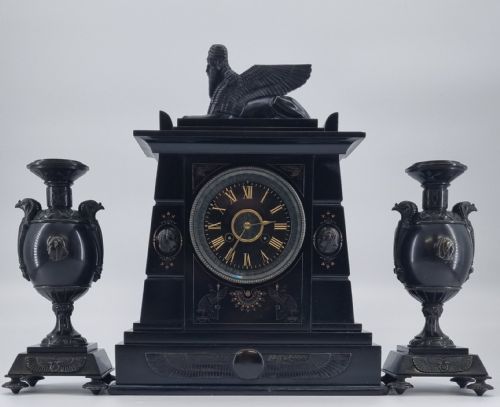
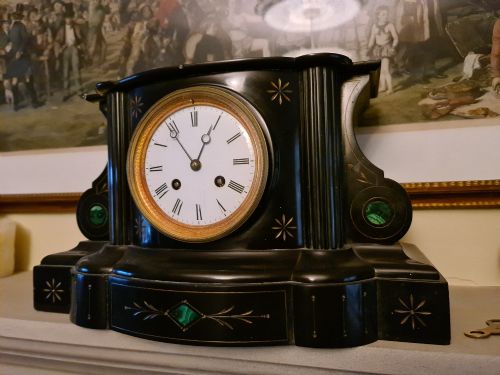
Buyers meet nineteenth-century French productions most frequently on this page. These pieces pair dark black slate or rouge marble with gilt bronze elements, often accompanied by matching garniture urns or sidepieces for the mantel.
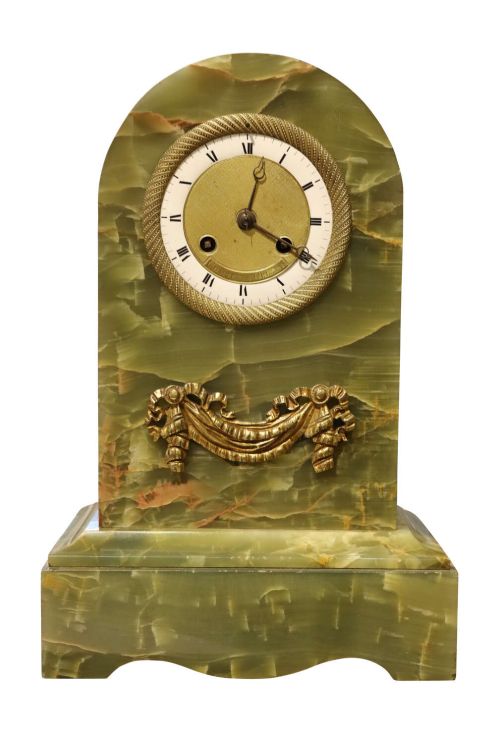
The selection also includes English examples alongside earlier eighteenth-century urn clocks and later art deco green onyx pieces. The core appeal remains the dense weight of the mineral case combined with visible brass dials and glass bezels.
Materials and Construction
The primary bodies utilise solid blocks of marble, green onyx, or black slate, cut and polished to display natural veining and sharp geometric edges. Workshops shaped these mineral cases using heavy saws and abrasive stones before mounting decorative metal components.
Gilt bronze, ormolu, and brass provide the contrasting mounts, bezels, and sculptural figures affixed to the stone. Founders cast these metal details using traditional lost-wax or sand methods, then chased the surfaces and applied gold leaf or fire gilding.
Enamel dials with delicate painted numerals sit behind protective glass doors, framed by cast bezels. Inside the stone housing, brass gear trains and escapements regulate the hours, driven by coiled springs or hanging weights.
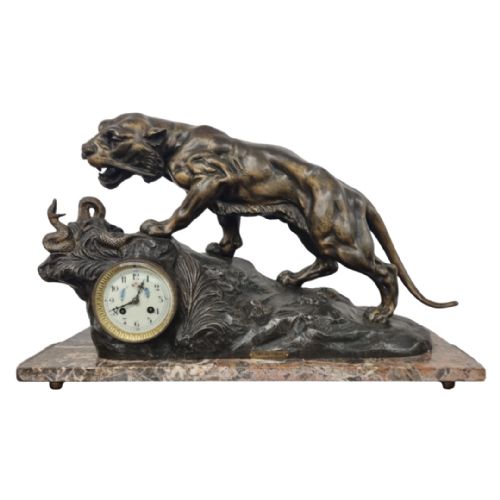
Certain Victorian timepieces feature exotic marble menageries, pairing stoic stone columns with cast bronze tigers and serpents frozen in mid-stalk.
Distinctions in Quality
The calibre of the mechanical movement separates standard timepieces from exceptional examples. Finer pieces house signed movements by recognised makers with complex gear trains, maintaining steady oscillation and accurate hours over many days.
The crispness of the bronze casting and the depth of the hand-chasing determine visual merit. Superior metal mounts display sharp relief in foliage and figures, whereas lesser versions rely on softer, unrefined cast surfaces.
The selection and matching of the stone case dictate structural integrity. High-grade items utilise uniform blocks of marble or carefully chosen coloured stone without awkward joins, polished to a deep, even lustre.
Charles à Orléans·R Varnier·Vincenti·Siffel and Cartier·Sega·Japy Freres·Philippes Paris·Berger Paris·Thwaites of London·Louis Goret·Sacre
The Antique Marble Table Clock Glossary
- Garniture
- A set comprising a central clock flanked by matching decorative objects such as urns or vases. These matching sidepieces balance the composition visually upon a mantelpiece.
- Ormolu
- Ground metallic gold applied to a bronze base through a mercury amalgamation process, creating a durable golden surface. The technique creates a warm, rich lustre distinct from modern electroplating.
- Slate
- A fine-grained metamorphic rock used frequently as a dark, uniform housing for nineteenth-century timepieces. It accepts a high polish and provides a stable, heavy foundation for brass movements.
- Escapement
- The mechanical linkage that controls the unwinding of the clock spring by releasing the gear train in measured steps. This mechanism creates the characteristic ticking sound of the timepiece.
Antique Marble Table Clock: Frequently Asked Questions
How do I wind an antique marble table clock?
Insert the matching key into the winding holes on the enamel dial and turn gently until you feel resistance. Do not overwind the mainspring, as this can damage the internal brass teeth.
Most movements require a weekly wind to maintain accurate time. Keep the key in a safe place near the clock so it remains available when needed.
Where should I place a heavy marble clock?
Position the timepiece on a sturdy surface such as a heavy sideboard, mantelpiece, or desk that supports significant weight. Marble and slate cases exert considerable downward pressure on their supporting furniture.
Ensure the surface is completely level so the pendulum swings evenly. An uneven base causes the escapement to stall and stops the movement.
How do I clean the marble case?
Dust the stone regularly with a soft, dry cloth to prevent grime accumulation in the carved details. Avoid chemical cleaning agents or excess water, which can stain porous marble or degrade the bronze mounts.
Use a dry artist brush to clear dust from intricate ormolu mounts and glass bezels. Professional restoration is recommended if the stone requires deeper cleaning.
What indicates a nineteenth-century French clock?
Look for cast brass movements bearing maker stamps or serial numbers on the backplate, often accompanied by mercury pendulums. The styling frequently incorporates neoclassical bronze mounts set against black slate or rouge marble.
Enamel chapter rings with individual cartouches for the numerals also point to this period of continental production. Signature plaques on the dial or movement backplate confirm the origin.