
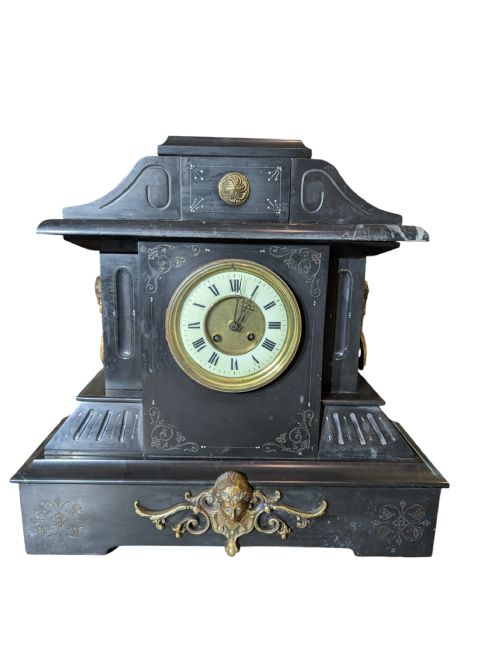


Incised Slate Mantel Clock
An incised slate mantel clock brings solid architectural presence to a room, built from heavy stone and driven by dependable nineteenth-century movements.
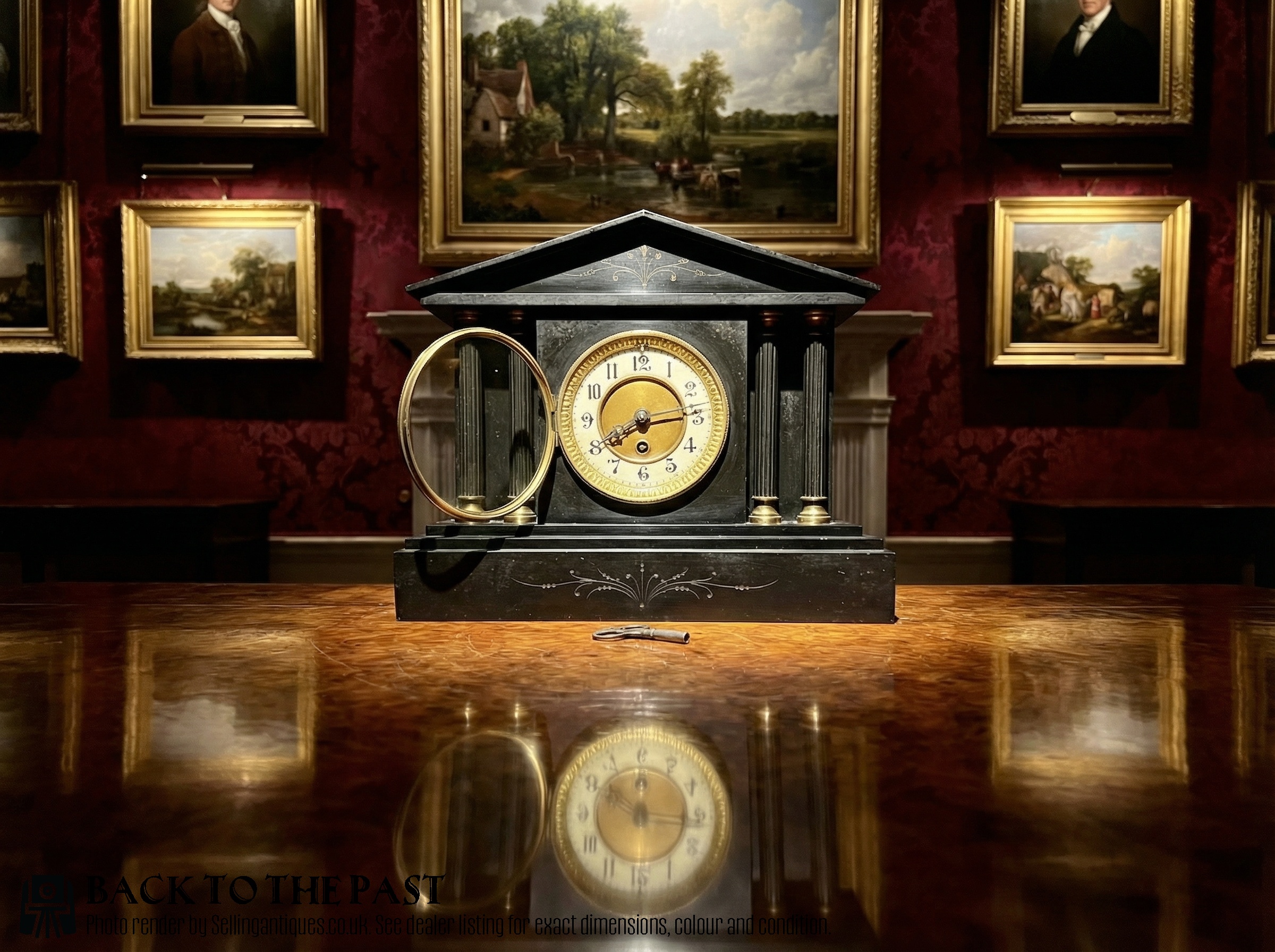
Incised Slate Mantel Clock
When you search for an incised slate mantel clock, you find heavy architectural timepieces built during the Victorian era. The examples listed on this page date from the nineteenth century, specifically spanning the decades around eighteen sixty through to eighteen ninety.
Most pieces on this page are described as marble or black slate mantel clocks, often featuring inlaid panels and classical revival styling. They take the form of substantial mantel and mantle clocks designed to sit solidly on a fireplace shelf.
These robust timekeepers originate primarily from the Victorian period, reflecting the heavy, imposing interior decoration tastes of the later nineteenth century. You will encounter both simple geometric forms and more elaborate garniture sets incorporating contrasting stone.
How they were made
Makers constructed these clocks using black slate and marble as the primary structural bodies, shaping the heavy stone into architectural temple and architectural block forms. Surfaces were frequently incised with geometric or floral patterns, sometimes filled with contrasting materials like malachite.
Listings on this page span the Victorian era from eighteen sixty to eighteen ninety, featuring black slate, marble, brass, and glass materials.
What varies in quality
The distinction between standard pieces and the finest examples lies in the precision of the stone cutting and the complexity of the surface ornamentation. High Victorian models often feature intricate inlaid marble work and multi-coloured stone detailing rather than plain slate surfaces.
Superior items frequently survive as part of a clock garniture set complete with matching side ornaments, demonstrating a higher tier of original manufacture. The crispness of the incised detailing and the quality of the enamel dial further separate the best examples from simpler items.
The Incised Slate Mantel Clock Glossary
- Slate
- A fine-grained metamorphic rock that can be split into thin plates, used here as the heavy dark body of the clock. It provides a smooth surface that takes incised decoration very well.
- Garniture
- A set of matching decorative ornaments designed to be displayed together on a mantelpiece, usually comprising a central clock flanked by two matching side pieces. These sets represent the more ambitious end of nineteenth-century production.
- Marble
- A metamorphic rock composed of recrystallised carbonate minerals, frequently utilised alongside slate in these clocks. It offers contrasting colours and textures for inlaid panels.
- Enamel
- A glassy substance fused to a metal dial face by firing, providing a smooth white background for painted numerals. It creates a crisp, durable surface that resists fading.
- Bezel
- The metal ring that holds the glass door in front of the clock dial. It protects the hands and face from dust and damage.
Incised Slate Mantel Clock: Frequently Asked Questions
How heavy is a slate mantel clock?
These clocks are exceptionally heavy because they are constructed from solid blocks of slate and marble rather than lighter wood or metal cases. You need a sturdy shelf or mantelpiece capable of supporting substantial weight safely.
When positioning the clock, ensure the surface is completely level and stable to prevent any strain on the stone structure or the internal mechanical movement.
Where should I place a mantel clock?
A mantel clock is traditionally placed on the mantelpiece above a fireplace, where its architectural design acts as a natural focal point for the room. You can also display them on sturdy sideboards, bookcases, or console tables.
Keep the clock away from damp walls and direct heat sources to protect the stone case, the enamel dial, and the internal brass mechanism over time.
How do I wind a Victorian clock?
Victorian mechanical clocks are typically wound using a specialised metal key inserted into winding holes on the enamel dial face. Turn the key gently until you feel firm resistance, taking care not to overwind the mainspring.
Most movements require winding once a week to keep accurate time, though exact intervals depend on the specific gear train configuration inside the clock.
What is a clock garniture?
A clock garniture is a matched set consisting of a central mantel clock accompanied by two side ornaments, often designed in the same architectural style. These matched groupings were popular in Victorian drawing rooms to create a balanced, symmetrical display on a fireplace.
The side pieces often echo the materials of the main clock, incorporating matching black slate, marble, and inlaid stone panels.