


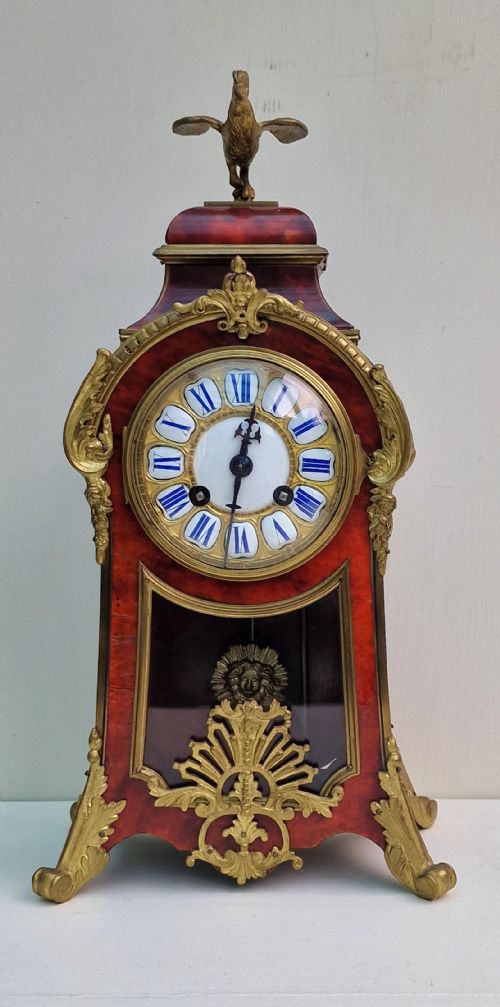


Gilt Brass Mounted Clock
A gilt brass mounted clock brings together fine metalwork and domestic timekeeping, uniting functional mechanics with decorative arts from the nineteenth century.
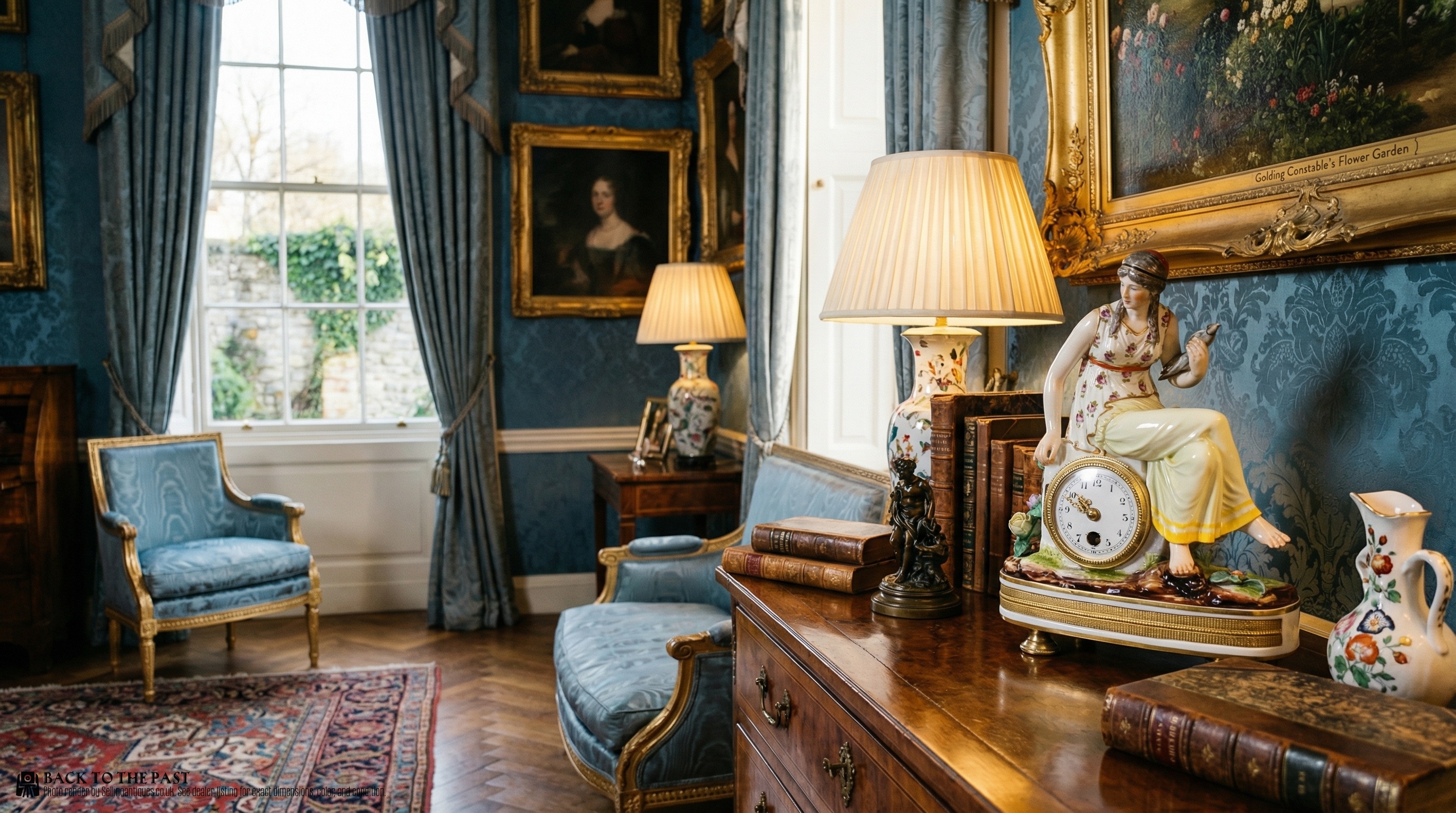
Gilt Brass Mounted Clock
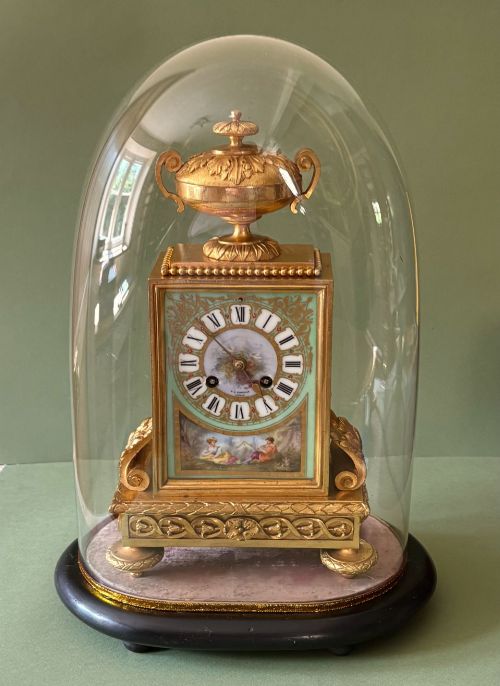
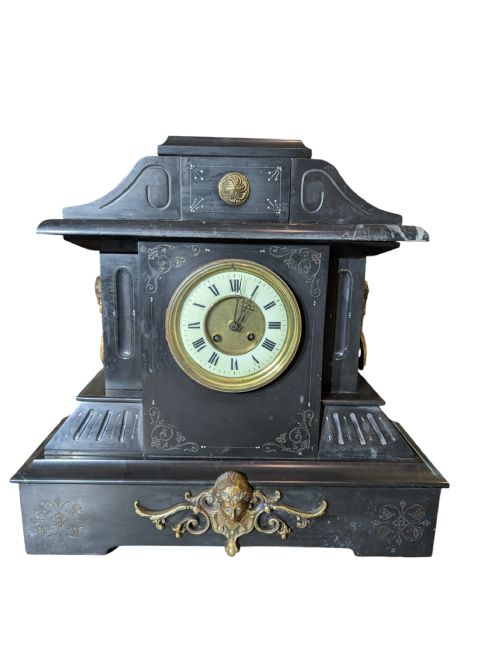
A gilt brass mounted clock is a mantel timepiece, bracket clock, or clock garniture designed to sit prominently in a nineteenth-century interior. These objects combine cast or beaten metal mounts with housing materials such as marble, ebonised wood, porcelain, and tortoiseshell.
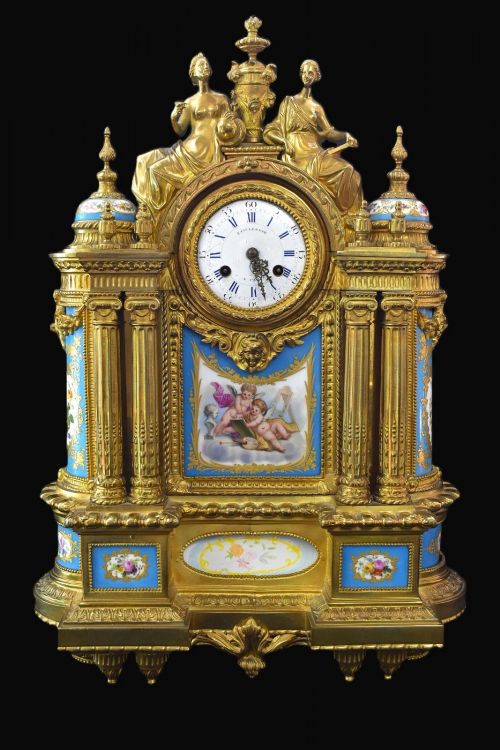
The versions most frequently met on this page originate from French and English workshops spanning the Victorian era and the later decades of the nineteenth century. Common decorative idioms include French Rococo Revival, Napoleon III, and Louis XIV styles.
Buyers look for these items to anchor a room with period character, combining mechanical interest in eight-day movements or chiming systems with sculptural metal decoration.
Materials and construction methods
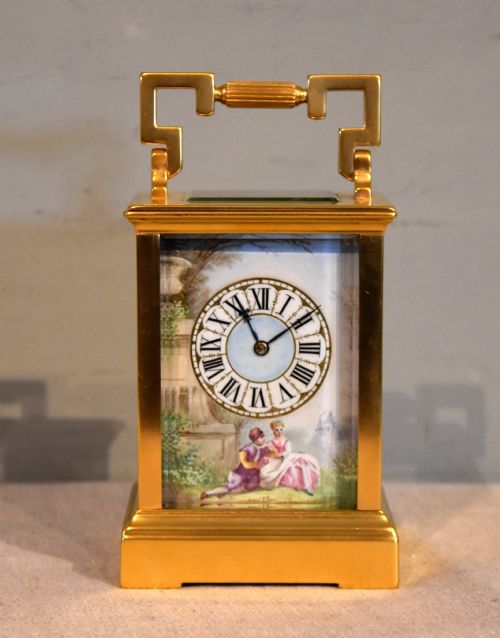
Makers utilised cast brass, ormolu, and gilt bronze for the decorative mounts, securing them to carcasses formed of marble, mahogany, ebonised wood, or burr walnut. Enamel dials and porcelain plaques, often painted in Sevres styles, were incorporated into the housing alongside glass viewing panels.
Cabinetmakers and bronze-workers employed fire-gilding or electroplating on brass components, pairing intricate surface chasing with complex mechanical movements supplied by specialist horologists.
Listings feature brass, ormolu, and tortoiseshell alongside marble and ebonised wood across Victorian and nineteenth-century French periods.
Distinguishing quality across examples
Quality rests in the crispness of the bronze chasing and the depth of the gilding on the brass mounts, where sharp relief indicates skilled hand-finishing rather than mass production. The integration of mounts to the body - whether marble, wood, or tortoiseshell - reveals the joiner's precision.
The calibre of the movement, signed by established makers or utilising fusee systems, elevates an example above standard commercial production, as does the survival of matching components like wall brackets or candelabra garnitures.
Etienne Lenoir·Lenzkirch·Payne & Co·A.D. Mougin·Miroy Frères·J.B. Delettrez·Barraud & Lunds·James Smith
The Gilt Brass Mounted Clock Glossary
- Ormolu
- Gilded bronze or brass, used extensively for decorative mounts on nineteenth-century clock cases. The technique involves applying gold amalgam to a metal base and heating it.
- Boulle
- A marquetry technique using brass and tortoiseshell inlaid in ornate scroll patterns, popularized in France and revived during the nineteenth century. It forms the striking facade of many bracket and mantel clocks.
- Fusee
- A conical pulley used in clock movements to maintain even tension on the chain as the mainspring unwinds. This mechanism improves timekeeping accuracy across the power reserve.
- Garniture
- A set comprising a central clock flanked by matching decorative objects such as candelabras or vases. These matched suites were designed for display on mantelpieces.
- Chimings
- The mechanical capability of a clock to strike the hours and quarters using gongs or bells. Westminster movements are a common example seen in these pieces.
Gilt Brass Mounted Clock: Frequently Asked Questions
How do fusee movements work?
A fusee movement uses a conical pulley connected to the mainspring by a fine chain or cord. As the spring unwinds and loses power, the chain moves to a wider part of the cone, providing greater leverage.
This clever mechanical design ensures the driving force remains constant, resulting in more accurate timekeeping than standard spring-driven clocks.
How do I identify Boulle work?
Boulle work is a distinctive marquetry technique featuring intricate patterns cut from tortoiseshell and brass. The design typically contrasts the warm, mottled tones of the shell with the bright gleam of polished metal.
Originating in the seventeenth century, this technique saw a major revival during the nineteenth century on French mantel and bracket clocks.
Where should I place a heavy marble clock?
Heavy marble and bronze clocks require a sturdy, level surface capable of supporting considerable weight, such as a strong sideboard, console table, or reinforced mantelpiece. Placing the clock securely prevents vibrations that might disrupt the pendulum.
Ensure the surface is level to allow the escapement to beat evenly, which is essential for the reliable operation of an eight-day mechanical movement.