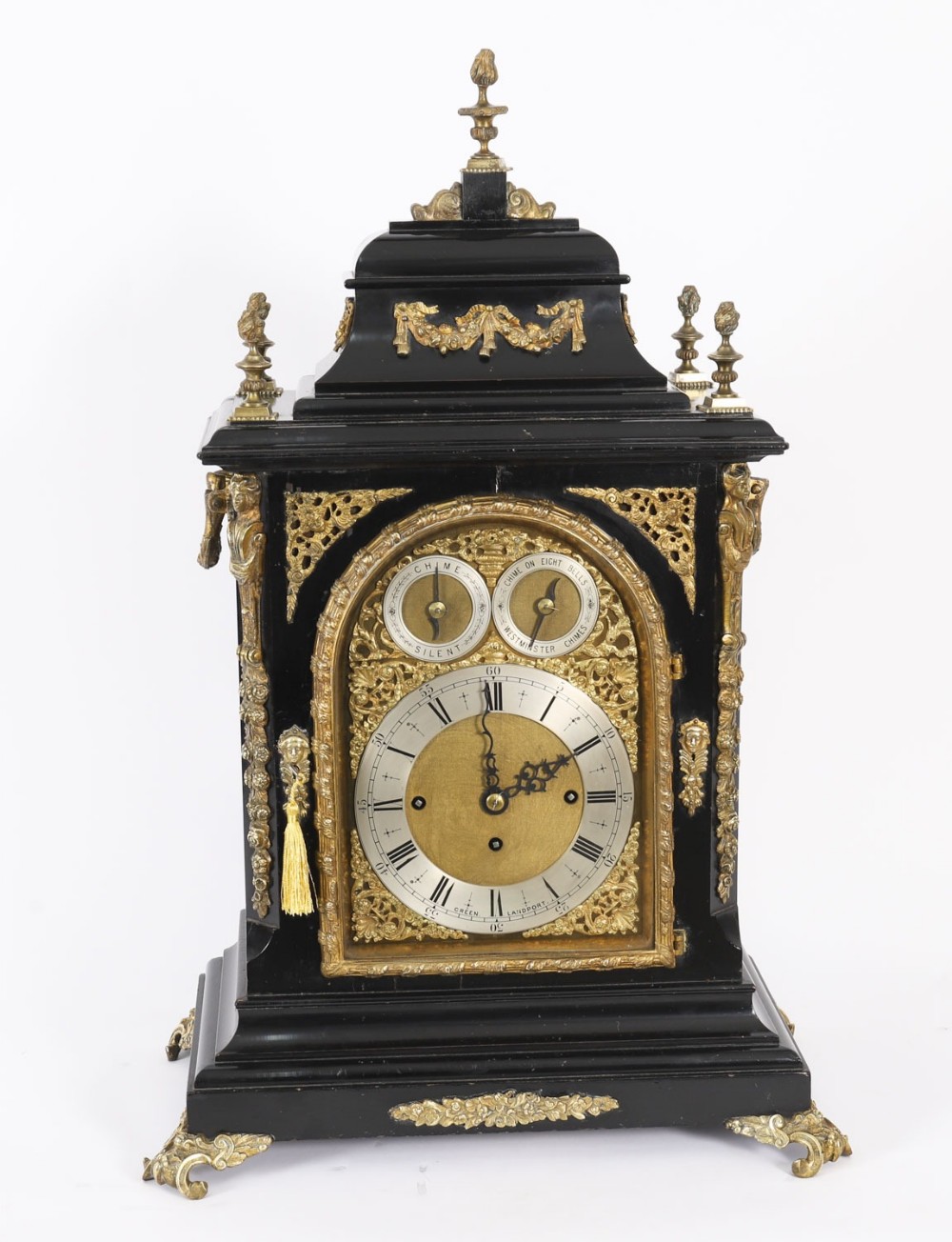
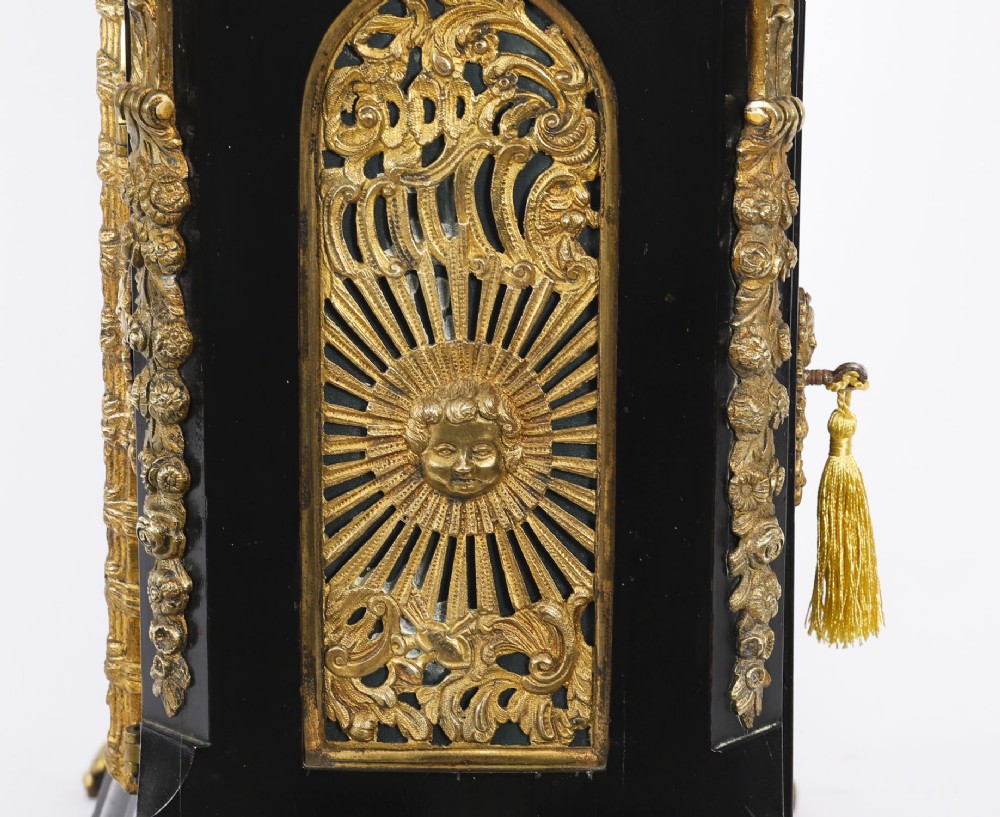
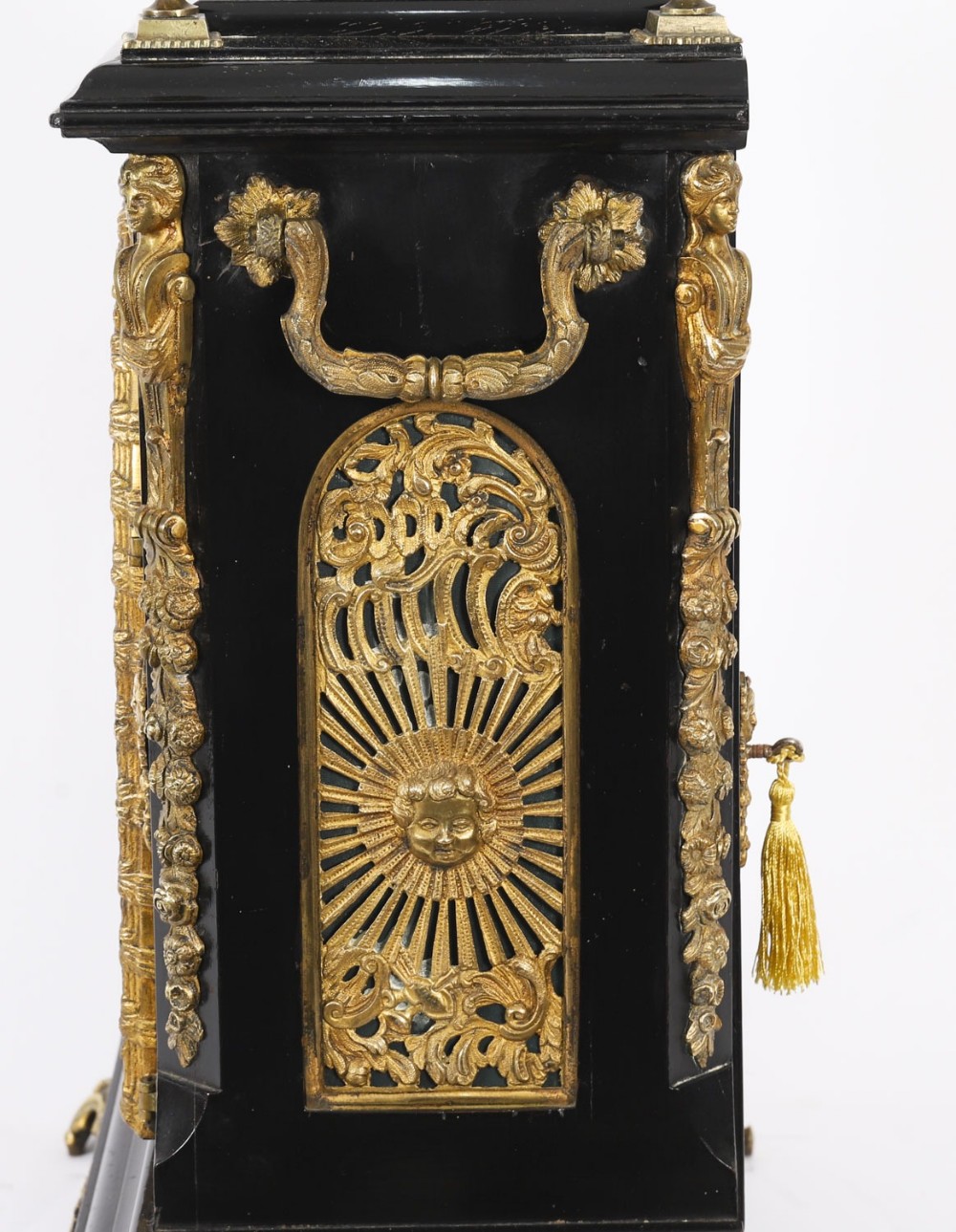
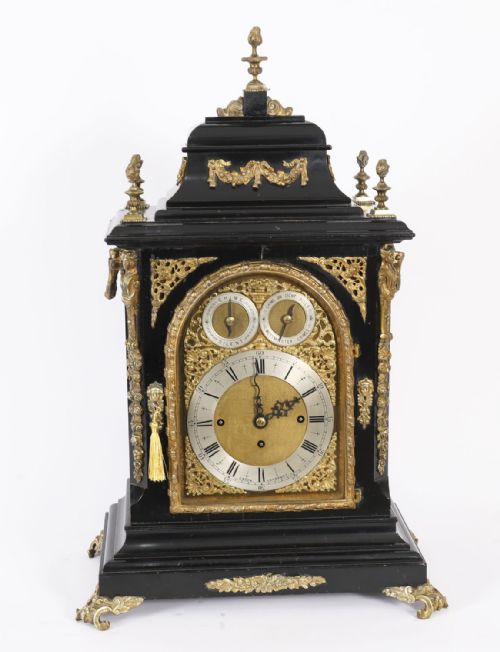
Regent Antiques has dated this Ebonised Ormolu Mantel Clock to the 1860s.
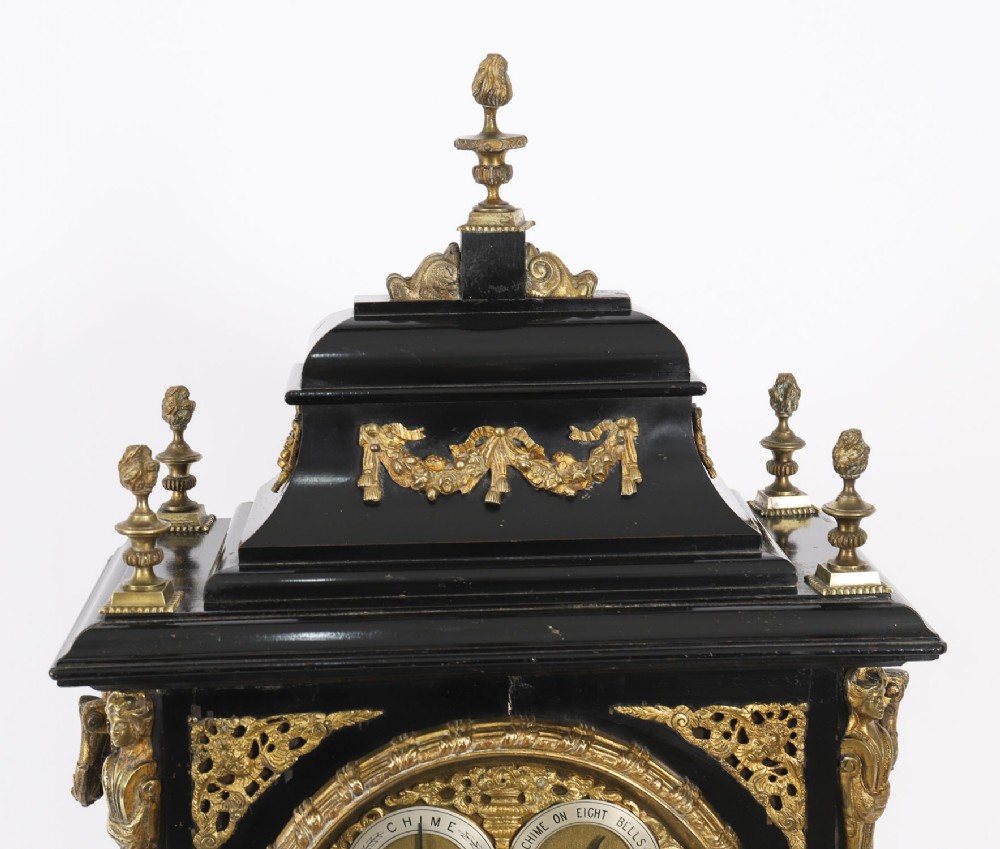
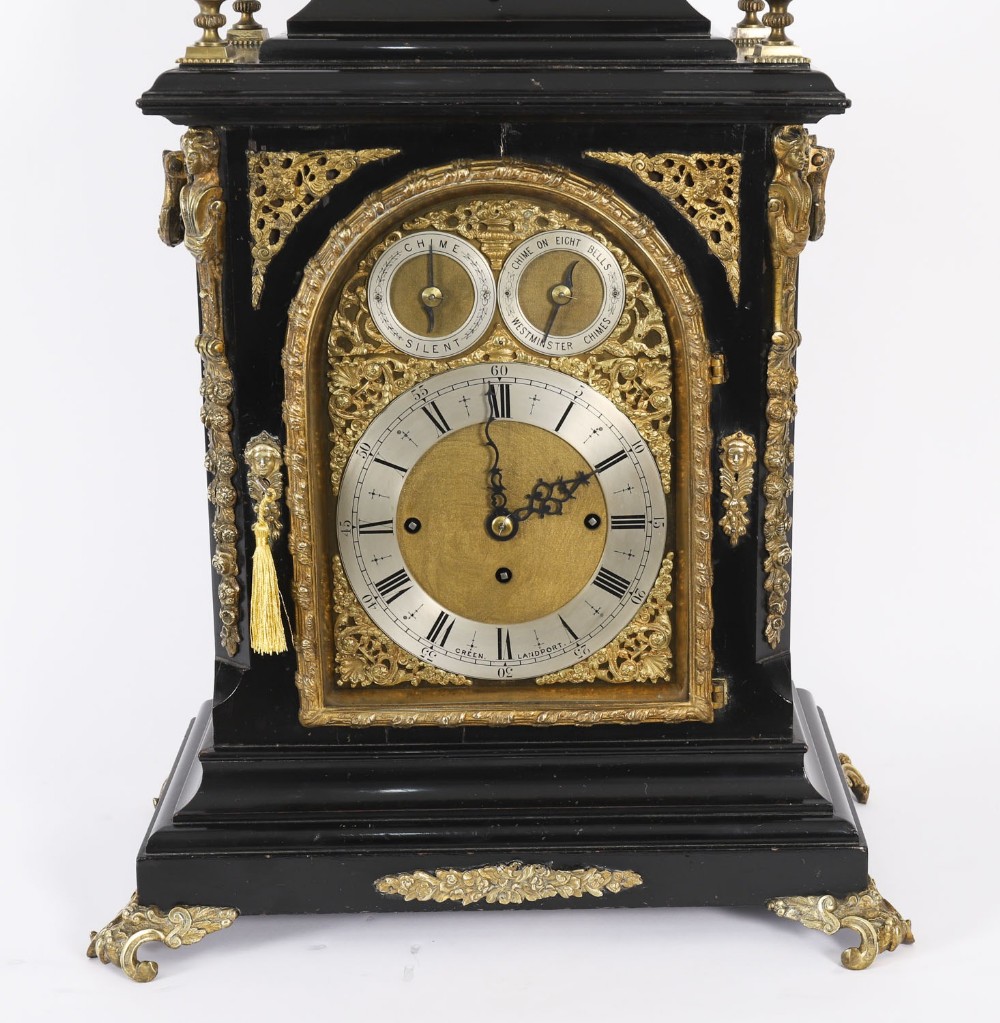
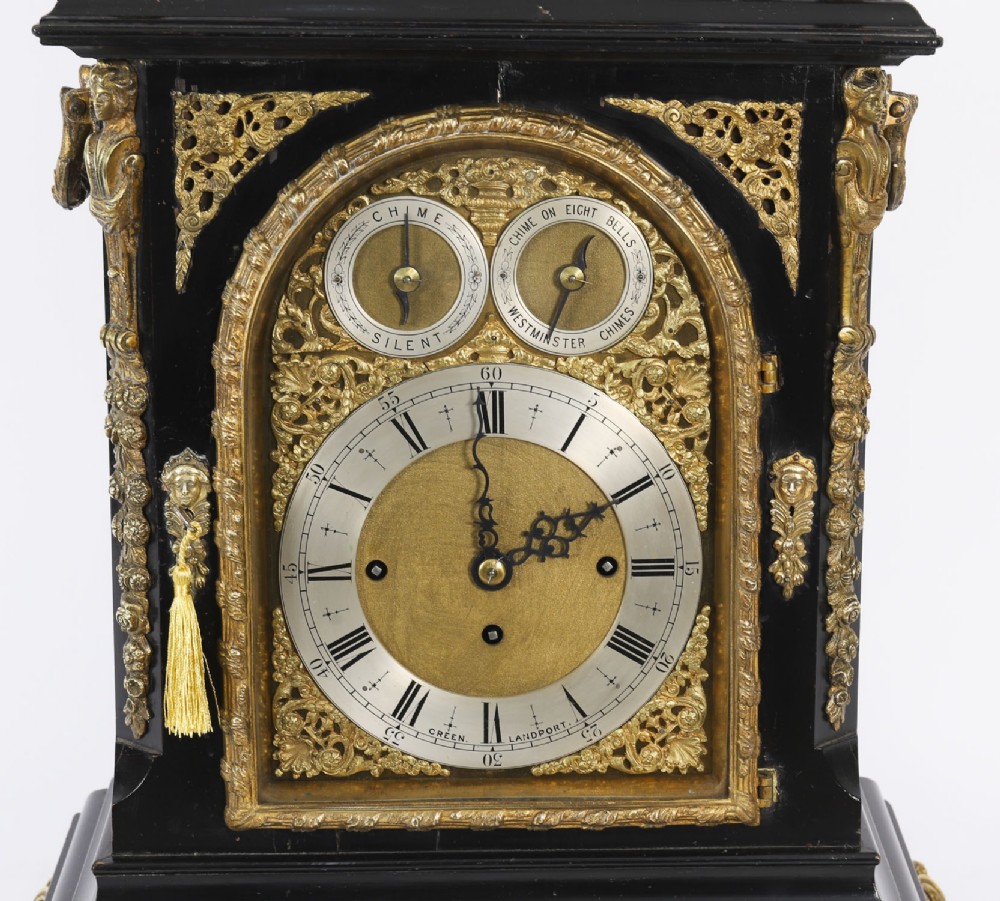
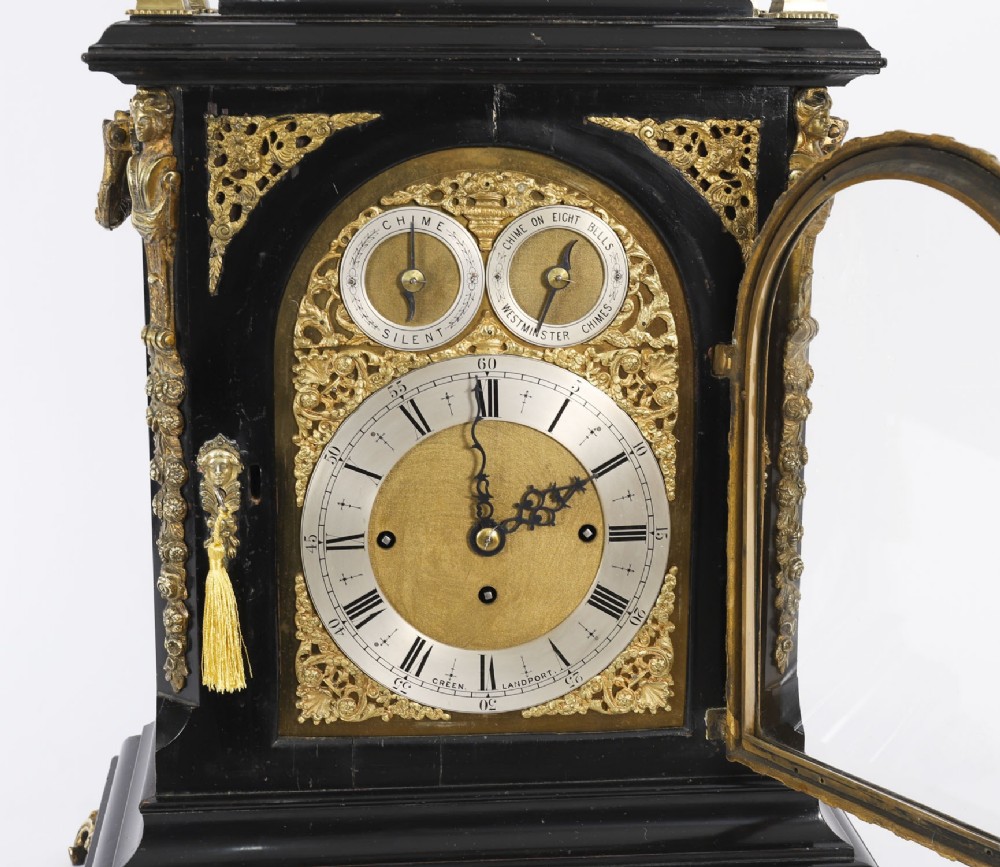
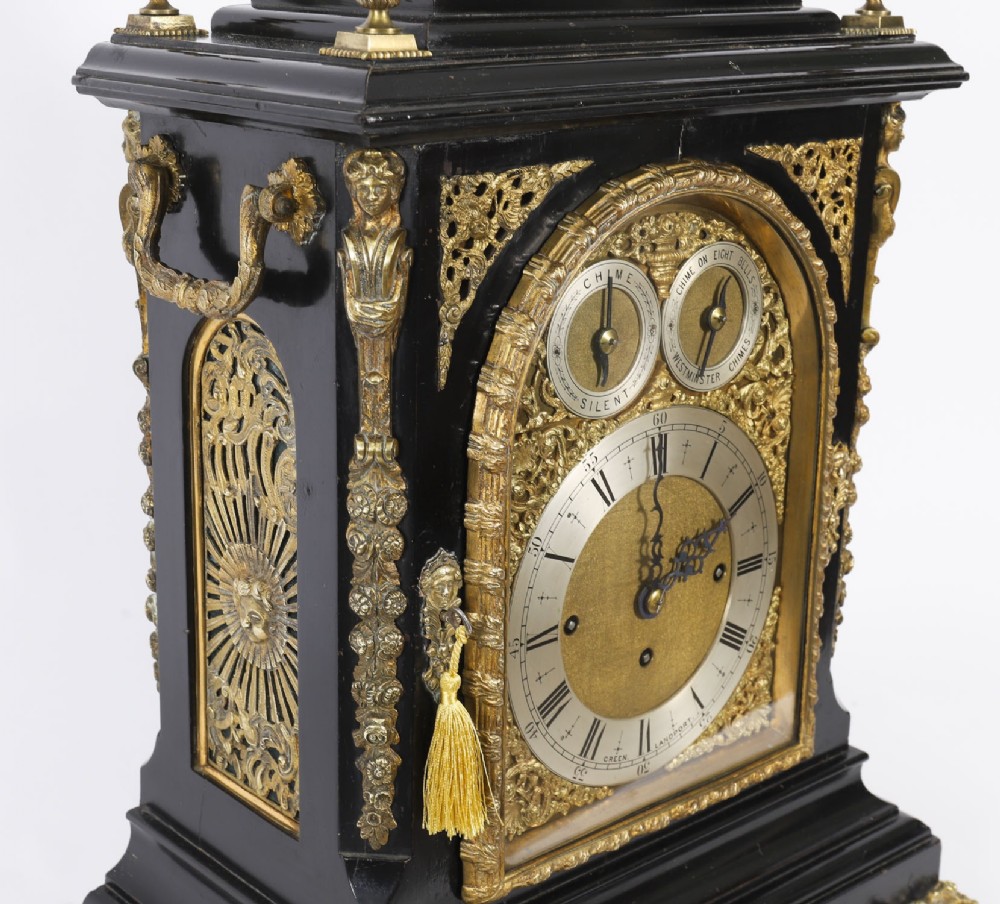
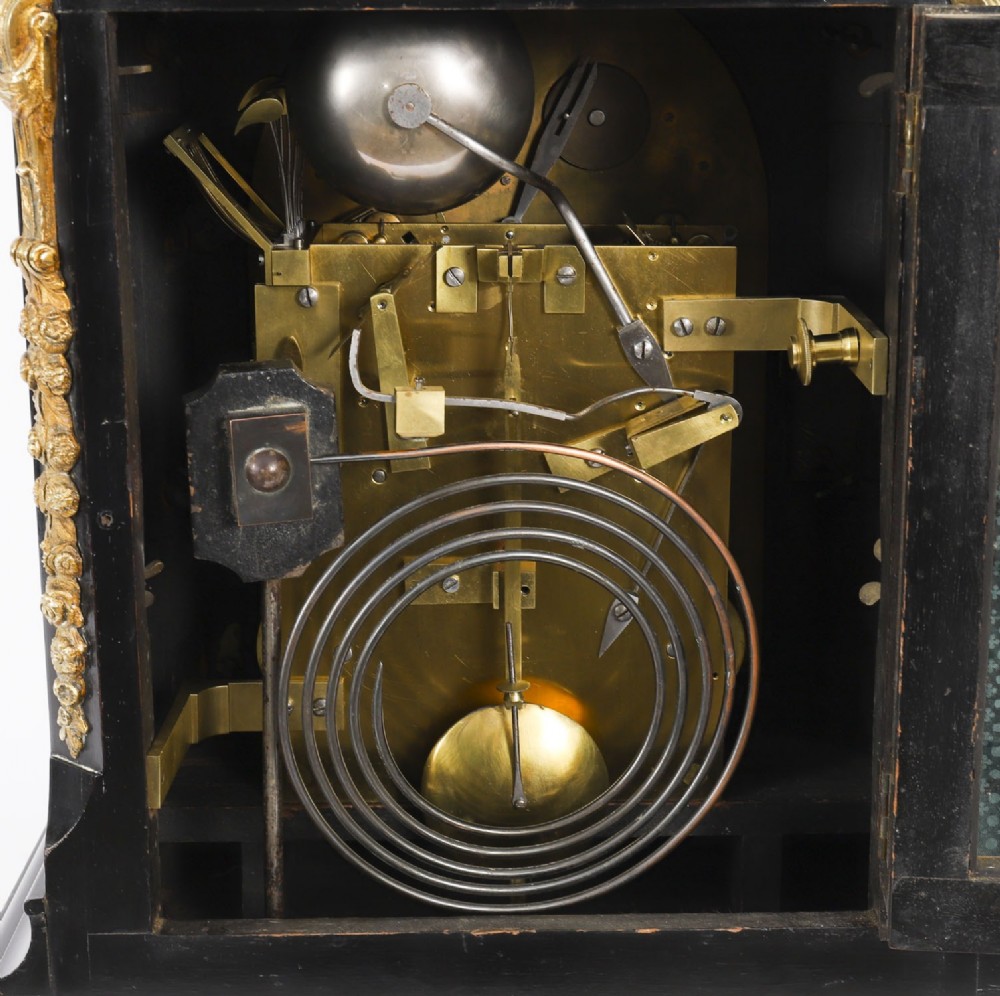
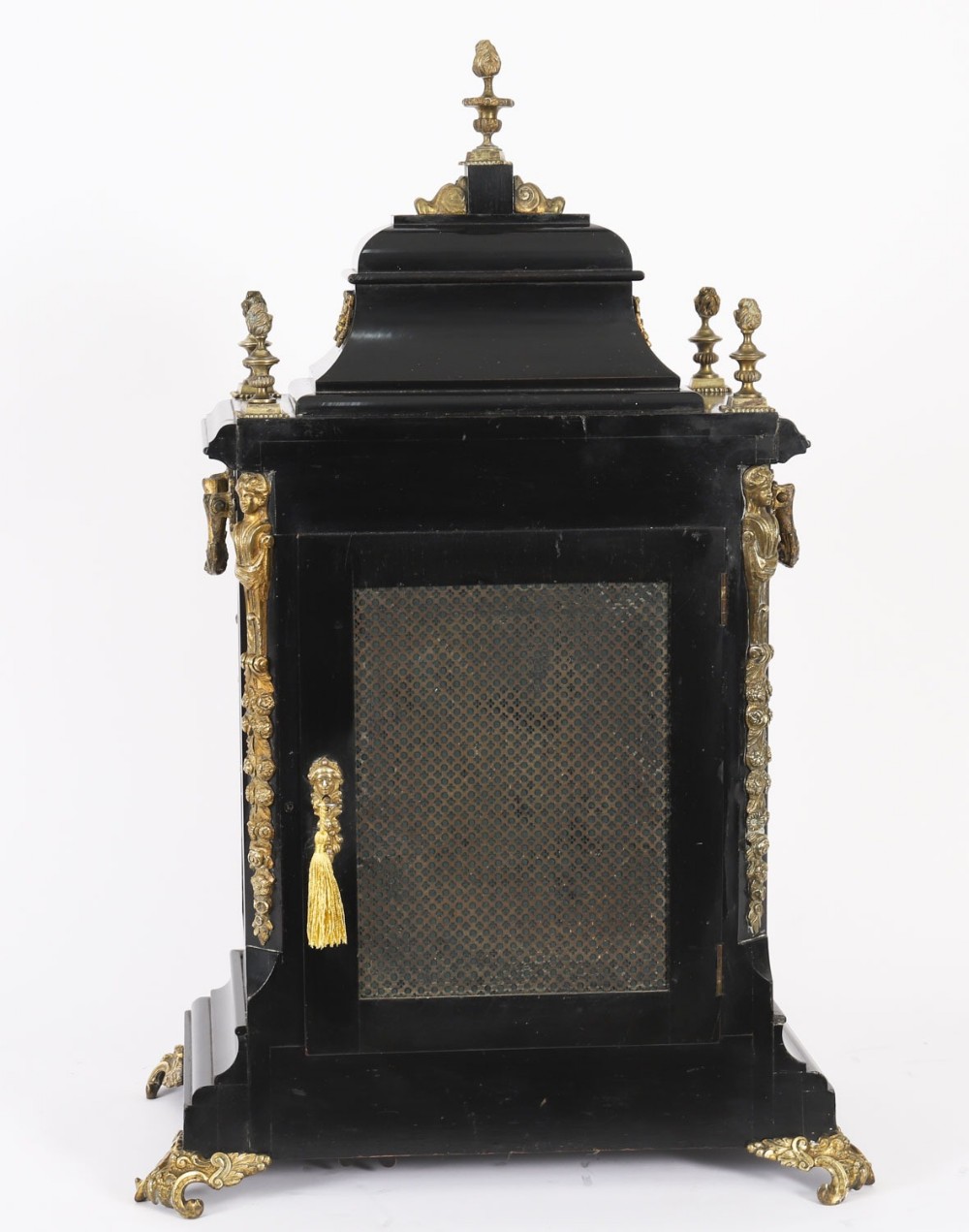
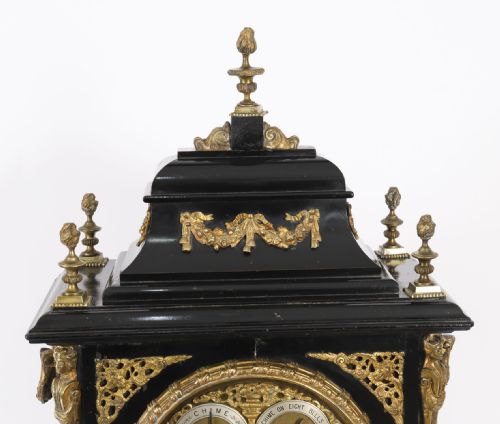
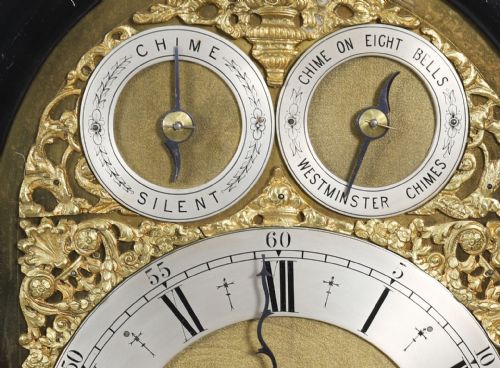
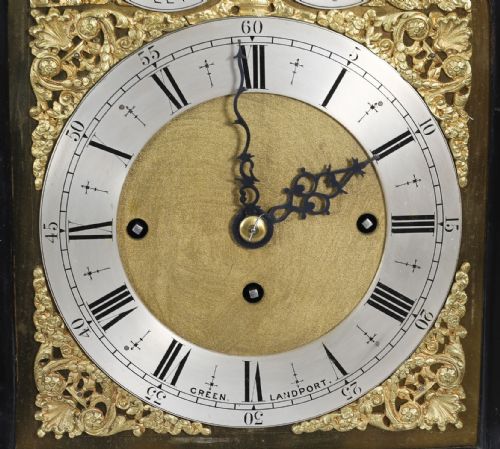
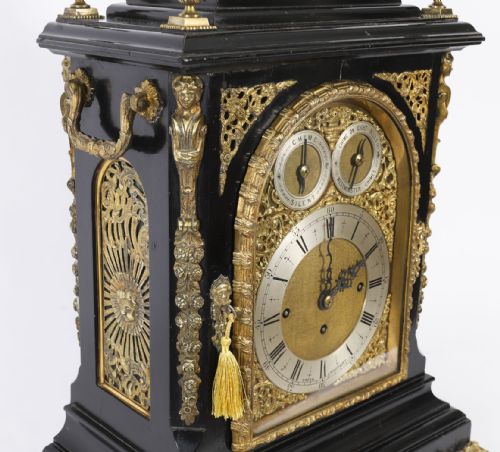
The caddy top case with five flaming finials and ribbon-tied foliate festoons, above an arched cast brass glazed door, flanked by a caryatid to each corner, and with a foliate cast handle and pierced mask arched ormolu panel to each side, on a stepped foot with scroll cast feet, the 8½in. arched ormolu dial with twin silvered subsidiary rings in the arch 'CHIME/SILENT' and 'CHIME ON EIGHT BELLS/ WESTMINSTER CHIMES', above a silvered chapter ring signed astride the VI "Green Landport", with a matted centre and pierced blued steel hands, the three train chain fusée movement with anchor escapement and pendulum locking block chiming the quarters on eight bells and striking the hour on a gong.

It keeps really good time and is delightful to look at.
Leonardo da Vinci’s clock designs, found in the Codex Atlanticus, focused on improving 15th-century timekeeping through increased precision, often utilizing two separate, interconnected mechanisms for hours and minutes. These designs, which included weights, gears, and, in some concepts, springs, aimed to improve accuracy for both timekeeping and astronomical observation.
Provenance:
Coventry Lodge, Corfe Mullen
Condition:
In excellent condition, please see photos for confirmation.
Dimensions in cm:
Height 73.5 cm x Width 47 cm x Depth 29 cm
Dimensions in inches:
Height 2 foot, 5 inches x Width 1 foot, 6 inches x Depth 11 inches

Landport
refers to a central district in Portsmouth, England, featuring Commercial Road and the city's main railway station. It is also defined as a secure, on-land area at international borders for handling trade, including roads and railways.
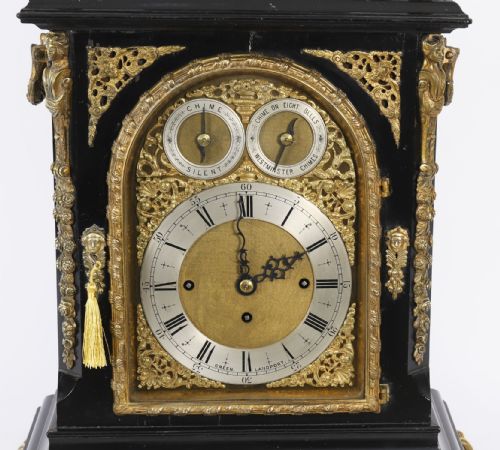
The Green family were well-known as jewellers and clockmakers in Landport.
Ormolu - (from French 'or moulu', signifying ground or pounded gold) is an 18th-century English term for applying finely ground, high-carat gold in a mercury amalgam to an object of bronze.The mercury is driven off in a kiln leaving behind a gold-coloured veneer known as 'gilt bronze'.

The manufacture of true ormolu employs a process known as mercury-gilding or fire-gilding, in which a solution of nitrate of mercury is applied to a piece of copper, brass, or bronze, followed by the application of an amalgam of gold and mercury. The item was then exposed to extreme heat until the mercury burned off and the gold remained, adhered to the metal object.
No true ormolu was produced in France after around 1830 because legislation had outlawed the use of mercury. Therefore, other techniques were used instead but nothing surpasses the original mercury-firing ormolu method for sheer beauty and richness of colour. Electroplating is the most common modern technique. Ormolu techniques are essentially the same as those used on silver, to produce silver-gilt (also known as vermeil).
The Westminster Quarters is the most common name for a melody used by a set of clock bells to chime on each quarter hour. The number of chime sets matches the number of quarter hours that have passed. It is also known as the Westminster Chimes, or the Cambridge Chimes from its place of origin, the church of St Mary the Great, Cambridge.
This chime is traditionally, though without substantiation, believed to be a set of variations on the four notes that make up the fifth and sixth measures of "I know that my Redeemer liveth" from Handel's Messiah. This is why the chime is also played by the bells of the so-called 'Red Tower' in Halle, the native town of Handel.
It was written in 1793 for a new clock in St Mary th
Regent Antiques has dated this Ebonised Ormolu Mantel Clock to the 1860s.
We specialise in english and continental furniture, silver, porcelain and decorative items.
You can view the stock and full dealer information on the Regent Antiques Profile Page
Regent Antiques is a registered member of LAPADA CINOA
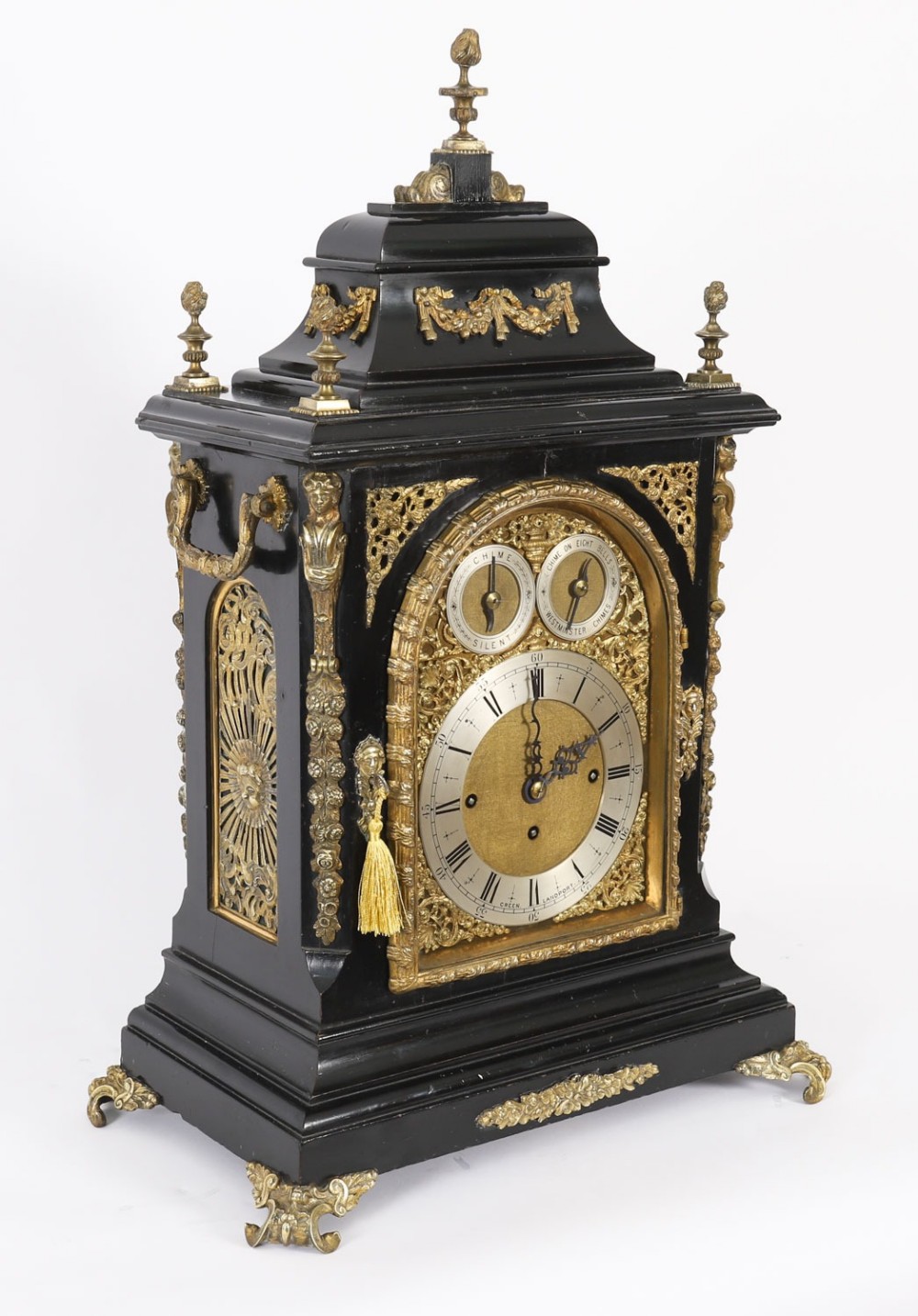
Antique Ormolu Mounted Ebonised Gilt Bronze Chiming Mantel Clock C1860