
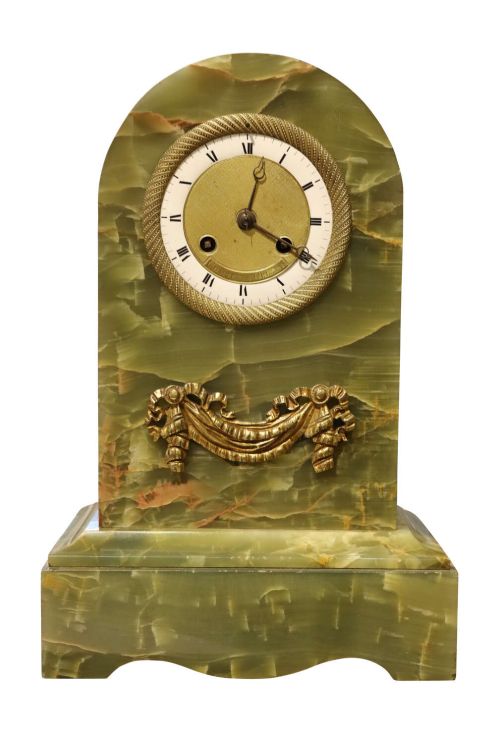
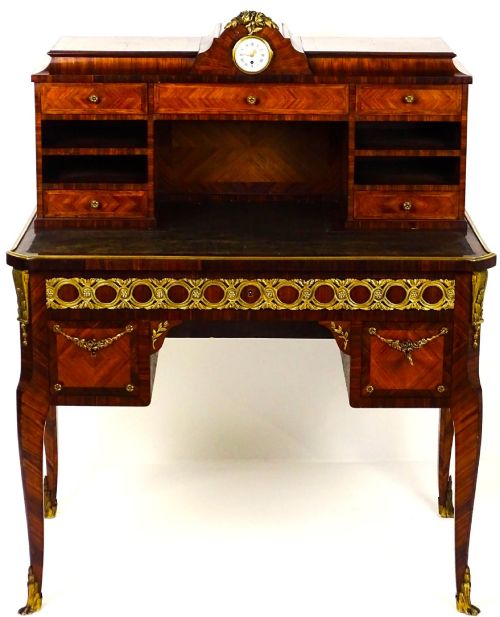
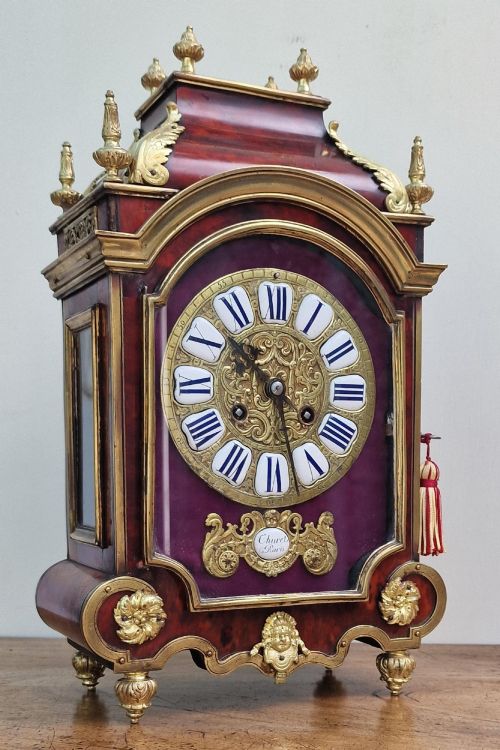
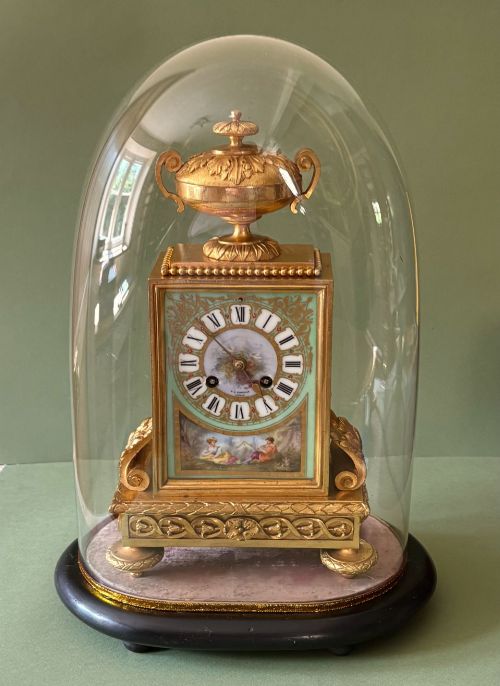





Ormolu Mounted Table Clock
An ormolu mounted table clock brings gilded French and English craftsmanship into a room, offering both reliable timekeeping and sculptural presence.
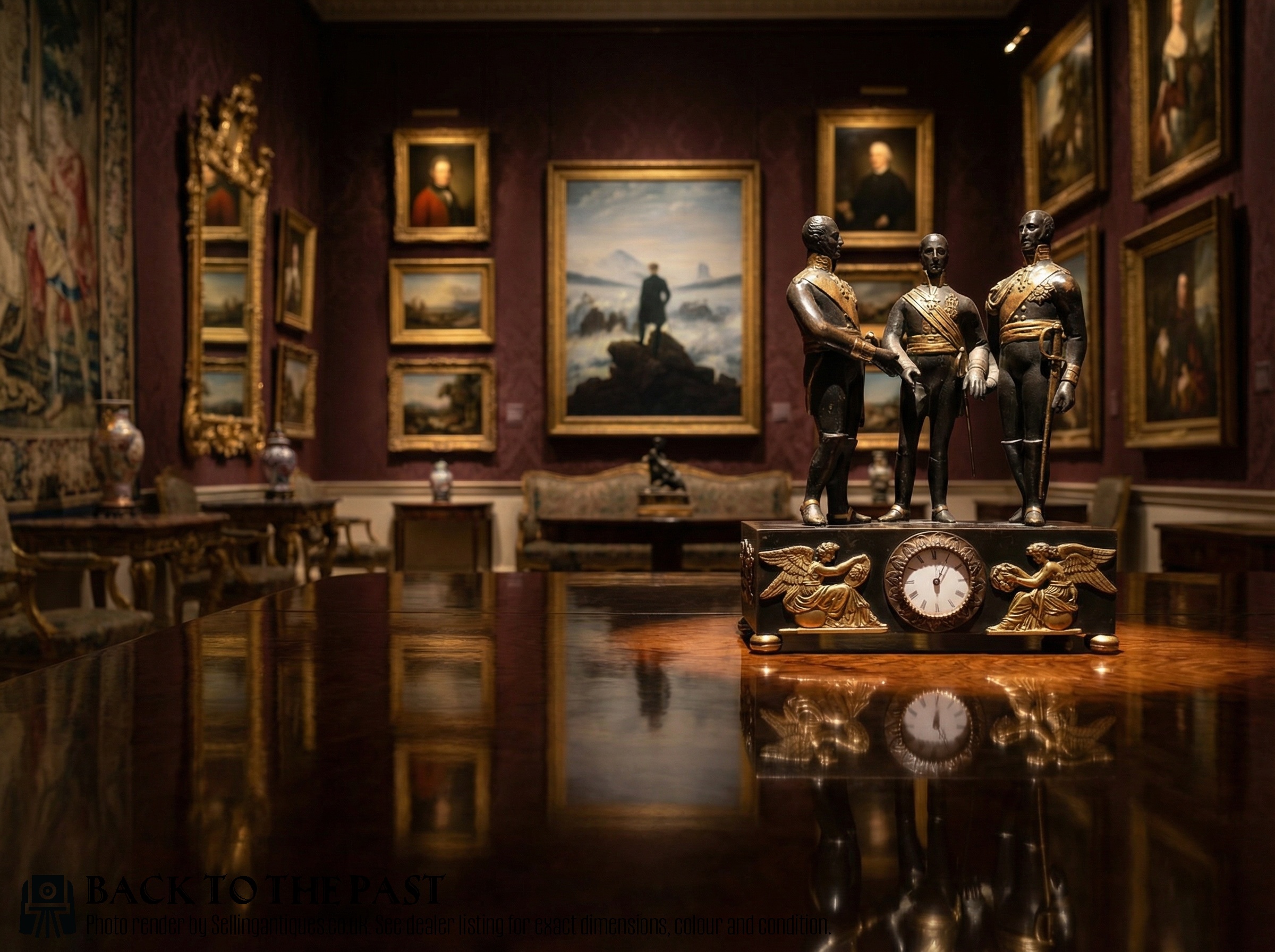
What an ormolu mounted table clock is
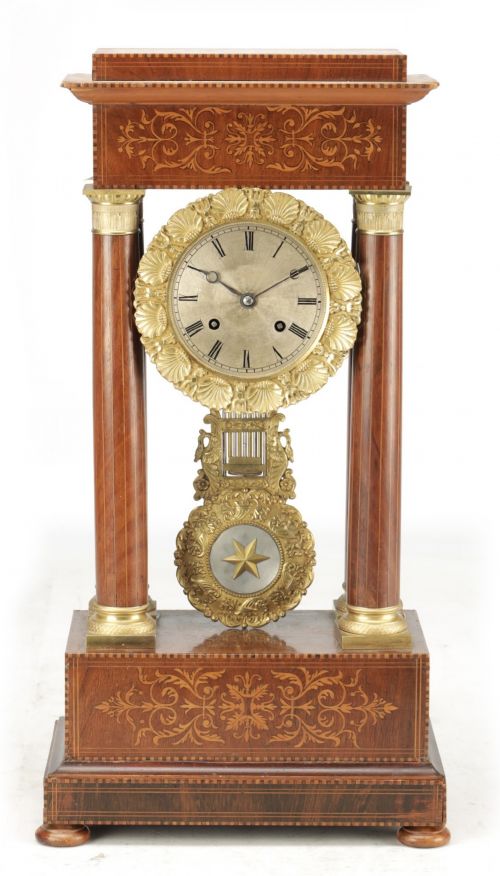
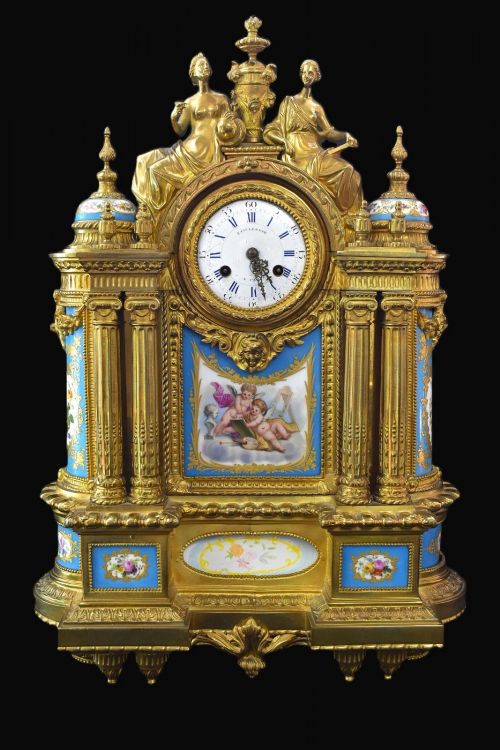
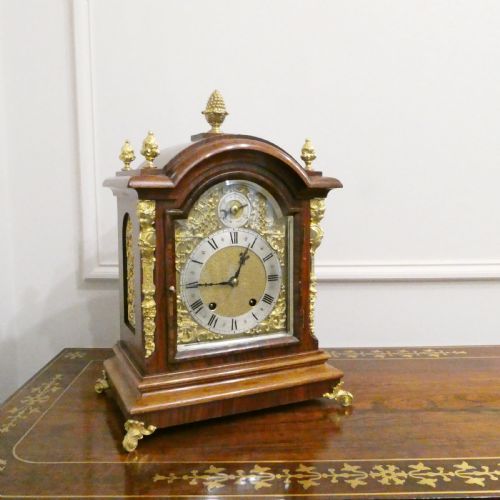
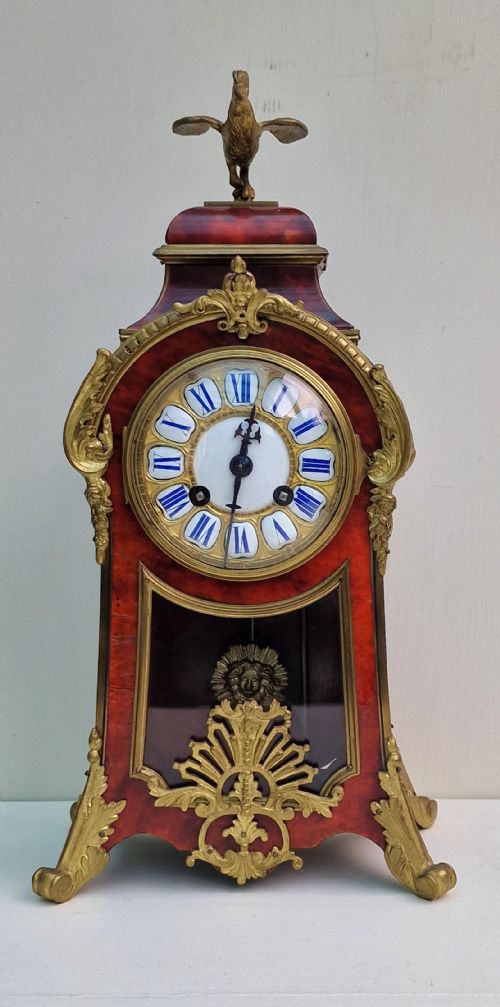
An ormolu mounted table clock is a timepiece designed for placement on mantels, brackets or furniture surfaces, combining metalwork with dial faces. These pieces range from substantial mantel clocks to bracket clocks, representing periods from the eighteenth century to the early twentieth century.
The most likely version to encounter on this page is a nineteenth-century French or English design, often featuring gilt bronze or ormolu mounts alongside materials such as green onyx, ebonised wood, mahogany or rosewood. Mantel clocks and bracket clocks dominate these listings, reflecting both Victorian revivalism and earlier Regency or George III aesthetics.

How they were made
Maker workshops constructed these movements and cases using traditional metallurgy and cabinet-making techniques. Gilt bronze and ormolu were cast, chased and fire-gilded to achieve a bright, durable golden surface.
Casses combined structural timbers such as mahogany, rosewood and ebonised wood with applied metal mounts, glass panels and enamel dials. Movement construction involved brass wheels, fusee mechanisms and chime systems fitted by specialised horologists.
Retail Price Guide 2026
Typical UK retail prices for ormolu mounted table clock, calculated from the Sellingantiques database of over a million retail prices indexed since 2003. This retail price guide relies exclusively on Sellingantiques data; no external sources or auction records are used, so the figures do not describe the wider market.
Listings feature items spanning the eighteenth, nineteenth and early twentieth centuries, constructed from mahogany, rosewood, green onyx and gilt bronze.
What varies in quality
Quality rests in the precision of the movement and the depth of the metal chasing. Finer examples display crisp detail in the ormolu mounts and sophisticated internal mechanics like fusee or musical trains.
Charles a Orleans·Francis Perigal·Payne and Co·Marti
The Ormolu Mounted Table Clock Glossary
- Ormolu
- Finely ground high-carat gold applied to a bronze base using a mercury amalgamation technique, creating a durable golden finish. This surface treatment defines much of the visual appeal in antique French and English decorative metalwork.
- Fusee
- A conical pulley used in spring-driven clocks to maintain even power delivery as the mainspring unwinds. This mechanical device ensures consistent timekeeping accuracy throughout the running period.
- Bracket clock
- A portable timekeeper originally designed to sit upon a wall bracket to project sound more effectively. These items frequently feature wooden cases with carrying handles and glazed side panels.
- Enamel dial
- A metal face covered with fused powdered glass, providing a smooth white background for painted numerals. These dials require careful firing to prevent cracking and discoloration over time.
Frequently Asked Questions
How do I wind a mechanical table clock?
Use the appropriate key to turn the arbour slowly until you feel resistance, taking care not to over-wind the mainspring.
Most movements require a weekly or bi-weekly wind to maintain accurate timekeeping.
Where should I place a mantel clock?
Position the clock on a stable, level surface away from direct sunlight, draughts and extreme temperature fluctuations.
Mantels, sideboards and dedicated wall brackets provide ideal support for these heavy timepieces.
How do I identify the period of a clock?
Examine the case style, wood types, dial construction and movement signatures to determine the approximate manufacturing era.
Stylistic cues such as French Rococo Revival or George III proportions offer strong clues to the date.
Can these clocks be repaired if they stop?
Professional horologists can service and restore antique movements by cleaning gears, replacing worn bushings and adjusting escapements.
Regular servicing preserves the original mechanics and ensures the clock continues to run reliably.