
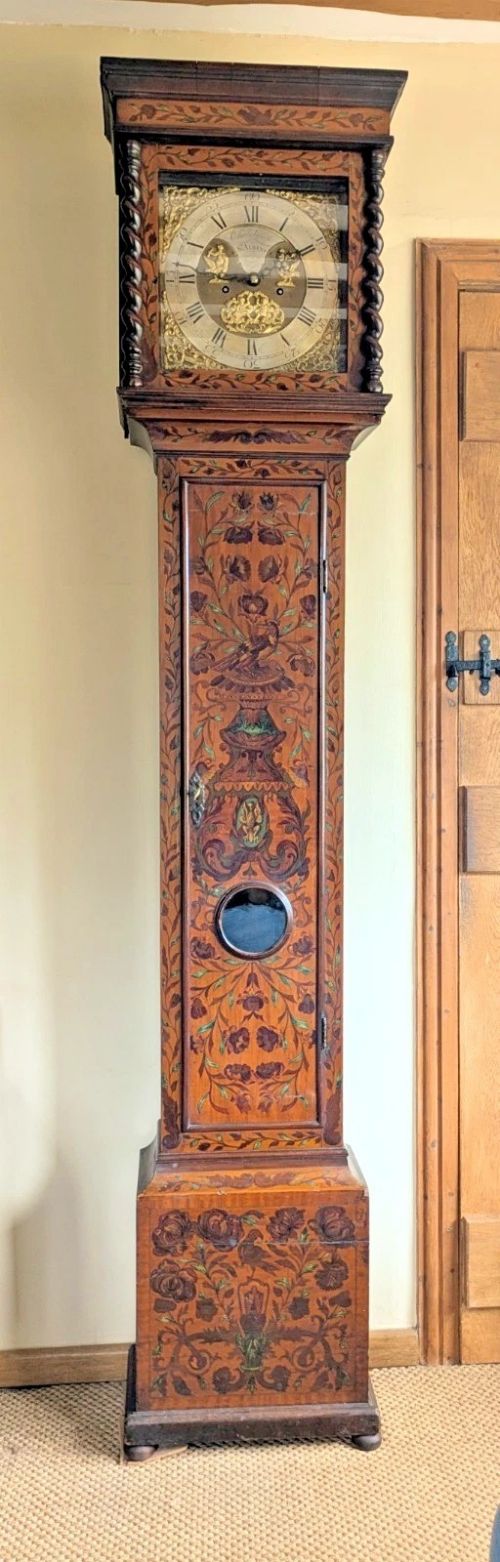
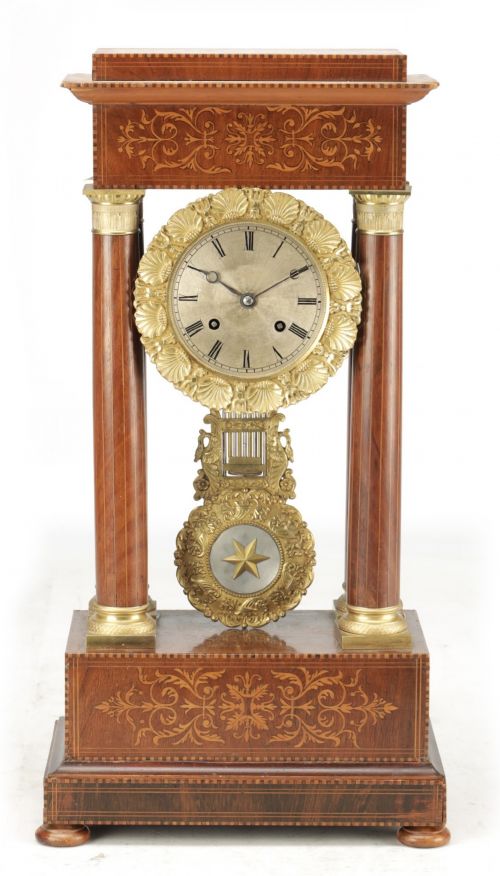


Floral Marquetry Clock
These floral marquetry clock pieces bring complex floral wood inlay and period movement to a room, offering historic character.

What these floral marquetry clock pieces are
A floral marquetry clock brings together botanical wood inlay and traditional timekeeping, spanning the seventeenth, eighteenth, and nineteenth centuries. These items appear primarily as tall longcase clocks alongside mantel clocks.
The evidence shows examples from English workshops and French makers, utilising styles from William and Mary to French Rococo Revival. Longcase clocks dominate the selection, housing weight-driven movements within tall wooden cases.
Makers from London, St Albans, and Paris produced these pieces, incorporating intricate botanical patterns across walnut, rosewood, and fruitwood surfaces. Buyers encounter both provincial English craftsmanship and metropolitan French design.
How they were made
Craftsmen built these cases using walnut, rosewood, and fruitwood timbers, applying thin veneers of contrasting woods to the exterior surfaces. Inlay work incorporated mother-of-pearl details alongside various timbers to render floral motifs.
Brass dials and ormolu mounts complemented the wooden marquetry, while glass protected the clock face and sometimes the pendulum trunk. Movements relied on metal gearing driven by weights or springs, enclosed within fitted wooden housings.
Retail Price Guide 2026
Typical UK retail prices for floral marquetry clock, calculated from the Sellingantiques database of over a million retail prices indexed since 2003. This retail price guide relies exclusively on Sellingantiques data; no external sources or auction records are used, so the figures do not describe the wider market.
Listings feature longcase clocks and mantel clocks spanning the seventeenth to the nineteenth centuries, utilising walnut, rosewood, fruitwood, brass, and mother-of-pearl.
What varies in quality
The standard of the marquetry cutting and the choice of inlaid woods dictate the visual impact of the piece. Finer examples display precise botanical shapes using diverse timber grains and mother-of-pearl highlights.
The integrity of the wooden case and the reputation of the dial signature separate standard items from superior works. Signed London and Paris movements reflect higher levels of horological and decorative ambition.
Charles Louch St Albans·Peter Wise London·Savory and Fils A Paris·Henry Massy of London·Richard Baker London·John Martin
The Floral Marquetry Clock Glossary
- Marquetry
- The art of applying veneer pieces in botanical or geometric patterns to a wooden structure. This technique defines the visual surface of these timepieces.
- Longcase clock
- A tall, weight-driven pendulum clock enclosed in a wooden case standing directly on the floor. These items form the majority of the surviving examples.
- Ormolu
- Gilded bronze applied as decorative mounts or framing on clock cases. It appears particularly on French nineteenth-century pieces.
- Fruitwood
- Timber derived from fruit-bearing trees, frequently utilised in historic marquetry panels for its warm tone and fine grain. It contrasts effectively against darker walnut backgrounds.
- Mother-of-pearl
- The iridescent inner layer of mollusc shells embedded into floral inlay work. This material adds reflective highlights to the wooden botanical designs.
Frequently Asked Questions
What periods do these clocks cover?
The selection spans from the late seventeenth century through the eighteenth and nineteenth centuries up to nineteen hundred. William and Mary styles sit alongside French Rococo Revival designs.
English longcase clocks from London and St Albans appear alongside French mantel clocks from Paris. Each era brings distinct proportions and decorative treatments to the marquetry.
What materials are used in the inlay?
Craftsmen utilised walnut, rosewood, fruitwood, and inlaid woods to create complex botanical pictures across the timber surfaces. Mother-of-pearl also appears in the detailing.
Metals such as brass and ormolu provide contrast for the dials and mounts, while glass protects the delicate clock faces and mechanical components.
Where were these clocks made?
Origin locations include London and St Albans in England, alongside workshop production in Paris. Provincial English makers worked alongside metropolitan horologists.
Stylistic influences range from seventeenth-century English marquetry traditions to nineteenth-century French decorative movements.
How do longcase and mantel clocks differ?
Longcase clocks stand directly on the floor with tall wooden trunks housing hanging weights and pendulums. They dominate the historic selection.
Mantel clocks are smaller, designed to sit on furniture surfaces, and frequently incorporate thermometers or specialised French movements.