


Walnut Tallcase Clock
A walnut tallcase clock brings striking architectural presence and precision horology into a room, combining rich timber grain with mechanical mastery.
Walnut Tallcase Clock
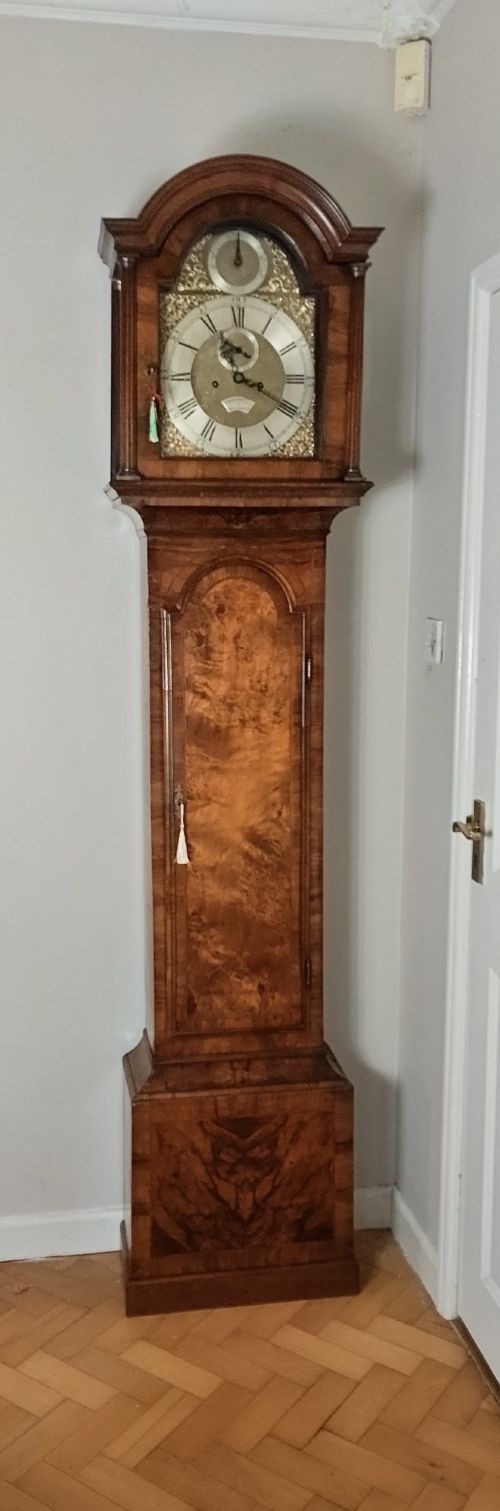
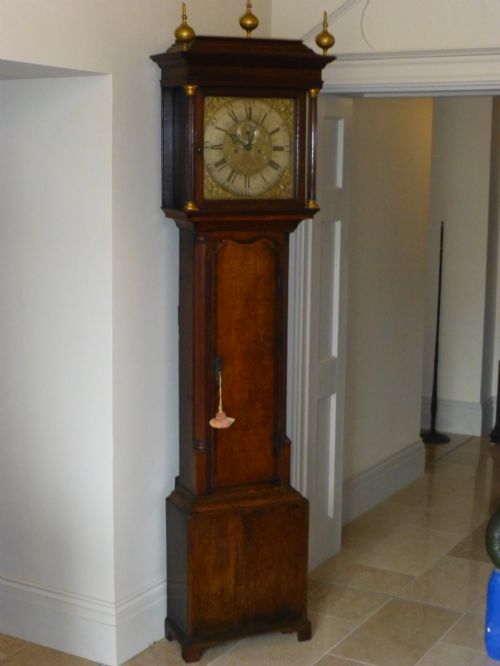
A walnut tallcase clock stands as a towering floor-standing timekeeper, historically housing intricate weights and pendulums behind a glazed dial door. Buyers seek these grand floor clocks for their commanding vertical proportions and sophisticated casework.
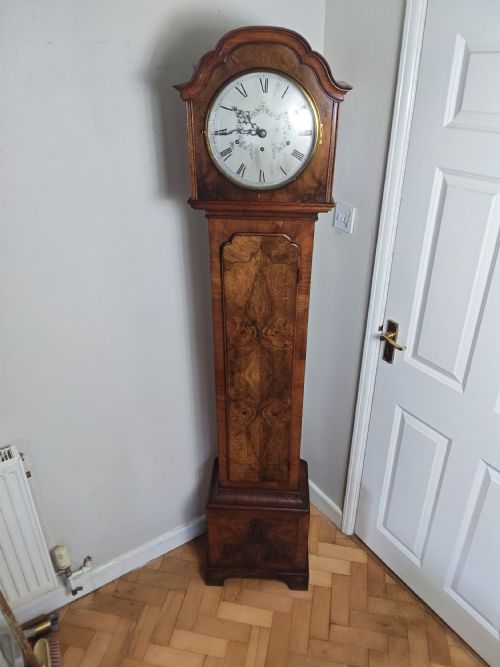
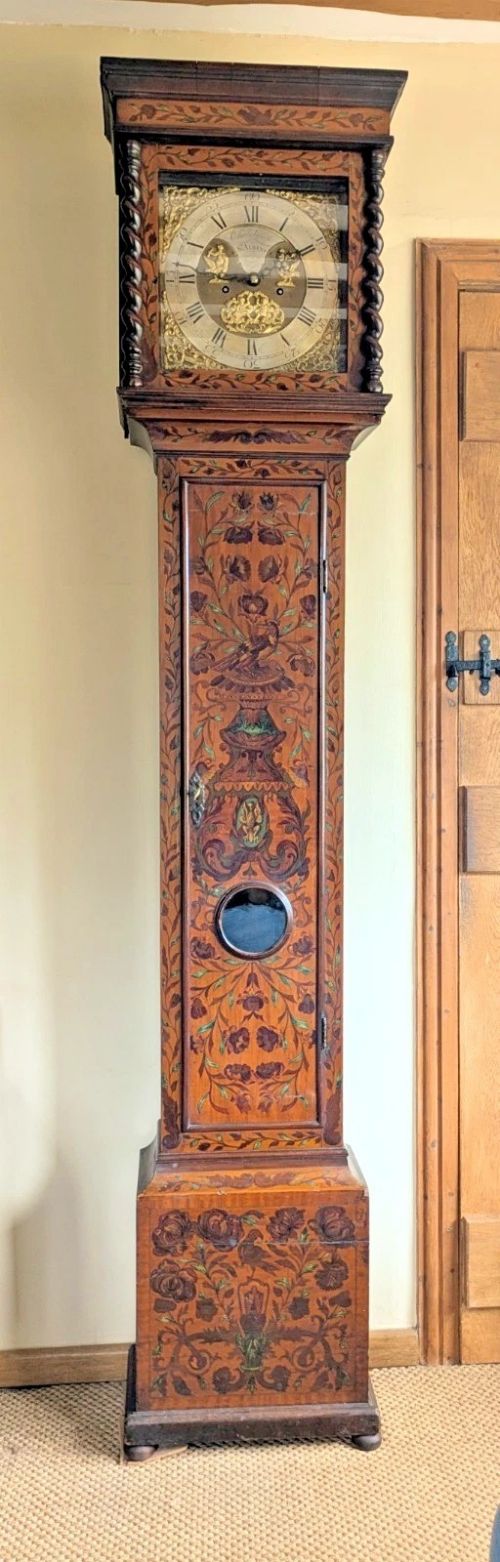
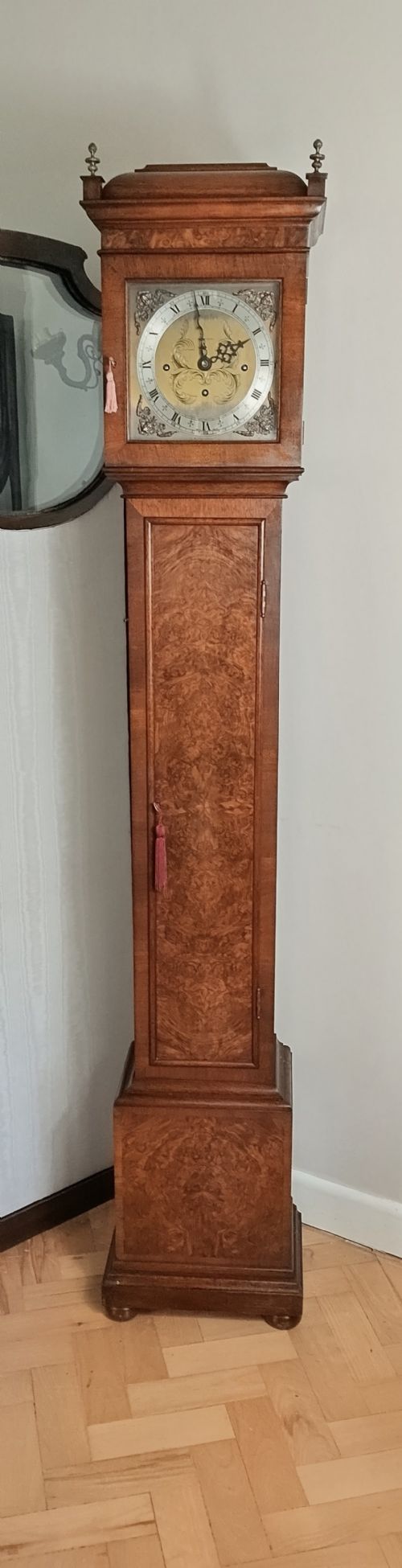
The selection here encompasses substantial examples from the seventeenth and eighteenth centuries alongside later twentieth-century interpretations, including scaled-down grandfather and grandmother variations. These pieces range from restrained early Georgian forms to elaborate marquetry and quarter-veneered designs.
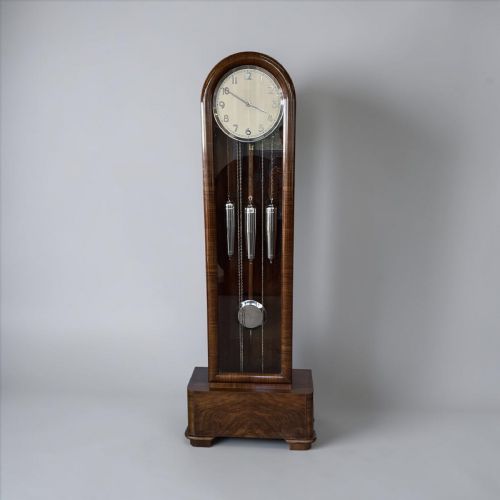
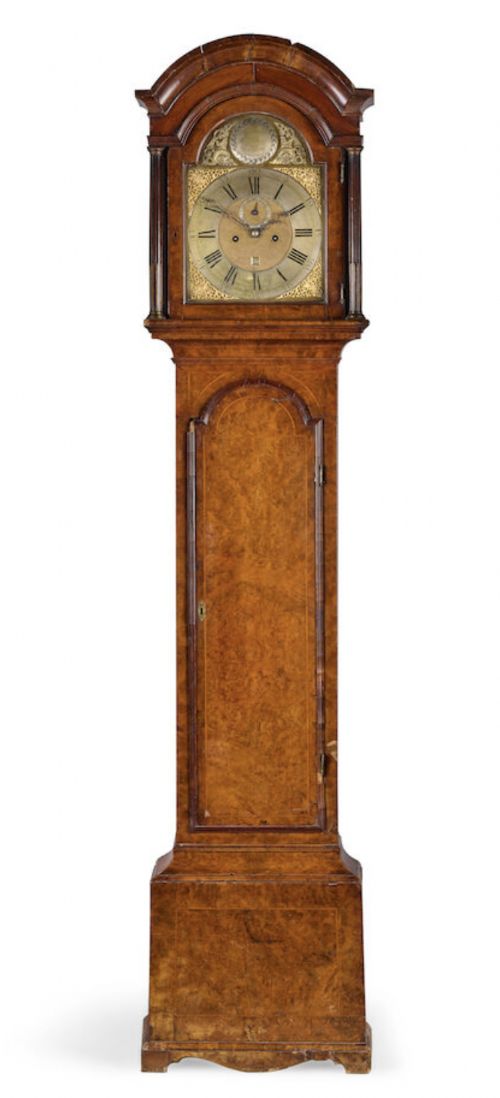
Most pieces seen on this page originate from the seventeenth century, the Georgian era, and the nineteen-thirties, reflecting significant shifts in cabinetmaking and horological technology. Makers utilised walnut and burr walnut predominantly, often accented by oak, brass, and glass.
How they were made
Cabinetmakers constructed these clock bodies using solid timbers and decorative veneers applied to secondary woods such as oak, employing quarter-veneering and marquetry to create complex geometric and floral patterns on the trunk doors.
Dials incorporate engraved brass, steel hands, and applied chapter rings, driven by brass-geared movements powered by hanging weights or springs. Craftsmen integrated moonphase displays, musical chimes, and tubular bells into the more complex mechanisms.
Listings feature walnut tallcase clocks spanning from the seventeenth century through the Georgian era to the nineteen-fifties.
What varies in quality
The distinction between tiers rests upon the choice of timber figure, such as highly figured burr walnut against plain grain, and the intricacy of the marquetry inlay. Superior examples display meticulous matching of veneers across the entire trunk and hood.
Horological refinement sets the finest specimens apart, seen in signed brass dial work by notable makers and complex movements featuring multiple trains for chiming or musical output. The integrity of the original casework relative to the movement dictates the overall standard.
Henry Massy·Joseph Knibb·Edward East·Windmills and Wightman·Edin Burgis
The Walnut Tallcase Clock Glossary
- Marquetry
- A decorative technique of applying thin veneers of various woods in intricate pictorial or floral patterns onto the clock case. This method requires considerable skill from the cabinetmaker to align the grain and colour.
- Moonphase
- A dial mechanism tracking the lunar cycle through a rotating disc visible through an aperture on the clock face. It added both utility and visual complexity to eighteenth-century timepieces.
- Quarter veneering
- The arrangement of four symmetrical veneer segments cut from the same log to create a mirrored diamond pattern on the door. It demonstrates the maker's dedication to decorative symmetry.
- Grandmother clock
- A smaller, more slender version of the traditional longcase clock, typically produced during the twentieth century. These shorter timepieces suit lower ceiling heights while retaining classic proportions.
Walnut Tallcase Clock: Frequently Asked Questions
How do I wind the clock?
Most eight-day movements require the heavy brass weights to be drawn up using a crank inserted through small winding holes in the dial face. Care must be taken not to over-wind the mechanism.
Shorter duration or three-weight musical models have specific winding sequences that should be followed carefully to maintain accurate timekeeping without straining the internal gears.
Where should I place a tallcase clock?
Position the piece against a sturdy interior wall away from direct sunlight, heating vents, and exterior doors where temperature and humidity fluctuations could affect the wood.
A stable floor surface is essential to ensure the pendulum swings freely and the case remains plumb for accurate timekeeping.
What is the difference between periods?
Seventeenth-century examples often feature architectural mouldings and rich marquetry panels, whereas Georgian pieces tend towards cleaner architectural lines and refined burr walnut veneers.
Twentieth-century grandmother clocks adopt earlier stylistic cues but generally house more modern chiming movements within compact proportions.